
Reviewed · AMSTERDAM
24 Jan: Organ Favourites at Westerkerk Amsterdam
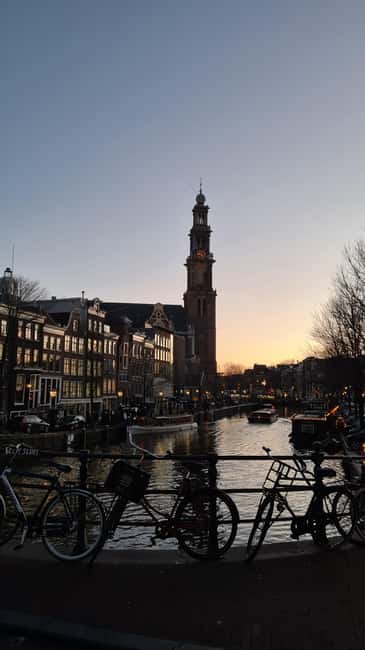
One hour, and Amsterdam sings on keys. In Westerkerk, the candlelit setting and the feeling of real Dutch art history sit right around you, with Rembrandt’s burial tied to this building.
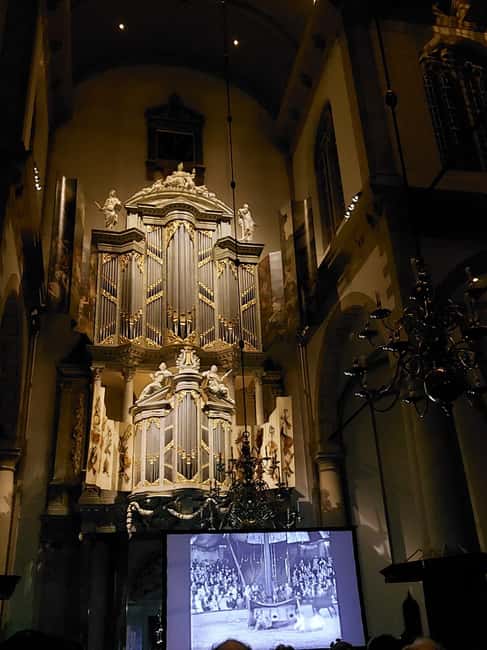
I especially like the way this program spotlights the Duyschot organ, a 1686 Dutch Baroque instrument, played live by Evan Bogerd. You also get the practical bonus of seeing the organist on a big screen, so you can follow what your ears are hearing.
One possible drawback: the concert’s candlelit promise may depend on conditions, and the church can get chilly. If you go expecting warm comfort and nonstop fireworks, you might find the experience a bit slow, depending on your music taste.
In This Review
- Key highlights you will care about
- Why the Westerkerk setting changes everything
- The Duyschot Organ: 1686, Dutch Baroque, and big mechanical drama
- Evan Bogerd on the bench: what to listen for in a one-hour recital
- Concert program: Bach, Buxtehude, Wagner, Franck, and the toccata finale
- A tip for first-timers
- Rembrandt’s burial, Anne Frank’s clock chimes, and why those stories matter
- Candlelight, cold air, and how to avoid a bad night
- The price: $26 for a live organ in a world-famous church
- Who this recital suits best
- How to plan it into your Amsterdam day
- Should you book the 24 January Organ Favourites recital?
- FAQ
- Where does the Organ Favourites recital take place?
- How long is the concert?
- What organ is featured in the recital?
- Who is the organist performing?
- Which composers are included?
- Does the concert end with a specific Bach piece?
- Is it wheelchair accessible?
- What is the price?
- Is there free cancellation?
Key highlights you will care about
- Westerkerk setting: a landmark Protestant church in Amsterdam, and Rembrandt is buried here
- Duyschot organ sound: a monumental 1686 instrument built in the Dutch Golden Age
- Evan Bogerd performing live: your recital is anchored by one focused, expert musician
- Organ shutters by Gerard de Lairesse: you are seeing art and hearing history in the same place
- Clock tower story with Anne Frank: you learn how the chimes soothed her during hiding
- Bach toccata finale: the concert concludes with Bach’s famous toccata in d minor
Why the Westerkerk setting changes everything
Walking into Westerkerk for an organ recital feels different from most “sit and listen” concerts. This is not a modern hall built for sound. It is a historic Amsterdam church, and that context matters because the building shapes what you hear, how tones linger, and how the music lands in the air.
The place also carries a heavy artistic weight. Rembrandt van Rijn is buried in the Westerkerk, and there is a memorial stone for him here. You can think of the recital as more than music. It is also a chance to experience how Dutch culture mixed faith, art, and public memory in one space.
And yes, candlelight is part of the pitch. One important note for you, though: your enjoyment may depend on whether candles are actually lit during your specific performance. Even when they are, the vibe is still about reverence and quiet attention, not audience participation. If you like a calm, focused evening, you are in the right place.
Weighing this against the rest? A few more from Amsterdam:
- Amsterdam: Heineken Experience Ticket including 2 Drinks
★ 4.6 · 36,014 reviews - Amsterdam Classic Saloon Boat Cruise with Drinks and Cheese
★ 5.0 · 31,825 reviews - Amsterdam Luxury Canal Cruise + Unlimited Drinks & Bites option
★ 5.0 · 30,518 reviews
The Duyschot Organ: 1686, Dutch Baroque, and big mechanical drama
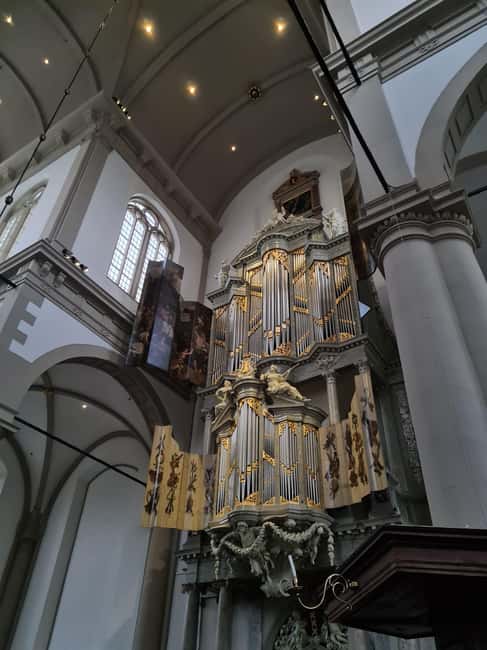
The heart of this recital is the Duyschot organ, built in 1686. That year is not just trivia. An organ from the Dutch Baroque era has a particular personality in how it speaks, with clarity in the lines and a powerful sense of structure when multiple voices join.
Here is the practical part: organ music can feel abstract if you do not understand what you are listening for. Seeing the organist on a big screen helps you connect the physical action to the sound. You get to watch how hands and feet coordinate, and you stop wondering how something that complex can still sound musical and controlled.
Then there are the shutters. The massive organ shutters are painted by Gerard de Lairesse, who was an acquaintance of Rembrandt van Rijn. That means the visual layer is not random decoration. It is part of the artistic world around Rembrandt, and it adds weight to the concert. When the shutters frame the instrument, the organ becomes a landmark itself, not just an instrument in the background.
Evan Bogerd on the bench: what to listen for in a one-hour recital
Evan Bogerd is the organist for this 24 January Organ Favourites recital, and that matters because the performer shapes the pacing. In a one-hour program, there is less time to slowly “settle in.” A strong player guides you through moods and styles without turning the concert into a single long stretch.
This is also a good choice if you are new to organ music. The show is built around recognizable favorites, including composers like Bach, Buxtehude, Wagner, Franck, and others. That mix can keep your attention because each composer tends to bring a slightly different approach to harmony, rhythm, and contrast between loud and soft passages.
One thing I would watch for as a listener is the way the recital likely moves through styles rather than staying in one mood. Even when the church acoustics are thick and atmospheric, a skilled organist still uses contrast to keep the music from blurring. You can use that yourself too: focus on changes in tempo and density. When the sound grows fuller, listen for how the lines stay clear instead of turning into one wall.
Concert program: Bach, Buxtehude, Wagner, Franck, and the toccata finale
The concert is designed as “Organ Favourites,” so it aims for music that many people will recognize or at least feel drawn to quickly. You will hear works connected to Bach, Buxtehude, Wagner, Franck, and other favorites.
The big bookend is the ending. The concert concludes with Bach’s famous toccata in d minor. That finale is a reason to book, even if you are still deciding whether you like organ music. It is dramatic, propulsive, and built to land with impact, especially in a stone church like Westerkerk where sound hangs in the room.
At the same time, keep your expectations realistic. Classical music taste varies, and organ music can feel cerebral if you want nonstop emotional punch every minute. I like this recital for people who enjoy craft and atmosphere, not just a continuous rush of intensity. If you are the type who likes hearing different composers’ voices, this mix is a good match.
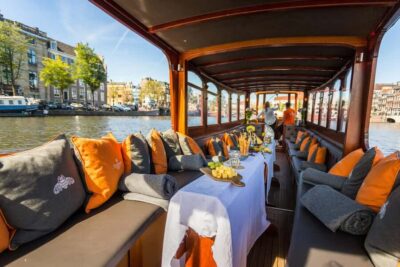
A different use for the same hours in Amsterdam:


A tip for first-timers
When you hear a new composer, do not just wait for your favorite moment. Listen for what changes:
- Is the rhythm more driving or more flowing?
- Does the harmony feel darker or brighter?
- Does the organ sound like many voices or one large mass?
Those quick checks make the whole hour more satisfying, even if one segment does not click instantly for you.
Rembrandt’s burial, Anne Frank’s clock chimes, and why those stories matter
The Westerkerk connection to Rembrandt is not subtle. Rembrandt van Rijn was buried in this church, and you can see the memorial stone. Learning that while you are listening does something useful to your attention. Instead of treating the concert as detached entertainment, you start perceiving it as part of a cultural timeline.
Then comes the Anne Frank connection. While she was hiding next door, she mentioned hearing the church’s clock tower chimes in her diary, and she referred to them several times. That detail turns the church from a monument into something more human. A clock sound becomes comfort. A familiar pattern becomes survival.
Whether you actually hear the chimes during your specific seat time can vary, but the lesson itself changes how you interpret the building’s presence. You are not just hearing music produced by the organ. You are also in a place where sound from the church has echoed through real lives.
This is where the recital becomes more than a soundtrack. It becomes a guided listening experience, even if the format is straightforward: you learn a little context, then you sit in the sound and let that context inform how you hear it.
Candlelight, cold air, and how to avoid a bad night
One review experience flagged that candles were not lit and that the church felt cold. I cannot control that for your day, but you can control your comfort.
Plan to dress for a cool interior. Even if it is January and the weather outside is already chilly, churches can still feel colder than you expect once you are seated for a full hour. Bring layers you can keep on, not just something you can toss over your shoulders. If you run warm, you can always remove an extra layer. If you run cold, you will not.
Also, think about the mood you want. Organ recitals can be moving, but they also tend to be quiet. If you are in the mood for lively comedy or social energy, this is not that kind of night. If you are ready for calm focus, you will likely enjoy it a lot more.
The price: $26 for a live organ in a world-famous church
At $26 per person for a one-hour concert, this recital can be strong value if you care about two things: live performance and a legendary venue. You are not just paying for sound. You are paying for the Duyschot organ, the building’s unique acoustics, and the chance to hear specific works performed in a setting that is tied to major Dutch names.
The other value angle is visual support. Being able to see the organist on a big screen is not always offered at concerts. It helps you follow along, and for many first-timers, that turns curiosity into real enjoyment.
If your budget is tight, ask yourself one question: do I want a meaningful, low-effort cultural stop that feels complete in about an hour? If yes, $26 is reasonable in Amsterdam. If your priorities are shopping, nightlife, or constant movement, you might decide you want a different kind of experience.
Who this recital suits best
This is a great fit if:
- You love organ music or want to try it in a high-quality, famous setting
- You care about Dutch cultural landmarks, not only popular sightseeing
- You like having a built-in narrative, with Rembrandt and Anne Frank tied to what you hear
- You want a one-hour activity that fits easily into a day in Amsterdam
It is also a decent choice for families or visitors who prefer a calm, structured event, especially since the venue is wheelchair accessible.
If you are very sensitive to long quiet stretches, or you expect candles every time no matter what, you might want to think twice. And if you decide you only like the parts that feel extremely emotionally intense, you may find that one segment is less thrilling than another. The program ends strongly with Bach’s toccata in d minor, but taste is taste.
How to plan it into your Amsterdam day
Because the duration is one hour, you can slot this recital between other sightseeing. I like pairing a concert like this with a morning or early afternoon museum time, then keeping your evening simple. Your brain has context after you learn a few stories, and then the music feels like a finishing chapter.
Arrive with enough time to settle. Not because the tour is complicated, but because sitting comfortably matters for organ listening. Once you are in your seat, your job is easy: breathe, listen, and let the acoustics do their work.
If you are traveling with someone who is less into classical music, this might still work because the “favorites” framing usually keeps things approachable. The big screen also helps. People tend to feel less lost when they can see the performance hands-on, literally.
Should you book the 24 January Organ Favourites recital?
I think you should book if you want a compact, memorable Amsterdam evening that combines live artistry with serious place-based storytelling. The Duyschot organ is the reason to go, and Evan Bogerd is a strong anchor for an hour of focused music. Add the Westerkerk setting, the Rembrandt connection, and the Anne Frank clock tower chime detail, and you get more than a concert ticket.
You might skip it if you know you hate long quiet listening, or you only want the most dramatic emotional moments. Also, if candlelight is your whole expectation, be aware that conditions can change.
FAQ
Where does the Organ Favourites recital take place?
It takes place at Westerkerk Amsterdam in Amsterdam.
How long is the concert?
The concert lasts 1 hour.
What organ is featured in the recital?
The recital features the Duyschot organ, built in 1686.
Who is the organist performing?
Evan Bogerd performs on the Duyschot organ.
Which composers are included?
The program includes music connected to Bach, Buxtehude, Wagner, Franck, and other favourites.
Does the concert end with a specific Bach piece?
Yes, the concert concludes with Bach’s toccata in d minor.
Is it wheelchair accessible?
Yes, the venue is wheelchair accessible.
What is the price?
The price is $26 per person.
Is there free cancellation?
Yes. You can cancel up to 24 hours in advance for a full refund.
Newest on the canal ring
- Amsterdam Bike Food Tour with Private Guide★ 5.0 · 1 review
- Amsterdam: Rijksmuseum Private Tour with an Art Historian★ 5.0 · 1 review
- Happy B-day Amsterdam! Guided Tour with a History Buff★ 5.0 · 1 review
- Local Foodie Adventure in Amsterdam★ 5.0 · 1 review
- Private Photo Shoot in Amsterdam with a Professional Photographer★ 5.0 · 1 review
- Private day trip to Giethoorn and the Enclosing Dike★ 5.0 · 1 review
- Private Sightseeing Tour to Giethoorn from Amsterdam incl. canal cruise★ 5.0 · 1 review