
Reviewed · MUSEUMS
Amsterdam: ARTIS-Micropia Microbe Museum Entry Ticket
Micro life is everywhere. You just never see it this clearly.
ARTIS-Micropia turns the invisible world of microbes into something you can scan, collect, and understand with your own eyes. I like how hands-on it is, especially the interactive scanner that reveals microbes on and inside you. A second standout is the stamp-style route through the exhibits, which makes it easy to keep your momentum instead of wandering. One thing to consider, though, is that this place is very science-focused, so if you want lots of giant animals or spectacle, it can feel a bit pricey for the sheer number of areas.
You will also appreciate the setting: it sits in the ARTIS area, so you can combine your visit with a coffee stop in the neighborhood and a look around the gardens. Daily lab talks happen in front of the Laboratorium, which adds real energy without needing to be a microbiology expert. The only drawback I would flag is practical, not educational, some visitors note that certain facilities like the toilets can fall behind the museum’s clean science vibe.
In This Review
- Key things to know before you go
- ARTIS-Micropia in the ARTIS area: what the setting does for your visit
- Your first moves inside: scanner, stamps, and a smart route through the exhibits
- The microscope stations and living exhibit style that make microbes feel real
- Daily lab talks at the Laboratorium: the human layer of science
- Micro Mission in spring break: a free add-on for young explorers
- How long to plan, and what a good pacing looks like
- Price and value: is $21 per person worth it?
- Pairing options in the ARTIS zone: plan a full day or keep it simple
- Small practical notes that can change your experience
- Who this is best for
- Should you book ARTIS-Micropia tickets?
- FAQ
- Where is the meeting point for ARTIS-Micropia?
- How long is the ticket valid?
- What are the opening hours?
- Is it free for children?
- What age is the museum recommended for?
- Is admission to ARTIS Zoo or ARTIS-Groote Museum included?
Key things to know before you go
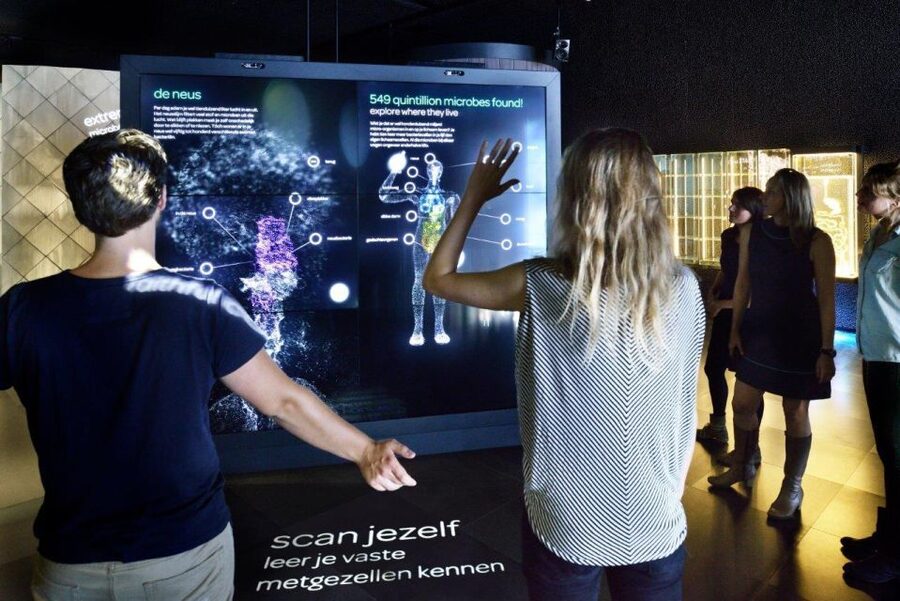
- Scan yourself to find microbes living on and inside you, then expect results that feel surprising.
- Collect microbe stamps across stations, a simple system that makes the visit feel like a quest.
- See the Laboratorium in action with daily lab talks in front of the room.
- Interactive exhibits for kids and adults, with visual animations and microscope-style storytelling.
- Micro Mission during spring break for kids, a free workshop you can pick up at the ticket desk.
- Free entry for children up to 12, which can make a family day out more affordable.
ARTIS-Micropia in the ARTIS area: what the setting does for your visit
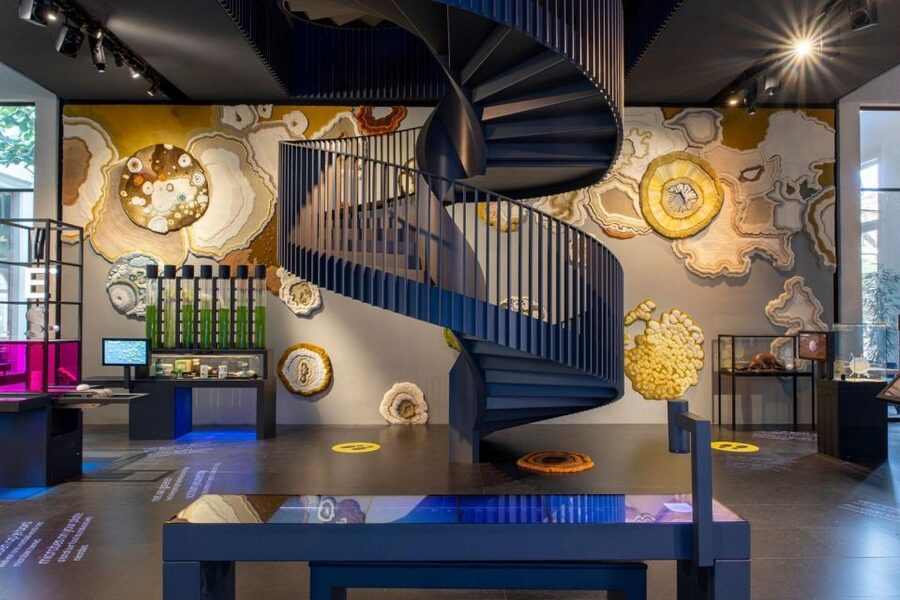
ARTIS-Micropia is in Amsterdam in the ARTIS neighborhood, with its classic garden feel and an easy walk from the city center, about 10 minutes. That matters more than it sounds. A microbe museum can feel a little “lab indoors only,” but the surrounding area helps you slow down, arrive ready to learn, and make the day feel like more than a ticket swipe.
Inside, the museum’s theme is simple and powerful: microbes are in the air, on skin, and in your gut. The exhibits don’t treat that as a scary fact to ignore. They explain it as something essential, then show you ways science turns invisible details into something you can study. You’ll spend your time looking, scanning, reading, and collecting stamps, and the whole place is designed so you do not need a background in microbiology to follow along.
The recommended age is 8 years or older, but that guideline is really about attention span and how quickly kids can process the science. The vibe is family-friendly, and the interactive elements are built to hold interest. If you’re traveling with older kids, it is an unusually good fit for a school-age curiosity level.
More Amsterdam collections worth the queue:
- Amsterdam: Red Light Secrets Museum Entry Ticket
★ 4.2 · 5,722 reviews - Amsterdam’s Weirdest Museum: Ripley’s Believe It or Not!
★ 4.5 · 4,920 reviews - Amsterdam: Van Gogh Museum Ticket and City Canal Cruise
★ 4.6 · 3,899 reviews
Your first moves inside: scanner, stamps, and a smart route through the exhibits
The biggest practical win at Micropia is that you’re given a reason to move through the museum, not just look at panels. As you go, you can collect microbe stamps from different parts of the experience. It’s a low-effort system that keeps you engaged. It also prevents the common museum problem where you wander, lose your place, and end up seeing half a display set and leaving.
Before you get too deep, spend a moment with the main interactive idea: scanning yourself. The museum invites you to scan and discover the microbes living on and inside you. I like that it is framed as educational rather than as a gimmick, because it connects the body to the wider microbial world. Just expect the results can be alarming in tone, even when the science idea is reassuring. That’s part of the learning, microbes are normal, and your body is not sterile.
Then use the stamp route to pace yourself. Many adults do best if they follow the “do the thing first, read after” rhythm: scan, stamp, look closely at the stations, then circle back to the text where you want more detail. Kids often do the opposite and it works. Either way, the building blocks are designed to stand on their own.
One small piece of advice: if you like photography, you’ll want to aim for the visual installations and the microscope-style views. The museum uses animations and visuals to communicate scale and shape, and those are the moments where pictures help you remember what you saw after your ticket time is over.
The microscope stations and living exhibit style that make microbes feel real
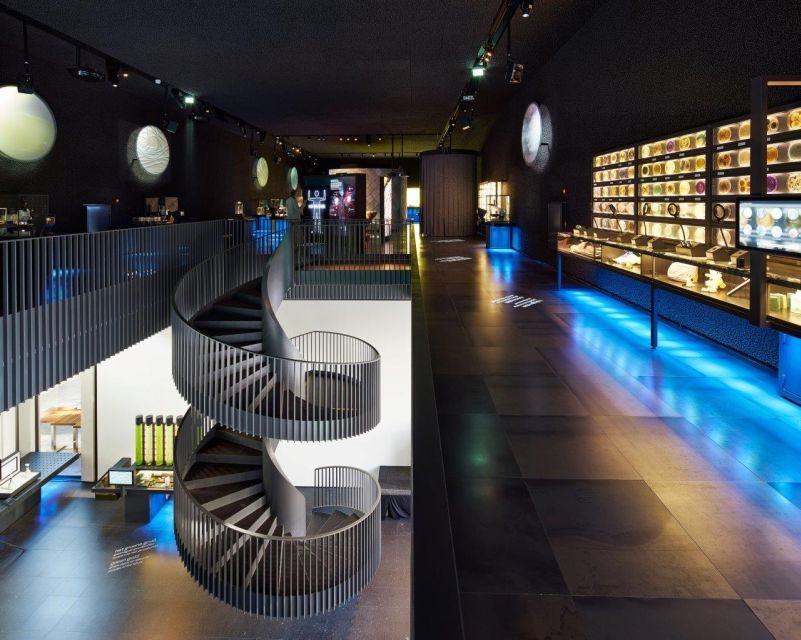
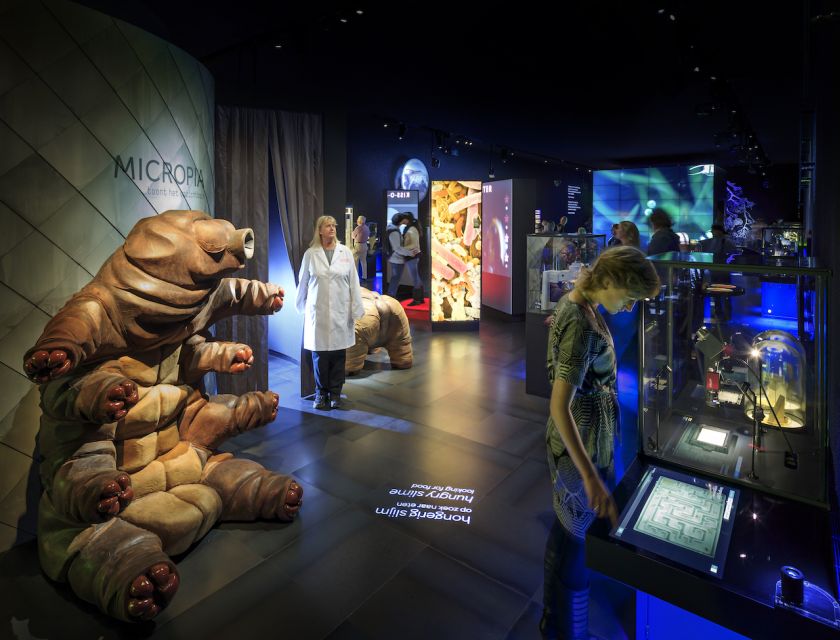
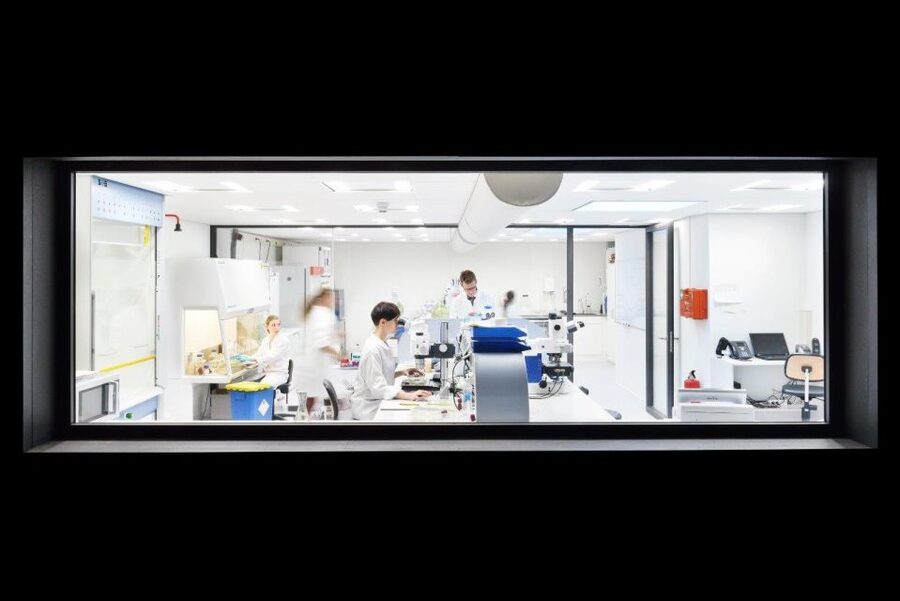
What makes Micropia more than an informational show is the way it makes the invisible feel tangible. You’ll see microscopes, interactive displays, and stories explained by lab technicians. The museum’s goal is not only to tell you microbes exist, but to help you understand why they matter, from health and digestion to balance in nature.
A couple of specific exhibit types tend to stick with people:
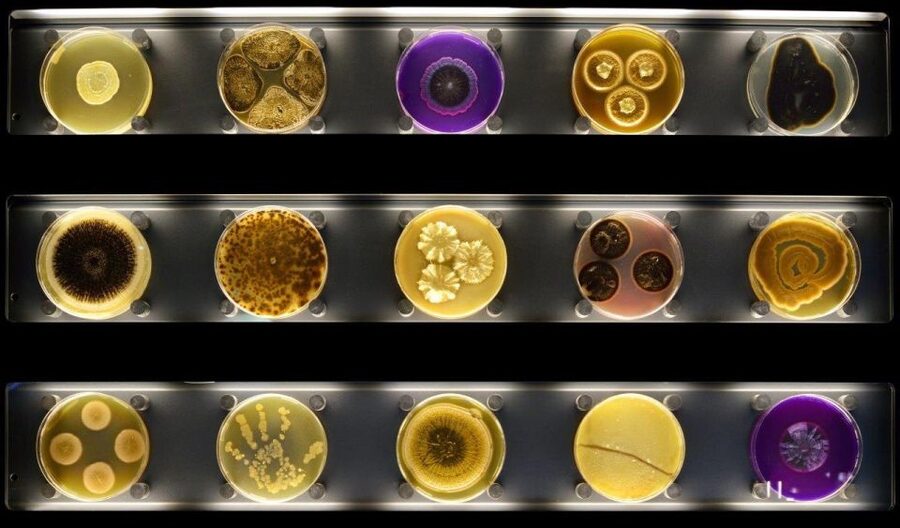
- Growing mold and culture plates, which turn lab-like uncertainty into visible patterns.
- Sculptures of bacteria and viruses, which help you grasp shapes you normally only see as flat diagrams.
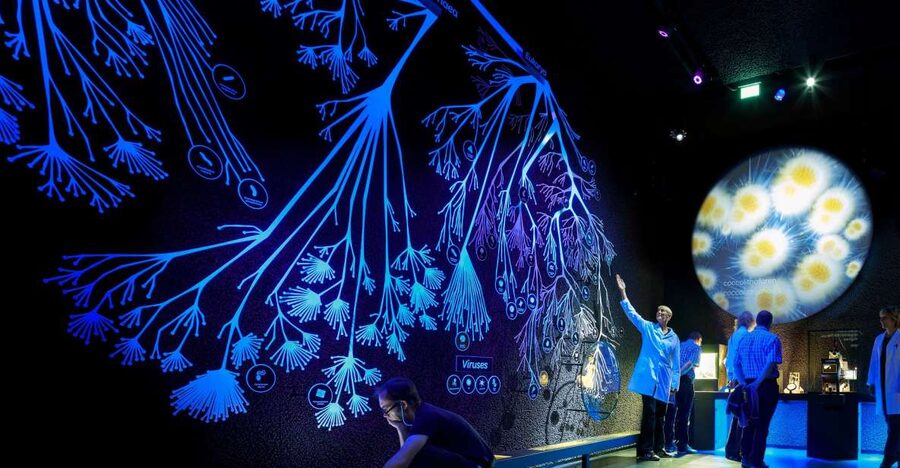
- Visual effects and animations, which bridge the gap between textbook concepts and what you can actually observe.
There are also installations that feel imaginative without breaking the science theme, and you may spot setups like ant farm-style observations alongside micro-focused displays. The point is consistency: everything connects back to how tiny organisms interact with food, bodies, and ecosystems.
If you’re the type of traveler who likes to read every label, you can. If you’re more of a “show me” person, you can too. That flexibility is a real value because it keeps the museum from becoming either too technical or too shallow.
Daily lab talks at the Laboratorium: the human layer of science
The museum includes daily lab talks in front of the Laboratorium, and this is where the experience gains personality. When someone is speaking in the same room where the lab feel is visible, it shifts the museum from “watch stations” to “ask questions, listen, and connect.”
You do not need to know microbiology vocabulary to benefit. The lab talks are there to explain what the museum is showing you. It’s also a good chance to hear how the exhibits connect: how microbes affect digestion, how they keep balances in nature, and how ecosystems are not separate from human life.
Timing matters here. If you go at opening time, you’re less likely to feel rushed between stations and lab moments. If you arrive later, you can still catch talks, but you might need to choose between watching the talk and continuing your stamp run. If you care about the live element, plan your visit around at least one lab talk.
Some other canal-ring outings to set against this



Micro Mission in spring break: a free add-on for young explorers
During spring break, Micropia offers a kids workshop called the Micro Mission. It is available daily in that spring break period between 10:00 and 17:00, and you collect it for free at the ticket desk. It is designed around “micro missions” that help children discover how plants, animals, and microbes work together in nature.
This matters for families because it turns the visit from passive viewing into a guided activity. If you have kids who need a task or they get antsy, this is the part that can make the day feel complete. It is also a smart way to keep the science theme age-appropriate while still being real.
The museum recommends Micropia for ages 8 and up, so if you are traveling with younger kids, you might find the experience more comfortable if you lean into the workshop and keep your expectations flexible. For older kids, Micro Mission can be the anchor that keeps them engaged beyond reading labels.
If spring break is not your travel time, you can still have a great visit. The workshop just gives families an extra free structured option when it is offered.
How long to plan, and what a good pacing looks like
You can comfortably plan for about 1 to 2 hours for the core museum route. Some people spend closer to 2 hours, especially if they pause for microscope views and read more of the details rather than scanning and moving on quickly.
For a good pacing plan:
- Start with the scanner and grab your stamp materials right away.
- Then go station by station until you’ve collected your set of microbe stamps.
- Leave a little time for the live feeling areas, especially if you want to catch a lab talk.
If you try to rush, Micropia turns into a blur of tiny concepts. If you slow down, it turns into a sequence of “wait, that’s why” moments. That’s the value of this museum, it teaches scale and connection without requiring you to become a specialist.
Price and value: is $21 per person worth it?
At about $21 per person, the ticket is not a bargain like a street-level attraction, but it is also not priced like a huge mega-museum. The value comes from what you actually get inside: interactive scanning, microscope-style storytelling, hands-on stations, and a stamp system that turns the visit into a guided path.
The “only microbe museum in the world” angle is more than a slogan. It signals that the exhibits are built around a very specific mission, and you are paying to experience that mission in one place. That can be worth it if you enjoy science learning that is interactive, visual, and a little surprising.
Price becomes a fairer deal when you’re visiting with kids, because children age 0 to 12 can enter for free. For families, that changes the math significantly and makes Micropia easier to justify as a main activity rather than a single-ticket splurge.
The main reason value can feel uneven is simple: the museum is focused. If you only want broad, general entertainment, the science may feel “too much” for the space. One reviewer even noted it can feel a little pricey for the amount of stuff, so if that’s your concern, I would treat this as a “choose your interest” museum. If you care about bacteria, fungi, digestion, or nature balance, you’re likely to feel it was worth every minute.
Pairing options in the ARTIS zone: plan a full day or keep it simple
Micropia is not only a standalone ticket. There are add-ons in the ARTIS ecosystem that can extend your day if you want to keep the science theme going.
A combination ticket can include the ARTIS-Groote Museum, where you explore how everything is connected, including human, animal, plant, and microbe. There is also the option to step outside to ARTIS Zoo for nature up close, though that zoo entry is not included with the Micropia ticket.
I like doing Micropia as the “brain part” of the day, then switching to something more outdoors or animal-focused right after, because it balances your energy. Another practical reason to pair things is logistics: since Micropia is only a short walk from the city center and sits in a larger ARTIS area, you’re already in the right neighborhood.
If you prefer a lighter day, you can keep it simple: Micropia, then nearby cafes and a slow walk. The ARTIS area makes that easy.
Small practical notes that can change your experience
A few practical details can help your day run smoother:
- Plan for interactions. The scanner and the stamp collection encourage you to slow down and participate, not just read.
- Use the time for lab talks. Daily talks in front of the Laboratorium add variety and help connect the exhibits.
- Expect a clean science vibe, but check on facilities. Some visitors have commented that toilets can be dirty for a museum that highlights microbes so strongly. That is not something you can control, but it is good to know.
- Bring your curiosity. This is best when you’re willing to ask why microbes matter, not just what they are.
If you like taking breaks during museum time, sit down when you can and read the story bits slowly. Microbes are tiny, but the learning is not rushed unless you make it rushed.
Who this is best for
Micropia is a strong match if you are:
- Traveling with kids age 8 and up (and especially if you’re there during spring break)
- Interested in biology, health, digestion, or how ecosystems work
- The type of visitor who enjoys interactive museums more than quiet galleries
- Curious about what science actually looks like when the lab is visible
It might be less ideal if you want a traditional art museum vibe, or if you are only loosely interested in science concepts. You can still enjoy it, but it will feel most rewarding when you lean into the micro-world theme.
Should you book ARTIS-Micropia tickets?
If you want a one-day Amsterdam activity that is genuinely unusual, Micropia is hard to beat. The scanner experience, the stamp hunt, and the daily lab talks in front of the Laboratorium give you multiple ways to engage, not just one. Add in free entry for kids up to 12, and the price starts to look more reasonable.
Book it if your group likes hands-on learning, visual explanations, and science that connects to daily life. Skip it or scale back expectations if your main goal is big, crowd-pleasing spectacle, because this museum is intentionally science-focused. If you do book, plan for about 1 to 2 hours, and try to catch at least one lab talk so the experience feels alive, not just read.
FAQ
Where is the meeting point for ARTIS-Micropia?
The meeting point is Plantation Kerklaan 38-40.
How long is the ticket valid?
The ticket is valid for 1 day. You should check availability to see starting times.
What are the opening hours?
The museum is open daily from 10:00 am to 5:00 pm. On 24 December, it opens from 9:00 am to 5:00 pm, on 25 December 9:00 am to 5:00 pm, on 26 December 9:00 am to 5:00 pm, on 31 December 9:00 am to 4:00 pm, and on 1 January 10:00 am to 5:00 pm.
Is it free for children?
Yes. Children age 0 to 12 can enter for free.
What age is the museum recommended for?
The recommended age for Micropia is 8 years or older.
Is admission to ARTIS Zoo or ARTIS-Groote Museum included?
No. Admission to ARTIS Amsterdam Royal Zoo and ARTIS-Groote Museum is not included with the Micropia ticket. You can visit them separately or with a combination ticket option.
Newest on the canal ring
- Amsterdam Bike Food Tour with Private Guide★ 5.0 · 1 review
- Amsterdam: Rijksmuseum Private Tour with an Art Historian★ 5.0 · 1 review
- Happy B-day Amsterdam! Guided Tour with a History Buff★ 5.0 · 1 review
- Local Foodie Adventure in Amsterdam★ 5.0 · 1 review
- Private Photo Shoot in Amsterdam with a Professional Photographer★ 5.0 · 1 review
- Private day trip to Giethoorn and the Enclosing Dike★ 5.0 · 1 review
- Private Sightseeing Tour to Giethoorn from Amsterdam incl. canal cruise★ 5.0 · 1 review
Museums, compared.


Amsterdam’s Weirdest Museum: Ripley’s Believe It or Not!
Read our review →


Van Gogh Museum Amsterdam Exclusive Tour w/ Reserved Entry
Read our review →
Moco Museum Amsterdam Admission Ticket with Banksy and more
Read our review →
Van Gogh Museum Tour Reserved Entry Semi Private
Read our review →Browse the lists this tour appears in