
Reviewed · CITY WALKING TOURS
Amsterdam Central Walking Tour
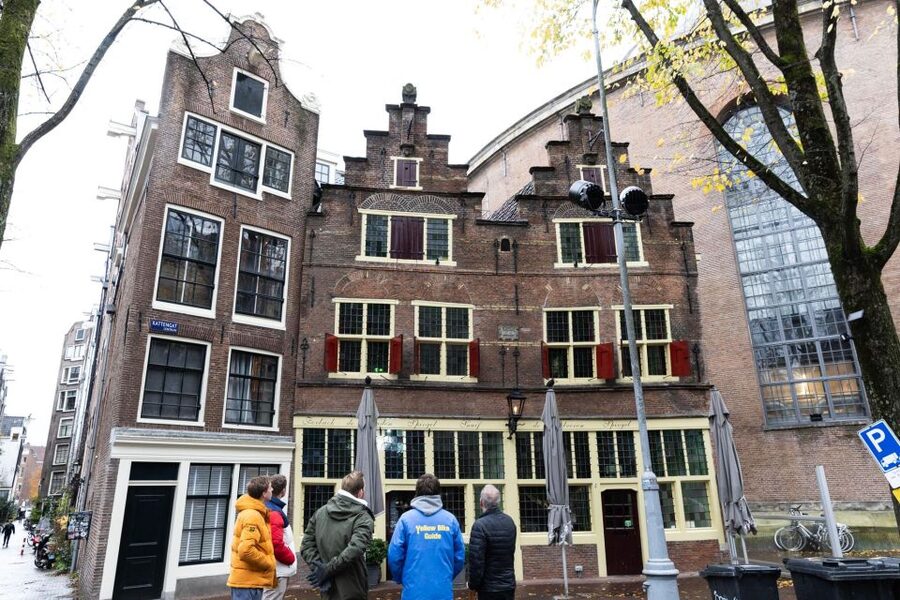
A walk in Amsterdam that connects the dots fast. This Yellow Bike tour pairs small-group guiding with street-level stories, moving through canals, bridges, and neighborhoods that most people only skim. You get a café break at a traditional Dutch spot, plus time in areas like the Negen Straatjes and Jordaan, where the city’s past and present sit side by side.
My favorite part is how the route stays human, not just landmark-chasing. You’ll also get helpful guidance on how to visit sensitive places thoughtfully, including the Westerlijke Wallen area where no photos and no lingering are part of the visit. One consideration: it runs in weather rain or shine, so cobblestones and winter conditions mean you really need warm layers and comfortable shoes.
In This Review
- Key Things I’d Plan For
- Start at Nieuwezijds Kolk, then get your bearings
- Canals, cobblestones, and the story behind Amsterdam’s tilted houses
- Westertoren and Koepelkerk: church towers and the city’s “after” stories
- Nieuwe Haarlemmersluis and Torensluis: engineering that kept the water at bay
- Brouwersgracht, the herring trade, and why Amsterdam earned its nickname
- Jan Roodenpoortstoren and the “hidden” spaces under bridges
- The Westerlijke Wallen area: respect rules you should know
- Anne Frank House stop: what this visit is really for
- Jordaan and the Negen Straatjes: from artisan streets to today’s scene
- Spui, Provo, and squatting history on Spuistraat
- A warm break at Brown Café Pitstop
- Kalverstraat to Dam Square: ending where the city funnels
- Price, time, and what makes it feel like good value at $26
- Guides you might meet, and why the guiding quality matters
- Who this tour is best for
- Should you book this Amsterdam Central Walking Tour?
- FAQ
- Where is the meeting point for the tour?
- How long is the Amsterdam Central Walking Tour?
- What does the tour cost?
- What’s included, and what costs extra?
- How big are the groups?
- What languages are the tours offered in?
- Does the tour run in bad weather, and what should I bring?
- Is the tour wheelchair accessible, and what is the cancellation policy?
Key Things I’d Plan For
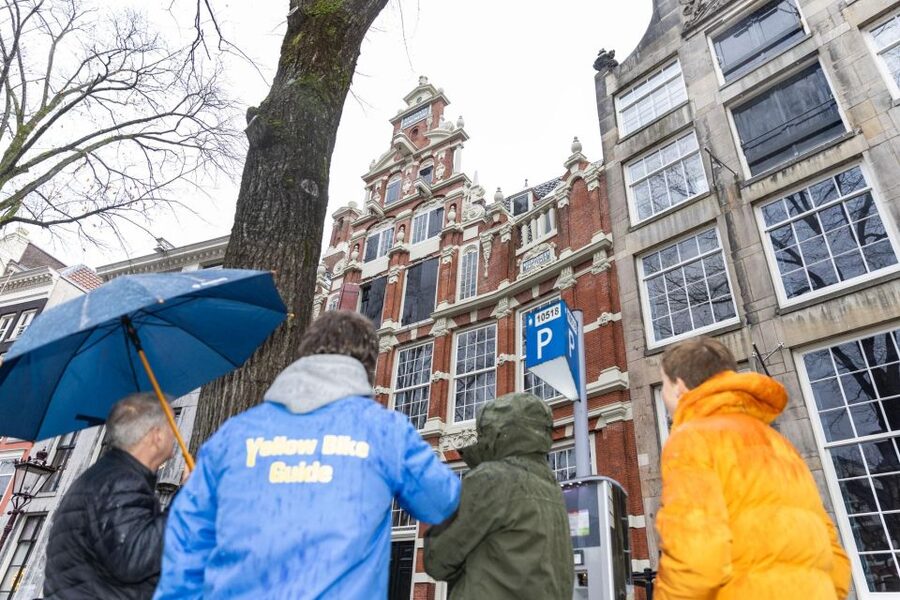
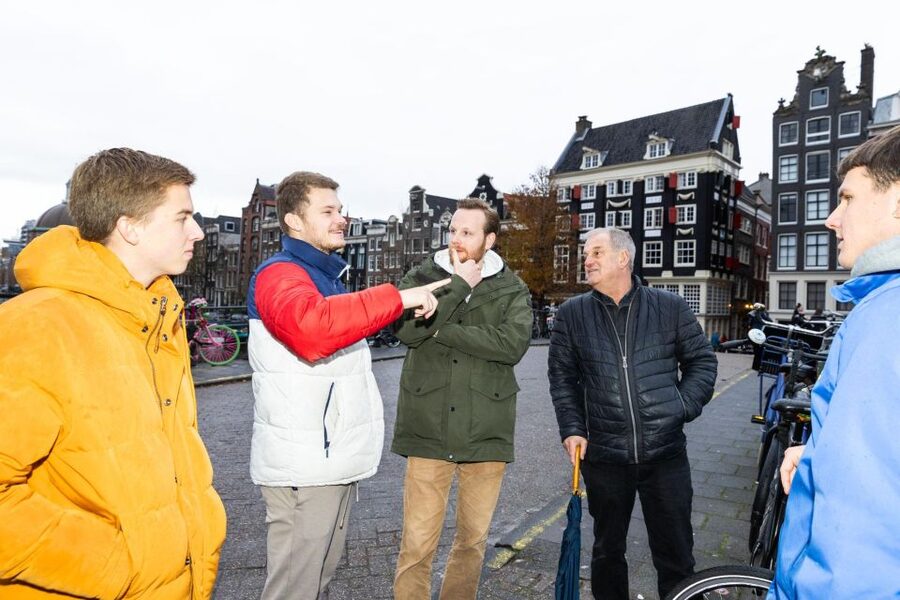
- Small groups, max 12 often smaller, which makes questions and pacing feel easy
- Local, longtime operator Yellow Bike is run by locals and part of the company’s early lineup
- A real Dutch café pit stop (drinks not included) so you can warm up without derailing the walk
- Tilted houses and canal engineering stories that explain why Amsterdam looks the way it does
- Clear rules for the Red Light District zone (respectful behavior, no photos, no lingering)
Start at Nieuwezijds Kolk, then get your bearings
The tour begins at Nieuwezijds Kolk 29, at the Yellow Bike shop, so it’s straightforward to find. You’ll check in at the counter and can store luggage for free, which is a big deal if you arrive with bags or you’re carrying day-trip gear.
From there, you’ll spend your first part of the walk learning how the city “works” at street level: why certain routes make sense, how canal crossings shape movement, and how neighborhoods connect even when you feel like you’re walking in circles. With only two hours, you’re not meant to go deep into any one museum, but you are meant to start thinking like a local.
More of the canal ring crossed on foot:
- Amsterdam Anne Frank: Small-Group Walking Tour & Local Guide
★ 4.8 · 12,789 reviews - Anne Frank’s Story – Guided Walking Tour through Amsterdam
★ 5.0 · 11,619 reviews - Absolutely Amsterdam – the Essential Introductory Walking Tour
★ 5.0 · 3,629 reviews
Canals, cobblestones, and the story behind Amsterdam’s tilted houses
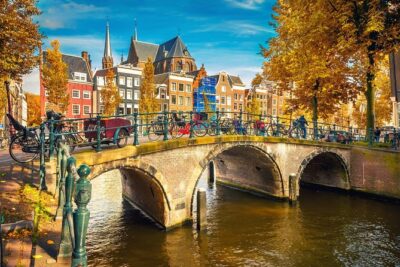
Amsterdam looks postcard-perfect, but the tour explains the physics underneath. You’ll see the charm of the city’s tilted houses and learn why they lean, with the core idea being that Amsterdam is built on wooden poles. That small detail changes how you read everything you see, including canal edges and the way buildings sit near the water.
You’ll also get plenty of cobblestone walking and canal-side views, which is great for atmosphere. The tradeoff is simple: winter plus stones equals slower footing. If you’re prone to slipping, bring grippy footwear, not just comfortable shoes.
Westertoren and Koepelkerk: church towers and the city’s “after” stories
Two major landmarks anchor the middle of the route: Westertoren and Koepelkerk. Westertoren is Amsterdam’s tallest church tower, and the tour connects its role to the city’s historical landscape and identity, not just the fact that it’s tall.
Koepelkerk adds a different kind of meaning. The focus is on the church’s copper-clad Lutheran character and the story of resilience after a massive fire. I like this stop because it reminds you that even the most familiar skyline features survived real disruption, not just time.
Nieuwe Haarlemmersluis and Torensluis: engineering that kept the water at bay
You’ll get a practical history lesson on how Amsterdam fights seawater intrusion through its historic canals, with Nieuwe Haarlemmersluis as the turning point for that topic. It’s the kind of information that makes the city’s water-management reputation feel real, instead of like trivia.
Then you move to Torensluis, the oldest bridge in Amsterdam and once part of the city’s defensive wall. If you’ve ever wondered why Amsterdam feels both open and guarded, this is one of the clearest places to understand how the city used structures for protection and control.
A different use for the same hours in Amsterdam:

Brouwersgracht, the herring trade, and why Amsterdam earned its nickname
This tour doesn’t treat food and trade as a side note. On Brouwersgracht, you’ll trace the supply of grain to breweries, and you’ll hear why the city got the nickname Booze Capital.
Before that, the route also touches the herring trade, which is another way the city built its economy long before modern tourism. I like connecting these topics because they give you a framework. You start seeing canals as infrastructure for goods, not just scenery for photos.
Jan Roodenpoortstoren and the “hidden” spaces under bridges
Jan Roodenpoortstoren brings in a darker, more grounded layer. The tour points out the secrets beneath the bridge, including historic prison cells. Even if you do not go into every detail, the idea lands: Amsterdam has always been a place where law, punishment, and survival mattered, not just commerce and culture.
This is one of the stops that’s easiest to remember later, because it changes the mood of the street. One moment you’re admiring architecture, and the next you’re imagining daily life in places people try not to picture.
The Westerlijke Wallen area: respect rules you should know
The tour includes the Westerlijke Wallen, also known as the Red Light District zone, with a clear cultural framing. You’ll learn how to approach the area with respect and understanding, and you’ll be told that no photos are taken and no lingering is permitted.
That matters because it’s not just about rules, it’s about how the city expects visitors to behave. If you’re the type who gets distracted and wanders, this portion will feel like a reminder to stay purposeful and move through with care.
Anne Frank House stop: what this visit is really for
A highlight on the route is the Anne Frank House. You’ll be given the story of World War II, the diary, and the courage tied to Anne Frank’s experience.
I’m glad this tour doesn’t treat it like a quick checkmark. Even during a walking tour, it gives you the emotional context that keeps the place from feeling like a theme park stop.
Jordaan and the Negen Straatjes: from artisan streets to today’s scene
As you head into the Jordaan and then the Negen Straatjes, the vibe shifts to the small-scale Amsterdam most people love but rarely understand. The tour frames these streets as places that were once home to artisans, then evolved into today’s mix of trendy boutiques and cafés.
You’ll walk streets that feel made for wandering, even if the tour time keeps things moving. If you want to do more shopping or linger for coffee after the guided part, this is where you’ll want to remember your favorite corners.
Spui, Provo, and squatting history on Spuistraat
Spui is one of the most interesting context stops. You’ll hear about the Provos, a civil resistance movement linked with student protests and cultural change. It’s history that helps explain why Amsterdam has a reputation for activism and social debate.
The route also connects this to squatting history along Spuistraat. I like this because it gives you a reason behind the city’s attitude, not just a list of events. You start to see how protest culture can shape neighborhoods and public spaces over time.
A warm break at Brown Café Pitstop
Winter walks need a reset, and this one builds in a traditional Dutch café break at Brown Café Pitstop. Beverages are not included, so you’ll pay for what you order, but the value is that you’re not left guessing where to stop or when.
This is a good time to ask your guide for practical next steps, like where to eat, where to walk on your own, or which streets match your interests.
Kalverstraat to Dam Square: ending where the city funnels
The walk finishes at Dam Square, one of Amsterdam’s central gathering points. Before you’re done, you also cover Kalverstraat, described as the Netherlands’ most well-known shopping street, which is useful if you want to anchor your bearings for the rest of your trip.
When the tour ends, you walk back to Yellow Bike at Nieuwezijds Kolk. That gives you an easy handoff to either pick up your plans nearby or continue exploring without needing to figure out transit from scratch.
Price, time, and what makes it feel like good value at $26
At $26 per person for a two-hour guided walk, the value depends on what you want. If you’re trying to understand Amsterdam’s layout, culture, and a handful of major sites without buying museum tickets, this price feels fair.
You also get two practical perks that quietly matter: free luggage storage and a local guide who can point out what to notice as you walk. And because the group is capped at 12 and is often smaller, you’re more likely to get actual conversation instead of being squeezed into a crowd.
Guides you might meet, and why the guiding quality matters
The overall experience stands or falls with the guide, and the names that come up include Sid, Willem, and Willen. The common thread is how smoothly the walk blends old history, present-day insights, and lively conversation.
Guiding shows up in small ways: staying on pace without making you feel rushed, explaining why a building or canal detail matters, and handling sensitive areas with clear, respectful framing. With only two hours on a winter day, that guidance helps you leave with a mental map, not just photos.
Who this tour is best for
You’ll probably love this if you want:
- A short, guided way to get oriented in central Amsterdam
- A mix of iconic sights and street-level stories, including canal engineering and neighborhood change
- A winter plan that still feels structured, even when it’s cold and wet
It’s especially smart for first-timers who want context for places they’ve heard of, like the Anne Frank House, and for repeat visitors who want better explanations for familiar streets.
Should you book this Amsterdam Central Walking Tour?
I’d book it if you want a tight two-hour route that explains how Amsterdam grew, how it stayed standing, and how modern life in the center got shaped. The small-group size, strong guiding, and the mix of landmarks plus neighborhood texture make it a solid way to spend a winter afternoon.
Skip it if you hate walking on cobblestones, want lots of museum time, or you know mobility challenges will make winter conditions hard. Also, if the Red Light District rules will stress you out, be ready to move through that area respectfully and quickly.
FAQ
Where is the meeting point for the tour?
You meet at Nieuwezijds Kolk 29. Look for Yellow Bike and check in at the counter.
How long is the Amsterdam Central Walking Tour?
The tour lasts 2 hours.
What does the tour cost?
The price is $26 per person.
What’s included, and what costs extra?
Included are a friendly local guide and free luggage storage. Drinks at the café pit stop are not included.
How big are the groups?
The group is capped at a maximum of 12 participants, and it often ends up smaller.
What languages are the tours offered in?
The guide speaks Dutch and English.
Does the tour run in bad weather, and what should I bring?
It takes place rain or shine. Bring comfortable shoes, warm clothing, a hat, gloves, and a scarf.
Is the tour wheelchair accessible, and what is the cancellation policy?
It lists wheelchair accessible, but it also notes the activity is not suitable for people with mobility impairments. Cancellation is free up to 24 hours in advance for a full refund.
Newest on the canal ring
- Amsterdam Bike Food Tour with Private Guide★ 5.0 · 1 review
- Amsterdam: Rijksmuseum Private Tour with an Art Historian★ 5.0 · 1 review
- Happy B-day Amsterdam! Guided Tour with a History Buff★ 5.0 · 1 review
- Private day trip to Giethoorn and the Enclosing Dike★ 5.0 · 1 review
- Local Foodie Adventure in Amsterdam★ 5.0 · 1 review
- Private Photo Shoot in Amsterdam with a Professional Photographer★ 5.0 · 1 review
- Private Sightseeing Tour to Giethoorn from Amsterdam incl. canal cruise★ 5.0 · 1 review
City Walking Tours, compared.

Amsterdam Anne Frank: Small-Group Walking Tour & Local Guide
Read our review →
Anne Frank’s Story – Guided Walking Tour through Amsterdam
Read our review →
Absolutely Amsterdam – the Essential Introductory Walking Tour
Read our review →
Anne Frank Guided Walking Tour in DE/EN/IT/ES
Read our review →

Anne Frank Walking Tour Amsterdam Including Jewish Cultural Quarter
Read our review →Browse the lists this tour appears in