
Reviewed · REMBRANDT TOURS
Amsterdam Guided Walking Tour about Rembrandt, private guide
Rembrandt’s Amsterdam feels personal on this walk. I like that this is a private guide experience, not a crowded shuffle, and it stays tightly focused on Rembrandt’s world across 2.5 hours of streets, churches, and canal landmarks. I also really like the storytelling angle, including how a guide like Anna brings humor and connections between art, money, and everyday city life. The one catch to note: it is still a walking tour, and it is not recommended if you struggle with standing or walking for about 2.5 hours.
For the price, $119.47 per person, you are paying for interpretation, not museum time. The tour runs in English, uses a mobile ticket, and the stops are marked as free for admission, which helps you avoid surprise entry costs. You just need to bring your own water, since bottled water is not included.
What you will get is a Rembrandt-shaped route that moves from guild buildings and patron houses to places tied to personal loss and final burial. You might not go inside every site, but you do get context for why these exact locations mattered to his commissions and his life. Plan for mostly outdoor viewing and short stops, so good weather helps.
In This Review
- Key highlights to look for
- Price, pacing, and what $119.47 really buys
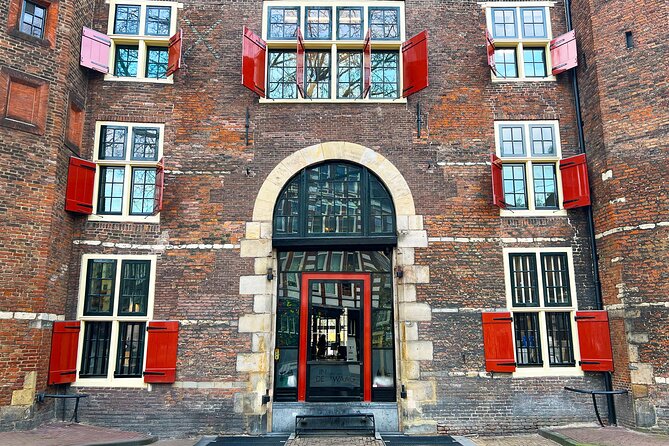
- Nieuwmarkt and De Waag, where guilds shaped a painter’s life
- Trippenhuis and patron portraits from the canal elite
- Zuiderkerk, Protestant Amsterdam, and Rembrandt’s family losses
- Rembrandt House Museum exterior views and the world at his doorstep
- Waterlooplein Market and Rembrandt’s cabinet of curiosities
- Staalstraat, guild pride, and The Syndics of the Clothmaker’s Guild
- Kloveniersburgwal and the commission behind The Night Watch
- Dam Square: Royal Palace, political art, and Elsje Christiaens
- Grachtengordel-West canals, House De Dolphijn, and Rembrandt’s civic figures
- Westerkerk burial, the Jordaan reality shift, and the end of the peak years
- Who this Rembrandt walking tour suits best
- Should you book this tour?
- FAQ
- What language is the tour offered in?
- How long is the Amsterdam Guided Walking Tour about Rembrandt?
- Is this a private tour?
- Where does the tour start and end?
- Are admission tickets included for the stops?
- What is included in the price?
- Is bottled water included?
- Are service animals allowed?
- Is it suitable if I use a walker or have trouble walking?
- What happens if weather is poor?
Key highlights to look for
- A private guide pacing that can match your interests instead of forcing a one-size route.
- Guild power in Nieuwmarkt, where Rembrandt’s painters’ guild world and the Surgeons’ Guild link to his famous subjects.
- Patronage at Trippenhuis, tying Rembrandt’s portraits to the Trip family and Amsterdam’s elite.
- Personal stakes at the Zuiderkerk and Westerkerk, including stories tied to his children and his unusual burial.
- Civic storytelling at Kloveniersburgwal, Dam Square, and the canal belt, where art meets politics and defense.
- A Rembrandt ending in the Jordaan, showing the shift after bankruptcy, not just the peak years.
Price, pacing, and what $119.47 really buys
At $119.47 per person for about 2 hours 30 minutes, this tour is best understood as a paid narrative service. You are not mostly buying access to indoor museums. You are buying a tight sequence of Rembrandt-related locations, explained in plain, human terms, with enough context to make the names and artworks click.
The pacing is designed for walking between key points, with short stops at each one. That matters because Amsterdam can be slow for visitors, with canals, corners, and crowds. A private guide helps because you can move at a comfortable speed for your group and spend more time where you actually care, like art commissions or religion.
One practical note that affects value: bottled water is not included. Amsterdam walks can warm up fast, and this route is long enough that you will feel it. If you want the smoothest experience, pack a bottle and comfortable shoes.
Other Rembrandt trails through Amsterdam:
- Amsterdam: Van Gogh & Rembrandt Captivating Experience Entry
★ 4.3 · 615 reviews - Rembrandts Experience Amsterdam Admission Ticket
★ 4.5 · 521 reviews - Rembrandt House Museum Amsterdam Entrance Ticket
★ 4.5 · 355 reviews
Nieuwmarkt and De Waag, where guilds shaped a painter’s life
Your tour starts at Nieuwmarkt, one of Amsterdam’s oldest squares, where the story begins with institutions. At the center is De Waag, a medieval gatehouse that became a weigh house and guild hall. The key idea here is that Rembrandt was not just a lone genius. He was a working professional tied to membership rules, meeting places, and client networks.
Your guide connects Saint Luke’s Guild to Rembrandt’s career. As an independent master, Rembrandt was required to be a member, and the tour explains how that would have put him inside the local art system, with meetings and connections that could translate into commissions.
You also get the Surgeons’ Guild angle. De Waag housed that guild too, and your guide links the setting to Rembrandt’s work known for the Anatomy Lesson of Dr. Nicolaes Tulp. Even if you have seen the painting before, it is a different experience to hear how guild buildings functioned as social hubs, not just backdrops for art.
Why this stop matters for you: it gives you a framework for understanding why Rembrandt painted specific subjects, with specific patrons, in specific city spaces.
Watch-out: this is a street-and-building talk. If you want long museum-style time, you may prefer a separate museum visit to go deeper on artworks. The walk gives context, not long viewing sessions.
Trippenhuis and patron portraits from the canal elite
Next comes Trippenhuis, a grand canal house built in 1660 for the wealthy Trip brothers, known as arms dealers and major figures of Amsterdam’s Golden Age. The building itself is an instant clue. Neoclassical ornament signals status, and your guide uses that to explain how money and influence shaped what artists could achieve.
Here’s the practical art connection: Rembrandt painted three members of the Trip family, and your guide places those portraits in the real-world context of patron relationships. The tour also frames the Trips beyond art collecting, in relation to the Eighty Years’ War and the Netherlands’ fight for sovereignty and religious freedom.
What I like about this stop’s angle: it refuses to treat patronage as background noise. You learn how influential families could help form the civic and economic fabric, and how Rembrandt’s art helped immortalize that legacy.
Possible drawback: if you are hoping to step inside the house or see original interiors, you will not. This is about seeing the exterior and letting the guide connect it to known portraits.
Zuiderkerk, Protestant Amsterdam, and Rembrandt’s family losses
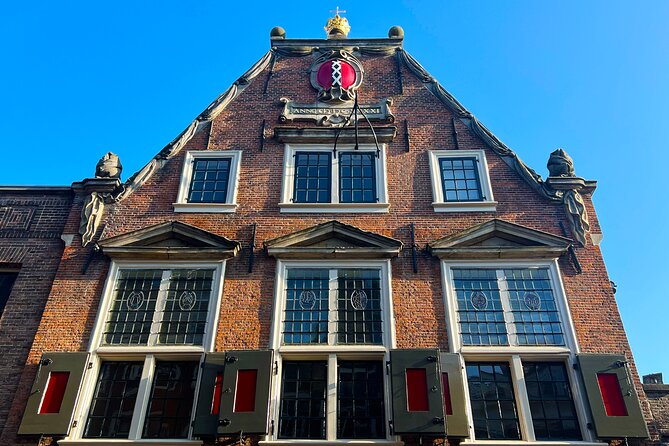
At Zuiderkerk (Southern Church), the tour shifts from city institutions to Rembrandt’s personal life. The church, designed by Hendrik de Keyser, is tied to the Reformation era and early Protestant architecture in Amsterdam.
Your guide explains that this was not just a church building. It represents cultural change during a time when the Netherlands was emerging as a sovereign nation after independence efforts. That political-religious context then connects to Rembrandt in a deeply human way: several of his children were buried here.
Standing outside, you get stories that move beyond art history trivia. You learn how faith shaped the period and how those influences can show up in Rembrandt’s wider world, not just in one painting.
Why this stop is powerful: Rembrandt is usually presented as a towering artist. Here, you get reminders that he was also a parent and a person living through loss.
What to consider: this part is reflective and story-driven. If you want nonstop art-science facts, you may find it slower. But it adds emotional weight to the rest of the walk.
More of the canal ring crossed on foot:


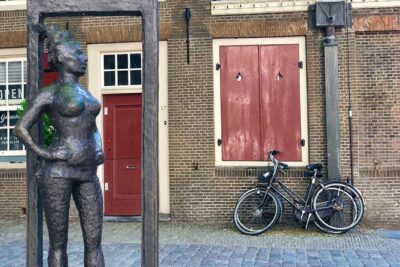

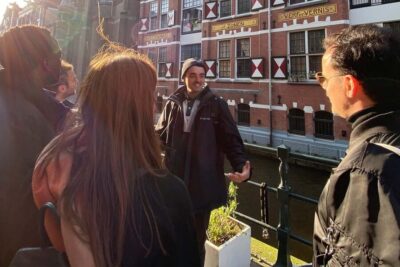
Rembrandt House Museum exterior views and the world at his doorstep
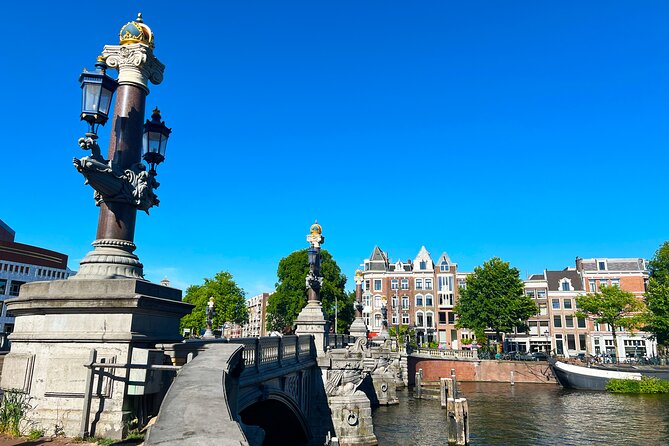
You then see the Rembrandt House Museum area, the canal house where he lived during the peak of his career. You do not go inside, but the exterior still communicates success and standing.
The tour explains what made the location so productive. The house sat in an upscale part of the Jewish Quarter and had a view toward the harbor. Goods arrived from far away, including spices, textiles, artworks, and other exotic items. Your guide makes a strong point here: the port put the world close enough for Rembrandt’s curiosity to do its job. That constant influx of objects, images, and materials helps explain why his work often feels detailed and textured.
Your guide also brings in an idea about models. Rembrandt is believed to have used local Jewish residents as models for historical and biblical figures. There is also mention of a small independent Black community nearby, which adds to the sense that this neighborhood held real diversity, not just polite postcards.
Value for you: even from the street, you understand why Rembrandt’s art imagination was fed by a real marketplace of people and things.
Practical note: since you are not entering, plan this as a “see and learn” moment, not a replacement for museum time.
Waterlooplein Market and Rembrandt’s cabinet of curiosities
Then you stroll through Waterlooplein Market, famous for flea-market finds in the Jewish Quarter near Rembrandt’s home. This stop is great for anyone who likes the craft side of art, where buying and collecting objects can be creative fuel.
Your guide connects Rembrandt to market behavior: he was known to frequent markets and auction spaces, searching for intriguing items to add to his cabinet of curiosities. The tour specifically points to the kind of collection he was drawn to, including exotic objects, antiques, and artworks.
The story gets more cautionary too. The same passion for collecting could lead to overspending, and your guide ties that to Rembrandt’s eventual bankruptcy. That turn makes the tour feel honest. Great art did not come from a trouble-free life.
What you can do with this stop: take the market atmosphere as an idea, then look around with a collector’s mindset. Even if you do not buy anything, it helps you understand the psychology behind the art.
Potential drawback: markets can be busy. The tour time here is short, so you likely will not have long browse time. Use the time to listen first, then decide if you want to explore on your own.
Staalstraat, guild pride, and The Syndics of the Clothmaker’s Guild
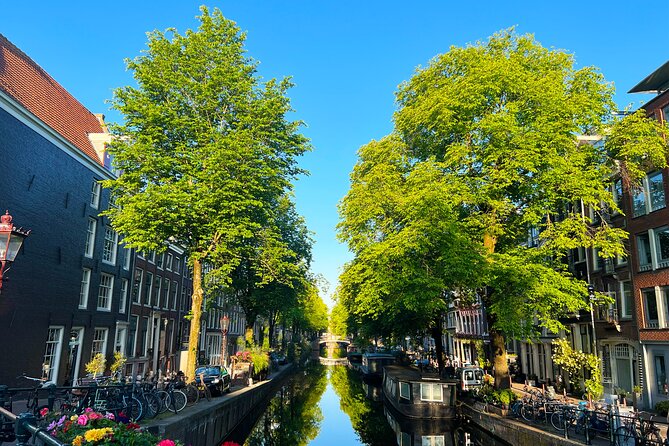
At Staalstraat, you learn how Rembrandt’s commissions were tied to the pride and prosperity of Amsterdam’s textile industry. The tour highlights a building linked to the Clothmaker’s Guild officials, who commissioned Rembrandt’s well-known group portrait, The Syndics of the Clothmaker’s Guild.
This is not treated as a distant art fact. Your guide explains how the painting worked as an ornament for the guild office, meaning it functioned as branding for the group. You see how guild culture blended civic identity, business status, and art display.
There is also a visual bonus. From roughly the middle of Staalstraat, the tour includes an iconic view of Zuiderkerk, later famously painted by Monet. That gives you a useful bridge from Golden Age Amsterdam to later art traditions, without turning the walk into a Monet-only story.
Why this stop works: it shows you Rembrandt was part of a broader system of public self-image.
Watch-out: the street viewing is brief. If you want to spend time on the surrounding neighborhood streets, build that into your plan after the tour ends.
Kloveniersburgwal and the commission behind The Night Watch
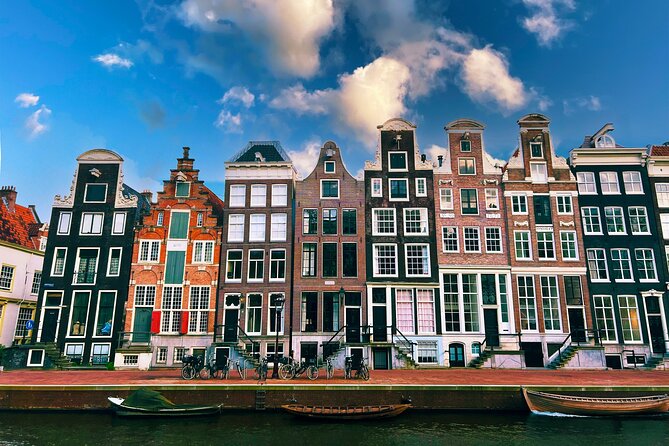
Next is Kloveniersburgwal, a canal tied to Amsterdam’s medieval city wall and civic defense. The wall itself no longer exists, and the guardsmen premises were destroyed by fire long ago, but there is a commemorative plaque marking the site.
Your guide brings in the civic guardsmen, responsible for protecting the city during both the Middle Ages and the Dutch Golden Age. Here is the Rembrandt link that most people recognize: the guardsmen commissioned Rembrandt’s The Night Watch. Your guide explains the original placement too, noting it hung in the dining room of the guild hall near this area.
This is one of the strongest “art meets symbolism” moments. You get a story behind the commission and how defense, status, and group identity appear in the artwork’s meaning.
Why it matters: it helps you see The Night Watch as more than a famous image. It becomes a document of civic power.
Possible drawback: if you are already deeply familiar with Night Watch symbolism, you may want more time for questions. The tour is timed, so bring your curiosity and ask as you go.
Dam Square: Royal Palace, political art, and Elsje Christiaens
You arrive at Dam Square, the historic heart of Amsterdam and a major location in Rembrandt’s world. The grand building here is now the Royal Palace, formerly the Town Hall. Your guide frames it as a symbol of Amsterdam’s civic pride during the Dutch Golden Age.
This is where the tour gets political. Rembrandt was commissioned to paint The Conspiracy of Claudius Civilis for this building, intended to celebrate Dutch resistance and independence. Your guide also notes that the painting was later removed, but the commission remains one of the clearest examples of how art served public messaging.
Then comes one of the most human stories of the entire walk: public executions, including that of Elsje Christiaens, a young Danish woman. Your guide describes how Rembrandt sketched her lifeless body shortly after her execution. It is a hard story, told with care, and it explains why this tour focuses on Rembrandt’s gaze, his attention, and his ability to make distant events feel personal.
Why this stop is valuable: it adds moral weight and shows that Golden Age Amsterdam had violence and spectacle alongside wealth and art.
Consideration: Dam Square can feel hectic. The stop is brief, so if you want deeper reflection, do that after the tour with a little personal time nearby.
Grachtengordel-West canals, House De Dolphijn, and Rembrandt’s civic figures
Now you move through the Grachtengordel area, part of the UNESCO-listed canal belt. Your guide points out the merchant-house grandeur and explains how these canals express Amsterdam’s trading power and civic ambitions during the 17th century.
You also get a named connection to The Night Watch. House De Dolphijn is highlighted as a residence once home to Frans Banning Cocq, the captain of the civic guards and the central figure in The Night Watch. Your guide connects this to a key idea: Rembrandt’s portraits did not just record faces. They also shaped the public image of civic roles.
This section is great if you like architecture and want the “why” behind the shapes, not just pretty photos. You understand how the canal district acted like a stage for social position.
What to expect: longer walking time than the church stops, with outward-facing views. It is photo-friendly, but it is also a lesson in how to read a city.
Watch-out: standing still for photos can eat time. If you have limited attention spans, focus on the guide’s key points, then take a quick shot when it makes sense.
Westerkerk burial, the Jordaan reality shift, and the end of the peak years
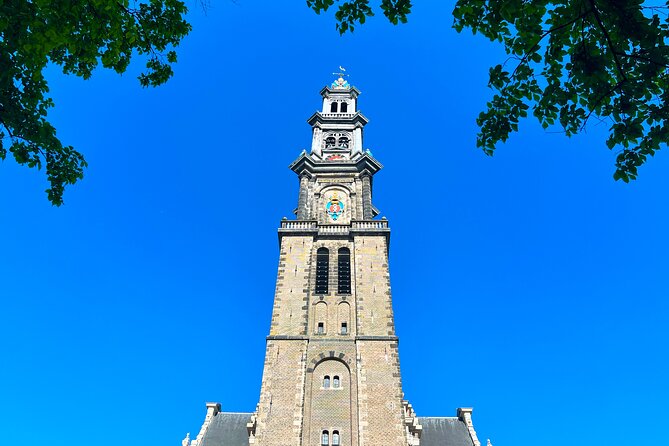
The tour concludes at Westerkerk, one of Amsterdam’s iconic Protestant churches and Rembrandt’s final resting place. This ending is emotional even if you already know the famous name.
Your guide explains the contrast: Rembrandt died in poverty in 1669, yet he was buried inside the church. Burial within church space was usually for the wealthy or well-connected. The tour treats this as a sign that Rembrandt’s reputation still carried weight, even late in life. The exact location of his grave has been lost over time, so the ending becomes about the story, not finding a specific marker.
From there, the walk continues into the Jordaan, showing what changed after bankruptcy in 1656. Rembrandt moved out of the upscale Jewish Quarter to this working-class district on Amsterdam’s western edge. Your guide describes the Jordaan at the time as crowded, with small-scale entrepreneurship, factories, and craft workshops, plus real poverty.
This is where the tour does something smart: it does not freeze Rembrandt as only a peak-career legend. It shows him still working, staying active as an artist even when life got harder. Narrow streets and canal views help you imagine daily routine, not just artistic triumph.
Why this ending is worth it: it balances success with decline, and it ties art to economic reality.
Who this Rembrandt walking tour suits best
This is a strong fit if you:
- love art stories tied to real locations, not just artwork descriptions
- want a private guide who can keep the route focused on Rembrandt
- like walking enough to handle about 2.5 hours outdoors
- are planning a first or second Amsterdam visit and want a fast route through the Golden Age city structure
It may be less ideal if you:
- need a walker or mobility aids, since mobility aids are not available and it is not recommended for walkers
- have difficulty standing and walking for about 2.5 hours
- want long indoor museum time, since several key points are exterior viewing and storytelling
Should you book this tour?
Yes, if you want a Rembrandt-themed route that connects art, guilds, patrons, religion, and politics into one walk. The best part is the private, story-led format, with guides like Anna bringing humor and turning names into meaning. The walking time is manageable for most people, and the free admission notes at the stops help keep costs predictable since bottled water is the only obvious extra you might want.
If your top priority is seeing Rembrandt works inside museums for long stretches, pair this with a museum visit afterward. But as an on-the-street way to understand why Rembrandt’s city life mattered, this tour is the kind of experience that makes Amsterdam feel personal, not just historical.
FAQ
What language is the tour offered in?
The tour is offered in English.
How long is the Amsterdam Guided Walking Tour about Rembrandt?
It is approximately 2 hours 30 minutes.
Is this a private tour?
Yes. It is a private tour/activity, so only your group participates.
Where does the tour start and end?
It starts at Tilburgse Benkskes Plein, Nieuwmarkt, 1011 JV Amsterdam, Netherlands, and ends at the Westerkerk, Prinsengracht 279, 1016 DL Amsterdam.
Are admission tickets included for the stops?
Admission is listed as free for the stops on this tour.
What is included in the price?
The private guide is included, and you also receive a mobile ticket.
Is bottled water included?
No. Bottled water is not included.
Are service animals allowed?
Yes, service animals are allowed.
Is it suitable if I use a walker or have trouble walking?
It is not recommended for participants who have trouble walking and standing for about 2.5 hours, and mobility aids are not available. It is also not recommended for participants who use a walker.
What happens if weather is poor?
The experience requires good weather. If it is canceled due to poor weather, you will be offered a different date or a full refund.
Newest on the canal ring
- Amsterdam Bike Food Tour with Private Guide★ 5.0 · 1 review
- Amsterdam: Rijksmuseum Private Tour with an Art Historian★ 5.0 · 1 review
- Happy B-day Amsterdam! Guided Tour with a History Buff★ 5.0 · 1 review
- Local Foodie Adventure in Amsterdam★ 5.0 · 1 review
- Private Photo Shoot in Amsterdam with a Professional Photographer★ 5.0 · 1 review
- Private day trip to Giethoorn and the Enclosing Dike★ 5.0 · 1 review
- Private Sightseeing Tour to Giethoorn from Amsterdam incl. canal cruise★ 5.0 · 1 review
Rembrandt Tours, compared.
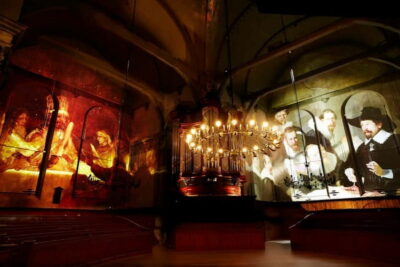
Van Gogh & Rembrandt Captivating Experience Entry
Read our review →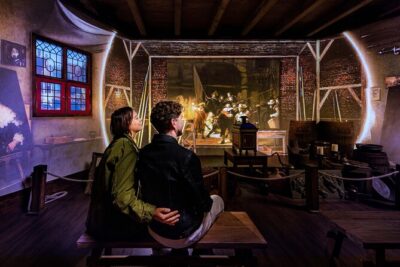
Rembrandts Experience Amsterdam Admission Ticket
Read our review →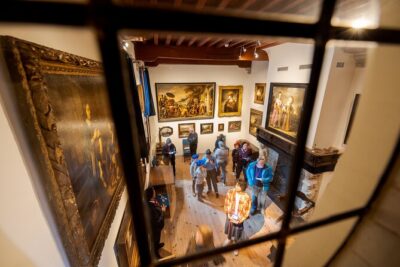
Rembrandt House Museum Amsterdam Entrance Ticket
Read our review →
Rembrandts Immersive Experience Admission Ticket
Read our review →
Private Rijksmuseum Tour- The Dutch Masters, Rembrandt & Vermeer
Read our review →
Amsterdam Cocktail Workshop: Shake & Sip at Rembrandtplein
Read our review →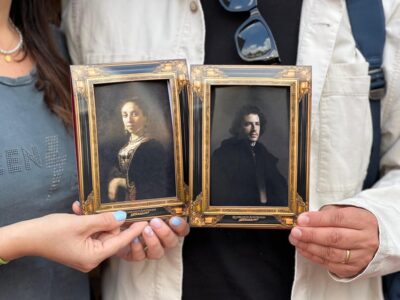
Van Gogh or Rembrandt AI Portrait Photo Souvenir
Read our review →Browse the lists this tour appears in