
Reviewed · CITY WALKING TOURS
Amsterdam: Haunted History and Ghost Walking Tour
Amsterdam turns spooky when you follow the stories. This 2-hour haunted history walk connects witch trials and medical oddities to real places like Dam Square and the Nieuwe Kerk.
What I love most is the guide-driven storytelling, often with real humor, and the fact that you’re moving through the old center on foot. You’ll also get clear context at each stop, so the scary parts make sense, not just shock you.
One thing to consider: the tone can feel history first, ghosts second, especially on earlier departures. If you want maximum spook, you may prefer a later time slot.
In This Review
- Key Points I’d Use to Plan Your Night
- Where the Tour Really Starts: Dam Square and the “right” kind of eerie
- Nieuwe Kerk: Crypts, vaults, and why royal ceremonies still echo
- Spinhuis: A women’s prison you feel in your chest
- Begijnhof: The courtyard looks calm, the story doesn’t
- Blood Street: Cobblestones that carry violence
- The Waag’s Purgatory: Enlightenment science with a supernatural aftertaste
- How It Feels in Real Life: timing, pace, and weather reality
- Price and Value: why $30 can work out really well here
- Who Should Book This Tour (and who might want a different one)
- Should You Book This Haunted History and Ghost Walking Tour?
- FAQ
- Where do I meet for the tour?
- How long is the Amsterdam haunted history walking tour?
- Is the tour in English?
- What is included in the price?
- Are food and drinks included?
- What places will we visit during the walk?
- Is the tour wheelchair accessible?
- Can I get a full refund if I cancel?
- Is there a reserve now and pay later option?
Key Points I’d Use to Plan Your Night
- Meet at Dam Square by Hotel Krasnopolsky so you start right in the thick of Amsterdam’s center.
- Nieuwe Kerk stop pairs ceremonies with crypt-and-vault stories, including what notable figures left behind.
- Spinhuis former women’s prison brings the mood down fast, with sorrow-focused, emotional tales.
- Begijnhof courtyard is quiet on the surface, but your guide’s nun story adds a haunting edge.
- Blood Street is the real “walk-in-the-story” moment, where violence is linked to the cobblestones under your feet.
- The Waag’s Purgatory ties ghosts to Enlightenment science, including dissection-era lore.
Where the Tour Really Starts: Dam Square and the “right” kind of eerie
This tour begins at Dam Square, in front of Hotel Krasnopolsky, behind the monument. It’s a smart start point. You’re already in the center, so the first few minutes feel like you’re stepping into a different Amsterdam than the one people usually rush through for photos.
Dam Square also sets the tone. The stories move from public power and religious ceremony toward the grim institutions that sat nearby in earlier centuries. That matters, because the tour’s best moments come when the guide links place to plot, not just place to creepiness.
I like that you get going quickly. With only a 2-hour time window, there’s little “wandering and waiting.” You start hearing the spooky past early, then keep moving so the mood doesn’t evaporate.
More of the canal ring crossed on foot:
- Amsterdam Anne Frank: Small-Group Walking Tour & Local Guide
★ 4.8 · 12,789 reviews - Anne Frank’s Story – Guided Walking Tour through Amsterdam
★ 5.0 · 11,619 reviews - Absolutely Amsterdam – the Essential Introductory Walking Tour
★ 5.0 · 3,629 reviews
Nieuwe Kerk: Crypts, vaults, and why royal ceremonies still echo
Your first key stop is Nieuwe Kerk. You’ll hear how royal ceremonies once played out here, and how the building’s deeper spaces connect to quiet, permanent resting places. The tour leans into the idea that even when the public parts of a church feel official and polished, the story doesn’t stop at the doors.
You can expect your guide to talk about crypts and vaults and what’s meant by “eternal slumber” for notable figures. Even if you’re not a true believer in ghosts, this stop works because it’s about memory: the way stone holds history, and how a place keeps its reputation long after the people are gone.
Practical note: churches can have different lighting and surfaces than the streets outside. Wear footwear you trust on flat stone and allow a second to adjust your eyes before your guide gets into the details.
Spinhuis: A women’s prison you feel in your chest
As dusk comes in, the tour heads for the heart of the city and takes a darker turn at Spinhuis, a former women’s prison. This is the moment where the “ghost walk” label starts to feel emotionally earned. The stories focus on sorrow and despair, and the setting does a lot of the heavy lifting.
Your guide paints a picture of confinement and what that meant for women caught in the wrong system. If you’re expecting lots of dramatic paranormal claims, you might notice the tour plays it differently. The energy is more about the weight of injustice and suffering tied to specific locations.
This stop also benefits from a strong guide. Names like Sunil and Duncan show up again and again in recent departures, and their approach tends to mix clear historical framing with humor in the lighter stretches, then switch gears when the story turns serious. You stay engaged because you’re not just hearing one grim tale. You’re learning how Amsterdam’s institutions worked, then seeing where those mechanisms still echo.
Begijnhof: The courtyard looks calm, the story doesn’t
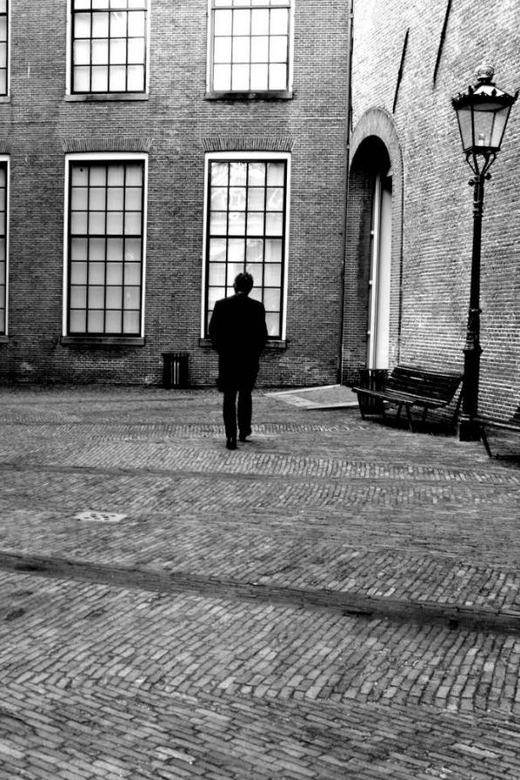
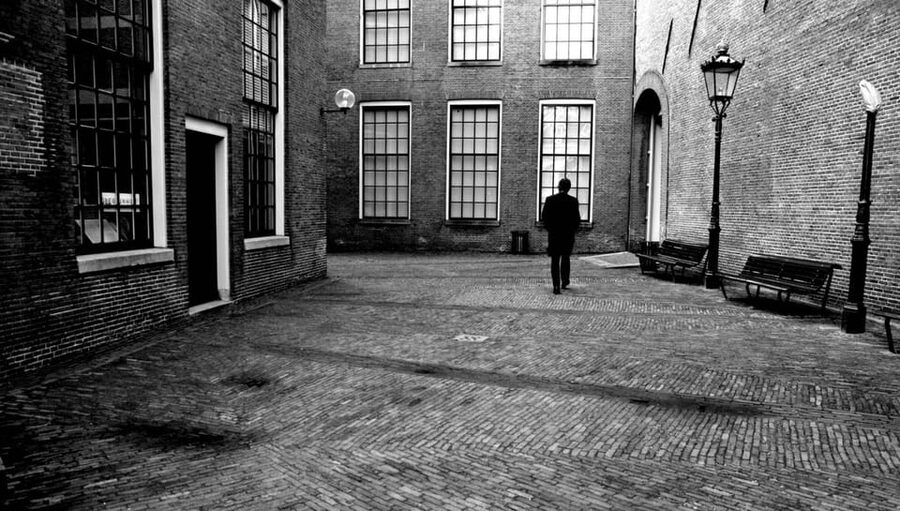
Next is Begijnhof, a tranquil courtyard. That contrast is the point. The space itself feels peaceful, and your guide uses that calm to highlight a tragic tale: a nun condemned to wander in silence for breaking her vows.
The haunting angle here comes from restraint. Instead of constant spectacle, you get the sense of a presence implied through punishment and secrecy. The idea of “faint echoes of footsteps” is more about atmosphere than effects, and I actually think that makes the story more believable. You’re listening closely, and you’re watching the courtyard as the narrative lands.
Begijnhof also gives your legs a small pause from the busiest streets. It’s a nice rhythm shift: grim, quiet, then grim again.
If it’s rainy, keep an eye on how the guide adapts. Some guides use visuals like older photos, paintings, or newspaper clippings on an iPad to help you picture what you cannot see today. That can add a lot to this stop, since courts and courtyards are easy to misread without a story lens.
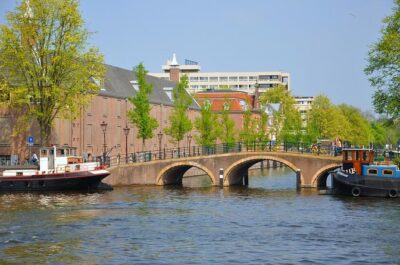
More of the Golden Age still standing:



Blood Street: Cobblestones that carry violence
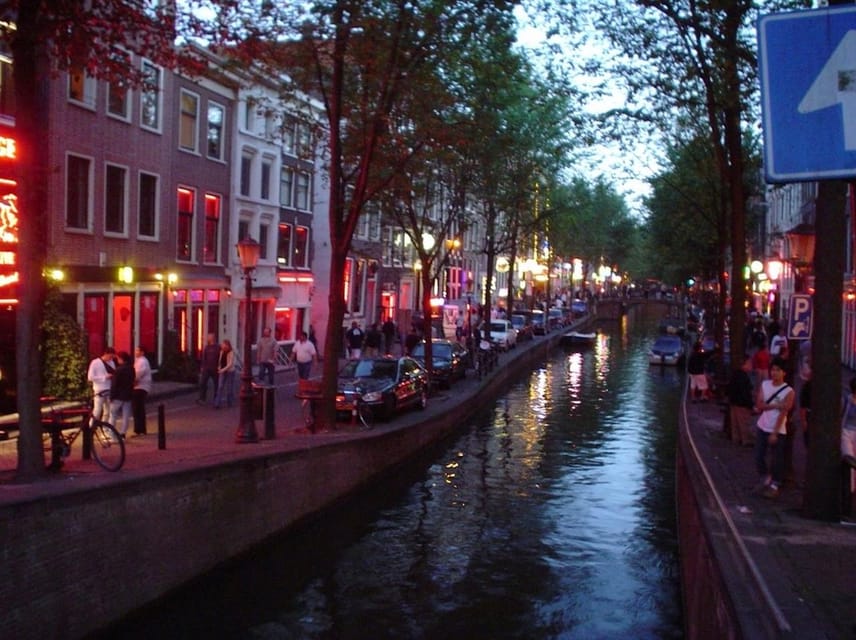
Then the tour heads to Blood Street, and the mood changes again. Blood Street is famous in this kind of storytelling for a reason: your guide links centuries of violence to the narrow lane and the cobblestones beneath you.
This is one of the tour’s most memorable “walk through the plot” moments. You’re not just hearing about crimes in the abstract. You’re moving along the corridor where those events would have felt immediate, and you can picture how fast life could turn from ordinary to dangerous.
The tour also tends to keep things grounded in how Amsterdam functioned. So the violence isn’t just random horror. It’s tied to social breakdown, institutions, and the city’s rough edges.
If you’re someone who likes a story that’s scary but makes historical sense, you’ll probably rank Blood Street as a top stop.
The Waag’s Purgatory: Enlightenment science with a supernatural aftertaste
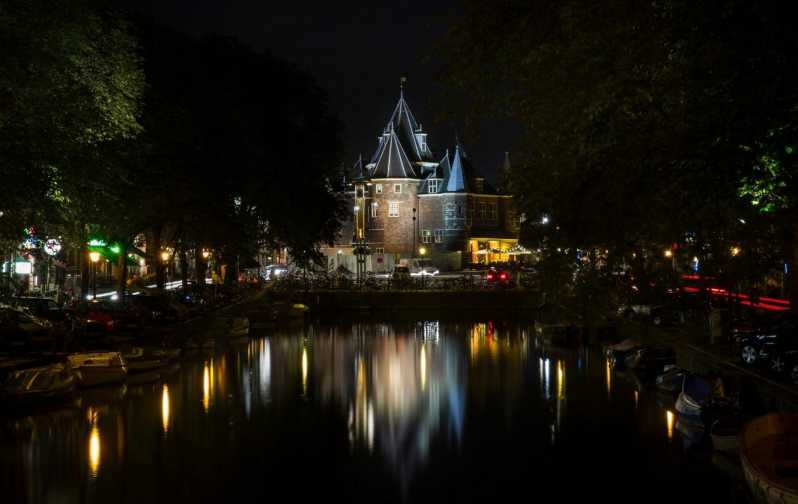
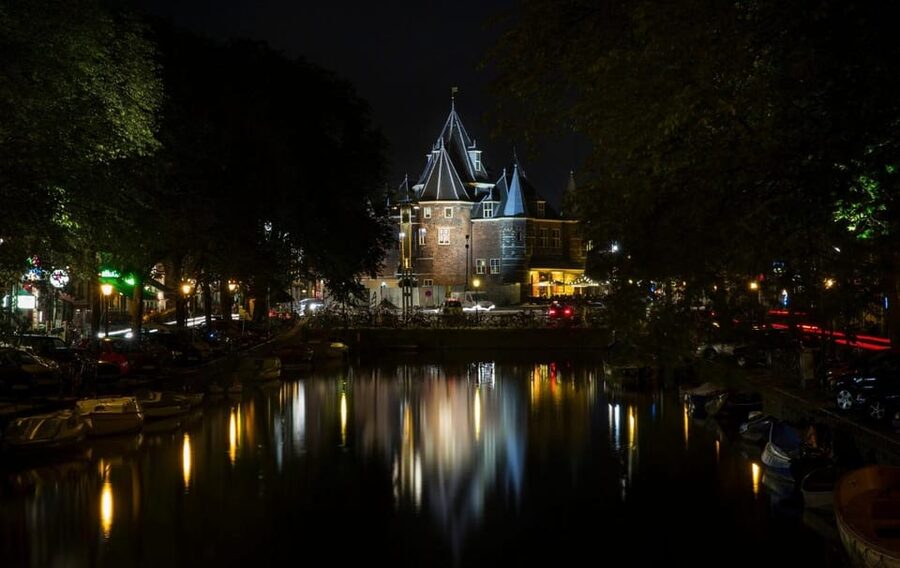
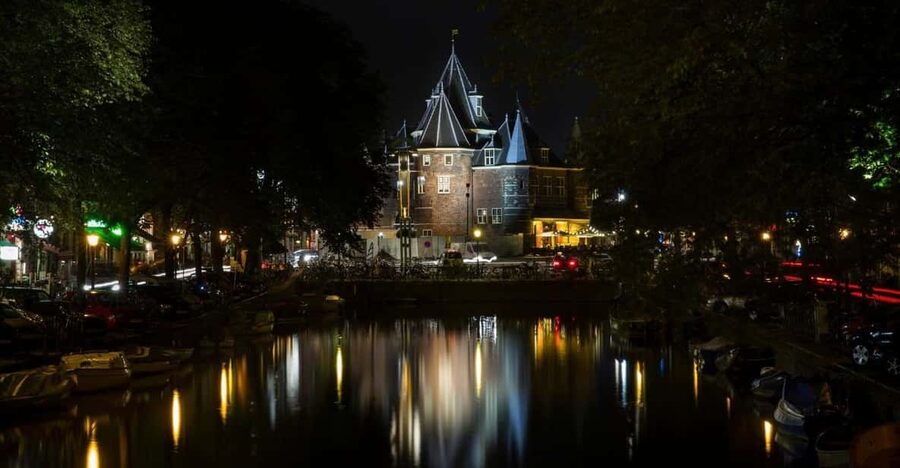
Your final stop is the Purgatory of the Waag. Here the tour shifts from religion and prisons to the Age of Enlightenment and scientific curiosity. Your guide connects the eerie legend of what happened inside its walls with the restless souls said to linger.
The story centers on dissection-era lore, which can land oddly at first if you came for pure ghost drama. But that mix is exactly why this tour feels more than a repeat of generic hauntings. Amsterdam’s darker past isn’t only about witches and prisons. It’s also about how people tried to explain the world, even when the methods were brutal.
This ending works because it reframes what you’ve learned. Earlier you saw places of confinement and punishment. Now you see a place tied to learning, but with ghostly consequences. The result is a final stop that feels like a warning about curiosity without compassion, whether you treat it as legend or moral history.
How It Feels in Real Life: timing, pace, and weather reality
The tour runs for 2 hours and is a walking tour. That matters because Amsterdam walking can be deceptively easy during sunny weather, then miserable when it’s cold and wet. Reviews include plenty of rain and cold remarks, which tells me to plan like you’ll be outside longer than your body wants.
Bring layers. A warm outer layer and shoes with traction help a lot, especially around older stone and wet cobbles. Also, expect the group to move at a steady pace between stops. You’ll hear plenty of story, but you won’t be standing around for long.
Language is English with a live guide, so you’ll get the explanations in full sentences, not just quick facts. Wheelchair accessible is listed, which is helpful if you need a route that works for limited mobility. Still, it’s a city walking experience, so it’s wise to think about uneven streets and cobblestones when planning your comfort.
Price and Value: why $30 can work out really well here
At $30 per person, this tour is priced like a standard city walking experience, not like a premium theater production. The value comes from two things you actually feel during the walk.
First, you get a guided story in multiple locations. That’s harder to replicate on your own at night because many of these sites are not the first places you’ll stumble into while doing the usual canals-and-museums route.
Second, you get a guide who usually connects the dots between buildings and Amsterdam’s evolution. In recent departures, guide names like Sunil, Duncan, Jan, Julia, Lola, and Martina show up, and the recurring pattern is clear: humor and strong storytelling early, then heavier tone when the sites call for it. If you like history explained through real walls and real streets, you’re paying for that translation.
One more value point: there’s no food included. That can be good if you already planned dinner. It also means you should eat beforehand, especially if you’re going after work or during a damp evening.
Who Should Book This Tour (and who might want a different one)
This tour is a strong match if you want:
- A history-forward ghost walk that uses places like Spinhuis and the Begijnhof to make the past feel specific
- A guided night plan that helps you see parts of central Amsterdam you might miss on your own
- A mix of institutions, legends, and explanations, not just one scary story repeated in different words
It may be less perfect if you want:
- A heavy paranormal experience with lots of spooky effects. The tour can feel more like dark cultural history than nonstop ghost activity.
If you’re with friends, it’s also a good shared experience. The walk naturally gives you conversation topics at each stop, and the guide’s humor helps keep the mood from getting too heavy too fast.
Should You Book This Haunted History and Ghost Walking Tour?
Yes, I think you should book it if your idea of fun is history you can walk through. Dam Square, Nieuwe Kerk, Spinhuis, Begijnhof, Blood Street, and the Waag all tell different slices of Amsterdam’s darker side, and the best part is how the guide connects those slices into a single night’s story.
Skip it only if you’re mainly chasing jumpy ghost theatrics. Here, the spook comes from atmosphere and meaning, not props. And if you’re worried about the tone, pick a departure time that suits your preference for scare level, since an earlier slot can feel more history-focused.
If you want a practical, memorable evening that also gives you context for the city you’re visiting, this is a solid value at $30.
FAQ
Where do I meet for the tour?
Meet in front of the Hotel Krasnopolsky, behind the monument at Dam Square, where your tour guide will be waiting.
How long is the Amsterdam haunted history walking tour?
The tour lasts 2 hours.
Is the tour in English?
Yes, the live tour guide speaks English.
What is included in the price?
You get a walking tour and a guide and storyteller.
Are food and drinks included?
No. Food and drinks are not included.
What places will we visit during the walk?
The tour includes stops such as Dam Square, the Nieuwe Kerk, Spinhuis, Begijnhof, Blood Street, and the Purgatory of the Waag.
Is the tour wheelchair accessible?
Yes, wheelchair accessible is listed.
Can I get a full refund if I cancel?
Yes. Free cancellation is available up to 24 hours in advance for a full refund.
Is there a reserve now and pay later option?
Yes. You can reserve now and pay later, so you can book your spot without paying right away.
Newest on the canal ring
- Amsterdam Bike Food Tour with Private Guide★ 5.0 · 1 review
- Amsterdam: Rijksmuseum Private Tour with an Art Historian★ 5.0 · 1 review
- Happy B-day Amsterdam! Guided Tour with a History Buff★ 5.0 · 1 review
- Local Foodie Adventure in Amsterdam★ 5.0 · 1 review
- Private Photo Shoot in Amsterdam with a Professional Photographer★ 5.0 · 1 review
- Private day trip to Giethoorn and the Enclosing Dike★ 5.0 · 1 review
- Private Sightseeing Tour to Giethoorn from Amsterdam incl. canal cruise★ 5.0 · 1 review
City Walking Tours, compared.

Amsterdam Anne Frank: Small-Group Walking Tour & Local Guide
Read our review →
Anne Frank’s Story – Guided Walking Tour through Amsterdam
Read our review →
Absolutely Amsterdam – the Essential Introductory Walking Tour
Read our review →
Anne Frank Guided Walking Tour in DE/EN/IT/ES
Read our review →

Anne Frank Walking Tour Amsterdam Including Jewish Cultural Quarter
Read our review →Browse the lists this tour appears in