
Reviewed · MUSEUMS
Amsterdam: Houseboat Museum Entry Ticket
A houseboat museum feels different fast. You step aboard the Hendrika Maria and see how a working 1914 cargo ship became a home in 1967, with an interior that still looks like the 1970s.
I particularly like the mix of ship details and everyday living, especially the practical sailing gear like the mast and leeboard. You also get an interactive visit style that makes the history easier to picture than a plain display.
The main thing to consider is space and layout. This is a real houseboat, with steep stairs and limited room, so it is not ideal if you hate tight spaces or have mobility concerns.
In This Review
- Key highlights you will actually notice
- Stepping aboard the Hendrika Maria in Amsterdam’s houseboat world
- The 1970s interior: small rooms, big atmosphere
- Learning life as a freight barge, then a home
- The walking experience: interactive, guided-by-explanation
- Photos, stairs, and what to expect once you arrive
- Is it worth $12? Value depends on how you like museums
- Who this houseboat museum ticket suits best
- Should you book this Houseboat Museum entry ticket?
- FAQ
- What boat is the Houseboat Museum in Amsterdam located on?
- How long does the visit take?
- What is included with my ticket?
- Is food and drink included?
- Is flash photography allowed inside?
- What languages are available for the host or greeter?
- Is the museum accessible for everyone?
- Can I cancel or pay later?
Key highlights you will actually notice
- Hendrika Maria, a 1914 freight ship turned home in 1967
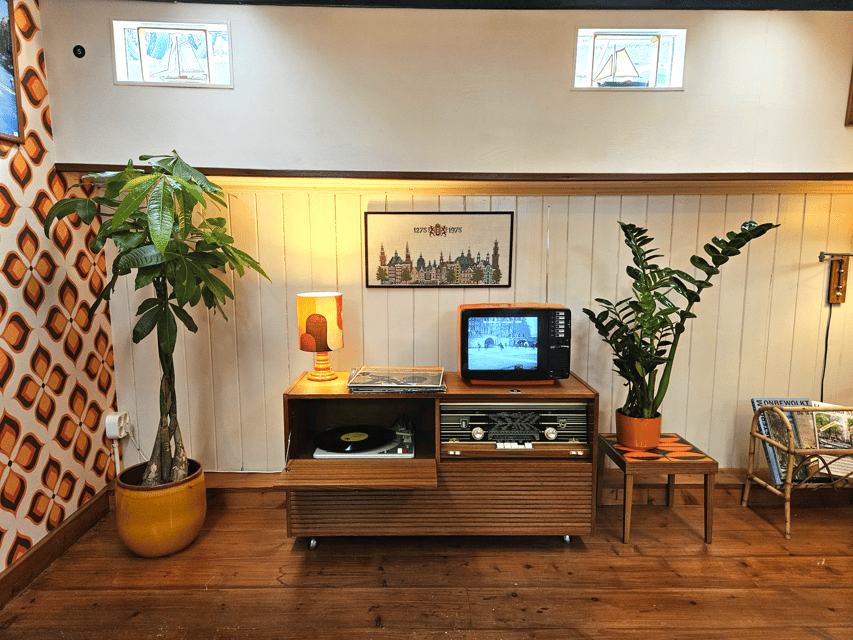
- Original 1970s interior, including throwback colors like orange, yellow, and brown
- Practical sailing hardware, like the mast and leeboard, tied to old routes to Scandinavia
- A family of 4’s lived-in story, first as a freight barge, later as a houseboat
- Small-scale museum experience, with commentary and an easy-to-follow walk through
- Photo-friendly, flash-free, so you can capture the ship atmosphere without disturbing others
Stepping aboard the Hendrika Maria in Amsterdam’s houseboat world
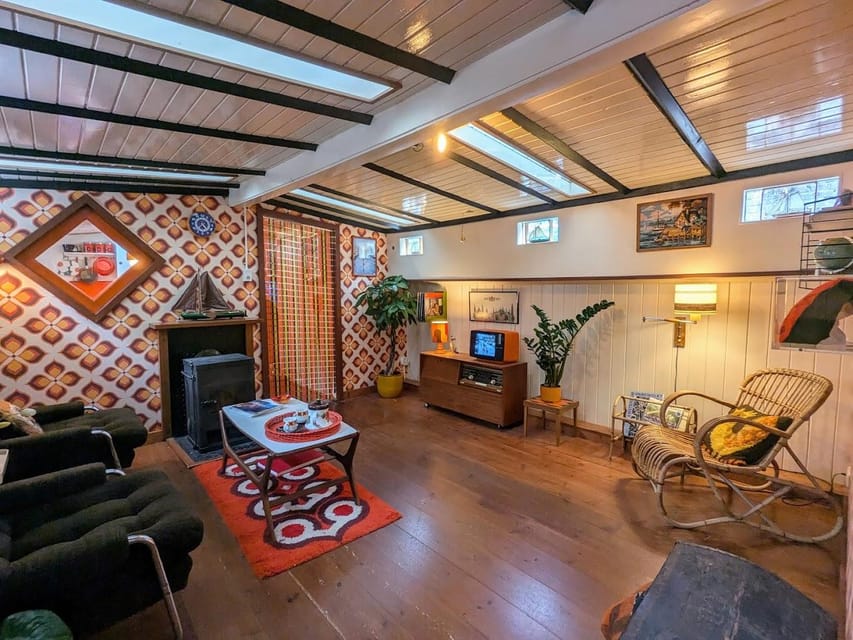
This is one of those Amsterdam experiences where the setting does half the work. The Houseboat Museum is on the Hendrika Maria, a 1914 cargo ship. Then, in 1967, it was converted into a residential houseboat, which means you are not just looking at history, you are standing inside it.
What makes it interesting is how the boat explains itself. The shape, the layout, and the small spaces all hint at a working vessel. And once you see the interior from the 1970s, the contrast becomes part of the story.
Amsterdam has plenty of floating homes, but this is the only Houseboat Museum in the city, so it has a focused mission. You come in for one thing, and that is learning what life felt like aboard this ship, before it became a decorative float on the canals.
More Amsterdam collections worth the queue:
- Amsterdam: Red Light Secrets Museum Entry Ticket
★ 4.2 · 5,722 reviews - Amsterdam’s Weirdest Museum: Ripley’s Believe It or Not!
★ 4.5 · 4,920 reviews - Amsterdam: Van Gogh Museum Ticket and City Canal Cruise
★ 4.6 · 3,899 reviews
The 1970s interior: small rooms, big atmosphere
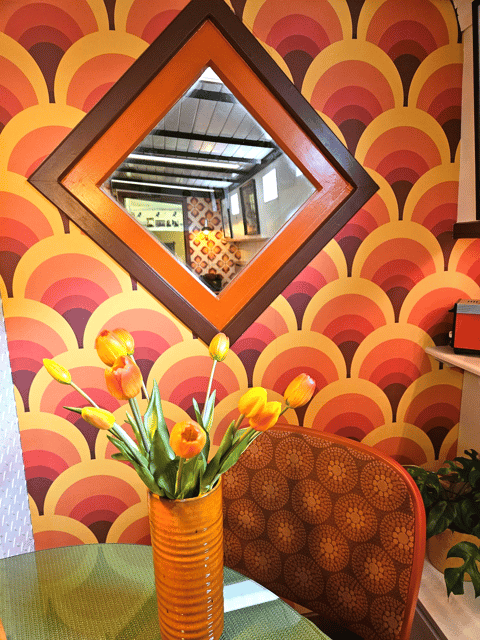
The museum’s interior is the star attraction. It is still original from the period when it started functioning as a regular home, and you will immediately notice the throwback palette: orange, yellow, and brown. It sounds like a detail, but it matters because it changes how you read the space.
On a ship, color can make a huge difference. In a floating home, those warmer tones help the cramped areas feel more livable, not just cramped. That is part of the fun here, because you are seeing a houseboat as a real lived-in choice, not as a staged museum set.
Size is also part of the experience. The visit is designed to guide you through the boat efficiently, and one review noted it can feel compact, with about 15 to 20 minutes if you follow an audio guide around. Another comment claims it can feel even shorter if you move fast. Translation for you: this is not a marathon museum. Plan for a quick, focused visit, then decide if you want to slow down and linger.
Learning life as a freight barge, then a home
The museum’s story runs on a simple idea: the same hull lived two lives. First, it was a freight barge carrying goods. Later, it became a houseboat where a family of 4 lived.
That family-of-four angle is what makes the history practical. You are not just learning dates. You are trying to picture how daily routines fit on a ship that was never built as a spacious apartment. How would you store things? Where would you spend time? What would you do with space once the boat stopped being a working cargo route and started being a home?
The museum also highlights the boat’s sailing background. It includes an original sailing mast and a leeboard. These were practical tools for the kind of sailing used back then, including routes to Scandinavian countries for transportation. You do not need to be a sailor to get it. The physical presence of the gear helps you understand why old freight travel depended on real, functional equipment.
The walking experience: interactive, guided-by-explanation
Even though you pay for an entry ticket, you are not left alone with a brochure. The visit is interactive, and you get plenty of knowledge shared during your time on board. Depending on the moment and language, you may hear an explanation while you move through the spaces, which helps you connect what you see with what you are learning.
There is also audio-guided style mentioned by visitors, and that can be especially useful on a boat like this. When rooms are tight and passageways turn quickly, audio helps you keep the story straight. One person called out the visit as following the audio guide for the loop around the roughly 80 square meters of interior space.
My practical advice: take the “slow down at the important rooms” approach. Don’t rush every corner just to tick it off. If you like this kind of compact museum, you will get more value by spending extra time where the ship features and the living features meet.
Some other canal-ring outings to set against this





Photos, stairs, and what to expect once you arrive
This museum is inside a real houseboat. That means the experience comes with real-world tradeoffs.
First, photography is allowed, but flash photography is not permitted inside. So if you want pictures of the color-filled interior, bring a camera that does well in lower light. Or plan to use your phone without flash and just stabilize your shot.
Second, the stairs are steep. That is not a small warning. If you are sensitive to stairs or struggle with balance, you may find the layout tough. The museum is also limited in space, so even if you are fine on stairs, you might feel the squeeze during busy moments.
Finally, expect a throwback vibe. The interior design being from the 1970s is not subtle. Reviews specifically call out the restored feel of that period, and you should go in knowing the colors and textures are part of the point. It is a snapshot of how this boat was lived in, not a neutral, modern museum interior.
Is it worth $12? Value depends on how you like museums
At about $12 per person, this ticket sits in the low-to-mid range for a city museum. But the value question depends on your expectations.
Here is the honest math. One review said it is expensive for what it is, claiming you can see it all in about 5 minutes. Another said it takes around 15 to 20 minutes when following the audio guide around an interior of about 80 square meters. That spread tells you the main variable is pacing and how much you read, listen, and look.
If you like maritime details, ship-to-home conversion stories, and interiors that feel like someone’s actual place, you will likely feel the ticket is fair. If you mainly want large exhibits, lots of rooms, and a long, wander-and-discover day, this might feel too short.
My take: for $12, it is a reasonable buy if you view it as a focused stop in a broader Amsterdam day. It is also a strong choice if you want something different from the standard canal-and-photos routine. The boat is the exhibit, and that kind of “inside the object” experience tends to land well when you are in the right mood.
Who this houseboat museum ticket suits best
This is a great fit if you:
- Like practical history, where you can imagine the daily life behind the facts
- Enjoy architectural or design details, especially how a home adapts to a ship hull
- Want a short, memorable stop that is different from the big museum circuits
It may not be your best match if:
- You have trouble with steep stairs or hate tight, enclosed spaces
- You want a long museum visit with many rooms and lots of content per ticket
It can work well for older kids who are curious about how boats and homes function. It is less comfortable for families with very young children who need a lot of space to move.
Should you book this Houseboat Museum entry ticket?
If you want a compact, hands-on history stop in Amsterdam, I think you should book it. The boat itself is the draw: a 1914 cargo ship that became a house in 1967, with an interior that preserves the look of the 1970s. Add in the practical sailing details like the mast and leeboard, and you get a story that feels real.
I would only skip it if stairs and cramped spaces would make the visit miserable for you, or if you know you do not enjoy short museums where the experience is concentrated in one small structure. For everyone else, it is a thoughtful, unique ticket that gives you a rare look at floating domestic life.
FAQ
What boat is the Houseboat Museum in Amsterdam located on?
It is located on the Hendrika Maria, a 1914 cargo ship that was converted into a residential houseboat in 1967.
How long does the visit take?
The visit duration is listed as 1 day, and people’s experience described it as short, with one comment estimating about 5 minutes and another suggesting around 15 to 20 minutes when following an audio guide.
What is included with my ticket?
Your ticket includes entrance to the Houseboat Museum.
Is food and drink included?
No, food and drinks are not included.
Is flash photography allowed inside?
Photography is allowed, but flash photography is not permitted inside the museum.
What languages are available for the host or greeter?
The host or greeter language options include English, French, Traditional Chinese, German, Spanish, Portuguese, Italian, and Dutch.
Is the museum accessible for everyone?
Because it is a real houseboat with steep stairs and limited space, it may not be suitable for everyone.
Can I cancel or pay later?
Free cancellation is available up to 24 hours in advance for a full refund. You can also reserve now and pay later to keep your plans flexible.
Newest on the canal ring
- Amsterdam Bike Food Tour with Private Guide★ 5.0 · 1 review
- Amsterdam: Rijksmuseum Private Tour with an Art Historian★ 5.0 · 1 review
- Happy B-day Amsterdam! Guided Tour with a History Buff★ 5.0 · 1 review
- Private day trip to Giethoorn and the Enclosing Dike★ 5.0 · 1 review
- Local Foodie Adventure in Amsterdam★ 5.0 · 1 review
- Private Photo Shoot in Amsterdam with a Professional Photographer★ 5.0 · 1 review
- Private Sightseeing Tour to Giethoorn from Amsterdam incl. canal cruise★ 5.0 · 1 review
Museums, compared.


Amsterdam’s Weirdest Museum: Ripley’s Believe It or Not!
Read our review →


Van Gogh Museum Amsterdam Exclusive Tour w/ Reserved Entry
Read our review →
Moco Museum Amsterdam Admission Ticket with Banksy and more
Read our review →
Van Gogh Museum Tour Reserved Entry Semi Private
Read our review →Browse the lists this tour appears in