Reviewed · TICKETS
Amsterdam in Motion Entry Ticket
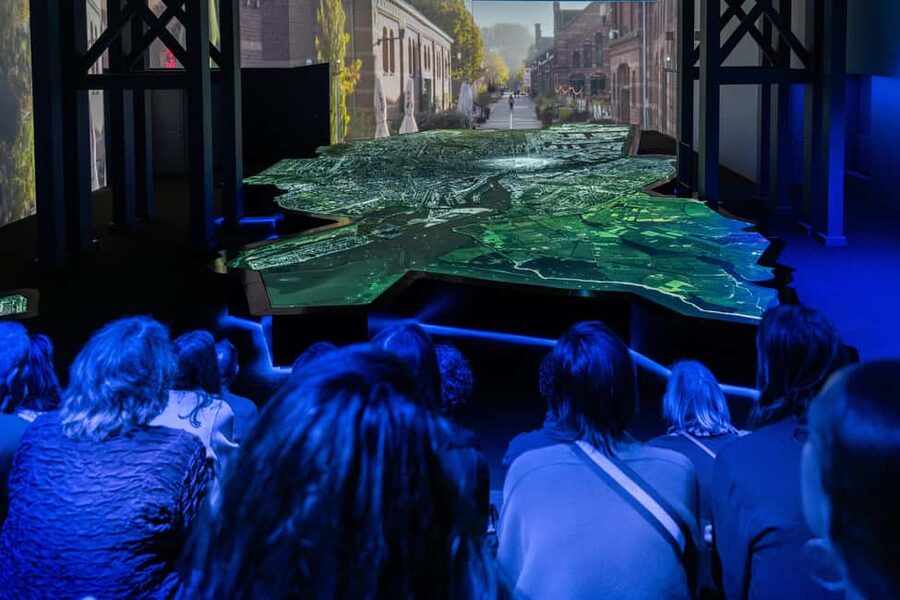
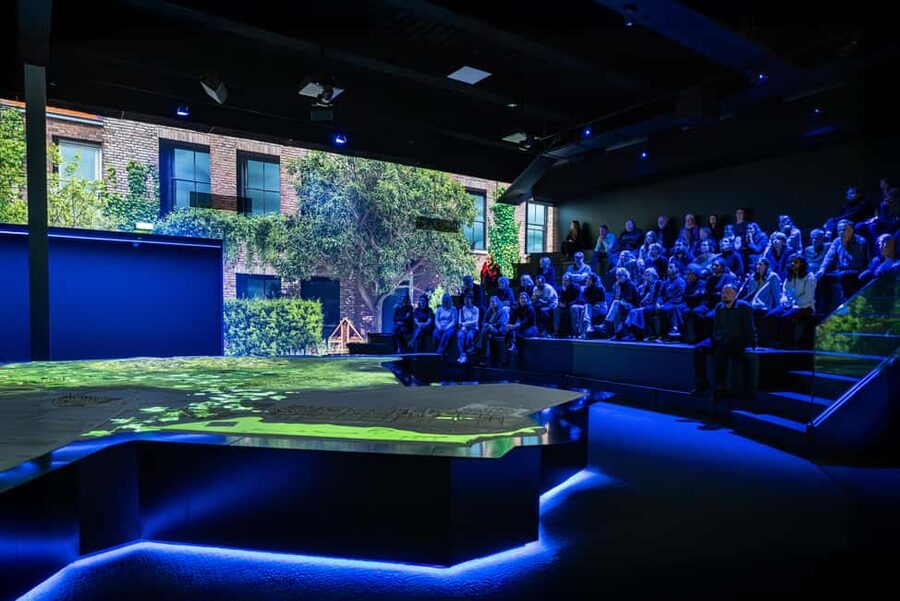
Big screens, tiny streets, one city story. Amsterdam in Motion turns Amsterdam into a hands-on audio-visual experience, using a 200 m² multimedia maquette and a serious sound setup to bring the city’s past, present, and future into focus. It is a compact visit, but it feels like a city-scale “preview.”
I especially like the way the projection mapping transforms the maquette and even nearby surfaces, so you can read Amsterdam like a moving map instead of a static display. I also like that after the main show, you can move upstairs to an interactive museum section rather than just sitting through lights and noise.
One possible snag is language. If the show audio switches to Dutch for your timeslot, it can make the experience harder to follow, and one review flagged exactly that issue.
In This Review
- Why the 200 m² maquette format works in Amsterdam
- The audiovisual show, projection mapping, and sound setup
- Timing: a focused 1.5 hours
- The upstairs interactive exhibition after the show
- Value and price: is $21 a fair deal?
- Language check: what if you prefer English?
- Who this is best for (and who should skip it)
- Practical tips to get more out of your 1.5 hours
- Should you book Amsterdam in Motion?
Why the 200 m² maquette format works in Amsterdam
Amsterdam in Motion is built around a big idea: show the city in motion, not as a list of facts. The centerpiece is a world’s largest multimedia maquette of a city, measured at 200 m². That scale matters, because it lets the museum tell broad stories of development and change without requiring you to read wall text or know every detail already.
Instead of asking you to imagine how canals, neighborhoods, and the city’s shape connected over time, the format uses animations, projections, and sound to connect the dots quickly. For many people, that is the value: you get a coherent overview in about 1.5 hours, then you can use that mental map as you wander outside.
Also, this is a small group experience, limited to 8 participants. That usually makes a show like this feel less chaotic. You can sit, watch, and then get to the interactive part without feeling like you are fighting through a crowd.
The audiovisual show, projection mapping, and sound setup
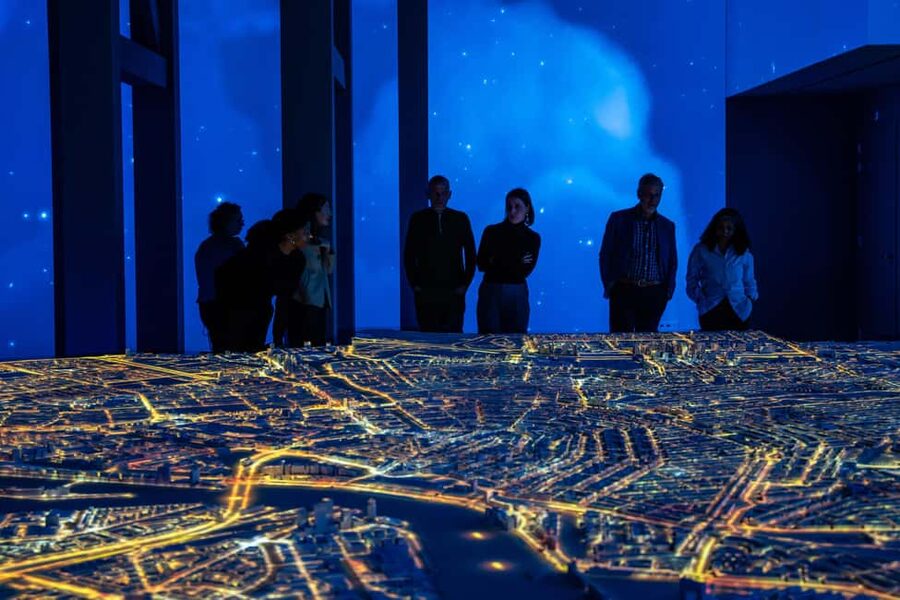
The main show is the heart of Amsterdam in Motion. You watch an audiovisual program that uses the maquette and also projects onto surrounding walls. The result is a kind of city theater where the model is not just a prop, it becomes the stage.
Here is what you can expect from the “show” portion:
- You’ll see Amsterdam represented in past, present, and future themes.
- The maquette receives projections and animations, so areas and storylines feel like they shift over time.
- A strong sound system helps the audio land as part of the presentation, not as background noise.
If you enjoy museums that feel like cinema, not classrooms, this part will likely click. If you prefer slow, quiet walking galleries, you may find the format more intense than expected. Either way, you should plan to give it your full attention for the 1.5 hours, since the education is delivered through audio and visuals.
Some other canal-ring outings to set against this
- Amsterdam: Heineken Experience Ticket including 2 Drinks
★ 4.6 · 36,014 reviews - Amsterdam: Rijksmuseum Entry Ticket
★ 4.7 · 29,512 reviews - Amsterdam: Icebar Entry Ticket with 3 Drinks
★ 4.2 · 14,562 reviews
Timing: a focused 1.5 hours
The ticket is for 1.5 hours, and that time window is realistic. You are not being asked to spend an entire half-day here. You’re getting a short “story hit,” then a follow-up museum section.
That makes it a good fit when your Amsterdam day is already full, but you still want a guided-feeling experience. It also helps if you want something indoor that still feels high-energy.
The upstairs interactive exhibition after the show
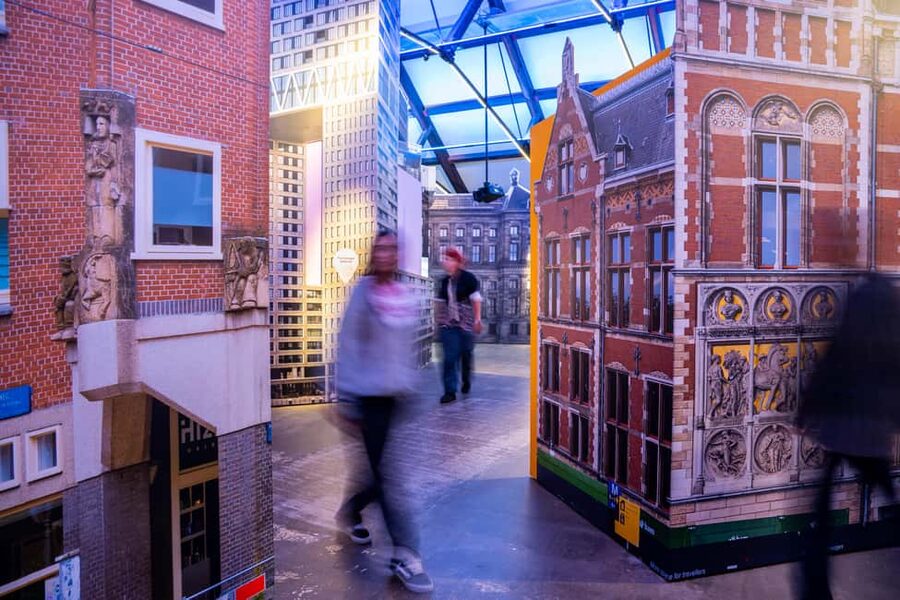
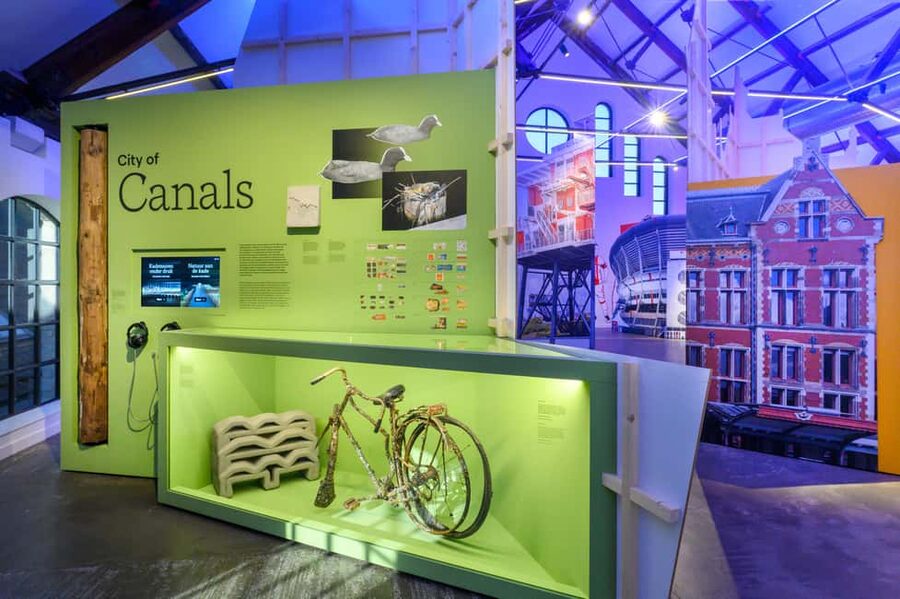
After the projections, you move into the museum section for deeper context. This part is more hands-on and less about watching a scripted program. The ticket includes access to an interactive exhibition on the upper floor.
Why I think that matters for your decision: it gives you an option to slow down after the lights-and-sound part. The show gives you the big picture. The interactive area gives you a chance to shift from passive viewing to active learning, at your own pace.
Also, the fact that the museum section exists means this is not only a one-time show purchase. Even if the first act is slightly hit-or-miss, you still have the upper floor to make your visit feel worthwhile.
One review you can learn from: the visitor who rated the experience poorly described the exhibition as very weak compared to the show format. That does not guarantee your experience will be the same, but it is a reminder to go with clear expectations. Come for the maquette and projections first, then treat the interactive section as a bonus.
Value and price: is $21 a fair deal?
At $21 per person for about 1.5 hours, Amsterdam in Motion sits in the “mid-priced museum attraction” range. The value depends on what you want from Amsterdam.
Here’s the value logic I would use:
- If you want an easy way to understand the city visually, the ticket can feel efficient because it compresses a lot of story into one show.
- If you expect a traditional museum with extensive self-guided displays as the main event, you may feel it is pricey for what you actually do.
The included elements help justify the cost. Your ticket covers the 200 m² maquette, the projection mapping, the audiovisual show, and the interactive exhibition. You are not paying extra for guided narration inside your ticket, since a guided tour is explicitly not included.
So, I’d call it good value if you are the type of traveler who likes multimedia, sound, and maps you can see working. If you are more of a “slow gallery walker,” you might want to compare it to other Amsterdam Museum experiences before you commit.
A different use for the same hours in Amsterdam:




Language check: what if you prefer English?
The host or greeter is listed as Dutch and English, but there is a key difference between staff speaking a language and the show audio being offered in that same language.
One review flagged a real-world problem: the show audio was in Dutch, so the visitor could not follow. When they asked why it was not in English, they were told it was a technical glitch, then offered the next show. The next show was in English, but the overall experience still felt underwhelming to that reviewer.
So here is my practical takeaway for you: if English audio is important to your enjoyment, be ready to confirm what language your show will run. If you notice the audio is not working for you in the way you expected, ask quickly. The “next show” option was offered in that case, which suggests staff can sometimes fix the language mismatch by swapping you into a different timeslot.
If you do not mind following visual storytelling even when audio is unfamiliar, you can still enjoy a projection-mapping show. But if the words and narration are central to how you learn, language becomes the deciding factor.
Who this is best for (and who should skip it)
Amsterdam in Motion is best for travelers who:
- Like multimedia museums and map-like visuals
- Want a quick, structured overview of Amsterdam’s change over time
- Prefer a small group setting
It also makes sense for families who can handle a short show format and then explore an interactive area upstairs. The time window is short enough that you will not be trapped here all afternoon.
You might skip it if:
- You strongly prefer quiet, self-paced galleries over audiovisual programming
- You want a guided tour style experience
- You know you will be frustrated if the audio language is not what you expected
Practical tips to get more out of your 1.5 hours
This place rewards simple preparation. Here are a few ways to make your visit smoother.
Arrive ready to focus. The show is where the magic happens. Treat it like a performance, not a casual walk-in exhibit.
Plan your energy. If you already have a full day walking Amsterdam streets, this can be a nice indoor reset. It still demands attention, though, so avoid stacking too many “sit-down” activities right before it.
Use the upstairs section as your safety net. Even if you find the show a bit chaotic, you have interactive time afterward. Let that guide the end of your visit, not just the lights and sound.
If language matters, ask early. Don’t wait until the show starts. If there is a choice or a check-in question, ask it. Your comfort in the narration is a big part of whether you will feel the value of the ticket.
Should you book Amsterdam in Motion?
Book it if you want a time-efficient, city-scale audiovisual experience in Amsterdam. The 200 m² maquette plus projection mapping is the core draw, and the interactive upper-floor exhibition gives you a second way to learn.
I would hesitate only if you are very language-sensitive, since at least one recent review reported a Dutch-only audio issue and a less-than-stellar experience after that. If you can confirm the show language for your timeslot, or you are fine learning through visuals, you’re likely to enjoy this more.
If your goal is a quick, memorable introduction before you explore Amsterdam neighborhoods, this ticket is a solid buy for $21 and 1.5 hours.
Newest on the canal ring
- Amsterdam Bike Food Tour with Private Guide★ 5.0 · 1 review
- Amsterdam: Rijksmuseum Private Tour with an Art Historian★ 5.0 · 1 review
- Happy B-day Amsterdam! Guided Tour with a History Buff★ 5.0 · 1 review
- Private Photo Shoot in Amsterdam with a Professional Photographer★ 5.0 · 1 review
- Private day trip to Giethoorn and the Enclosing Dike★ 5.0 · 1 review
- Local Foodie Adventure in Amsterdam★ 5.0 · 1 review
- Private Sightseeing Tour to Giethoorn from Amsterdam incl. canal cruise★ 5.0 · 1 review
Tickets, compared.

Heineken Experience Ticket including 2 Drinks
Read our review →