
Reviewed · GUIDED BIKE TOURS
Amsterdam in World War Two Cycle Tour
If you like history with street-level details, this tour delivers. It’s a small-group bike ride through Amsterdam South where you see WWII sites in the exact locations they happened, often with then-and-now photos placed in front of today’s buildings. I love how the route goes beyond the usual center sights by sticking to quieter streets on bikes that cars can’t easily dominate, and I also love the way the guide explains what those places meant for real people, not just dates. One consideration, this is a bike-focused tour, so you’ll want to be comfortable cycling for a few hours through city neighborhoods.
The standout here is the storytelling. My favorite part was the human scale, with a max group size of six and guides Rudy (and often Peter) who bring local familiarity and a teaching style that keeps the facts clear. There are also moments that can feel heavy, because the tour covers arrests, deportations, and retaliation, so it’s not a light sightseeing loop.
In This Review
- Key things that make this WWII bike tour worth your time
- Why WWII Amsterdam makes sense on two wheels
- Price, time, and small-group pacing that feel fair
- Meeting Tesselschadestraat, then rolling south toward Leidseplein
- Victorieplein and the June 20, 1943 raid that changed everything
- Merwedeplein and the Frank family connection you can’t miss
- Waalstraat 48, Café Blek, and the Tilex Bar story
- Cornelis Troostplein 23 and the PBA barracks takeover logic
- Museumplein as a WWII stronghold, with consulates and bunkers in place
- Roelof Hartplein coffee break that also helps you reset
- Roelof Hartstraat photo shop and resistance photography
- Beethovenstraat, Apollolaan, and retaliation after an execution
- Memlingstraat and Rubensstraat: SD HQ and stolen-property machinery
- RAF target and resistance safehouse betrayed in June 1944
- Olympiaplein registration and how Westerbork enters the story
- Valeriusplein and the Amsterdam Lyceum as Luftwaffe headquarters
- Queen Emma statue on Emmalaan and the defiant habit of flowers
- Final moments around surrender day, then cycling back through Vondelpark
- What to look for during the ride, so you get more out of every stop
- Who this WWII bike tour suits best
- A quick word on emotional weight
- Should you book it, or choose something else?
- FAQ
- How long is the Amsterdam WWII cycle tour?
- What time does the tour start?
- Where do I meet the guide?
- How big is the group?
- Is the tour offered in English?
- Do I need to use a mobile ticket?
- Is there a break during the ride?
- Do I need to bring my own bike?
- What is the price per person?
Key things that make this WWII bike tour worth your time
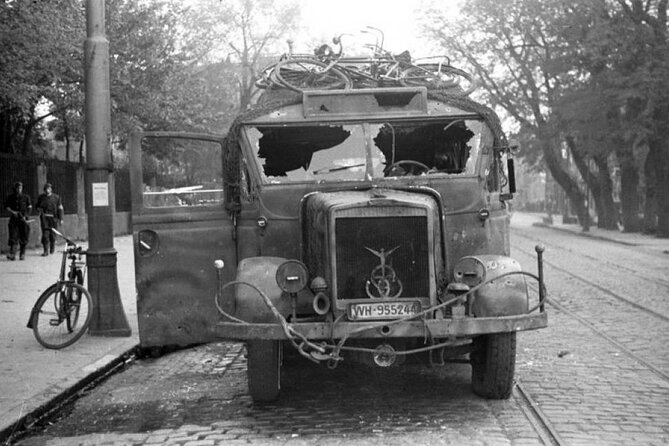
- Then-and-now WWII photos that match the exact corners and facades you’re standing next to
- Small group size (max 6), which makes it easier to ask questions and keep the pace comfortable
- Amsterdam South routing, which helps you cover more ground than walking and keeps you away from the densest tourist lanes
- A story arc from raids to resistance, with specific named locations tied to key events
- A safe, structured ride, with a coffee break and restroom stop built into the schedule
Why WWII Amsterdam makes sense on two wheels
Amsterdam has a way of letting the past hide in plain sight. In a place like this, walking can feel too slow to keep the story connected, and a bus can feel too far away from the street level details. On bicycles, you get that perfect middle, you move efficiently, but you still stop at corners and facades where the events actually unfolded.
This tour’s big advantage is focus. Instead of trying to cover all of WWII in a day, you ride a clear south Amsterdam corridor tied to specific arrests, offices, and resistance activity. You’ll see how occupiers used normal urban spaces, schools, and offices for surveillance and control, then follow the thread into where people tried to fight back.
The guide’s teaching method is a big part of why this works. With guides like Rudy and Peter, the facts land in context, and the vintage photos help you understand what has changed and what stubbornly stayed the same.
More of Amsterdam from a saddle:
- Big Bike tour Amsterdam – See all in 3 unforgettable hours
★ 4.7 · 4,929 reviews - Small Group Guided Bike Tour of Amsterdam’s Hidden Gems
★ 5.0 · 3,936 reviews - Amsterdam: Off the Beaten Path Bike Tour in French
★ 4.9 · 1,632 reviews
Price, time, and small-group pacing that feel fair
The price is $66.09 per person for about 2 hours 30 minutes to 3 hours 10 minutes. That’s not a bargain like a free walking tour, but it’s also not museum-ticket pricing either. For me, the value comes from the combination: guided route, small group cap (six max), and added research content like the historical photos placed at stops.
Time matters here because the tour keeps momentum. You’re not wandering for long stretches, you’re riding, stopping, and absorbing. Expect a schedule with multiple sites, plus a short coffee and restroom pause.
The group size is also a real practical perk. With only a handful of riders, you’re less likely to lose the guide when you’re stopping at traffic-light corners or listening at the curb. It’s easier to get your bearings and keep your questions in the moment.
Meeting Tesselschadestraat, then rolling south toward Leidseplein
The tour starts at Tesselschadestraat 1, 1054 ET Amsterdam, and you end back at the meeting point. The departure time is 11:00 am, and the ride loops back after finishing its last major stop and cycling through Vondelpark toward Leidseplein.
Two practical notes for your planning. First, build in buffer time to arrive early, since this is a timed group ride. Second, since it is a bike tour, you’ll want to show up ready to cycle comfortably in city traffic conditions, even if the route is chosen to feel safe and manageable.
Also, you’ll get a mobile ticket, so have your phone ready for check-in on the day.
Victorieplein and the June 20, 1943 raid that changed everything
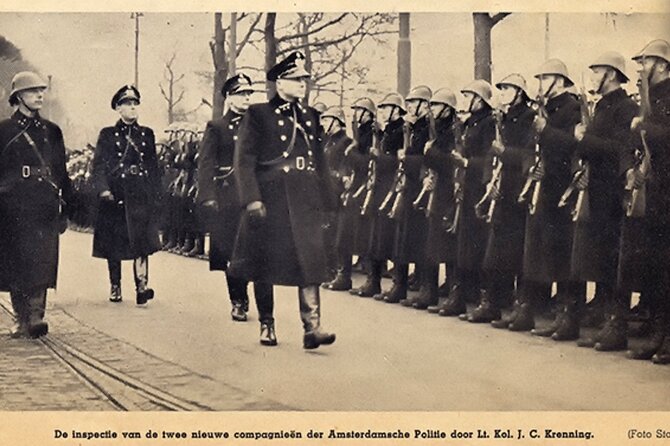
The ride begins at Victorieplein (then called Daniël Willinkplein). This is where a major raid hit on June 20, 1943, when large groups of Jewish citizens were arrested in a so-called Judenaktion. The story gets specific about how it worked in practice, with Dutch police units linked to the PBA (Police Battalion Amsterdam) and police volunteers from the NSB (Dutch National Socialist Movement) assisting the Nazis.
The powerful part of this opening stop is that it anchors the tour in action, not abstraction. The guide connects the street you’re at now with the chain of events that sent people to Olympiaplein for registration and then onward to the Westerbork concentration camp in the east of the Netherlands.
There is a lot to absorb at the start, and that can be intense. If you’re sensitive to stories of persecution, give yourself a minute before the group rolls again. You’ll be glad you did once you’re moving and the route starts building momentum.
A different use for the same hours in Amsterdam:
Merwedeplein and the Frank family connection you can’t miss
Next you stop at Merwedeplein 37-II (3rd floor by American counting), which was home to the Frank family. In summer 1942, Otto Frank took his family and acquaintances to Het Achterhuis, the Secret Annex on the Prinsengracht, connected to Otto Frank’s company.
Here the tour also ties the personal story to a public memory marker. There’s a statue commemorating Anne Frank on Merwedeplein, and the guide uses that to connect the wartime hiding to what came after.
One of the most meaningful practical details at this point is the diary trail that follows. Near the stop area, a bookstore in the Waalstraat area was tied to the postwar publication path, including how the first edition of Het Achterhuis was published in 1947. The stop clarifies that Otto Frank didn’t just live the events, he also helped shape what the world would read afterward.
Waalstraat 48, Café Blek, and the Tilex Bar story
At Waalstraat 48, opposite Merwedeplein, you’ll hear about a place now operating as Café Blek that used to be the Tilex Bar (Tilly and Lex, van Weren). This stop is emotionally sharp because it includes Lex van Weren’s story, he survived Auschwitz because he had to play his trumpet at executions.
This is the kind of stop that doesn’t just teach history, it forces a question: how did ordinary streets become stages for horror? In tours like this, these personal details are what keep the bigger Nazi system from feeling like a distant, mechanical machine.
Cornelis Troostplein 23 and the PBA barracks takeover logic
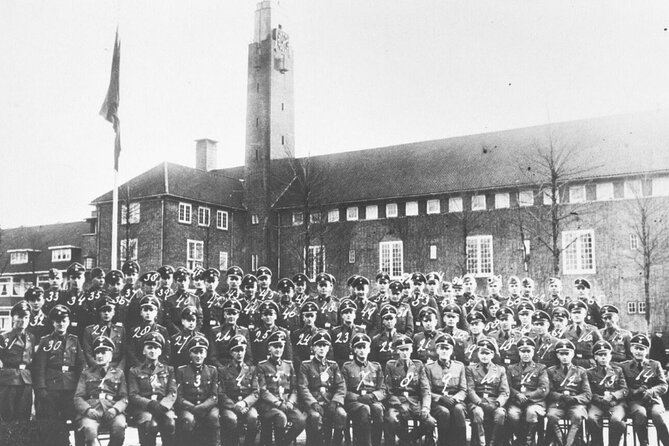
At Cornelis Troostplein 23, the tour points to the former PBA barracks area. Before WWII, the complex was called a peace parish with Catholic elements like two convents and a school. In spring 1942, the Sicherheitsdienst (SD) and Gestapo leadership came through, including an inspection by Rauter, followed by a meeting involving Heinrich Himmler at Museumplein.
What I like about this stop is the way it explains occupation logic without getting lost in abstract terms. You see how the war repurposed community institutions, schools and religious complexes included, and you understand how occupiers used existing infrastructure for control.
Museumplein as a WWII stronghold, with consulates and bunkers in place
Then the route shifts to Museumplein, where the guide explains how the Germans turned the square into a stronghold. Facing the concert hall, the houses on the left held German offices, including a former United States consulate building that once housed the Zentralstelle für Jüdische Auswanderung (Central Jewish Emigration office).
You also learn about adjacent functions that made this system work day to day. The tour references places used by the Ortskommandantur (Town Major) and the Feldgendarmerie (Military Police). Nearby, other buildings housed Nazi party offices and German services.
The square area in front of these buildings, connected to the IJsclubterrein (Amsterdam skating club), is described as the place where Germans built bunkers and anti-aircraft (Flak) batteries. That’s a key image to hold in your mind, because it shows how war defense and persecution machinery sat in the same urban footprint.
The NSB angle also appears here. The guide places the NSB headquarters next to the concert hall area, and after WWII many of the bunkers were blown up. It’s a reminder that even when the buildings go away, the locations still carry meaning.
Roelof Hartplein coffee break that also helps you reset
Before you go deeper into neighborhoods, there’s a short break at Roelof Hartplein. You get a pause for coffee at Café Wildschut plus a restroom stop. It’s listed as about 10 minutes, and admission is free.
This stop matters more than you might think. After multiple heavy history sites in a row, a quick reset helps you keep the rest of the ride focused. It also gives you time to regroup with the group if you had questions you wanted to ask earlier.
Roelof Hartstraat photo shop and resistance photography
At Roelof Hartstraat, the tour highlights a former photo shop next to the library building. During the war, the Dutch resistance used the store to develop photos, including unique images connected to the first roundup of Jews in Amsterdam by the SD/Gestapo and German police, with examples tied to photographer Charles Breijer.
You’ll also spot a small monument remembering Jews taken from this neighborhood. For me, that combination works well, it shows two sides at once, documentation by resistance and remembrance by the community now.
If you like photos as evidence, this is a smart moment in the ride. It’s not just a story, it’s about how people recorded events despite surveillance.
Beethovenstraat, Apollolaan, and retaliation after an execution
Next, you reach the Beethovenstraat and Apollolaan corner. Around the end of October 1944, roughly in front of no: 6 (with many house numbers still similar to WWII), Herbert Oelschlägel, an SS officer and SD/Gestapo agent, was executed by a Dutch resistance member.
The tour explains the brutal retaliation that followed. Sicherheitsdienst and Gestapo burned down two houses and executed 29 resistance fighters. That is the kind of detail that makes the resistance story clear, resistance had consequences, and occupiers responded with punishment meant to scare everyone else into silence.
The guide also connects that street context, noting that at the time it was called Euterpestraat, and it links to Gerrit van der Veen, described as the leader of an important Dutch resistance group.
Memlingstraat and Rubensstraat: SD HQ and stolen-property machinery
At Memlingstraat and Rubensstraat, the tour points to two major offices linked to Nazi oppression organizations. First is SD-HQ Amsterdam, described as an SD Aussenstelle under Willy Lages. Next is the Hausraterfassungsstelle, the unit associated with stealing possessions of deported Jews, part of the Zentralstelle für Jüdische Auswanderung system.
The guide also names a Dutch collaborator, Henneicke, connected to leading the Hauserfassungsstelle. This stop is useful because it reveals the roles inside the system were not all German-only. It shows how collaboration helped the machinery function.
RAF target and resistance safehouse betrayed in June 1944
As the ride continues, you learn how resistance tried to hit the system at its paperwork source. In November 1944, resistance requested the Royal Air Force via a secret radio message to attack the headquarters of the SD/Gestapo and the Hausraterfassungsstelle, with the goal of destroying SD/Gestapo files.
The tour names the leader of the attacking wing: Group Captain Denys Gillam, DSO, DFC, AFC, leader of 149 (Typhoon) wing. That level of specificity helps keep the narrative concrete, not vague.
You’ll also hear about a resistance safehouse near the corner of Rubensstraat and Gerrit van der Veenstraat, and the guide points you toward checking Stolperstein stones for the address. The story includes betrayal as well. In June 1944, the safehouse address was betrayed to the SD/Gestapo by a female informant identified as V-Frau.
Even if that’s a lot of names, it helps you understand the network nature of wartime Amsterdam, how information traveled and how danger spread.
Olympiaplein registration and how Westerbork enters the story
Next comes Olympiaplein and Parnassusweg. This is tied to how arrested people were processed after the June 1943 raid. Jewish people arrested during that raid of the sports complex were registered by the SD/Gestapo with help from Jewish camp police sent from Westerbork concentration camp.
This stop is one of those painful details that makes the system feel real. It shows that processing and paperwork were not side quests, they were central steps that determined where people were sent next.
Valeriusplein and the Amsterdam Lyceum as Luftwaffe headquarters
At Valeriusplein near the Amsterdam Lyceum, the tour explains that this school building served as Luftwaffe headquarters at the end of the occupation.
It’s a sobering pattern you’ll see across the tour, normal civic buildings repurposed into military offices. If you want to understand how occupation reshaped daily life at street level, this is a strong example.
Queen Emma statue on Emmalaan and the defiant habit of flowers
Then you stop at the Queen Emma statue on Emmalaan and Prins Hendriklaan. In summer 1940, people placed flowers at the statue in defiance of German occupiers.
This is one of the most hopeful stops on the route, not because it erases the war, but because it highlights small acts of resistance. It’s also a nice contrast to the offices and stronghold material you’ve been hearing about.
The guide ties in photography again, including a reference to Charles Breijer taking a photo of a guard at the headquarters of the Kriegsmarine in 1944.
Final moments around surrender day, then cycling back through Vondelpark
As the occupation ended, the tour doesn’t skip the chaos. When the Germans surrendered on May 7, 1945, the guide points to dangerous situations between frustrated German troops and resistance fighters. There is a monument remembering victims of one of the shootings on that last day.
After that, you ride through Vondelpark toward Leidseplein, ending where the route started at the meeting area. That final stretch feels like the story coming full circle, you’ve covered the machinery and the people trying to stop it, and now you’re back in the living city.
What to look for during the ride, so you get more out of every stop
I’d advise you to treat the matching photos like your main compass. The then-and-now images are what stop the tour from becoming a list of facts. When you see the photo aligned with what’s still there today, the city becomes a map you can read.
Watch for details the guide highlights, like which buildings once housed specific offices or the function of a square turning into a fortified area with bunkers and anti-aircraft batteries. Those details add up because they show how WWII occupation wasn’t only about combat, it was also about administration, control, and fear.
Also, use the small group size. Ask why a location mattered, or ask how someone would recognize a sign of resistance or danger. With Rudy and Peter, the stories tend to connect, and the Q and A can make the whole ride click.
Who this WWII bike tour suits best
This tour is a strong fit if you want WWII history that stays grounded in neighborhoods, with minimal tourist crowding and clear stop-by-stop context. It’s especially good if you like photo evidence and you want to understand the geography of persecution and resistance in one connected ride.
It’s also a great choice for couples and small groups who want a guide with room for questions. The ride works well if you’re comfortable cycling in a city, since the experience is explicitly bike-based and includes multiple stops across Amsterdam South.
A quick word on emotional weight
The tour covers arrests, deportations, collaboration, retaliation, and office systems tied to persecution. Even with excellent guidance, some stops will hit hard because the details are specific. If you’re choosing this on a trip packed with other heavy subjects, pace yourself and take breaks when you feel overwhelmed.
Should you book it, or choose something else?
Book this tour if you want a guided, small-group way to connect WWII events to the streets you’re standing on today. The value comes from the tight route, the then-and-now photos, and the strong guidance from Rudy, and often Peter, who bring local familiarity and clear storytelling.
Skip it or consider an alternative if you want a lighter sightseeing day, or if cycling for a few hours in urban conditions feels like a hassle. This isn’t a museum day where you can pause whenever you want, it’s a ride with a set rhythm.
If you’re in Amsterdam with even a little curiosity about what happened in south neighborhoods during the occupation, this is one of the most direct ways to see how the city changed, and how it remembers.
FAQ
How long is the Amsterdam WWII cycle tour?
It runs for about 2 hours 30 minutes to 3 hours 10 minutes.
What time does the tour start?
The start time is 11:00 am.
Where do I meet the guide?
You meet at Tesselschadestraat 1, 1054 ET Amsterdam, Netherlands, and the tour ends back at the meeting point.
How big is the group?
The tour has a maximum of six travelers.
Is the tour offered in English?
Yes, it is offered in English.
Do I need to use a mobile ticket?
Yes, the experience uses a mobile ticket.
Is there a break during the ride?
Yes. There is a short stop at Roelof Hartplein for coffee at Café Wildschut and a restroom visit.
Do I need to bring my own bike?
This is a bike tour experience, and you should plan on being ready to cycle. Make sure you have a suitable bike for city riding, since the tour focuses on cycling between sites.
What is the price per person?
The price is listed as $66.09 per person.
Newest on the canal ring
- Amsterdam Bike Food Tour with Private Guide★ 5.0 · 1 review
- Amsterdam: Rijksmuseum Private Tour with an Art Historian★ 5.0 · 1 review
- Happy B-day Amsterdam! Guided Tour with a History Buff★ 5.0 · 1 review
- Local Foodie Adventure in Amsterdam★ 5.0 · 1 review
- Private Photo Shoot in Amsterdam with a Professional Photographer★ 5.0 · 1 review
- Private day trip to Giethoorn and the Enclosing Dike★ 5.0 · 1 review
- Private Sightseeing Tour to Giethoorn from Amsterdam incl. canal cruise★ 5.0 · 1 review
Guided Bike Tours, compared.
Big Bike tour Amsterdam – See all in 3 unforgettable hours
Read our review →
Small Group Guided Bike Tour of Amsterdam’s Hidden Gems
Read our review →
Countryside Bike Tour from Amsterdam: Cheese, Clogs & a Windmill
Read our review →
Windmill, Cheese, and Countryside E-Bike Tour
Read our review →
Browse the lists this tour appears in