
Reviewed · CITY WALKING TOURS
Amsterdam Old City Private Walking Tour
A first taste of Amsterdam, minus the randomness, always helps. This private 2-hour walk connects the city’s swamp-built beginnings to the 17th-century merchant boom, then threads you through places like the Begijnhof and Nieuwmarkt. I love how the route mixes big stories with small, walkable details, and I like that the guide can steer the canal-house focus toward your interests. One possible drawback: with only two hours, the walk is active, and the Red Light District stops can feel uncomfortable if you prefer a gentler Amsterdam.
You’ll start at Amsterdam Central Station and head into the medieval center, where old city-wall sections and church stops keep the pace grounded in real architecture. If you’re interested in buildings, neighborhoods, and how Amsterdam became a science and culture hub, you’ll get a lot out of this.
Price-wise, it’s set per group (up to 10 people), so it can be very fair for a family or friends trip, but it may feel steep if you’re only one or two. Also note the practical limit: luggage or large bags are not allowed.
In This Review
- Key things to look forward to
- Why this Amsterdam Old City private walk is a smart use of 2 hours
- Getting started at Amsterdam Central Station (and what that means for pacing)
- From reclaimed swamp to world power: the story you walk through
- Medieval center walls and church stops that anchor the walk
- Oostindisch Huis, East India Company power, and Jordaan canal life
- Herengracht canal banks and the logic of Amsterdam’s layout
- Red Light District: see it with context, not shock tourism
- Begijnhof women’s homes: quiet courtyards in the middle of the city
- Old Jewish District to Chinatown and Nieuwmarkt: neighborhood by neighborhood
- A quick reality check: what your guide can and can’t do in 2 hours
- Price and value: $265 per group up to 10 people
- Practical comfort tips: bags, wheels, and what to wear
- Languages and what that means for your experience
- Should you book this Amsterdam Old City private walking tour?
- FAQ
- How long is the Amsterdam Old City private walking tour?
- Where is the meeting point?
- How much does the tour cost?
- What is included in the price?
- Are food and drinks included?
- Is it a private group tour?
- What languages are available?
- Is it wheelchair accessible, and are bags allowed?
- What are the cancellation rules and pay-later option?
Key things to look forward to
- A private guide who adapts the walk to what you want to see most
- Big Amsterdam story in compact form, including 1650 population and the East India Company angle
- A route that crosses eras and neighborhoods, from medieval center walls to Jordaan canal life
- Churches and courtyards you might miss on your own, like the Old Church and Begijnhof homes
- Culture stops beyond the center, including the old Jewish District, Chinatown, and Nieuwmarkt
Why this Amsterdam Old City private walk is a smart use of 2 hours
Amsterdam is one of those cities where a map can lie to you. Streets look close, but canals, crossings, and constant detours can chew up your time fast. A private, 2-hour walking format keeps you moving without turning it into a blur.
What I like about this tour is that it gives you the city’s logic first: reclaimed swamp land, tricky harbor access, and the long timeline that leads to Amsterdam’s 17th-century power. Once you understand that foundation, the canal houses and districts start to make sense instead of feeling like scenery.
It also hits a good balance of “famous” and “not just the famous.” You get the Red Light District and the big canal sights, but you’re also nudged toward older corners like the Begijnhof women’s homes and the surrounding church/medieval fabric of the center.
More of the canal ring crossed on foot:
- Amsterdam Anne Frank: Small-Group Walking Tour & Local Guide
★ 4.8 · 12,789 reviews - Anne Frank’s Story – Guided Walking Tour through Amsterdam
★ 5.0 · 11,619 reviews - Absolutely Amsterdam – the Essential Introductory Walking Tour
★ 5.0 · 3,629 reviews
Getting started at Amsterdam Central Station (and what that means for pacing)
Your meeting point is Amsterdam Central Station, in front of the main entrance. That’s convenient, especially if you’re arriving by train or using the station area as your anchor.
Because you’re meeting at a hub, you should expect the first leg to involve getting you oriented quickly, then moving into denser historic streets. This matters because you only have two hours. If you’re the type who spends the first hour trying to “figure out the route,” this tour is built to get you past that.
Practical tip: wear shoes that handle cobblestones. Amsterdam’s old streets are charming, but they can be slick and uneven when you least expect it.
From reclaimed swamp to world power: the story you walk through
Amsterdam’s origin story is not the usual “city grew from a river.” It’s stranger and more useful to understand. The city was built on reclaimed swamp land, with the ground buried in mud and the harbor almost inaccessible for a long time. The connection to the North Sea only gets realized in the 19th century, but Amsterdam’s rise to global importance happens earlier than you might expect.
On this walk, you’ll connect that origin to the 17th-century boom: in 1650, the city reaches a population of about 220,000, making it the 3rd largest city in Europe. Your guide explains how Amsterdam becomes a major science and cultural center, not just a trading port.
Why this matters for you: when you understand the city’s engineering constraints, the canals and merchant architecture feel less random. You start seeing Amsterdam as a system. You also get better at reading the city while you keep walking on your own after the tour.
Medieval center walls and church stops that anchor the walk
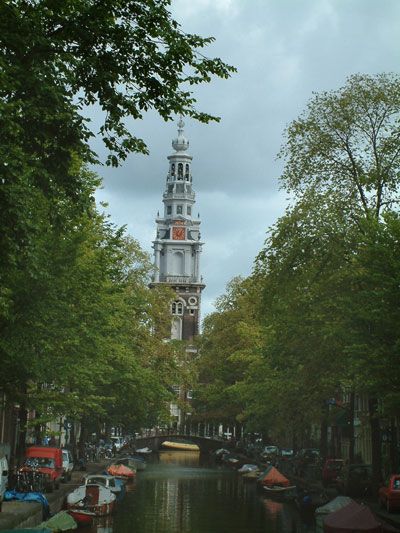
This tour is designed for people who are interested in architecture and history, and it does not require deep museum time. You’ll stroll through the medieval center and see parts of the old city wall along the way.
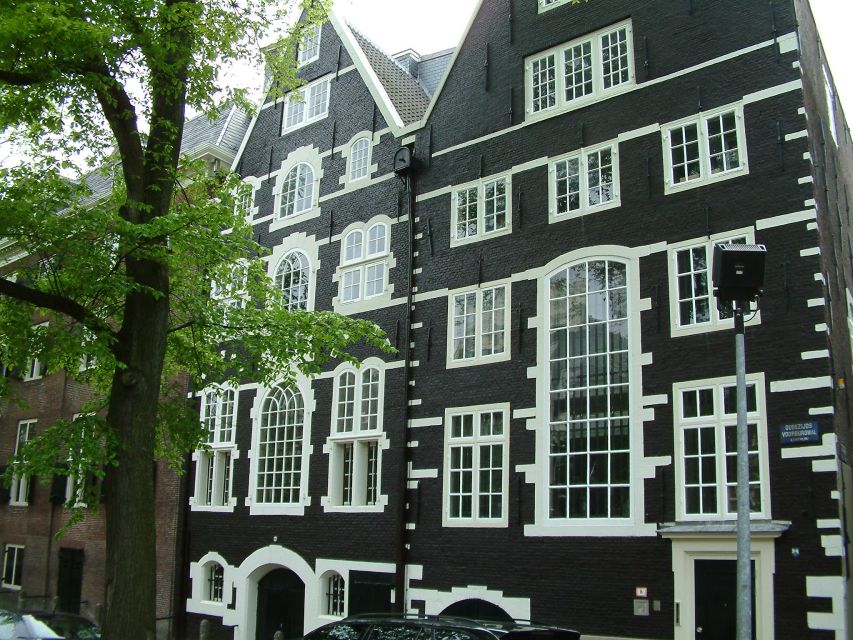
From there, the walk shifts into churches and historic corners, including hidden churches and major stops like the Old Church. You’ll also encounter the Oude Manshuispoort, which is one of those structures that helps you feel the “older Amsterdam” underneath the modern tourist flow.
Here’s the value of this segment: churches and old passages are where you learn scale and how people lived day to day. Even if you don’t go inside every building, you’re training your eyes to notice materials, facades, and the way the street bends around older structures.
Also, for a private group, you can usually ask quick questions on the spot. If something on the wall, tower, or courtyard sparks your curiosity, this format is the easiest way to turn it into a real explanation.
Other loops taking in the big sights:



Oostindisch Huis, East India Company power, and Jordaan canal life
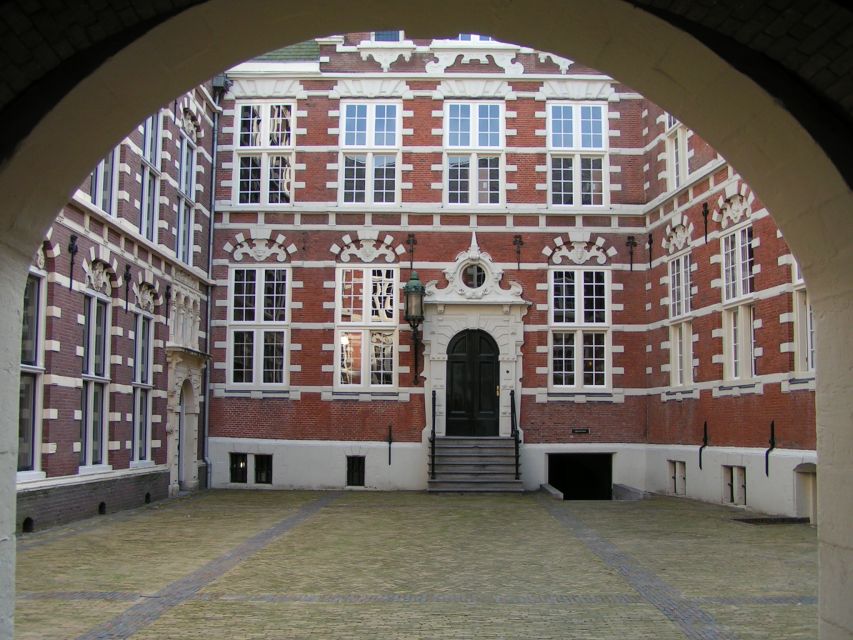
One highlight in the story is the 17th-century Oostindisch Huis, tied to the East India Company. When you see a building like that with guidance, it stops being a postcard and becomes a clue.
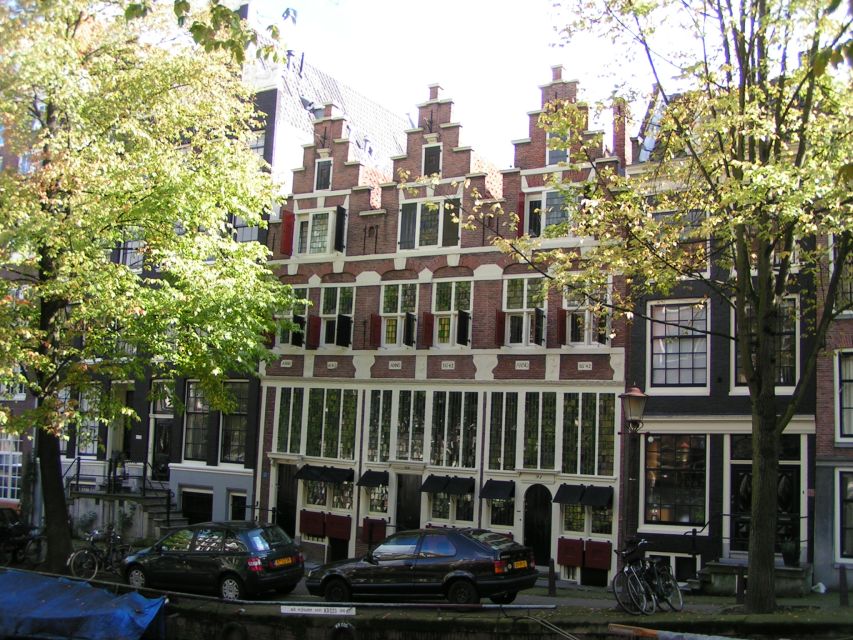
Your guide also takes you past places that speak to Amsterdam’s trading economy: handsome merchant houses, and older street life like pawn shops in the area around the Jordaan. You’ll get a sense of how wealth circulated, how commerce shaped neighborhoods, and why certain canal-side areas look built for status.
If you like details, this is one of the best parts of the tour. You can enjoy the visuals, but you also get context for what those buildings meant in their time.
A small realism note: architecture tours can turn into “look, look, look” without breathing room. The private format helps because the guide can adjust the pace to your group.
Herengracht canal banks and the logic of Amsterdam’s layout
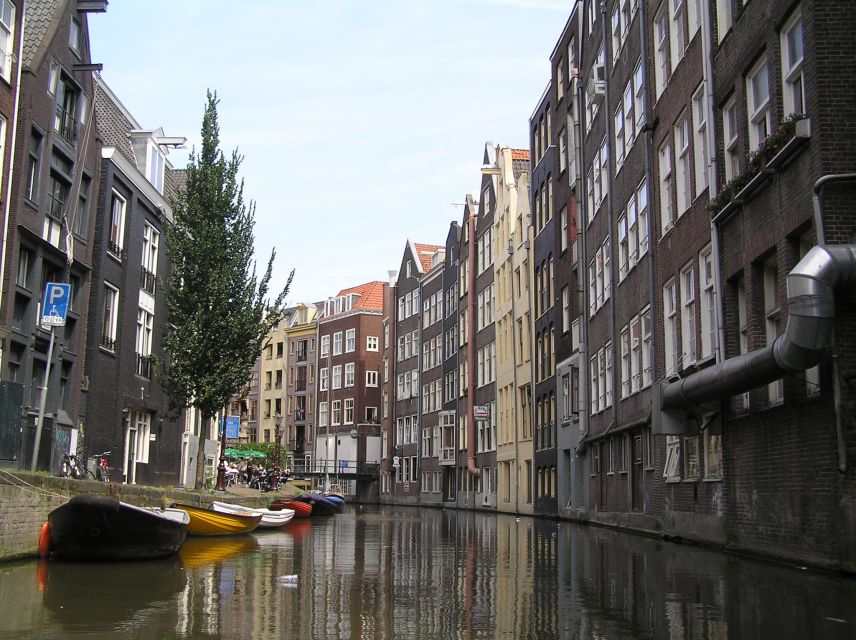
Canals in Amsterdam are more than decoration. They are the framework. On this tour, you walk along the Herengracht, one of the first three major canals of the city.
What I like about having a guide on a canal stretch is that you start noticing how the buildings face the water and how the street grid responds to the canal line. You also get a clearer sense of why the most important parts of the city formed where they did.
If you’ve ever walked Amsterdam and felt like you were chasing the next pretty view, this canal segment gives you something better: a reason behind the view.
Red Light District: see it with context, not shock tourism
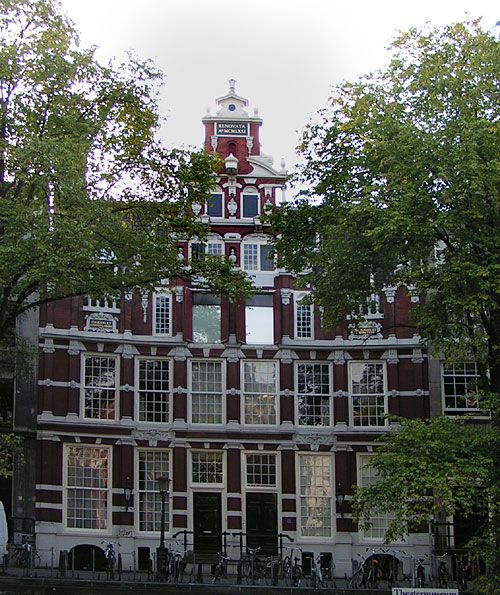
Yes, this tour includes the infamous Red Light District. But the key difference is context. You’re not being sent there as a free-for-all photo opportunity. You’re learning where it fits in the city’s larger story and why the area developed the way it did.
This is also the one place where I’d flag a possible drawback. If you feel uncomfortable with the subject matter, or you prefer to avoid that style of street-level tourism entirely, you may want to tell your guide in advance so the pace and emphasis can be adjusted.
A practical tip: keep your phone away if you start feeling awkward. Even on private tours, the vibe can be more tense in these streets.
Begijnhof women’s homes: quiet courtyards in the middle of the city
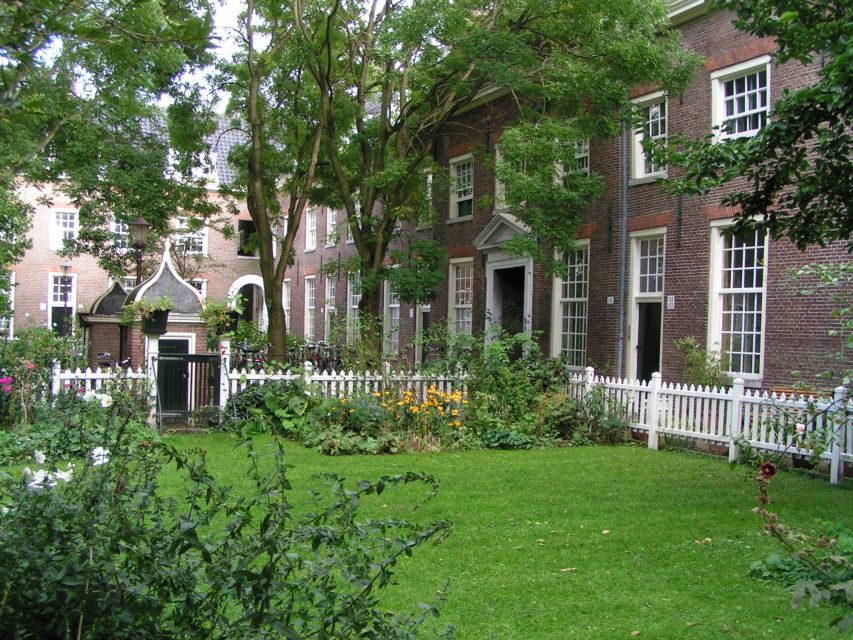
Then the tour turns calmer, with the Begijnhof and the women’s homes there. This stop is a good reminder that Amsterdam contains spaces built for community, not just commerce.
Begijnhof courtyards tend to give you that “how is this here in the center?” feeling. Having a guide matters because you’ll understand the meaning behind the architecture and the place in Amsterdam’s social history, not just the fact that it’s photogenic.
If your ideal day in Amsterdam includes pockets of quiet and respectful sightseeing, this is the kind of stop you’ll remember long after the canal photos fade.
Old Jewish District to Chinatown and Nieuwmarkt: neighborhood by neighborhood
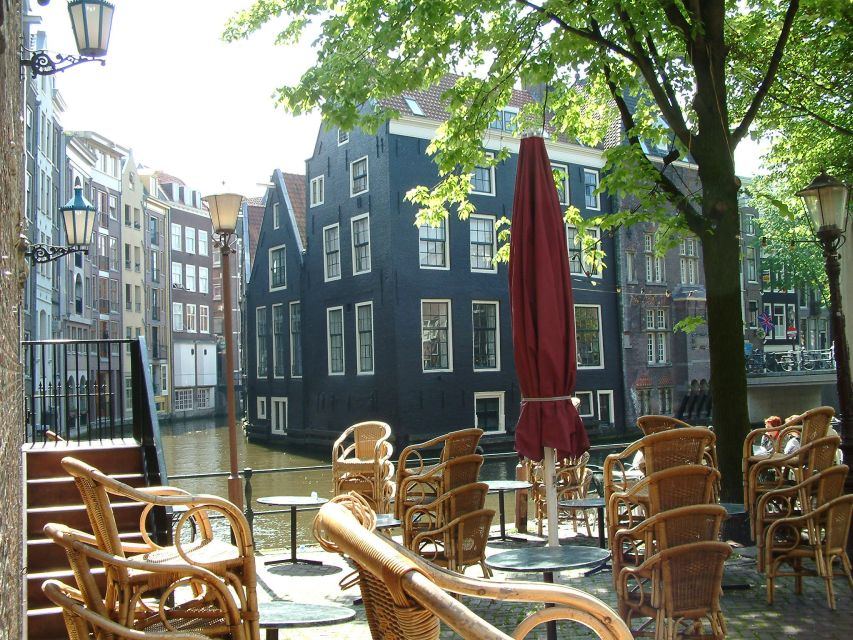
Amsterdam is many cities stitched together. This tour helps you feel that stitching as you move from the old Jewish District area to Chinatown, and then to Nieuwmarkt.
Here’s what makes this more than a checklist: you’re not just passing through. You’re learning how the city’s identity formed in layers. The old Jewish District and Chinatown stops give you a sense of community life and cultural continuity, not just immigrant-era history in abstract terms.
Nieuwmarkt is a smart final touch because it gives you a lively public space where you can keep exploring on your own after the tour ends. If you want a natural transition from guided history to casual wandering, this ending helps.
A quick reality check: what your guide can and can’t do in 2 hours
Two hours is enough to orient you, but not enough to replace a museum day. The tour’s strength is that it gives you a guided path across major themes: reclaimed-swamp origins, 17th-century merchant power, canal structure, and the layered neighborhoods.
You’ll cover a lot of ground on foot. That means:
- you should plan to stand and walk more than you sit
- you should expect to move between contrasting areas (quiet courtyards, then busy streets, then canal-side views)
- you’ll likely spend more time looking with purpose than you would on a self-guided stroll
The good news is the tour is private and adapted to your wishes. If you’re more drawn to churches and architecture, or more drawn to city power and commerce, you can steer emphasis.
Price and value: $265 per group up to 10 people
The price is $265 per group, up to 10 people, for a 2-hour private walking tour. That pricing is the main reason this tour can be a great deal.
To make it practical, think in per-person terms:
- If you fill the group with 10 people, it comes to about $26.50 per person.
- With 6 people, you’re around $44 per person.
- With 4 people, you’re around $66 per person.
If you’re a solo traveler, it becomes less of a bargain because you’re paying the full group amount. If you’re traveling with a small crew, it often becomes one of the best ways to buy a guided experience without blowing your budget.
Also, you get VAT included, and the tour includes the guide and is adapted to your interests. Food and drinks are not included, so factor that into your day plan.
Practical comfort tips: bags, wheels, and what to wear
This tour is wheelchair accessible, which is a big plus if you need that kind of flexibility. At the same time, the tour prohibits luggage or large bags, so travel light if you can.
For clothing, dress for walking and weather. Amsterdam can shift quickly, and two hours means you’re out there long enough to notice if you chose poorly.
For your group, consider this a “conversation pace” tour. If you want to ask questions, the private format makes that easy. If your group is prone to wandering off at each corner, set an expectation early so you don’t lose time.
Languages and what that means for your experience
The guide can work in English, Dutch, or German. If you’re not fluent in English, it’s worth checking language options so you’re truly getting the story details, not just the highlights.
Good language support also matters for nuanced topics like city power history and the social context behind districts. You’ll get more from it when you can ask one good follow-up question.
Should you book this Amsterdam Old City private walking tour?
Book it if you want a fast, guided way to understand Amsterdam without getting trapped in museum time. It’s especially worth it when you travel in a group up to 10, because the price per group can turn into a very good deal. I’d also recommend it if you like architecture, churches, and canal neighborhoods, and you want the city’s big story explained with landmarks you can actually point at.
Skip it or adjust your expectations if you need a low-walking day, or if the Red Light District stops would make your group uncomfortable. In that case, ask the guide to shift emphasis toward the medieval center, churches, the Begijnhof, and the canal-and-neighborhood story elsewhere.
If your goal is to leave Amsterdam with a clear mental map of how the city became powerful, and how its districts fit together, this is a strong use of two hours.
FAQ
How long is the Amsterdam Old City private walking tour?
The tour lasts 2 hours.
Where is the meeting point?
Meet at Amsterdam Central Station, in front of the main entrance.
How much does the tour cost?
It costs $265 per group, up to 10 people.
What is included in the price?
A 2-hour walking tour adapted to your wishes, a guide, and VAT are included.
Are food and drinks included?
No, food and drinks are not included.
Is it a private group tour?
Yes, it’s a private group tour.
What languages are available?
The live guide is available in English, Dutch, and German.
Is it wheelchair accessible, and are bags allowed?
The tour is wheelchair accessible. Luggage or large bags are not allowed.
What are the cancellation rules and pay-later option?
You can cancel up to 24 hours in advance for a full refund. You can reserve now and pay later.
Newest on the canal ring
- Amsterdam Bike Food Tour with Private Guide★ 5.0 · 1 review
- Amsterdam: Rijksmuseum Private Tour with an Art Historian★ 5.0 · 1 review
- Happy B-day Amsterdam! Guided Tour with a History Buff★ 5.0 · 1 review
- Local Foodie Adventure in Amsterdam★ 5.0 · 1 review
- Private Photo Shoot in Amsterdam with a Professional Photographer★ 5.0 · 1 review
- Private day trip to Giethoorn and the Enclosing Dike★ 5.0 · 1 review
- Private Sightseeing Tour to Giethoorn from Amsterdam incl. canal cruise★ 5.0 · 1 review
City Walking Tours, compared.

Amsterdam Anne Frank: Small-Group Walking Tour & Local Guide
Read our review →
Anne Frank’s Story – Guided Walking Tour through Amsterdam
Read our review →
Absolutely Amsterdam – the Essential Introductory Walking Tour
Read our review →
Anne Frank Guided Walking Tour in DE/EN/IT/ES
Read our review →

Anne Frank Walking Tour Amsterdam Including Jewish Cultural Quarter
Read our review →Browse the lists this tour appears in