
Reviewed · SIGHTSEEING TOURS
Amsterdam Pedicab City Tour (2 hours)
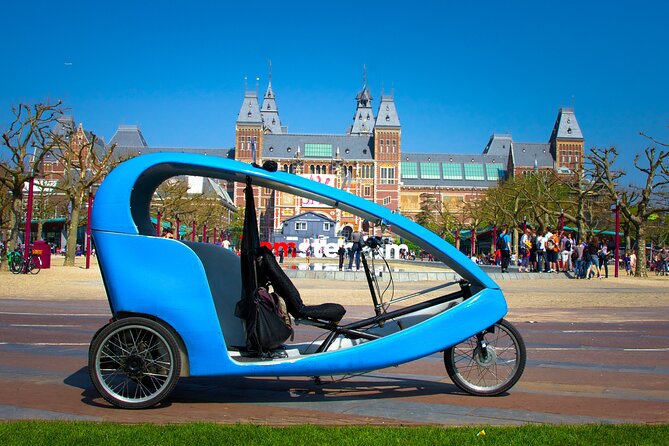
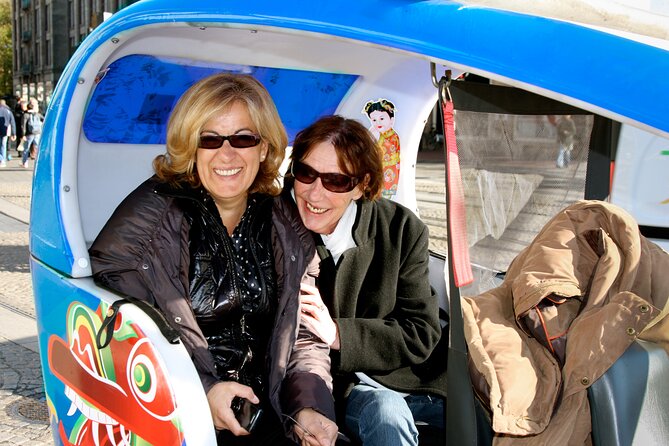
Pedicab rides make Amsterdam feel instantly manageable. This private pedicab tour in a blue rickshaw lets you skim the city without the marathon walking, while Bram de Haan brings the stops to life with old maps, photos, and local stories.
I also like the pacing. You get photo-friendly stops at major landmarks like Dam Square and Museumplein, with time to pull over for pictures or linger when something pulls your attention.
The tradeoff is that it is a 2-hour circuit, so you will mostly see buildings from the outside, and museum entry is limited. The Rembrandt House Museum, for example, is viewed from outside and entry is not included, and the ride depends on good weather even though a waterproof blanket can help in light rain.
In This Review
- Quick Takeaways
- Blue Pedicab Pickup, Comfort, and Getting Around Fast
- Why Bram de Haan Makes the City Click
- Dam Square to Chinatown: The Old City Core, Explained
- Montelbaanstoren and the Canal Views You Want
- Rembrandt’s Area, Jodenbuurt, and Synagogue Architecture from the Outside
- Holocaust Names Monument: A Sobering Stop That Fits the Route
- Magere Brug and Museumplein: Canals, Bridges, and Big-City Energy
- Timing, Photo Stops, Snacks, and Weather Reality
- Price and Value for a Private Pedicab Tour Up to Two
- Should You Book This Amsterdam Pedicab City Tour?
- FAQ
- How long is the Amsterdam Pedicab City Tour?
- Is this tour private, and how many people can go?
- Where do we meet the guide for pickup?
- What language is the tour offered in?
- Are entrance tickets included for museums?
- Are snacks included during the tour?
- Does the tour run in rainy or bad weather?
- Is there a weight limit for riding in the pedicab?
Quick Takeaways
- Private, up-to-two pedicab time that keeps the focus on your group and your questions
- Bram de Haan’s before-and-after visuals, using maps and photos to show how Amsterdam changed
- A route that mixes the obvious with the quieter corners, including the Jewish quarter and Chinatown area
- Canals and bridges on purpose, with multiple chances for skyline views and photos
- Views over walking, meaning you can cover more ground without tiring out
- Rain-ready for light weather, plus waterproof blanket support, while very poor weather can cause rescheduling
Blue Pedicab Pickup, Comfort, and Getting Around Fast
This tour is built for people who want a smart Amsterdam orientation without spending the day on your feet. In a blue pedicab, you cover a large city loop in about 2 hours, which matters when you have limited time, tired legs, or you just want to see more.
The pickup is straightforward. You wait in front of your hotel and look for the blue pedicab, so you are not hunting for a meeting point across a busy area. It is also a private tour, so you are not squeezed into a larger group rhythm.
Comfort is part of the deal. The pedicab format is easy to get in and out of for short stops, and the reviews also point to the guide arriving early and bringing practical gear for weather. Keep one thing in mind: there is a 210 kg total passenger weight limit, so if you are traveling as a heavier group, you should double-check fit before booking.
Other loops taking in the big sights:
- Amsterdam: 75 Minute City Canal Cruise with Audio Guide
★ 4.4 · 19,938 reviews - Amsterdam: City Centre Canal Cruise including Audioguide
★ 4.3 · 16,901 reviews - Amsterdam: Smoke and Lounge City Boat Cruise
★ 4.7 · 8,572 reviews
Why Bram de Haan Makes the City Click
What makes this tour work is the way the guide explains what you are seeing. Bram de Haan uses real visuals like old maps and photographs, then ties them to what you see now. That means you are not just collecting facts, you are getting a sense of how neighborhoods grew, shifted, and why certain parts of the city look the way they do.
Another thing I’d watch for is how flexible the stops can feel. The pacing is structured, but the guide is happy to pull over when you want a photo or want a bit more detail on a specific building, street, or canal corner. It is a good match for first-timers who want a plan, plus curious travelers who do not want to feel rushed.
One practical upside: you get undivided attention. With a private setup for up to two people, it is easier to ask follow-up questions on the spot, especially when the guide is talking about the layered story behind places like Dam Square and the canal ring.
Dam Square to Chinatown: The Old City Core, Explained
The tour starts where Amsterdam’s story becomes visible in one glance: Dam Square. This is the old center’s main square and the heart of the area where the city evolved. You will get the basics you need quickly, including landmarks around the square like the Royal Palace area, the Nieuwe Kerk (New Church) zone, and the national monument.
From there, the route heads toward Zeedijk, a street tied to Amsterdam’s early dike history. You are not just looking at storefronts here. The guide frames Zeedijk as an old artery of the city, including a stop near one of Amsterdam’s oldest cafe interiors, which helps you understand the area’s long continuity of daily life.
Next comes Chinatown, described as the oldest Chinese neighborhood on the European mainland. It is not a museum stop. It is a “walk with your eyes open” moment, where you see restaurants and shops tied to the neighborhood’s identity, plus a temple presence that gives the area cultural weight beyond food.
Then you hit Nieuwmarkt, another key old square tied to the city’s historical defenses and city-gate past. The value here is context. If you know what role city gates played when Amsterdam was walled and fortified, the square makes more sense. You also get nearby details that help you picture the city before the big 17th century expansion changed the map.
One consideration: these are short stops, usually around 5 to 10 minutes, so if you want deep photo sessions at each exact spot, you may need to prioritize. The tour is designed to help you see the shape of Amsterdam, not to linger for hours at one site.
Montelbaanstoren and the Canal Views You Want
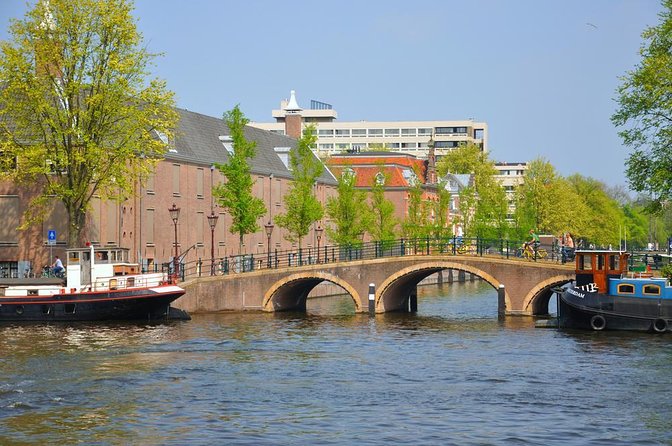
After the early urban core, the tour shifts into viewpoints that show how Amsterdam defends itself and how it lives with water. A highlight is Montelbaanstoren, an old ship watch tower linked to the defense line from the early 1500s. You will also get a lookout angle over de oude Waal, where houseboats sit against 17th century canal houses in the background.
This is the kind of stop that works even if you are not a big history buff. The tower gives you a physical anchor, then the guide connects it to how Amsterdam’s canal life is tied to trade, transport, and the practical realities of living near water. It is a visual “aha” moment.
Another smart element is how the tour keeps you moving without making you do long stretches of walking. You get the viewpoints and the story, then you slide to the next area before you lose momentum. For many travelers, that is the whole point of a pedicab city tour: less tiring, more seeing.
Some other canal-ring outings to set against this



Rembrandt’s Area, Jodenbuurt, and Synagogue Architecture from the Outside
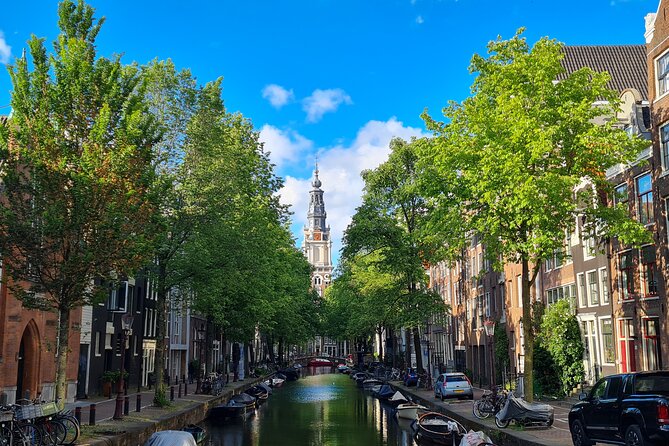
One of the best parts of the route is that it does not only stick to postcard landmarks. You also pass through parts of the Jewish quarter area. Rembrandt House Museum appears near the route, but you view the outside, and museum entry is not included. That is still worthwhile if you like linking an artist to a place, but it is not a substitute for a full museum visit.
Next comes Jodenbuurt, where you see surviving buildings, streets, and synagogues connected to the old Jewish quarter. Even with losses from World War II, the area still carries visible history in its architecture and street feel. The guide’s job here is to help you read what remains and understand what was disrupted.
You then pass by the Portuguese Synagogue of Amsterdam, described as the largest synagogue and among the early western European synagogues built after Jewish communities were allowed to build more freely in the late 1600s, with the building dating to 1675. You will look at the outside and also see other synagogue buildings opposite, connected to what is now the Jewish Museum area.
I like this approach because it respects time. Instead of asking you to commit to multiple museum tickets, you get a strong sense of place from street-level viewing. If you want interior access later, you can plan that on another day.
Holocaust Names Monument: A Sobering Stop That Fits the Route
This tour includes a moment that is heavier than the usual sightseeing loop: the National Holocaust Names Monument. You will pass by a memorial made from many brick stones with names, meant to remind you of Dutch Jewish victims from World War II.
It is short, just a couple minutes in the flow, so you do not turn your trip into a long solemn session. Still, it adds an important layer. You come away understanding that Amsterdam’s history is not only about commerce, art, and canal houses. It also includes loss and memory, and the city makes room for that in public space.
If you want to reflect longer, you can ask the guide for a bit more time at the stop. Just know the tour overall is paced to cover many areas within the 2-hour window.
Magere Brug and Museumplein: Canals, Bridges, and Big-City Energy
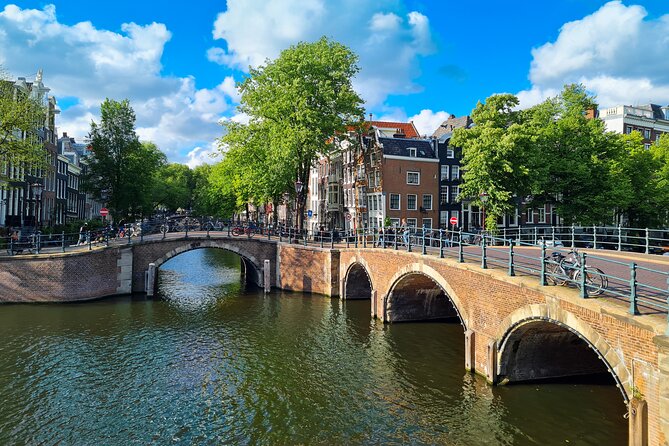
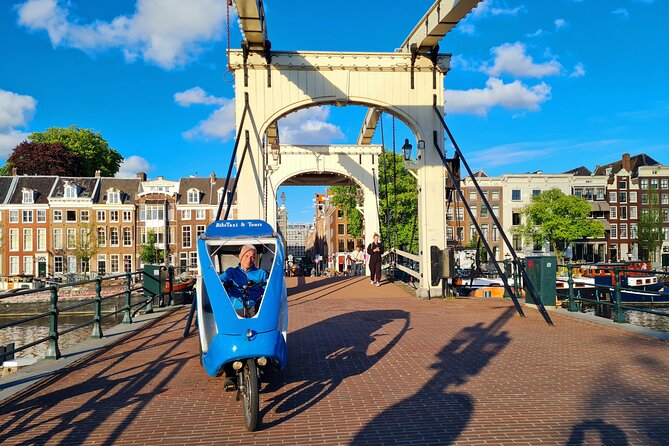
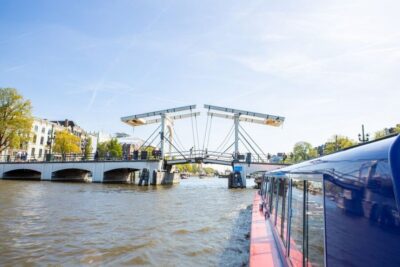
Then the tour heads toward some of Amsterdam’s most iconic views. Magere Brug (the Skinny Bridge) is a standout for photos. The bridge is known for its nighttime lighting, with bulbs that highlight its narrow shape. Even in daylight, it still delivers a clean canal-line look, and the view over the Amstel is a great way to orient yourself.
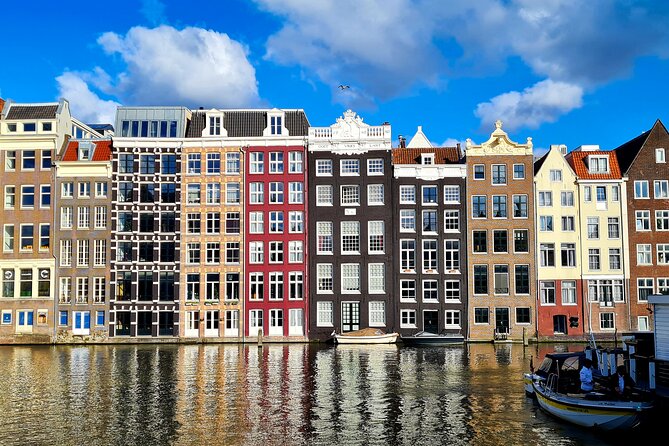
After that, you get to the Grachtengordel, the 17th century canal district ring. The guide explains how these canals shaped the city’s expansion and how canal houses reflect the different eras. This is one of those stops where a short explanation helps you see patterns you might otherwise miss. You start noticing that not all canal houses look identical, even when they follow similar building logic.
Finally, the route arrives at Museumplein, a major square surrounded by some of the Netherlands’ biggest cultural names. You get views toward the Rijksmuseum side and also the Concertgebouw. The tour also notes that the area is packed with other museums nearby, including Van Gogh-related sites, contemporary art options, and more. In this stop, you are mostly soaking in the setting and getting context, not doing museum hours.
A unique touch is the pass through the famous bicycle tunnel under the Rijksmuseum. If you have never seen it, it changes how you think about the city’s movement. Then you continue toward Museumplein for a view of the back of the Rijksmuseum building, completed in 1885 and designed by Pierre Cuypers.
This is a great closing arc because it ties together three Amsterdam themes at once: water, architecture, and culture.
Timing, Photo Stops, Snacks, and Weather Reality
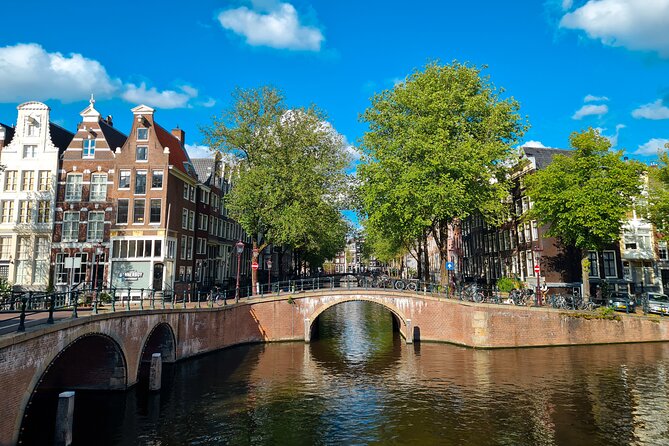
Because this is a 2-hour private pedicab loop, you should treat each stop as a “see it, understand it, photograph it, move on” moment. The stops are generally short, with several around 5 minutes, a couple longer ones like Nieuwmarkt and Jodenbuurt, and a few quick pass-bys for key monuments and buildings.
If you care about photos, the good news is you can take them without hopping off constantly. The guide is set up to pause when needed, which is a big deal in Amsterdam where timing and crowds can make photo planning annoying. Still, be ready for brief get-out moments rather than long free-time wandering.
Snacks are not included, so if you are doing this early or later in the day, bring a small water bottle and plan a snack before or after. That way you stay focused on the sights instead of thinking about hunger midway through the ride.
Weather is also real here. The experience requires good weather, but a waterproof blanket is available if rain pops up during the tour. If the operator cancels due to poor weather, you should expect rescheduling or a refund option, so check your email and keep an eye on updates as your date gets closer.
Price and Value for a Private Pedicab Tour Up to Two
At $237.65 per group (up to 2), this is not a budget activity. You are paying for private transportation, a guide, and the ability to cover a lot of ground without doing the full walking version of the route.
That price can feel fair if you compare it to two separate tickets for multiple guided city tours, or if you are already spending money on transit and museum add-ons. The real value is the combination of:
- Private pace for a couple
- High sight density in a short window
- Guided context using old maps, photographs, and personal local perspective
If you are traveling solo, the “up to two” setup means you may want to think about splitting with a friend. If you are traveling as a couple and you value a relaxed first-day overview, this is the kind of tour where the cost starts to look less crazy.
For people who love walking for hours, you could do a self-guided canal and historic core day cheaper. But if you want efficient orientation plus a guide who makes the city’s layers make sense, this pedicab format justifies the price more easily.
Should You Book This Amsterdam Pedicab City Tour?
Book it if you want a high-efficiency first Amsterdam loop, you prefer limited walking, and you like getting city context from a local guide who uses old visuals to explain how Amsterdam changed. It is also a strong choice if you are doing Amsterdam in a short time window and want the highlights plus meaningful stops like the Holocaust Names Monument.
Skip it or adjust expectations if you want long museum visits. This tour is mostly about views from the outside, quick stops, and photo moments, with limited entry included. Also, if you are sensitive to cold wind or rain, plan for weather flexibility since the experience depends on good conditions.
If your goal is to get your bearings fast, see canal and synagogue area context, and end with classic Amsterdam views from Magere Brug to Museumplein, this is a smart use of your time in the city.
FAQ
How long is the Amsterdam Pedicab City Tour?
It runs for about 2 hours.
Is this tour private, and how many people can go?
Yes, it is a private tour, and it lists a group size of up to 2.
Where do we meet the guide for pickup?
You wait in front of your hotel and look for the blue pedicab.
What language is the tour offered in?
The tour is offered in English.
Are entrance tickets included for museums?
The stops are listed as free, but museum entry is not included. For example, Rembrandt House Museum is viewed from the outside, and entering the museum is not included.
Are snacks included during the tour?
No, snacks are not included.
Does the tour run in rainy or bad weather?
The experience requires good weather. If it is canceled due to poor weather, you will be offered a different date or a full refund. A waterproof blanket is available if rain happens.
Is there a weight limit for riding in the pedicab?
Yes. Maximum total passenger weight is limited to 210 kg.
Newest on the canal ring
- Amsterdam Bike Food Tour with Private Guide★ 5.0 · 1 review
- Amsterdam: Rijksmuseum Private Tour with an Art Historian★ 5.0 · 1 review
- Happy B-day Amsterdam! Guided Tour with a History Buff★ 5.0 · 1 review
- Private day trip to Giethoorn and the Enclosing Dike★ 5.0 · 1 review
- Local Foodie Adventure in Amsterdam★ 5.0 · 1 review
- Private Photo Shoot in Amsterdam with a Professional Photographer★ 5.0 · 1 review
- Private Sightseeing Tour to Giethoorn from Amsterdam incl. canal cruise★ 5.0 · 1 review
Sightseeing Tours, compared.
75 Minute City Canal Cruise with Audio Guide
Read our review →
City Centre Canal Cruise including Audioguide
Read our review →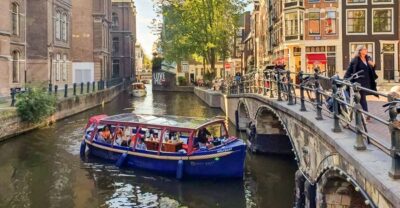
City Card with Free Entrance & Public Transport
Read our review →
Browse the lists this tour appears in