
Reviewed · CITY WALKING TOURS
Amsterdam private city walking experience with a local
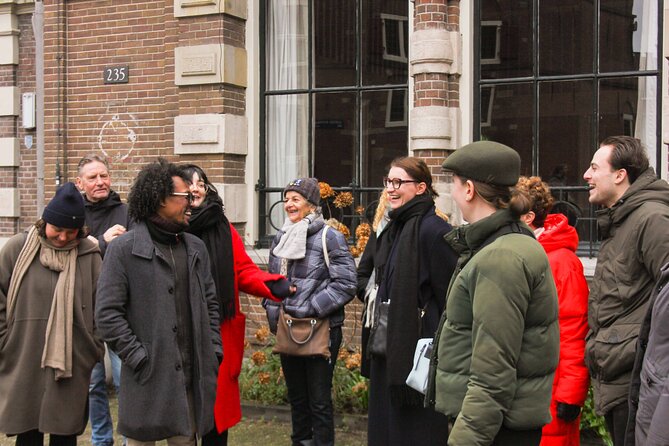
Amsterdam feels like a puzzle. This private city walking experience lines up key places so the stories connect, from the city’s early roots to its modern streets.
I love that it is genuinely personal. In the guide feedback, Manouk gets high marks for adjusting to what you care about, explaining clearly, and making you feel relaxed, even if you travel solo.
The only real drawback is the format. With short stops, about 15 minutes each on most locations, you need to be okay with seeing a lot rather than lingering.
In This Review
- What makes this Amsterdam private walking tour worth your time
- The best reason to do it: the tour’s smart 2-hour flow
- Beursplein: Where Amsterdam’s name and big-city rise start
- Dam Square and the Royal Palace, plus the Second World War layer
- Begijnhof: A calm courtyard that says a lot about tolerance
- The house on three canals and the bicycle bridge trick
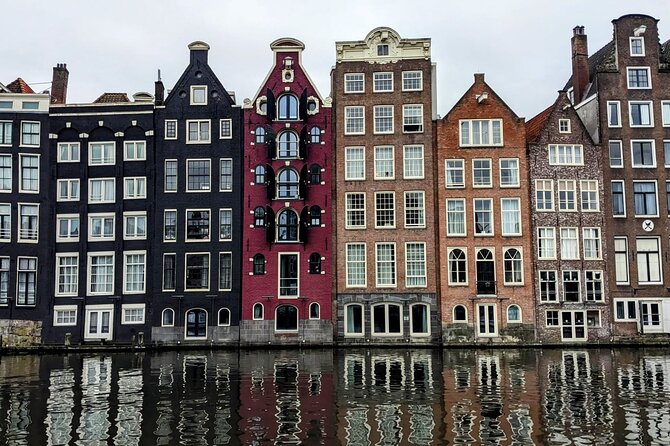
- Nieuwmarkt: The Waag, guild power, and the dancing houses
- Zeedijk: Chinatown’s 1970s chapter and the street’s turnaround
- Centraal Station: Architecture that also explains a city hub
- Why the guide matters more than the checklist
- Walking logistics that keep the experience comfortable
- Value check: what $180.62 per group really means
- Who this Amsterdam private walking tour fits best
- Should you book this Amsterdam private walking experience?
- FAQ
- How long is the Amsterdam private city walking experience?
- Where does the tour start?
- Is this tour private?
- What language is the tour offered in?
- Are there admission fees for the stops?
- Will I receive a ticket on my phone?
- Is this tour near public transportation?
- Can I bring a service animal?
- Can I cancel for a full refund?
What makes this Amsterdam private walking tour worth your time
- Private group, up to 12 people, so you get a calmer pace and more room for questions
- 7 focused stops in around 2 to 2.5 hours, covering the city’s past and present
- Free admission at each highlight stop, so your money stays for food and walking snacks
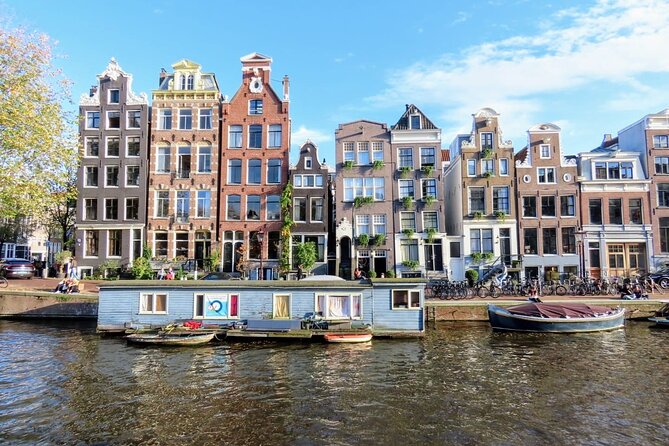
- Canal-house curiosities, including the house on three canals and its bicycle bridge
- Neighborhood shift stories, especially Zeedijk, from 1970s danger to a current local favorite
- Guide support with maps and pictures, plus little local edible treats on some walks
The best reason to do it: the tour’s smart 2-hour flow
This is a tight, efficient Amsterdam walk, about 2 hours on the clock with some wiggle room up to 2.5. You start at Beursplein and end back there, so you do not burn time repositioning.
Because it is private, your group can set the tone. If your interest leans toward architecture, you can steer more of the conversation that way. If you care about how Amsterdam became Amsterdam, you can ask for extra context without feeling rushed.
More of the canal ring crossed on foot:
- Amsterdam Anne Frank: Small-Group Walking Tour & Local Guide
★ 4.8 · 12,789 reviews - Anne Frank’s Story – Guided Walking Tour through Amsterdam
★ 5.0 · 11,619 reviews - Absolutely Amsterdam – the Essential Introductory Walking Tour
★ 5.0 · 3,629 reviews
Beursplein: Where Amsterdam’s name and big-city rise start
Your walk begins at Beursplein, which is a good choice because it sets the stage quickly. Here, you get the origin story of the city, including how Amsterdam got its name, and how a fishing village grew into a financial powerhouse in the 17th century.
What I like about starting here is the “why” behind the sightseeing. Once you understand the shift from small settlement to global economy, Dam Square and the canal-era buildings stop looking random. They become evidence.
Practical note: this stop is short, about 15 minutes, so bring questions early rather than saving them for later.
Dam Square and the Royal Palace, plus the Second World War layer
Next is Dam Square, the city’s big public stage. You’ll learn why Dam Square matters to Amsterdam’s formation, then you get to look at the Royal Palace on the Dam as part of that story, not just as a photo backdrop.
Then the guide connects it to the Second World War era, which helps you read the square with more depth. It is the kind of context that makes the place feel real, not just scenic.
Consideration: Dam Square can feel busy and exposed. If you are sensitive to crowds or want calmer walking, keep your expectations practical. You are there briefly, then the tour moves on.
Begijnhof: A calm courtyard that says a lot about tolerance
Begijnhof is where the pace changes. This serene courtyard is famous for its religious past, and you will get that history without it turning into a lecture. The big theme here is Amsterdam’s tolerance, explained through how this place functioned over time.
You also see two standout elements:
- one of the oldest houses in Amsterdam
- the two wooden cottages
That mix matters. You get a quiet, human-scale place and then you connect it back to the city’s larger social story. It is one of the best stops on this route if you like Amsterdam that feels lived-in rather than staged.
Tip for your walk: slow down here. Even though the time is about 15 minutes, give yourself a moment to look around before you move on.
Other loops taking in the big sights:
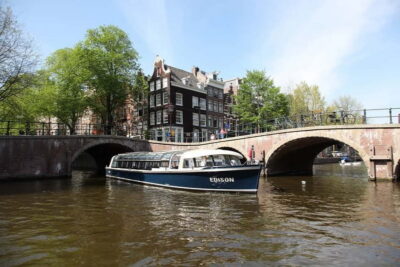




The house on three canals and the bicycle bridge trick
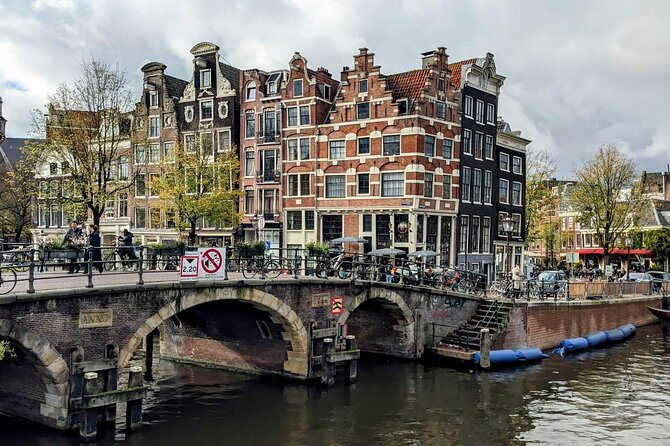
At the House On The Three Canals, you get a classic Amsterdam visual puzzle. You’ll learn about a house positioned across multiple canals, and the tour explains the idea of the bicycle bridge that helps people cross the water-connected space.
This is a fun stop because the focus is practical. Amsterdam’s canals are not just scenery. They shape daily movement, architecture decisions, and even the little “how do people get through here” solutions that make the city work.
If you like playful engineering and compact city design, this stop will land well.
Time reality: it is still around 15 minutes, so this is more about understanding what you are seeing than a long deep study.
Nieuwmarkt: The Waag, guild power, and the dancing houses
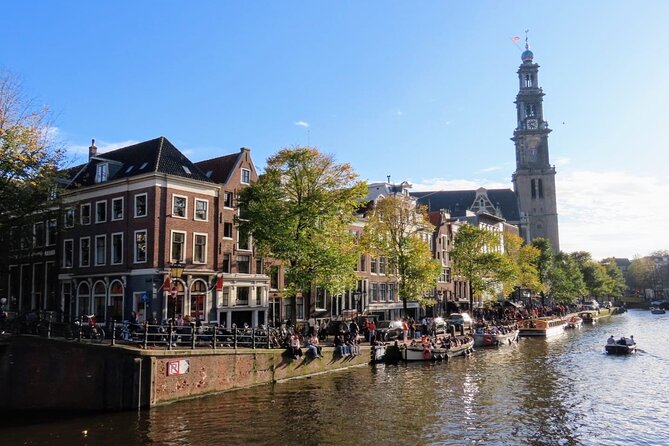
Then you move to Nieuwmarkt, where the tour shifts from individual buildings to how Amsterdam organized work and community.
You’ll stop at the Waag, which started as one of the old city gates and later became a guild hall. The guide connects this to the importance of guilds in Amsterdam, explaining why these groups mattered for trade, skill, and city life.
After that, you’ll see the famous dancing houses. Even if you already know the look, you’ll get more context on what makes them a “thing” in Amsterdam, so your photos come with meaning, not just angles.
This stop is about 30 minutes, which is longer than most. That extra time helps the story feel less rushed.
Zeedijk: Chinatown’s 1970s chapter and the street’s turnaround
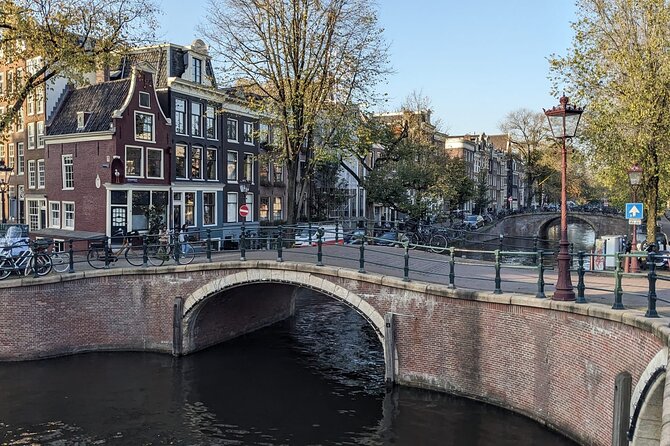
At Zeedijk, you get the neighborhood story you might not expect on a first-time walk. The tour discusses Chinatown here and remembers when this area was once the most dangerous in Amsterdam during the 1970s.
Then it explains the decline and how the street has transformed into a favorite spot for many Amsterdammers today.
I like this stop because it keeps the city honest. Amsterdam is easy to romanticize when you only focus on canals and gables. Zeedijk reminds you that cities change, sometimes through hard chapters, and that transformation is part of the real story.
Practical note: this is still a short stop, about 15 minutes, so if you want more detail, ask for recommendations right away after you hear the overview.
Centraal Station: Architecture that also explains a city hub
The tour ends at Centraal Station, and it is a satisfying finale. You’ll explore one of Amsterdam’s most stunning buildings and learn why the station’s location mattered for centuries.
The guide explains Centraal Station as a transportation hub and a historical symbol of connection and prosperity. That framing is the key. The station is not just a landmark you pass through. It is a statement about how people and ideas moved through the city.
If you are walking in from the city center, this ending also works well because the station is practical for transit afterward. Your tour returns you to the meeting area, and Centraal Station is close enough to keep your next step simple.
Why the guide matters more than the checklist
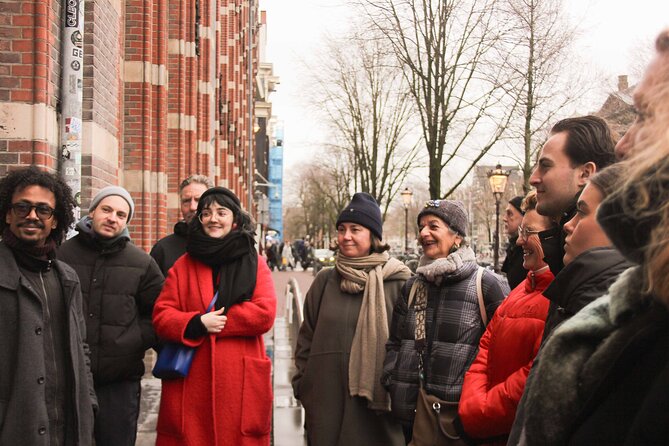
This experience has one repeat theme in the guide-led experience: the guide treats your group like people, not a headcount.
In the most enthusiastic accounts, Manouk stands out for being:
- friendly and welcoming, including for solo travelers
- extremely informative and organized in how she presents facts
- curious about you, so the conversation feels natural
- able to adapt the walk to your interests, especially history and architecture
- prepared with maps and pictures, which helps you connect what you see with what you hear
- willing to include little local edible treats during the walk
That combination matters in Amsterdam, because the city’s details can overwhelm you. A good guide turns confusion into clear landmarks and simple takeaways.
You also get a better memory afterward. If you can picture what you learned at Beursplein, then you can read Dam Square differently. If you understand guilds at Nieuwmarkt, the old buildings stop being decorations. They become functional pieces of how the city ran.
Walking logistics that keep the experience comfortable
Plan for a steady walk and short stops. Most highlights are around 15 minutes, with Nieuwmarkt taking about 30 minutes. That pacing keeps you moving, but it also means you should wear shoes you trust.
This tour runs in English and uses a mobile ticket, which is convenient. You will be near public transportation, which helps if you are coordinating with other parts of your day.
Also, this is designed so most travelers can participate. If you have mobility concerns, you should still consider the fact that it is a city walking route, not a sit-down museum visit.
Value check: what $180.62 per group really means
The price is $180.62 per group for up to 12 people, for about 2 hours. That sounds straightforward, but the value depends on who is in your group.
Here’s the math in plain terms:
- If you are a group of 2, you are paying about $90 per person.
- If you fill 6 people, it becomes about $30 per person.
- If you maximize the group size near 12, it drops to about $15 per person.
So this works best when you are traveling with family or friends who want the flexibility of a private walk. If you are solo or a couple, it can still be worth it if you value personal attention and a guide who can tailor the route and pace to you.
Why it can still feel like a good deal:
- admissions at the main stops are free
- you get a private guide experience rather than a big-group script
- the route covers multiple “big Amsterdam” areas plus canal-house and neighborhood context
- you leave with a better sense of direction for the rest of your trip
Who this Amsterdam private walking tour fits best
You should consider booking this if you want:
- a quick, practical orientation to the city
- history and architecture explained in human language
- a walking route that also includes social context, like Zeedijk’s 1970s story
- a guide who can answer questions and adjust to your interests
It may not be the best fit if you want a long museum-style experience or if you prefer to spend a lot of time inside one building. This tour is about smart walking and clear connections, not slow deep study.
If you are the type of traveler who likes to understand what you are looking at while you’re looking at it, you’ll probably enjoy this format a lot.
Should you book this Amsterdam private walking experience?
I think you should book it if you want a guided, no-stress way to understand Amsterdam in one half-day chunk. The route is well-chosen, and the combination of major squares, a quiet courtyard, canal architecture, a neighborhood story, and a big transportation landmark gives you a rounded view without museum fatigue.
The decision comes down to your group size and pace preference. If you have 4 to 8 people, it tends to feel like strong value. If you are solo or two people, it is still a nice way to get personalized attention, just be honest about the per-person cost.
If you want the city to make sense fast, this is the kind of walk that does it.
FAQ
How long is the Amsterdam private city walking experience?
It runs for about 2 hours, and it can take up to around 2.5 hours depending on the pace and time at the stops.
Where does the tour start?
The tour starts at Beursplein, 1012 JW Amsterdam, Netherlands.
Is this tour private?
Yes. It is a private activity, and only your group participates.
What language is the tour offered in?
The experience is offered in English.
Are there admission fees for the stops?
The tour includes stops where admission is listed as free.
Will I receive a ticket on my phone?
Yes. The experience uses a mobile ticket.
Is this tour near public transportation?
Yes, it is described as near public transportation.
Can I bring a service animal?
Yes, service animals are allowed.
Can I cancel for a full refund?
You can cancel up to 24 hours in advance of the experience start time for a full refund. If you cancel less than 24 hours before, you will not receive a refund.
Newest on the canal ring
- Amsterdam Bike Food Tour with Private Guide★ 5.0 · 1 review
- Amsterdam: Rijksmuseum Private Tour with an Art Historian★ 5.0 · 1 review
- Happy B-day Amsterdam! Guided Tour with a History Buff★ 5.0 · 1 review
- Local Foodie Adventure in Amsterdam★ 5.0 · 1 review
- Private Photo Shoot in Amsterdam with a Professional Photographer★ 5.0 · 1 review
- Private day trip to Giethoorn and the Enclosing Dike★ 5.0 · 1 review
- Private Sightseeing Tour to Giethoorn from Amsterdam incl. canal cruise★ 5.0 · 1 review
City Walking Tours, compared.

Amsterdam Anne Frank: Small-Group Walking Tour & Local Guide
Read our review →
Anne Frank’s Story – Guided Walking Tour through Amsterdam
Read our review →
Absolutely Amsterdam – the Essential Introductory Walking Tour
Read our review →
Anne Frank Guided Walking Tour in DE/EN/IT/ES
Read our review →

Anne Frank Walking Tour Amsterdam Including Jewish Cultural Quarter
Read our review →Browse the lists this tour appears in