
Reviewed · AMSTERDAM
Explore hidden streets with friends
Amsterdam gets smaller with the right guide. This 2.5 hour walking tour helps you learn the city’s layout fast, moving from famous squares to lesser-known streets, courtyards, and church landmarks. You’ll also hear how key places shaped Amsterdam long before it became the postcard capital.
I really like two things about it: the route puts Dam Square, the Canal Ring, and the Jordaan into one connected story, and the pace is conversational, so it feels like talking with an expert who answers your questions without rushing you along. The one thing to consider is simple: you should be comfortable walking about 2.5 miles / 4 km in roughly 2.5 hours, mostly on streets and near canals.
In This Review
- Key highlights worth your time
- Start at Beursplein and get your bearings fast
- Dam Square, the town hall building, and the why-behind-where
- The Canal Ring crossing: see medieval expansion up close
- Nine Streets: shopping lanes and small streets without the crush
- Jordaan hidden lanes: squares, courtyards, and local Amsterdam
- The church for the poor: a specific reason, not vague grandeur
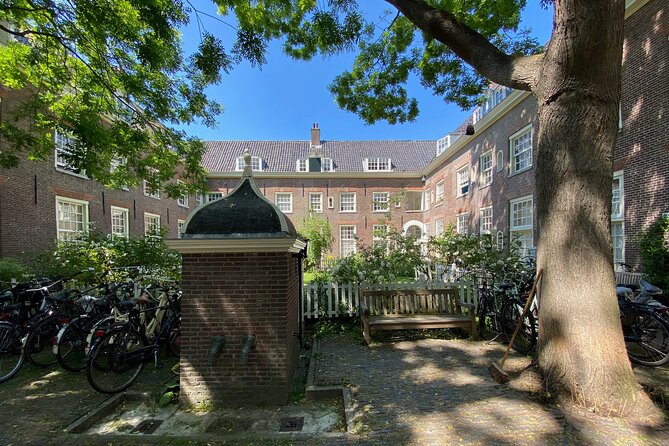
- Karthuizerhof courtyard: widows, social housing, and 1650 reality
- Westerkerk and Rembrandt’s burial: merchant power in stone
- What makes the guides feel different: questions, pace, and calm confidence
- Walking time, distance, and what to plan for
- Price of about $52.81: what you’re buying and why it can be worth it
- Who this works for, and who might prefer something else
- Should you book this hidden-streets Amsterdam walk?
- FAQ
- How long is the walk?
- How far do we walk?
- What is the maximum group size?
- Is it offered in English?
- Where does the tour start and end?
- Can I get a full refund if I cancel?
Key highlights worth your time
- Up to 10 people: small group size means more personal attention and easier questions
- Dam Square to the Canal Ring to the Jordaan: a tight route that explains how Amsterdam grew
- Courtyard stop at Karthuizerhof: a 1650 social housing site with a clear human story
- Quiet streets via the Nine Streets area: shopping and local life away from the loudest crowds
- Church-and-art connection at Westerkerk: built by merchant power, with Rembrandt buried there
- English guided storytelling: offered in English with a mobile ticket
Start at Beursplein and get your bearings fast
Your tour begins at Beursplein 1-3, near the heart of Amsterdam, which is exactly where you want to be if your first goal is to understand the city without getting lost. The opening focus is on Amsterdam’s origins, and the guide frames the city as something built and expanded by people making real decisions, not just as scenery.
One moment you will likely remember is the story of the world’s first stock market. It’s not a random trivia hit. It explains why merchants and money mattered in Amsterdam’s rise, and it makes later stops feel linked, not like separate photo spots. You also get context for what you’re seeing around you as you move toward the central square.
Weighing this against the rest? A few more from Amsterdam:
- Amsterdam: Heineken Experience Ticket including 2 Drinks
★ 4.6 · 36,014 reviews - Amsterdam Classic Saloon Boat Cruise with Drinks and Cheese
★ 5.0 · 31,825 reviews - Amsterdam Luxury Canal Cruise + Unlimited Drinks & Bites option
★ 5.0 · 30,518 reviews
Dam Square, the town hall building, and the why-behind-where
Once you reach the central square, you’re not just hearing dates. You’re learning why that place became the center and how it functioned over time. The guide calls out the importance and history of the square, then shifts to a key building that originally served as the town hall of Amsterdam.
That combination helps you read Amsterdam like a map. A lot of visitors walk through Dam Square, point at major structures, then move on. Here, you’ll understand what roles buildings played in city life, so your eyes start noticing details that would otherwise slide by.
A practical tip for this part: keep your phone ready but not glued to it. In the first stretch, the narration is doing the work of connecting the dots. If you constantly stop to take pictures, you’ll lose the flow that makes the storytelling click.
The Canal Ring crossing: see medieval expansion up close
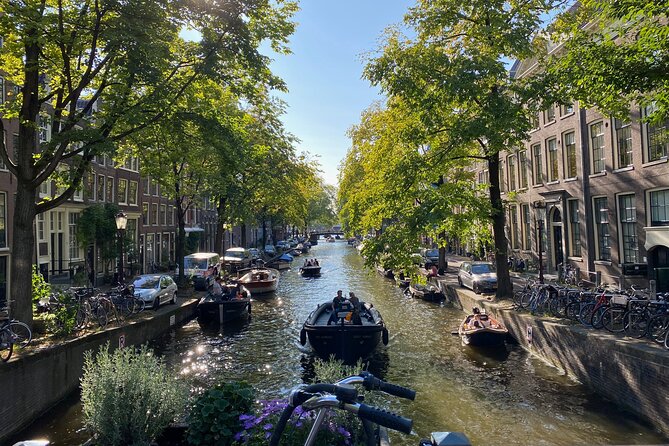
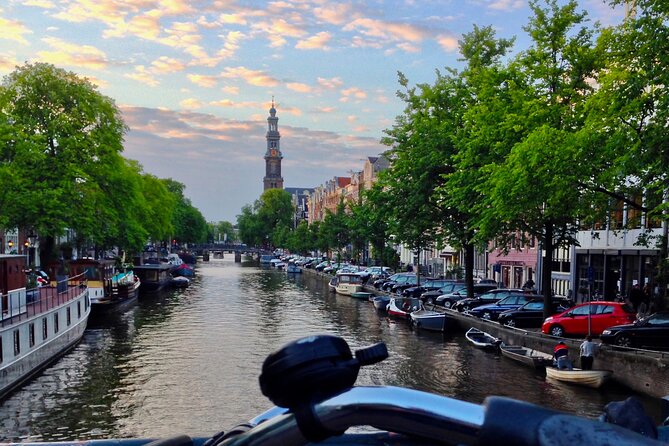
After the square, the walk brings you onto the Canal Ring of Amsterdam. This is one of those areas that looks instantly impressive, yet it can feel abstract if nobody explains what you’re looking at. Here, the guide explains how the city extended during the medieval period, so the canals become evidence of growth rather than just a view.
The Canal Ring also helps you physically grasp Amsterdam’s shape. You cross it on foot, so you get a sense of where movement happens and how neighborhoods connect. It’s a good reset from the big-square energy, and it sets you up for the calmer streets that come next.
Also, the tour marks this stop as free of paid admission. That’s not a small detail. You’re paying for guidance and direction, not for constant add-on tickets.
Nine Streets: shopping lanes and small streets without the crush
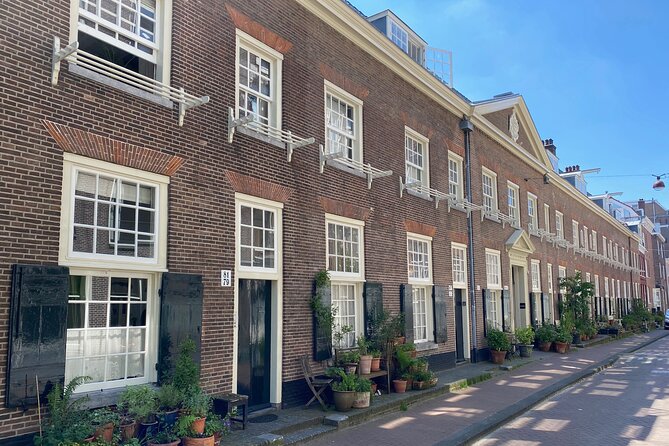
One of the tour’s smartest moves is the transition from major landmarks into the Nine Streets area. This is the zone where you can wander and shop, but without the same level of tourist density you get in the most famous corridors. The guide explains how the nine streets became a cozy shopping area and how that differs from the mass-tourism flow.
In a city that can feel crowded even when you try to steer sideways, this is a quality-of-life win. You get quiet street corners, more local pace, and the chance to notice smaller storefronts and everyday details. If you like walking for texture, not just for checkmarks, you’ll enjoy this segment.
A different use for the same hours in Amsterdam:



Jordaan hidden lanes: squares, courtyards, and local Amsterdam
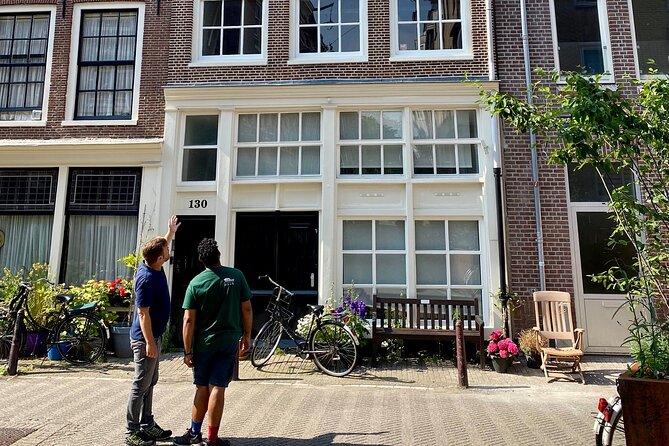
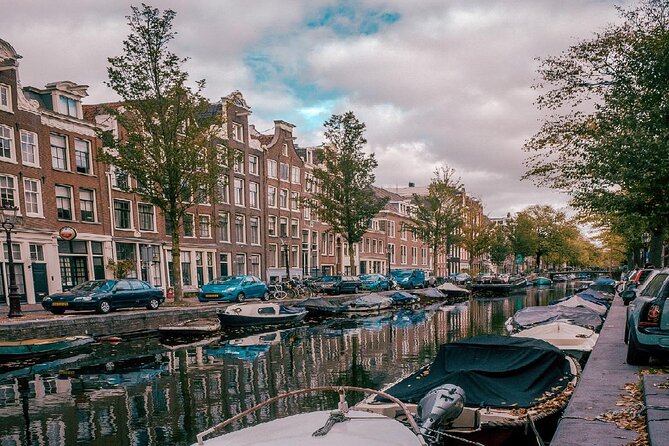
The Jordaan stop is where the tour really delivers on the promise of hidden streets with friends. You’ll spend about an hour and 20 minutes exploring hidden streets and squares, with the guide explaining why the Jordaan remains an authentic Amsterdam neighborhood.
What makes the Jordaan work on foot is the rhythm. You’re not just seeing one sight after another. You’re moving through a layered neighborhood where streets connect like shortcuts, and the guide’s pointers help you understand how locals experience the area.
The walk also includes a pass by the Anne Frank House during the stroll through the Jordaan. You won’t linger at a ticket line or act like you’re in a museum crowd scene. Instead, you’ll get the stop in the right narrative context, then continue into smaller streets that feel more like everyday life.
The church for the poor: a specific reason, not vague grandeur
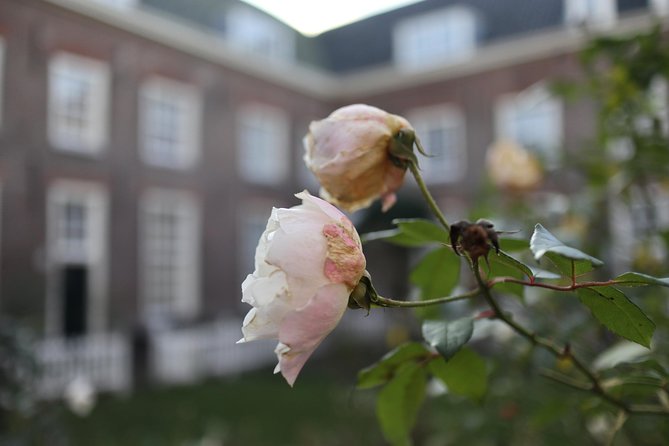
In the middle of the Jordaan route, you hear about a church for the poor and why it was constructed exactly there. That detail matters because it turns architecture into something practical. You start asking, who needed what, and where did the city choose to place help?
This is also a good moment to slow down. The guide’s explanations here are more about purpose than photo angles, so even if you don’t fall in love with every building style, the logic behind the placement sticks.
Karthuizerhof courtyard: widows, social housing, and 1650 reality
Then comes one of the most memorable stops on this walk: Karthuizerhof, a courtyard built in 1650 for widows. The guide connects it to one of the first social housing projects in the world, which gives the courtyard a serious meaning underneath the calm beauty.
Courtyards can be pretty, but this one has a clear human anchor. You’re looking at a space designed for a vulnerable group, not just a decorative block in the city. That shift is why this stop feels more than scenic.
It’s also listed as about 10 minutes, which is the right length. Short enough to stay brisk, long enough for you to actually notice what a courtyard feels like once you step into it. Again, admission is marked as free, so you’re spending time with the guide, not adding costs.
Westerkerk and Rembrandt’s burial: merchant power in stone
Near the end of the walk, you hit Westerkerk, described as a marvel of a church. The guide explains that rich merchants of Amsterdam had it built, and you’ll hear that Rembrandt was buried here.
This is the kind of stop that changes how you see Amsterdam’s skyline. Churches in major European cities can look like cultural monuments. Here, the narration ties the building to money, civic influence, and the kind of power that could shape public space.
If you’re the type who likes a clear link between art, religion, and city economics, this is a strong payoff. Even if you’ve seen churches before, the merchant-to-art connection keeps it grounded.
What makes the guides feel different: questions, pace, and calm confidence
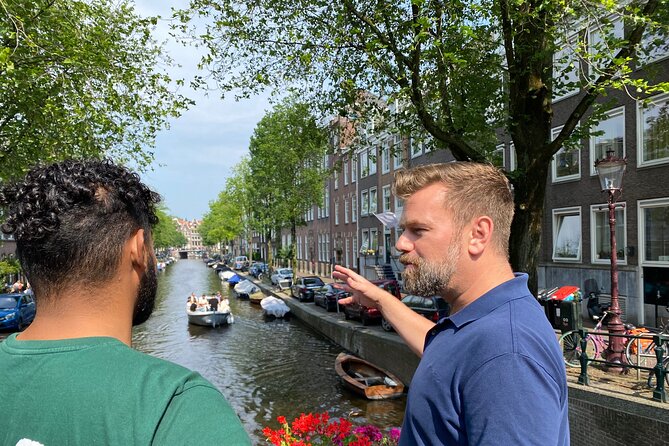
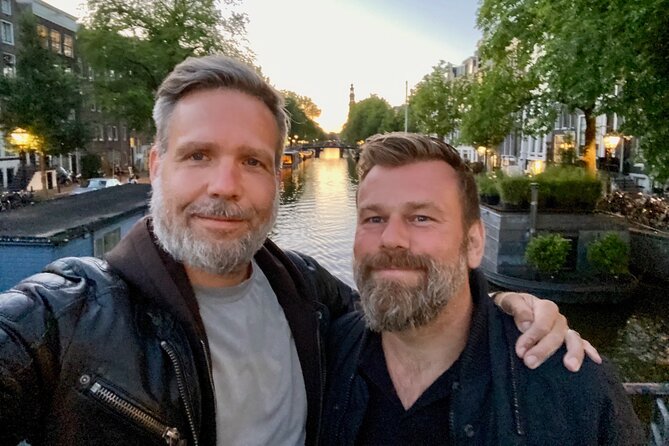
You’ll probably notice a consistent theme from the guide styles tied to this tour. Guides like Michael and Christian are described as informal, conversational, and very willing to answer questions even when the chat wanders. That matters in a walking tour, because Amsterdam is full of things that trigger curiosity.
Small groups support this. With a maximum of 10 travelers, you’re not competing for attention. The guide can pause for your question and then smoothly steer back toward the next stop.
One other plus I like is the sense that the walk is guided, not performed. People highlight that it doesn’t rush, which makes it easier to keep up, especially if you’re traveling with friends and want time to talk between stories.
Walking time, distance, and what to plan for
This tour runs about 2 hours 30 minutes and covers around 2.5 miles / 4 km. That’s a moderate distance, but the real factor is pacing. The route includes multiple stops, plus time spent listening.
Plan for comfortable shoes. Amsterdam streets are mostly flat, but you still walk on uneven sidewalk surfaces and through canal-adjacent areas where you might find cobbles or tight passages. If you’re the kind of traveler who needs frequent breaks, you might feel the total time, even though the distance is manageable.
Also, this is near public transportation, so if you start late, end early, or need a break, there are options to return to your base area. Still, I recommend staying with the full arc if you want the stories to connect.
Price of about $52.81: what you’re buying and why it can be worth it
At $52.81 per person, this is not a “random wander” price, and you shouldn’t treat it like one. You’re paying for a guide who can connect architecture, neighborhoods, and the city’s economy into one walk you can actually remember.
The value angle here is the mix of paid labor and low extra costs. Several stops are listed with free admission, including the Canal Ring segment and parts of the Jordaan route, and Karthuizerhof is also a short, low-friction stop. So you’re not stacking ticket fees on top of the guide fee.
The other value lever is group size. With a maximum of 10, your money buys time with a person, not just a ticket code. If you’ve ever done a big group walking tour and spent most of your time trailing behind, you’ll appreciate the smaller setup.
If you’re visiting Amsterdam for the first time, I think the price makes more sense because you’re buying orientation. If you’ve been in the city for days and already know your way through the Jordaan, you may enjoy it less, unless you specifically want the courthouse-to-canal-to-courtyard storytelling.
Who this works for, and who might prefer something else
This tour fits best if you want Amsterdam with a local lens. You’ll like it if you enjoy back streets, courtyards, and the kind of history that explains why a neighborhood feels the way it does.
It also works well for couples and solo travelers, because the route is easy to follow and the small group setting encourages conversation. If you travel with friends, it’s ideal too, because you can compare notes as the guide moves from square to canals to the Jordaan.
You might choose a different option if you only want the biggest landmarks and you don’t care about neighborhood context. This isn’t a rapid-fire highlights march. It’s a connected story walk.
Should you book this hidden-streets Amsterdam walk?
I’d book it if your goal is to understand Amsterdam beyond the main sights. The strongest reason is the structure: Dam Square and the town hall building set the civic stage, the Canal Ring shows expansion, and the Jordaan plus courtyards bring it back down to everyday human-scale spaces.
It’s also a good match if you like a guide who answers questions and keeps the tone relaxed. You’ll likely leave with a clearer mental map and a better sense of what to explore on your own afterward.
If you dislike walking for any length of time, or you want constant museum-style ticket attractions, then this may feel too “street-focused.” But if you want to learn the city by moving through it, this is the kind of tour that makes Amsterdam click.
FAQ
How long is the walk?
It runs for about 2 hours 30 minutes.
How far do we walk?
You should be able to walk about 2.5 miles (4 km) during the tour.
What is the maximum group size?
The tour has a maximum of 10 travelers.
Is it offered in English?
Yes, it is offered in English.
Where does the tour start and end?
It starts at Beursplein 1-3, 1012 JW Amsterdam, Netherlands, and ends at Elandsgracht, Amsterdam.
Can I get a full refund if I cancel?
Yes. Free cancellation is available, and you can cancel up to 24 hours before the experience start time for a full refund.
Newest on the canal ring
- Amsterdam Bike Food Tour with Private Guide★ 5.0 · 1 review
- Amsterdam: Rijksmuseum Private Tour with an Art Historian★ 5.0 · 1 review
- Happy B-day Amsterdam! Guided Tour with a History Buff★ 5.0 · 1 review
- Private day trip to Giethoorn and the Enclosing Dike★ 5.0 · 1 review
- Local Foodie Adventure in Amsterdam★ 5.0 · 1 review
- Private Photo Shoot in Amsterdam with a Professional Photographer★ 5.0 · 1 review
- Private Sightseeing Tour to Giethoorn from Amsterdam incl. canal cruise★ 5.0 · 1 review