
Reviewed · WORKSHOPS
Kintsugi Workshop “The art of Imperfection”
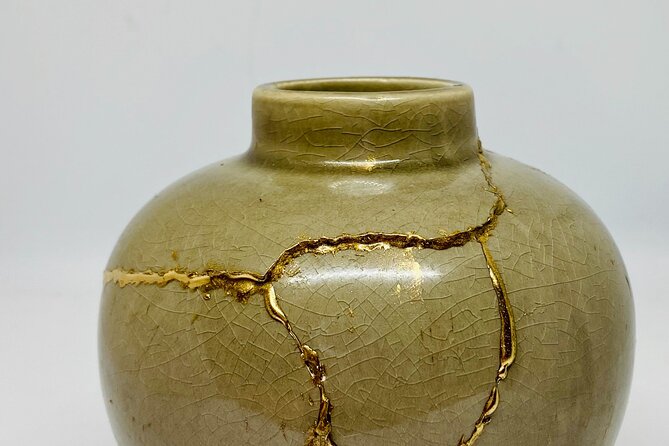
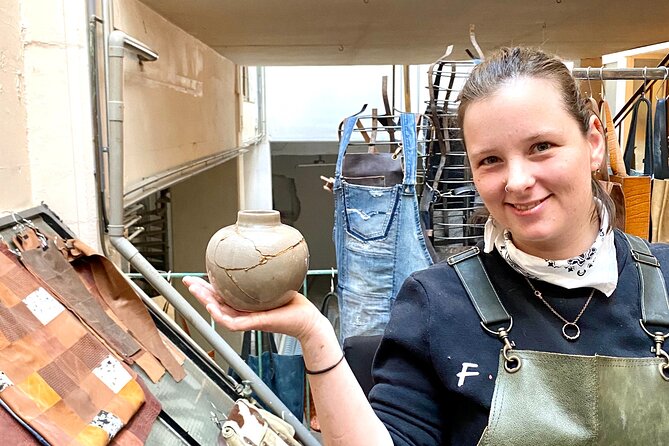
Cracks turn into gold patterns. I love the hands-on rhythm of working with golden leaf glue, and I love how the class stays intimate with a max 6-person group led by Annelies. The one catch is that you do a symbolic plate break, so go with the right mindset.
I also like that it connects the craft to wabi-sabi, not just a quick souvenir activity. You get a focused, about 2-hour session in English, with patient guidance while you reassemble shards into something new-looking and meaningful.
In This Review
- Key highlights to know before you go
- Kintsugi in Amsterdam, in a group that actually feels small
- The meeting point on Paleisstraat, and how to plan your timing
- What the first minutes feel like: a serene start before the craft
- The symbolic plate break: the part that turns a class into a reset
- Rebuilding shards into something new with golden leaf style repair
- Why this workshop feels “mindful” without turning weird
- The value question: is $90.11 worth it?
- Who should book this workshop (and who might prefer something else)
- Small details that help: tickets, transport, and the guide’s vibe
- Should you book this Kintsugi workshop?
- FAQ
- Where is the meeting point for the Kintsugi workshop?
- Where does the workshop end?
- How long is the workshop?
- What language is the workshop offered in?
- Are coffee and tea included?
- Are materials provided?
- How large is the group?
- Is the workshop suitable for children?
- Are service animals allowed?
- What is the cancellation policy?
Key highlights to know before you go
- A symbolic plate break that turns the idea of starting over into a real, hands-on moment
- Small group setting (up to 6) so the guidance feels personal
- Annelies-led class with a calm, welcoming pace
- Golden repair lines using kintsugi style restoration with a gold effect
- A mindful, slow craft workflow that builds concentration and careful hand skills
Kintsugi in Amsterdam, in a group that actually feels small
Kintsugi is the Japanese art of repairing cracked pottery so the breaks become part of the design. Instead of hiding flaws, you highlight them, often with gold-like material, to make the repaired object look intentional and beautifully transformed.
In this Amsterdam workshop, you’ll get the full experience without feeling rushed. The setting is capped at 6 travelers, which matters, because kintsugi is slow work. You need time to handle small pieces carefully and follow the steps without a crowded room energy.
The workshop runs in English, so you won’t have to decode craft instructions. And because it’s only about 2 hours, it fits well into a day of museums and canals, without swallowing your whole afternoon.
Some other canal-ring outings to set against this
- Amsterdam: Traditional Dutch Syrup Waffle Making Workshop
★ 4.8 · 4,093 reviews - Amsterdam Traditional Dutch Syrup Waffle Making Workshop
★ 5.0 · 960 reviews - Amsterdam: Bols Cocktail Experience and Cocktail Workshop
★ 4.8 · 666 reviews
The meeting point on Paleisstraat, and how to plan your timing
You meet at Paleisstraat 107, 1012 ZL Amsterdam. The activity starts there and ends back at the same spot, so you can plan your next stop right after, without hopping around the city.
It runs on Wednesdays from 2:00 PM to 4:00 PM during the listed seasons (11/09/2025 to 01/31/2026, and again 11/09/2026 to 01/31/2027). Because the average booking window is about 90 days in advance, I recommend locking it in early if you’re traveling in peak months or you want a specific week.
For timing, keep your morning flexible. You don’t need a massive lead-up, but it helps if you arrive a few minutes early so you can settle in and start on the calm side, not the sprint side.
What the first minutes feel like: a serene start before the craft
Most craft classes jump straight into tools. This one does something smarter first, a calm introduction that sets the tone for what you’re about to do.
You’ll get context on what kintsugi is, where it comes from, and why it’s connected to imperfection as a design language. The idea traces back to the 15th century, when repaired pottery was treated as worthy of beauty, not cover-up.
That quiet setup matters because kintsugi is both physical and mental. You’re training fine motor control, but you’re also learning how to slow down and treat the break as information. When that mindset is set early, the later steps feel smoother.
The symbolic plate break: the part that turns a class into a reset
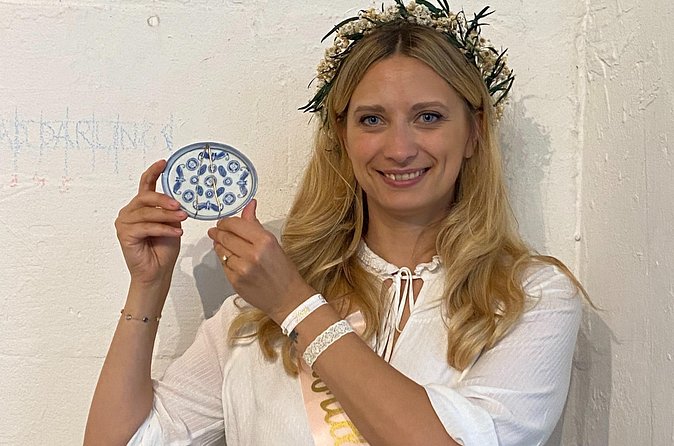
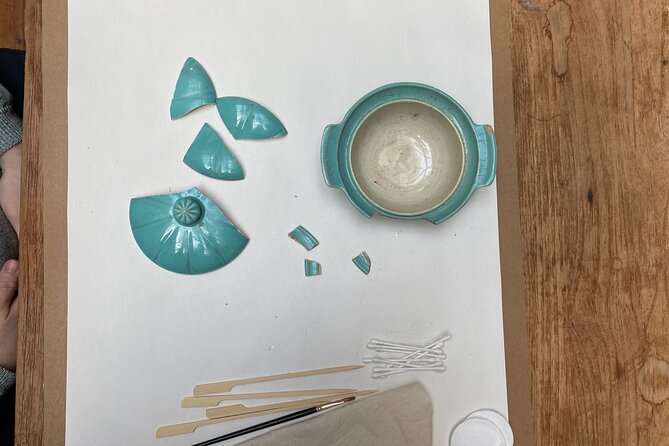
Then comes the signature moment: you break a plate symbolically as part of the fresh-start theme. It’s not about destruction for its own sake. It’s about making the point tangible, so the idea of repair has weight from the beginning.
If you dislike the idea of smashing something, consider that this is part of the ritual. You’re not just watching, you’re participating. Going in with the story in mind helps a lot, because the break is the turning point between before and after.
This step also helps with focus. Once you’ve committed to the symbolism, you’re ready to rebuild with attention, rather than treating it like a casual art project.
A different use for the same hours in Amsterdam:





Rebuilding shards into something new with golden leaf style repair
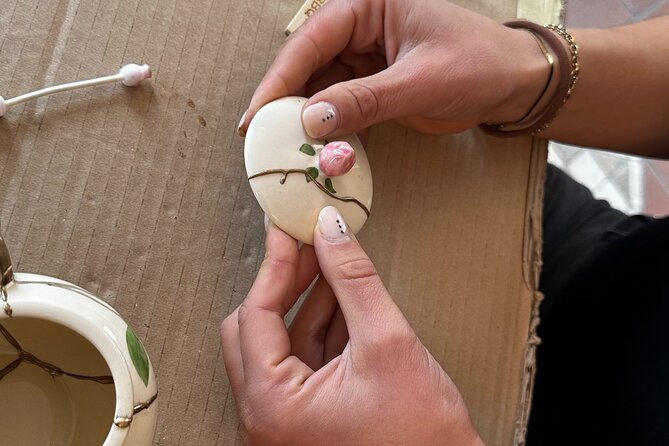
After the break, you’ll be guided through reassembling the shards. The workshop is designed around patience: you’ll work slowly, align pieces, and watch how fractures can become a visible pattern rather than a flaw to hide.
The restoration uses golden leaf style glue, which is the visual heart of kintsugi. Those gold-toned lines are what make the repair look intentional, almost architectural. Instead of covering cracks with paint, the method turns the fracture lines into a design element.
This is where the workshop becomes useful beyond the art table. You’ll naturally practice:
- careful hand movements for alignment
- staying present during repetitive steps
- using constraints as part of creativity
And because it’s a small group, it’s easier to get help in the exact moments you need it. You’re not competing for attention, and you can ask for clarification without feeling rushed.
Why this workshop feels “mindful” without turning weird
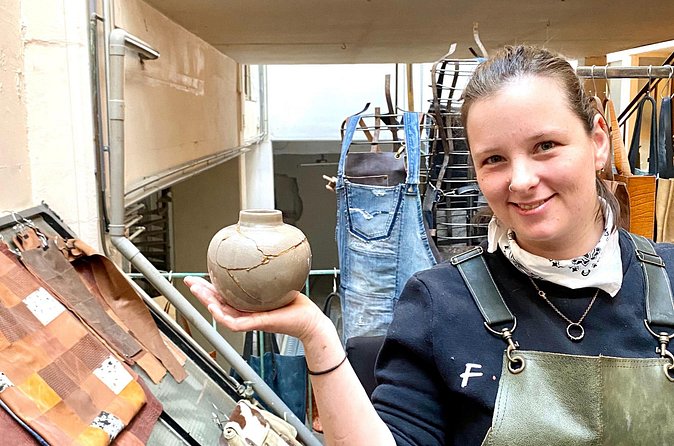
The course doesn’t just frame kintsugi as craft. It also frames it as a metaphor for letting go, embracing new beginnings, and finding beauty in resilience. You don’t need to be spiritual to appreciate that.
In practice, the mindfulness comes from the structure. You break, you rebuild, you slow down. That rhythm encourages you to treat mistakes and adjustments as normal. Even if your hands aren’t perfect yet, the process still leads to a beautiful outcome because the method honors the fact that things broke.
This also makes the class a good fit if you like crafts that are more thoughtful than flashy. If you want fast, loud, high-speed making, this may not be your vibe. But if you like calm work and clear steps, it’s satisfying.
The value question: is $90.11 worth it?
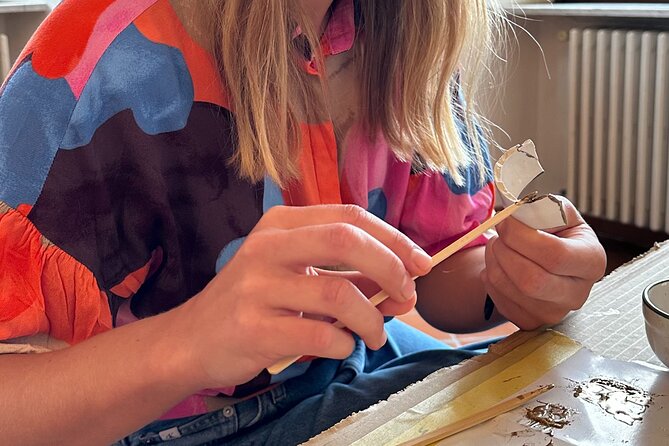
At $90.11 per person, this isn’t a budget activity. But I think the price holds up when you look at what’s included and how the session runs.
You get:
- all materials provided
- a hands-on, guided process rather than a passive demo
- English instruction
- a small group size (up to 6)
- a full about-2-hour craft session, not a quick stop
Kintsugi materials and techniques are specialized, and the class format supports attention and patience. That’s hard to price low, especially in Amsterdam where space and instruction time aren’t cheap.
One more value factor is the emotional payoff. The symbolism, the plate break, and the slow rebuild create a strong personal story. You’ll likely remember the experience because it’s not just technique. It’s meaning, made physical.
A practical note: coffee and/or tea are not included. If you’re the type who likes a drink while crafting, plan to grab something nearby before you arrive, or keep water in mind.
Who should book this workshop (and who might prefer something else)
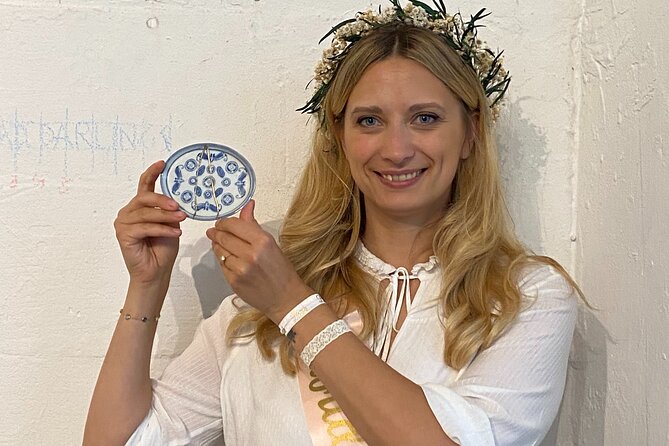
This is a great choice if you want a real cultural craft experience in Amsterdam that doesn’t feel like a tour bus stop. It’s especially good for people who enjoy hands-on art, are curious about Japanese aesthetics, and like learning a process you can use at home as a creative outlet.
It’s also a strong option for couples or small groups of friends who like shared, quiet focus. With max 6 travelers, you’ll likely feel included rather than shoved into a corner.
A few considerations:
- It’s not suitable for children under age 10.
- It requires moderate physical fitness level, which likely means you’ll be standing and using your hands for careful work.
- It involves a plate break, so you should be comfortable with the symbolic part of the process.
If you’re a total beginner, that’s fine. The whole point is learning the steps and seeing how the repair transforms the object.
Small details that help: tickets, transport, and the guide’s vibe
You’ll use a mobile ticket, and you should receive confirmation at the time of booking. That makes it easier to coordinate if your Amsterdam plan is already packed.
The location is near public transportation, which is a big plus in a city where you don’t always want to commit to long walks. And the class ends back at the meeting point, so you’re not dealing with “now what” logistics at the end of your session.
The guide Annelies is specifically described as welcoming and friendly, and that matters here. A craft workshop can feel intimidating if you’re worried about doing things wrong. In this case, the tone is supportive, which helps you settle in and focus on the process.
Also, service animals are allowed. If you travel with one, that’s a useful detail to know ahead of time.
Should you book this Kintsugi workshop?
I’d book it if you want a calm, hands-on Japanese craft experience in Amsterdam that treats imperfection as part of the beauty. The small group size, the symbolic plate break, and the golden leaf style repair are the kind of details that make this more than just a class where you learn a technique.
I’d hesitate if:
- you really dislike the idea of breaking an object, even symbolically
- you need a super kid-friendly option, since it’s not for under 10
- you want something fast and casual with no focus required
If you’re on the fence, my suggestion is simple: you’ll get the best enjoyment if you go in ready to slow down. When you do, kintsugi turns into a satisfying mix of craft skill and a real-life mindset shift you can carry forward.
FAQ
Where is the meeting point for the Kintsugi workshop?
You meet at Paleisstraat 107, 1012 ZL Amsterdam, Netherlands.
Where does the workshop end?
The activity ends back at the meeting point.
How long is the workshop?
The duration is approximately 2 hours.
What language is the workshop offered in?
The workshop is offered in English.
Are coffee and tea included?
No, coffee and/or tea are not included.
Are materials provided?
Yes, all materials needed for the workshop are provided.
How large is the group?
The workshop has a maximum of 6 travelers.
Is the workshop suitable for children?
No, the workshop is not suitable for children under the age of 10.
Are service animals allowed?
Yes, service animals are allowed.
What is the cancellation policy?
You can cancel for free up to 24 hours in advance of the experience for a full refund. If you cancel less than 24 hours before the start time, the amount paid is not refunded. Any changes less than 24 hours before the start time are not accepted.
Newest on the canal ring
- Amsterdam Bike Food Tour with Private Guide★ 5.0 · 1 review
- Amsterdam: Rijksmuseum Private Tour with an Art Historian★ 5.0 · 1 review
- Happy B-day Amsterdam! Guided Tour with a History Buff★ 5.0 · 1 review
- Local Foodie Adventure in Amsterdam★ 5.0 · 1 review
- Private Photo Shoot in Amsterdam with a Professional Photographer★ 5.0 · 1 review
- Private day trip to Giethoorn and the Enclosing Dike★ 5.0 · 1 review
- Private Sightseeing Tour to Giethoorn from Amsterdam incl. canal cruise★ 5.0 · 1 review
Workshops, compared.

Traditional Dutch Syrup Waffle Making Workshop
Read our review →Amsterdam Traditional Dutch Syrup Waffle Making Workshop
Read our review →

Amsterdam Bols Cocktail Experience and Cocktail Workshop
Read our review →Amsterdam Traditional Dutch Blue Tile Painting Workshop
Read our review →
Amsterdam Light Festival Winter Walk with Stroopwafel Workshop
Read our review →Browse the lists this tour appears in