
Reviewed · DAY TRIPS
Maastricht and Tripoint Full-Day Trip from Amsterdam
Maastricht at the edge of three countries feels oddly perfect. This full day links Roman-rooted streets, big-city sights like Vrijthof, and a serious change of perspective at the Dutch high point. I love the small group pace, because you can actually read the buildings and not just shuffle past them. I also like how the guide ties the day together, from defenses around the city to the Tripoint where the Netherlands, Belgium, and Germany touch.
The only real drawback to plan for is the schedule compression. With about 11 hours total, including the long drive each way, you’ll want to keep meals simple and your expectations realistic about how much you can linger in each spot.
In This Review
- Key things I’d circle before you go
- Maastricht, the Tripoint, and the Netherlands’ highest point in one day
- The Amsterdam-to-Maastricht drive: what 11 hours really means
- Vrijthof and the center of Maastricht: where your bearings get set fast
- Saint Servatius Basilica and the Church of Our Lady: why the names matter
- Helpoort: a small stop with big historical weight
- Crossing the Meuse River on the oldest Saint Servatius bridge
- Fort Sint Pieter and Maastricht’s tunnels: real defense, not museum theater
- Tripoint Drielandenpunt: standing where three countries meet
- Vaalserberg, 322.7 meters, and the calm after the borders
- Meals and downtime: how to make the most of limited free time
- Price and value: is $186 for a full day worth it?
- Who this Maastricht and Tripoint day trip fits best
- What to bring so the day stays pleasant
- Should you book this Maastricht and Tripoint tour?
- FAQ
- How long is the Maastricht and Tripoint full-day trip from Amsterdam?
- Where do I meet the guide in Amsterdam?
- What are the group size and language?
- What are the main sights included in the tour?
- What should I bring and wear?
- Is this tour suitable for children or people with mobility impairments?
Key things I’d circle before you go
- Tripoint at Drielandenpunt: stand where three national borders meet.
- Vaalserberg viewpoint: visit the Netherlands’ highest point at 322.7 meters.
- Oldest bridge on the Meuse River: walk across the historic Saint Servatius bridge.
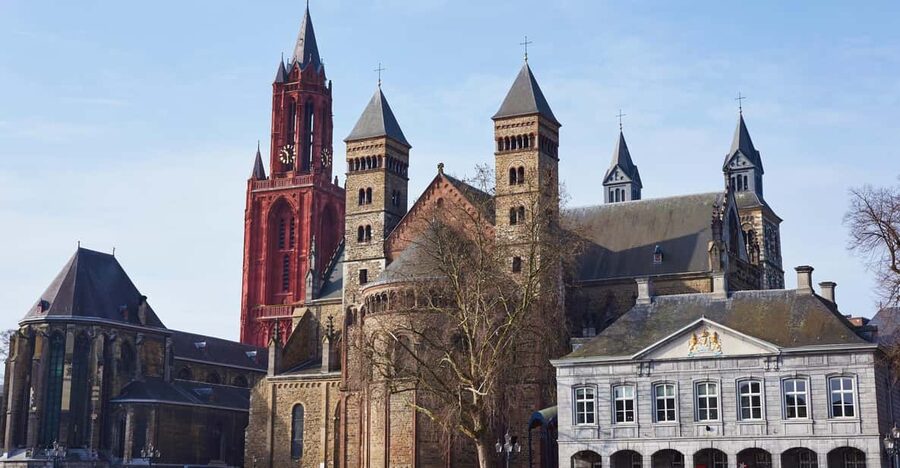
- Maastricht’s religious landmarks: Saint Servatius Basilica and the Church of Our Lady.
- Fort Sint Pieter and tunnels: see how the city defended itself for centuries.
- Small-group coach comfort: limited to 8 participants with a live English guide.
Maastricht, the Tripoint, and the Netherlands’ highest point in one day
This day trip is built for people who like variety without chaos. You’re not just sightseeing in Maastricht. You’re also chasing the extremes, from river history to border geography, and then up to the country’s high point.
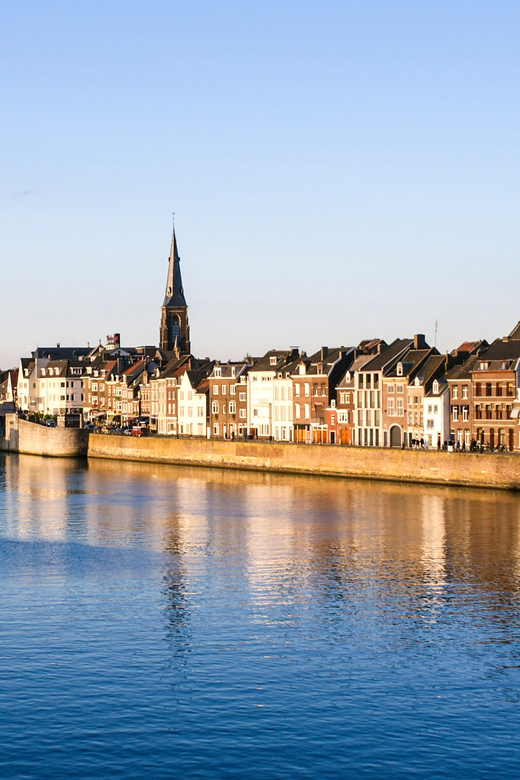
Maastricht sits in Limburg Province in the south of the Netherlands, and it feels different from Amsterdam in the best way. It’s said to be one of the oldest Dutch cities, with continuous settlement going back to Roman times. Over the centuries it grew from a Roman settlement into a religious center and later an early industrial city, so the streets and buildings have layers.
The tour’s big advantage is that the guide connects those layers. Defensive walls and moats make sense once you know the Meuse River mattered. Underground passageways feel less random once you understand sieges and surprise tactics. And the Tripoint and Vaalserberg stops don’t feel like add-ons, they feel like the logical “end chapter” of the day.
More Dutch days that start at Centraal:
- Day Trip to Zaanse Schans, Edam, Volendam and Marken from Amsterdam
★ 5.0 · 5,392 reviews - From Amsterdam: Bruges Day Trip in English with Boat Option
★ 4.4 · 1,989 reviews - From Amsterdam: Bruges Day Trip in Spanish with Boat Option
★ 4.6 · 1,866 reviews
The Amsterdam-to-Maastricht drive: what 11 hours really means
You start in Amsterdam at the pickup area outside the main entrance of the DoubleTree by Hilton Amsterdam Centraal Station, canal side. From there, the coach ride to Maastricht is about 2.5 hours, and you’ll do roughly the same back to Amsterdam.
That time matters, because it shapes the day. You’ll be sightseeing in a compact loop, with short stops for photos and guided moments for the parts that take explanation. This is ideal if you enjoy structured days and hate wasting time figuring out transport, but it’s not ideal if you want hours of free roaming.
The flip side is comfort. This is a luxury small-group coach tour with a professional driver, and the group is limited to 8. Fewer people means the guide can keep the pace sane and help you understand what you’re looking at instead of racing to the next photo spot.
Vrijthof and the center of Maastricht: where your bearings get set fast
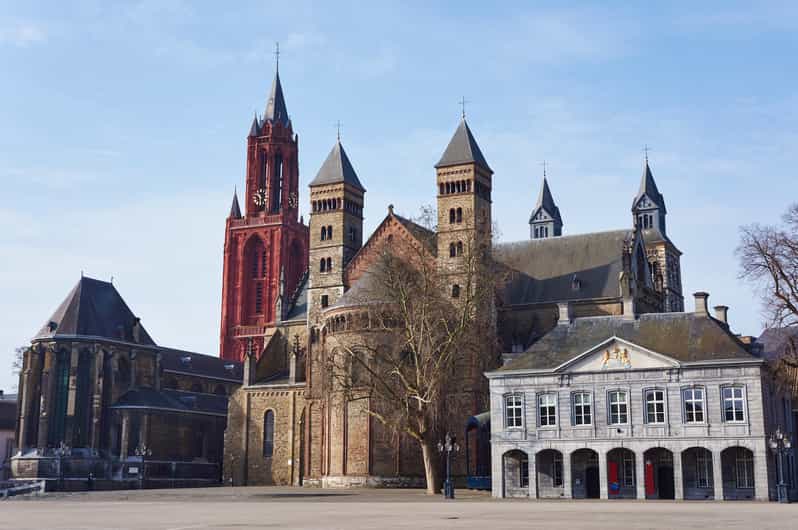
Your first real Maastricht stop is Vrijthof, where you get that classic town-square feeling right away. This is a key anchor, because it puts you in the middle of the city’s main public spaces, with lively café and bar energy around you.
Vrijthof is also tied to major church landmarks, including Sint-Servaas Church. You’ll also see Sint-Jan’s Cathedral. Even if you’re not a cathedral person, these buildings help you read the city: which streets were important, where people gathered, and what the local identity has focused on for a long time.
The guided time here is short, so don’t plan to “finish” the square. Instead, use it to get oriented. I like arriving to a place like this first, because it gives context before you start stepping into specific monuments.
Saint Servatius Basilica and the Church of Our Lady: why the names matter
Next comes the Basilica of Saint Servatius, with time for a photo stop. This isn’t just a pretty exterior moment. Saint Servatius is the theme that runs through the day, because Maastricht’s religious identity is part of its long story.
The tour also includes the Church of Our Lady, called out as one of the oldest churches in the area. That pairing is smart. It helps you see Maastricht’s faith history as more than one building. You’re looking at a city where religious architecture is woven into daily life and local pride.
If you care about details, you’ll get more out of this stop if you’re willing to slow down for a few minutes. Use your guided time to connect names to what you’re seeing, so you don’t leave with a pile of titles and no meaning.
Some other canal-ring outings to set against this

Helpoort: a small stop with big historical weight
Helpoort is a quick photo stop, but it’s one of those places that teaches you something fast. It’s tied to Maastricht’s older fortification story and the city’s strategic position.
This matters because Maastricht wasn’t just a peaceful Roman relic. It sat on the Meuse River and got targeted repeatedly over the centuries. When a city is attacked again and again, you don’t just get a few old buildings. You get systems: city walls, moats, forts, and other defensive works.
Even though Helpoort is only a brief stop, it helps you visualize those defenses. Think of it as a “checkpoint” that keeps the day from becoming only religious tourism.
Crossing the Meuse River on the oldest Saint Servatius bridge
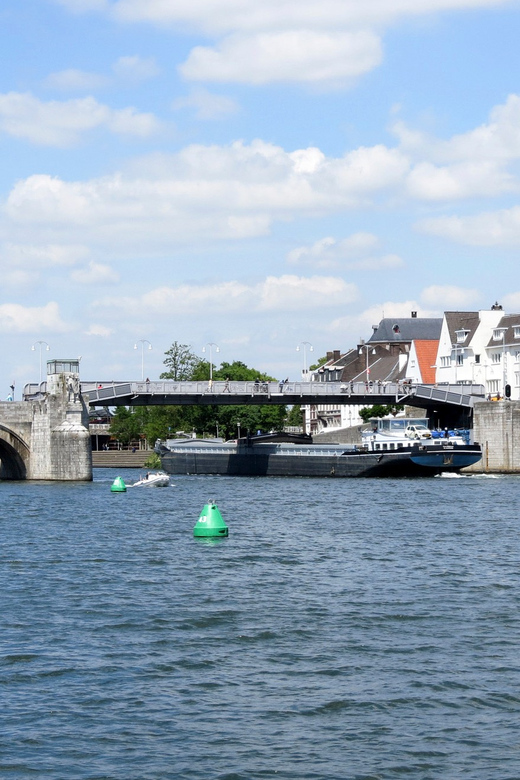
One of the most memorable moments in the day is stepping onto the oldest bridge on the Meuse River, associated with Saint Servatius. Walking across it changes how you experience the city. You stop thinking about Maastricht as a set of landmarks and start feeling how the river shaped movement and power.
This is also a practical mental reset. The earlier stops are tight and centered on buildings. Crossing a historic bridge adds scale. You see how the city links sides of the river, and you can picture why control of this route mattered in sieges and conflicts.
If your feet are already tired, this stop is still worth it because it’s not just scenic. It’s functional history you can literally stand on.
Fort Sint Pieter and Maastricht’s tunnels: real defense, not museum theater
Fort Sint Pieter is where the tour’s story turns physical. You get a visit here, and it’s timed at about 30 minutes. This is a good length, because forts can drag if you don’t have guidance, but short visits keep it focused.
Here’s why it matters. Maastricht has a network of underground passageways built between 1575 and 1825. These tunnels were used during sieges to surprise enemies, and now part of that system is partially open to the public.
That mix of “built for war” and “now accessible” is exactly the kind of history that sticks. You’re not just looking at old stones. You’re seeing how people planned movement and survival under pressure. The guide’s framing helps you connect tunnels, fort structure, and the city’s above-ground defenses.
Practical tip: wear comfortable shoes. Fort areas and underground connections can be uneven or require careful footing, and you don’t want to spend the day managing discomfort instead of paying attention.
Tripoint Drielandenpunt: standing where three countries meet
After the fort and another coach ride segment, you reach the Tripoint, known as Drielandenpunt. You’ll get about 40 minutes for the visit, which is plenty to take pictures, read signage, and simply absorb the weird fact of it.
This stop is more than a checkbox. It gives you perspective on how borders shape daily life, travel, and even language and culture in the region. Maastricht is Dutch, but it has always been shaped by neighbors. The Tripoint makes that reality visible in a way that a map never quite captures.
When you’re ready, look for the practical details around the area, because this kind of place often includes informational panels and views worth stepping to. Keep your time flexible, because weather and visibility can change.
Vaalserberg, 322.7 meters, and the calm after the borders
Then comes the Netherlands’ highest point on Vaalserberg, at 322.7 meters. This is the day’s vertical reward. It’s not about mountain climbing, it’s about reaching a high spot where you can feel the region spread out around you.
This stop also balances the history-heavy theme of the morning. Forts and churches are intense in their own way. A viewpoint is a clean break, and it helps you emotionally “close” the story you started in Maastricht.
You might notice how the geography feels when you’re standing above it. Even in a country that’s mostly flat, elevation here changes what you notice: roads, rooftops, and the sense of distance.
Meals and downtime: how to make the most of limited free time
Meals aren’t included, so you’ll want to plan food in a way that matches a guided day. With short stops, you’ll likely eat during gaps in the schedule or at locations the guide passes along.
To stay comfortable, bring a snack you like and water you can manage. That way, if a stop runs a little tighter or if you’re hungry but the next meal chance is a bit away, you’re not stuck.
Also, plan for all-seasons weather in one day. That line is not a joke. Even in summer, the region can feel cool or breezy, especially at viewpoints or outside monuments.
Price and value: is $186 for a full day worth it?
At about $186 per person, this is not a budget day trip. But for what you’re getting, it’s closer to fair than pricey.
You’re paying for:
- A luxury small-group coach ride with a professional driver
- A live English guide
- Multiple guided and photo stops in central Maastricht
- A Tripoint visit plus the Vaalserberg high-point stop
- Fort Sint Pieter and time for the tunnel and defense story
- Time-efficient routing from Amsterdam with no planning headaches
The value is in the guidance and time saved. Doing this solo would mean dealing with transport, ticket planning, and figuring out how to connect monuments and viewpoints into one coherent route. If you’re the type who wants history explained and landmarks linked into a single narrative, the cost makes more sense.
If you mostly want wandering time and zero structure, you might feel the schedule is tight. But if you like compact, curated days, this price is tied directly to the kind of day you’re building.
Who this Maastricht and Tripoint day trip fits best
This works best for adults and older kids, since it’s not suitable for children under 10. It also isn’t designed for people with mobility impairments, so you should treat the walking time and historic stops as a factor.
It’s a great match if you:
- Like small groups and live explanations
- Enjoy mixing city history with geography
- Want to stand at the Netherlands, Belgium, Germany border junction
- Prefer coach comfort over managing trains or car logistics from Amsterdam
If you want a relaxed weekend pace, you might feel the day is full. But if your ideal day is “watch, learn, walk, and end on a view,” this hits the right rhythm.
What to bring so the day stays pleasant
Wear comfortable shoes and comfortable clothes. That’s not generic advice, it’s the difference between enjoying Fort Sint Pieter and being miserable on uneven ground.
Don’t plan on bringing baby strollers or oversize luggage. This is a small coach day, so assume there’s limited space and you’ll want to travel light.
And because weather can shift quickly, layer up. You’ll be outdoors at squares, photo stops, and the Tripoint and Vaalserberg area, so flexibility beats one perfect outfit.
Should you book this Maastricht and Tripoint tour?
Yes, if you want an organized full day that combines historic Maastricht, the Tripoint at Drielandenpunt, and a real “top of the country” payoff at Vaalserberg. The standout value is the guide-led connections, especially the way the city’s defense story ties into tunnels, forts, and the bridge on the Meuse River.
Hold off if you’re mainly looking for long free time in Maastricht or you’re traveling with mobility constraints. This tour is built for a specific pace, with short stops and guided focus, so it’s best when you’re happy moving from one meaningful point to the next.
If your ideal day includes standing at a triple-border point and learning why Maastricht fought, worshiped, and thrived where it did, this one is worth your time.
FAQ
How long is the Maastricht and Tripoint full-day trip from Amsterdam?
The tour duration is 1 day, with about 11 hours total.
Where do I meet the guide in Amsterdam?
Meet your guide at the pickup and drop off area outside the main entrance of the DoubleTree by Hilton Amsterdam Centraal Station, facing the canal side.
What are the group size and language?
It is a small group limited to 8 participants, and the live tour guide is English.
What are the main sights included in the tour?
You visit Vrijthof in Maastricht, the Basilica of Saint Servatius, the Church of Our Lady, Helpoort, Fort Sint Pieter, the Tripoint (Drielandenpunt), and the Netherlands highest point on Vaalserberg at 322.7 meters.
What should I bring and wear?
Bring comfortable shoes and comfortable clothes. Plan for all-seasons weather in one day.
Is this tour suitable for children or people with mobility impairments?
It is not suitable for children under 10, and it is not suitable for people with mobility impairments. Baby strollers and oversize luggage are also not allowed.
Newest on the canal ring
- Amsterdam Bike Food Tour with Private Guide★ 5.0 · 1 review
- Amsterdam: Rijksmuseum Private Tour with an Art Historian★ 5.0 · 1 review
- Happy B-day Amsterdam! Guided Tour with a History Buff★ 5.0 · 1 review
- Private day trip to Giethoorn and the Enclosing Dike★ 5.0 · 1 review
- Local Foodie Adventure in Amsterdam★ 5.0 · 1 review
- Private Photo Shoot in Amsterdam with a Professional Photographer★ 5.0 · 1 review
- Private Sightseeing Tour to Giethoorn from Amsterdam incl. canal cruise★ 5.0 · 1 review
Day Trips, compared.


Day Trip to Zaanse Schans, Edam, Volendam and Marken from Amsterdam
Read our review →
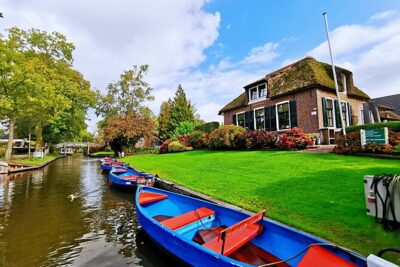
Giethoorn, Afsluitdijk, Zaanse Schans Day Tour Incl Hotel Pick Up
Read our review →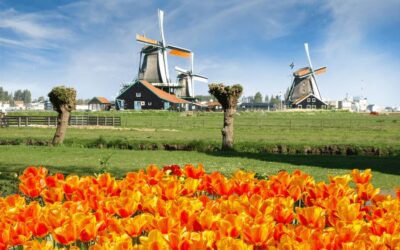
Day Tour Keukenhof and Zaanse Schans Windmills
Read our review →
Zaanse Schans, Marken, Volendam, & Edam Day Tour
Read our review →Browse the lists this tour appears in