
Reviewed · WORKSHOPS
Private Farmhouse Cheesemaking Workshop
A real cheese lesson starts outside Amsterdam. This private farmhouse workshop at Simonehoeve turns Boerenkaas into an edible souvenir, with a farm tour and tastings built in. I like that you get your own guide for the full experience, not a hurried lineup.
I also love the rhythm of the day: you make cheese, then the cheeses go under the press while you tour the cheese farm and the woodenshoes factory, tasting along the way. One more plus is the take-home part, you leave with very young fresh cheese after a small treatment.
One possible drawback: the workshop timing can feel uneven if your group is hoping for lots of detailed, slow-paced cheesemaking instruction. In some cases, the hands-on chunk felt shorter than expected, and the tour stops can start to feel a bit shop-like instead of classroom-like.
In This Review
- Key points to know before you go
- Simonehoeve near Amsterdam, a real farm break from city time
- Workshop room to fresh curds: making Boerenkaas step by step
- The press time plan: why tastings and touring happen while your cheese works
- From press to take-home: getting your fresh cheese ready to leave
- Price and value: what $148.75 buys in a private 2.5-hour session
- How to get the most out of your visit (without overthinking it)
- Who this works best for, and who may want a different plan
- Should you book Simonehoeve’s private cheesemaking workshop?
- FAQ
- How long is the private farmhouse cheesemaking workshop?
- Is this a private tour or shared group?
- Where does the workshop take place?
- What language is the workshop offered in?
- What is included in the price?
- What is not included?
- What happens during the workshop timeline?
- Can I buy food and drinks onsite?
- Are service animals allowed?
- What is the cancellation policy?
- Is the workshop near public transportation?
Key points to know before you go
- Private group experience with undivided guide attention, so you can ask questions as you work
- Boerenkaas hands-on session where you actually craft your own Dutch farmers’ cheese
- Cheese-press timing built into the plan, which is when you move into the farm and clog factory tour
- Tastings included in the shop and during the tour, plus fruit wine and Dutch biscuits
- Fresh take-home cheese after it comes out of the press and gets a small treatment
- Multiple start times to fit your day, but it is popular and booked about a month in advance on average
Simonehoeve near Amsterdam, a real farm break from city time
This experience is set just outside Amsterdam, at Simonehoeve, in Katwoude (meeting point: Simonehoeve Wagenweg 2, 1145 PW). That matters more than you might think. You start in a workshop setting, then you move through an actual working farm environment and a clog making space, not just a photo stop.
If you are craving something hands-on and local, this fits. You learn the idea behind Dutch farmers’ cheese, then you make it with the cheesemaker. Even if you are not a kitchen person, the pace is designed around the steps of cheesemaking, with equipment provided.
The private format is the other big reason to consider it. You are not competing with strangers for attention or translation. If you care about learning what you are tasting, that one-on-one feel makes a difference. If you just want a fun activity and do not care about the explanation, you can still have a good time, but you might find the talk varies by guide style.
Some other canal-ring outings to set against this
- Amsterdam: Traditional Dutch Syrup Waffle Making Workshop
★ 4.8 · 4,093 reviews - Amsterdam Traditional Dutch Syrup Waffle Making Workshop
★ 5.0 · 960 reviews - Amsterdam: Bols Cocktail Experience and Cocktail Workshop
★ 4.8 · 666 reviews
Workshop room to fresh curds: making Boerenkaas step by step
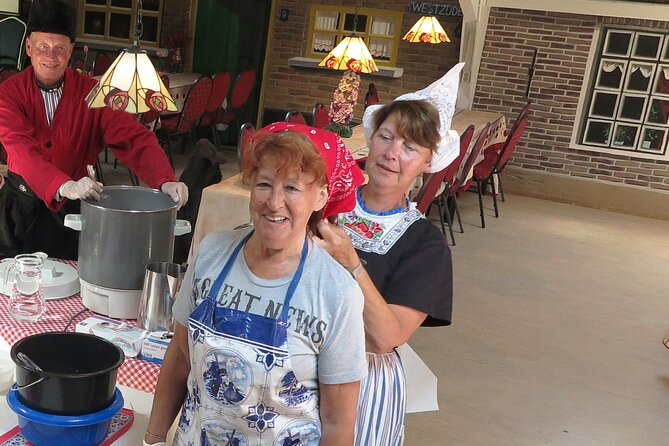
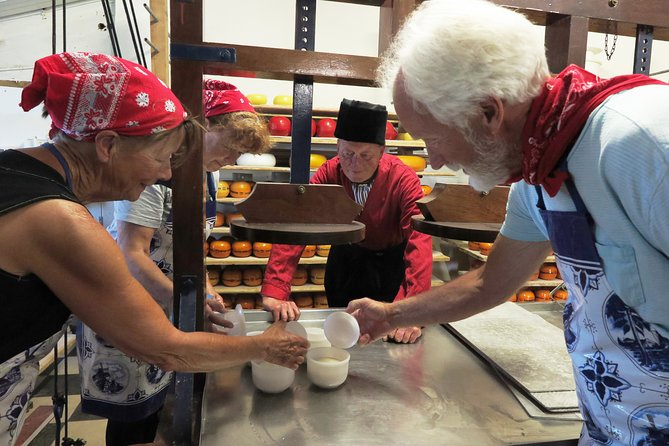
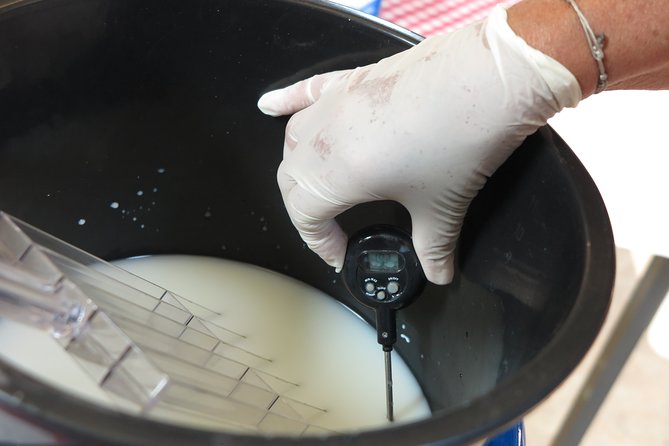
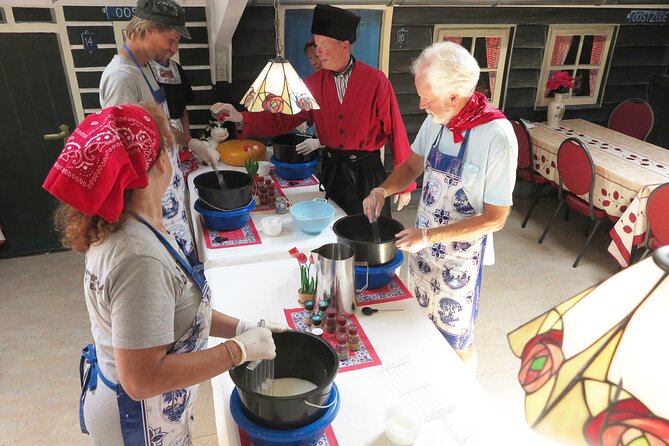
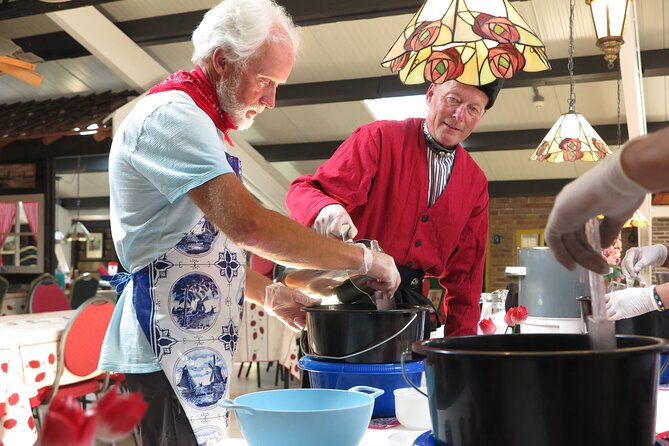
The workshop starts when you meet at the farm and are welcomed into the workshop room. From there, you get background on Dutch farmers’ cheese, known as Boerenkaas, including how it is made today. Then you shift from listening to doing, with one of the cheesemakers guiding your group through the process.
Here is what I like about this format. It is not only theory. You are using the provided cheesemaking equipment and actively working through a real process. That gives you a better understanding of why cheese tasting is such a specific skill in the Netherlands. When you make the cheese yourself, even the basics click faster.
What you should watch for is the expectation level. The experience is about 2 hours 30 minutes to around 3 hours. Inside that window, the actual hands-on making time may feel shorter for some groups, especially once you consider that the next phase happens while the cheese is under the press. If you want a long, uninterrupted instructor-led lesson, ask questions early. If something feels rushed, keep your group focused on the steps as you do them, because that is where the learning sticks.
Also plan your mindset. This is not a “watch and sample” class. You are creating your own cheese, and you will end up taking it home while it is still very young.
The press time plan: why tastings and touring happen while your cheese works
After your cheese goes under the press, the schedule changes gears. This is when you are taken for a tour of the cheese farm and the clog factory. It is a clever way to use time, because pressing is part of cheesemaking, and it usually takes time off your hands.
During the tour, you can taste all types of cheese. You also get a glass of fruit wine and typical Dutch biscuits. That combination is practical. You get to compare flavors while you are still fresh from the making session, so you can connect what you just did with what you are tasting.
In the shop, you start with cheese tasting as well, including Gouda and Edam options. The idea is to let you build a baseline before you craft your own farmers’ cheese. If you like structured food experiences, this ordering helps a lot.
The potential downside is flow. One less satisfying version of this day can happen when the guide steps out to handle shop tasks, and your group ends up wandering between tastings. If your group likes clear guidance and a tight timeline, this is where you should pay attention once the cheese is under press. Stay close to your guide and ask for the plan, so you do not end up waiting on informal cues.
From press to take-home: getting your fresh cheese ready to leave
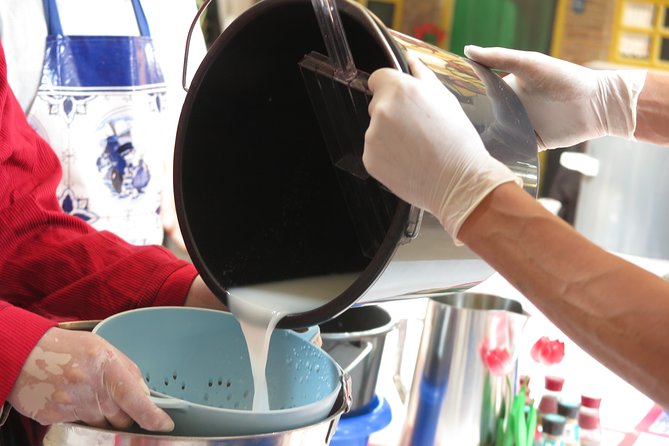
When the cheeses come out of the press, you do not just leave it behind. You get to remove the cheeses from the press, and then they receive a small treatment before you can take them home.
This is the part that turns the workshop into a real keepsake. You are not buying cheese afterward and calling it authentic. You leave with something you made yourself, fresh, very young, and at least partially prepared for the next steps you will do at home.
What you can do to make this smoother is think about how you will transport it. The tour does not spell out packaging details, but you can plan around it by bringing something insulated if you have a long ride back. If you are flying, ask the team how they handle packaging for travel. In one positive experience, the guide packaged the cheese specifically so the family could finish the process after getting home. Even if your session is different, asking that question early is smart.
Also, know that food and drinks in the restaurant can be purchased separately. The workshop includes the tastings, but meals are not automatically part of the price.
A different use for the same hours in Amsterdam:
Price and value: what $148.75 buys in a private 2.5-hour session
At $148.75 per person, this is not a cheap Amsterdam day trip. So the key question is value for your priorities.
You are paying for:
- A private workshop setup, meaning your group gets focused attention
- Use of cheesemaking equipment
- Free tastings, including cheese, wine, and Dutch biscuits
- A tour component of the farm and clog factory
- A take-home product, your own fresh homemade cheese
If you break it down, you are buying both an activity and a tangible outcome. Many food classes in the city cost about the same once you factor in tastings and the fact that you leave with nothing edible you made. Here, you do leave with cheese.
Where value can change is in how you experience the pacing. If you get the hands-on time you expected and you feel guided through the process, it is a strong deal. If you feel the instruction was light, or the guide’s attention wandered, that same price can feel steep.
One more practical value point: it is popular. On average it is booked about 36 days in advance, so lock in your preferred start time early if you want options.
How to get the most out of your visit (without overthinking it)
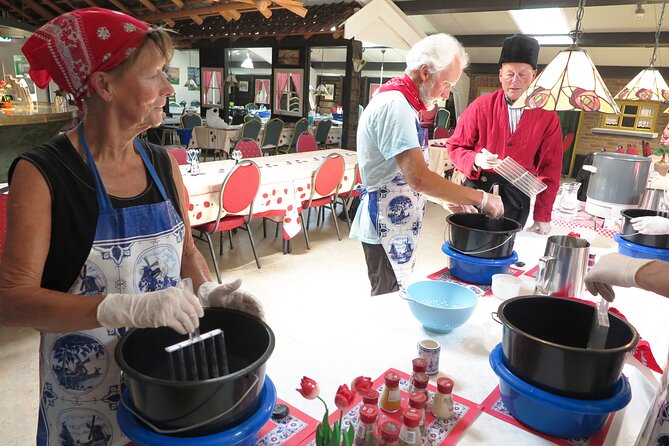
This is a hands-on workshop, so your best strategy is to stay engaged from the first minute. Here are a few simple moves that help:
- Arrive ready to ask questions. You get a guide for your group, so use that.
- During tastings, pay attention to how the cheese you taste compares to what you made. Gouda and Edam are offered in the shop, and the tour includes broader cheese tasting.
- When the cheese goes under press, treat the tour as part of the learning, not a break. The fruit wine and biscuits are included, and the farm and clog factory tour are the core way the remaining time is structured.
And one gentle warning. If your group is sensitive to loose structure, keep an eye on where you are meant to be. A satisfying version of the day feels like a smooth sequence from workshop to tour to take-home. A less satisfying version feels like your group gets left to browse a shop area. If that starts happening, calmly ask your guide for the next step.
Who this works best for, and who may want a different plan
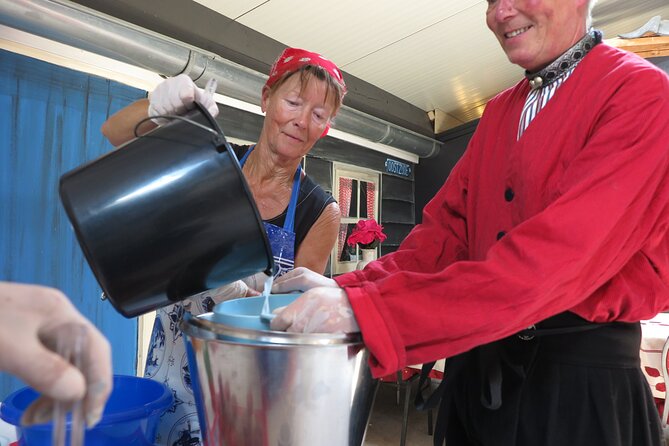
This workshop suits people who want a day away from city bustle and a tangible food souvenir. It is a good match for:
- Food lovers who want to make something, not only taste
- Parents with kids or teens who do better with activities than lectures
- Visitors who like Dutch culture beyond museums, especially farm life and traditional crafts like wooden shoes
It may be less ideal if you want:
- A long, detailed history lecture focused on production methods
- A tightly timed workshop where every minute is hands-on
- A purely “sit and observe” experience, because the goal is actively making cheese
If you are coming with a group that varies in interest, the tastings and factory tour help balance it out. Everyone can enjoy the cheese comparisons and the clog-making visit, even if they are less into the production explanation.
Should you book Simonehoeve’s private cheesemaking workshop?
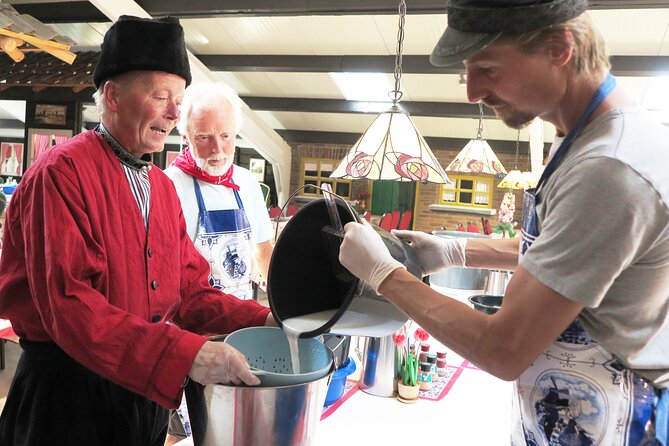
If you want a real, hands-on Amsterdam-area experience with tastings, a farm tour, and a take-home cheese you helped make, I think it is worth booking. The private setup and included equipment and tastings are the big value drivers. The fact that it is located outside the city also makes the day feel different, which is often what people are really after.
I would only hesitate if your top priority is deep, uninterrupted instruction, with lots of slow pacing and a fully classroom-style lesson. This experience is built around the real steps of cheesemaking, including time when your hands are off the process. If that timing does not match your expectations, the day can feel uneven.
If you do book it, do two things: pick your start time thoughtfully, and come ready to ask questions early so you get the most from your guide.
FAQ
How long is the private farmhouse cheesemaking workshop?
It runs about 2 hours 30 minutes, approximately.
Is this a private tour or shared group?
It is a private tour or activity, only your group participates.
Where does the workshop take place?
You meet at Simonehoeve Wagenweg 2, 1145 PW Katwoude, Netherlands. The activity ends back at the meeting point.
What language is the workshop offered in?
It is offered in English.
What is included in the price?
Included are use of cheesemaking equipment, free tasting of cheese, wine and biscuits, and you take home your own fresh homemade cheese.
What is not included?
Transport to the farm is not included.
What happens during the workshop timeline?
You are welcomed and hear about Dutch farmers’ cheese, then you make cheese with a cheesemaker. While the cheeses are under the press, you tour the cheese farm and clog factory and do additional tastings. After that, you remove the cheeses from the press and they receive a small treatment before you take them home.
Can I buy food and drinks onsite?
Yes. Food and drinks can be purchased in the restaurant.
Are service animals allowed?
Yes, service animals are allowed.
What is the cancellation policy?
You can cancel for a full refund up to 24 hours in advance of the start time.
Is the workshop near public transportation?
Yes, it is near public transportation.
Newest on the canal ring
- Amsterdam Bike Food Tour with Private Guide★ 5.0 · 1 review
- Amsterdam: Rijksmuseum Private Tour with an Art Historian★ 5.0 · 1 review
- Happy B-day Amsterdam! Guided Tour with a History Buff★ 5.0 · 1 review
- Local Foodie Adventure in Amsterdam★ 5.0 · 1 review
- Private Photo Shoot in Amsterdam with a Professional Photographer★ 5.0 · 1 review
- Private day trip to Giethoorn and the Enclosing Dike★ 5.0 · 1 review
- Private Sightseeing Tour to Giethoorn from Amsterdam incl. canal cruise★ 5.0 · 1 review
Workshops, compared.
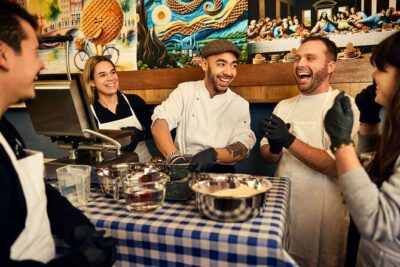
Traditional Dutch Syrup Waffle Making Workshop
Read our review →Amsterdam Traditional Dutch Syrup Waffle Making Workshop
Read our review →
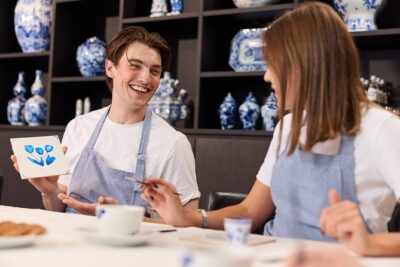
Amsterdam Bols Cocktail Experience and Cocktail Workshop
Read our review →Amsterdam Traditional Dutch Blue Tile Painting Workshop
Read our review →
Amsterdam Light Festival Winter Walk with Stroopwafel Workshop
Read our review →Browse the lists this tour appears in