
Reviewed · RIJKSMUSEUM TICKETS
Rijksmuseum & Amsterdam City Center Semi-Private Tour 12ppl Max
Your half-day in Amsterdam starts with a big win.
This semi-private tour keeps the group small, and you get Rijksmuseum skip-the-line entry so you waste less time in queues. I also like that you’re not stuck in one rigid flow, since a guide can give more attention when the group is up to 8. One thing to plan for: it’s a lot of walking on cobblestones and around historic streets, so you’ll want a moderate fitness level.
What makes this outing feel especially efficient is how it bundles art, architecture, and street-level history into one smooth loop. You start with a guided look at major Rijksmuseum works, including Rembrandt and Vermeer, then you switch gears to a long historical walk through the city’s landmark districts. After the walk, you still can return to the Rijksmuseum later the same day because the ticket is valid all day, which is a smart way to turn one visit into two chances to soak it all in.
In This Review
- Key things to know before you go
- Entering the Rijksmuseum without the queue crush
- Rijksmuseum highlights: Dutch masters, dollhouses, and a serious library
- The all-day ticket advantage after the 5-hour portion
- Lunch break: plan your own meal near the route
- Amsterdam city center walk: from Roman Catholic history to merchant-era gates
- St. Nicholas Basilica and the Schreierstoren Tower of Tears
- Zeedijk, Nieuwmarkt, and De Waag: markets, gates, and trade
- Canal-house details: Trippenhuis and the skinny-house story
- The Dutch East India Company courtyard (Oost-Indisch Huis)
- Major landmarks you’ll see on the way to the canal finale
- Stop-size pacing: why a small group matters on foot
- Price and value: what you’re really paying for
- Who this Rijksmuseum plus city walk fits best
- Should you book this tour?
- FAQ
- Where do I meet for the tour?
- What time does the tour run?
- What is included in the price?
- Is lunch included?
- Is the Rijksmuseum ticket valid after the tour ends?
- Do I need special luggage for the Rijksmuseum?
- Who should avoid booking due to mobility limits?
Key things to know before you go
- Max 8 people means a true small-group rhythm, not a crowd herd
- Rijksmuseum admission included with direct entry to the museum collection
- All-day Rijksmuseum ticket lets you come back after the walking tour
- A long landmark walk that strings together canals, churches, gates, and canal-house details
- Rain or shine touring, so bring layers and expect wet streets at times
Entering the Rijksmuseum without the queue crush
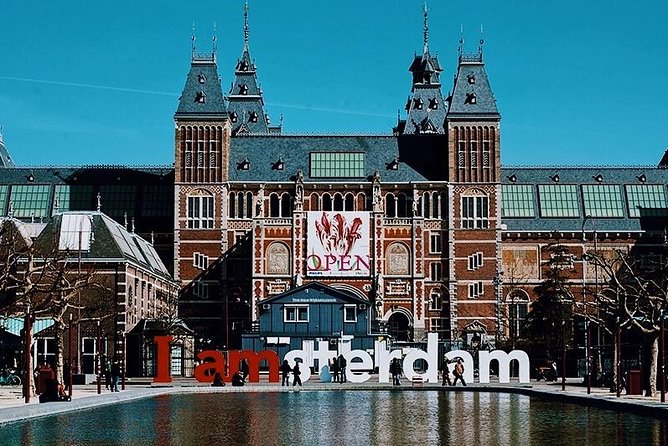
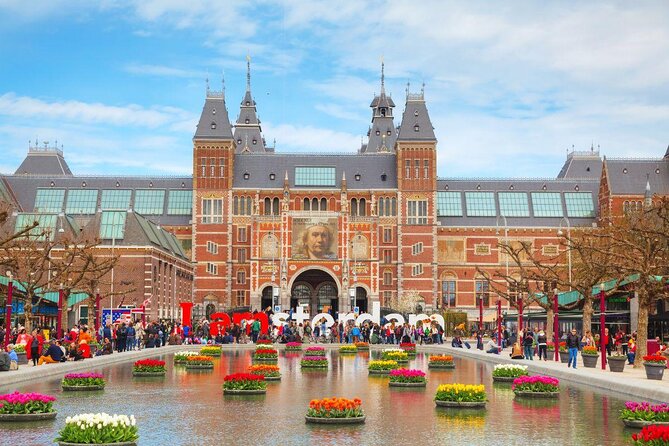
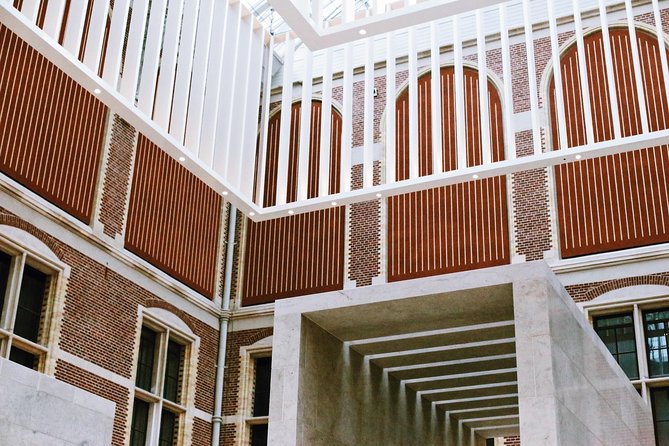
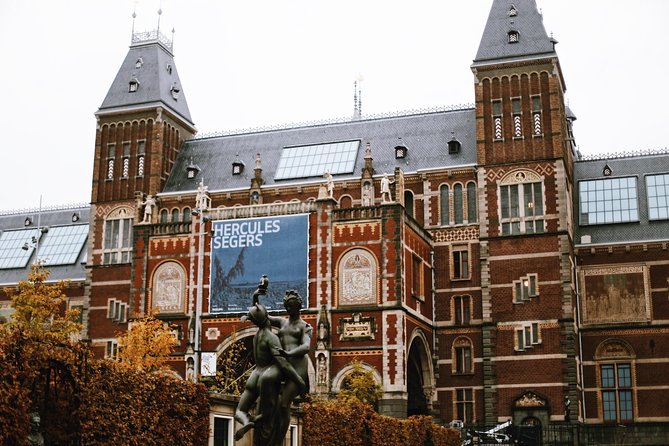
If you want the best “time on art” ratio in Amsterdam, this start matters. You meet at the Cobra Café on Hobbemastraat at 10:00 am, and the plan is to begin by heading to the giant I am Amsterdam sign outside the museum, at the letter I. That setup helps you start focused and makes it easy to stay on schedule in a city where things can spread out quickly.
Once inside, you’ll get straight access rather than grinding through the most common early bottleneck. The Rijksmuseum is popular for a reason, and when you’re saving that time, you can spend more of your limited half-day actually looking at paintings and objects instead of watching a line.
The other practical win here is group size. When you’re with up to 8 people, you’re less likely to feel like your guide is talking at you from the front. It also makes it easier to ask a quick question or slow down for a closer look at a detail on a canal-house façade outside later.
More ways into the Rijksmuseum:
- Amsterdam: Rijksmuseum Entry Ticket
★ 4.7 · 29,512 reviews - Amsterdam: City Canal Cruise and Rijksmuseum
★ 4.5 · 2,226 reviews - Rijksmuseum Amsterdam Small-Group Tour with Private Upgrade
★ 4.5 · 1,547 reviews
Rijksmuseum highlights: Dutch masters, dollhouses, and a serious library
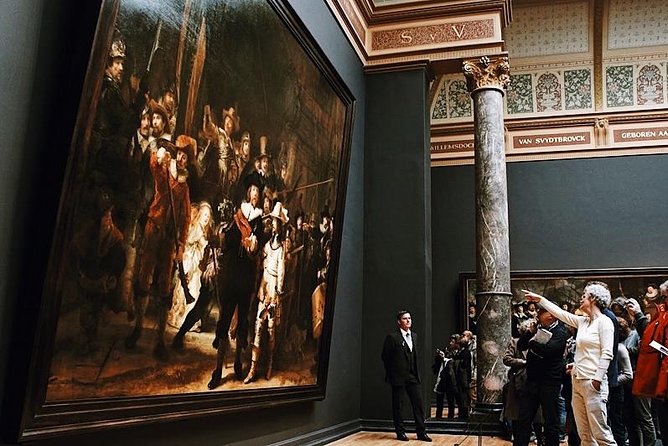
The guided museum portion clocks in at about 2 hours 30 minutes, and it’s built to give you a tour through Dutch culture, not just famous names. You’ll cover major categories of the collection, with stops on iconic works by Rembrandt and Vermeer, plus plenty of objects many first-timers would never spot on their own.
Here are the kinds of highlights you should expect to track during your time inside:
- Dutch paintings and cultural artifacts that connect the art to daily life and national identity
- Rembrandt and Vermeer as anchors, so you’re not just admiring, you’re also building context
- A look at 17th-century dollhouses, which are such a clever window into how people staged domestic life
- Vermeer’s domestic scene, The Milkmaid, used to explain what “ordinary life” looks like in Dutch art
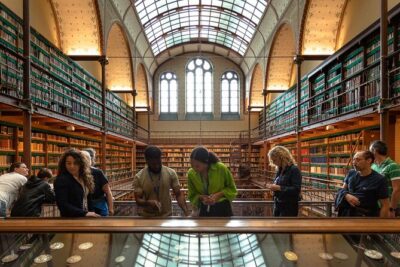
- A stop for the 19th-century library, which holds both Dutch and international literature
One detail I really like: the tour doesn’t treat the Rijksmuseum like a one-note museum. It includes art, but it also points you toward storytelling objects and museum settings, like the library, that help you understand the collection’s bigger frame.
Inside, you’ll also get the kind of heads-up that saves time and stress. The museum has security rules, and you won’t be able to bring big bags in. Only handbags or small thin bag packs are allowed through security, so if you’re traveling with a large backpack, plan on storing it elsewhere before you arrive.
Also note that a few rooms can be quiet or have restrictions on speaking. Your guide should set you up with what to expect before you enter those areas, so you’re not scrambling mid-visit.
The all-day ticket advantage after the 5-hour portion
Your guided day runs about 5 hours 30 minutes in total, with a lunch break built in. During the walking portion, you’ll see Amsterdam’s historic center landmarks, then you’ll finish the day and still have time flexibility.
Here’s the smart part for your planning: once the walking portion ends, you’re free to return to the Rijksmuseum because your ticket stays valid all day. That’s a big deal if you want to see a specific painting again, compare details, or simply take more time than you had during the guided timeline.
If you’re traveling with someone who loves museums but also gets tired of standing, the all-day ticket helps you pace the day better. You can walk the city with the group, then switch into slower museum time later, when you feel ready.
Lunch break: plan your own meal near the route
You get a lunch break during the transition from museum time to the city walk. Lunch is on your own expense, so your best move is to use this pause to eat something simple and local, and keep an eye on timing so you don’t lose your spot for the next walking segment.
This tour is rain or shine, so I’d also plan your lunch like a local: quick in, quick out. The walking portion includes cobbled streets and lots of short stops, and you’ll want to arrive refreshed.
Other loops taking in the big sights:


Amsterdam city center walk: from Roman Catholic history to merchant-era gates

After lunch, your guide leads a historical walk that connects the city’s major layers. You’ll move through squares, churches, towers, and merchant-era buildings, often with short segments that focus on what you’re looking at and why it mattered.
Many of the stops are brief, usually around 5 to 10 minutes, which means you’ll cover a lot without spending an hour in any one place. That format works well if you’re trying to get your bearings, like when you want to understand Amsterdam’s “shape” first: water, bridges, gates, and neighborhoods.
One thing to keep in mind: many stops are view-from-outside moments, and the tour’s focus is explanation plus photo opportunities. Some sites list admission as not included, so if you plan to step inside, you’ll need to treat that as optional rather than guaranteed within the tour.
St. Nicholas Basilica and the Schreierstoren Tower of Tears
One of the first landmark themes is religion and how faith communities shaped the city. You start at St. Nicholas Basilica, Amsterdam’s primary Roman Catholic church, built at the end of the 19th century when Roman Catholics could again practice publicly after centuries of prohibition. You’ll learn how the church mixes architectural styles and artistic movements, which helps you read the building as a statement, not just a pretty façade.
Then you head toward the Schreierstoren, often called the Tower of Tears. The story focus here is human: the tower is tied to a belief that women wept there when husbands left for war or long fishing voyages. You’re not just seeing a structure, you’re hearing how the city explained its own emotions.
Zeedijk, Nieuwmarkt, and De Waag: markets, gates, and trade
Next you pass through Zeedijk, known as Amsterdam’s Chinatown area, with Asian markets and restaurants along the street. There’s also a Zeedijk Buddhist temple, described as the largest Chinese style Buddhist temple in Europe. Even if you don’t go in, the stop is useful because it shows how Amsterdam layers cultures right inside the older center.
Then comes Nieuwmarkt, a lively market square that’s been a social and commercial hub since the 17th century. You’ll connect it to the city’s old gate geography, which made it convenient for traders and shoppers.
You’ll also see De Waag, a 15th-century non-religious building that’s one of the oldest surviving examples in Amsterdam. It originally served as a city gate and wall part, and later worked as a guildhall, museum, and even a firestation. That variety helps you understand the building as a tool for civic life.
Canal-house details: Trippenhuis and the skinny-house story
A big part of Amsterdam’s charm is how the city looks close up. Your walk includes Trippenhuis and Klein Trippenhuis, two buildings across from each other that show extremes of width. The Trippenhuis is described as Amsterdam’s widest home at about 22 meters, while the Klein Trippenhuis is among the narrowest, right across the way.
These stops are quick, but they’re great for learning how Amsterdam’s building decisions were tied to money, space, and land taxes. When a guide points out the logic behind architecture like this, you stop seeing it as just decoration and start reading it as a social record.
The Dutch East India Company courtyard (Oost-Indisch Huis)
You’ll also stop at the Oost-Indisch Huis, the Dutch East India Company headquarters courtyard. It’s framed as the birthplace of the world’s first multinational corporation. That’s an eye-opener in a city where people often focus on canals and bikes first. Here, you get a reminder that trade and power built a lot of what you’re walking through.
Major landmarks you’ll see on the way to the canal finale
As you continue, the walking tour keeps touching points that many people recognize, but with enough explanation that you can connect them to the city’s timeline.
Here are some of the key stops that anchor the route:
- Zuiderkerk, Amsterdam’s first purpose-built Protestant church, designed by Hendrick de Keyser, with a tower that’s a defining landmark
- Museum Het Rembrandthuis area, passing by Rembrandt’s house where he lived and worked between 1639 and 1656
- The Stopera area (Dutch National Opera & Ballet), a building complex that took at least 60 years to construct
- Huis Aan De Drie Grachten, a rare 17th-century canal house that sits at a junction where façades face three directions
- Begijnhof, one of Amsterdam’s oldest hofjes, a courtyard-centered group of almshouses for Beguines
- Dam Square, with the Royal Place, New Church, and the National Monument as key references
- Herengracht, the Golden Bend lined with ornate canal mansions from the Dutch Golden Age
- Anne Frank House and the nearby Westerkerk tower area, seen from outside
- De Drie Hendricken gable stones on Bloemgracht 87 to 91, with carved allegories and trade emblems
- Karthuizerhof, described as the largest hofje in Amsterdam
- Noorderkerk, a 17th-century Protestant church in the Jordaan district with a cross-shaped floor plan
- Papeneiland as the canal-corner finish point
A few of these are “look up” moments, and that’s where the short stops pay off. Amsterdam loves a façade detail. If you’re standing around without being told where to look, you can miss what the city is actually trying to show you.
Stop-size pacing: why a small group matters on foot
A tour that hits this many places in one go can either feel rushed or feel focused. The best version of this itinerary, and the reason the small size matters, is that your guide can keep the pace readable.
When a group is capped at 8, the guide can:
- pause for questions without losing everyone
- redirect attention fast, like when it’s time to look up at gable stones
- keep the timing tight without pushing you through photo stops
The walking portion also includes a mix of church sites, market squares, and canal houses. Without a guide, it can blur into “pretty buildings.” With a guide, you learn what each site represents, including stories tied to war, trade, faith changes, and local civic life.
Price and value: what you’re really paying for
At $286.56 per person for about 5 hours 30 minutes, this isn’t a bargain-basement deal. But it is a value play if you treat it like a bundle, not like two separate tasks you’d try to piece together.
You’re paying for:
- a professional guide for a half-day plan
- Rijksmuseum admission and skip-the-line access
- a structured walk that covers many central highlights without you mapping every stop
- the all-day ticket option, which can extend the impact of your museum time
If you try to do Rijksmuseum plus a guided canal-and-landmark loop on your own, you often end up juggling multiple tickets, timing, and confusing route decisions. Here, you get one organized flow, plus small-group attention.
My rule of thumb: if you want Amsterdam’s top art museum and want to leave with your bearings in the historic center, this price starts to feel fair fast. If you already know the city well and you only want a museum visit, you might find better value in a less expensive Rijksmuseum-only option. But if you’re new or you want both in one day, this tour is built for that.
Who this Rijksmuseum plus city walk fits best
This is a good match if you:
- want one guided plan that mixes museum art and street-level history
- like small groups and clearer pacing
- enjoy hearing how buildings connect to real stories, from merchant life to daily domestic culture
- want the option to return to the museum later the same day
It’s less ideal if you:
- have difficulty with walking or steady movement on older streets, since it’s not recommended for wheelchair use or walking disabilities
- expect a slow, museum-only day with long free time in each gallery, because the museum is guided with a timed structure and you’ll do the city walk afterward
Should you book this tour?
Book it if you want a smart, efficient Amsterdam day that pairs Rijksmuseum with a guided “greatest hits” loop in the center. The skip-the-line entry, the small group size, and the all-day ticket return option make it feel like more than a single pass through a museum.
Skip it if you want maximum free time to roam the Rijksmuseum galleries without guidance, or if your walking tolerance is limited for a long historic-streets route.
If you do book, bring a plan for lunch, pack for museum security rules (no big bags), and wear shoes ready for cobblestones. You’ll get a lot of Amsterdam meaning per hour, without feeling like you’re stuck in a crowd.
FAQ
Where do I meet for the tour?
You start at Cobra Café, Hobbemastraat 18, 1071 ZB Amsterdam. The tour start time is 10:00 am, and the museum meet point is at the letter I of the I am Amsterdam sign outside the Rijksmuseum.
What time does the tour run?
The duration is about 5 hours 30 minutes, and the tour starts at 10:00 am.
What is included in the price?
The tour includes a professional guide, semi-private group size (maximum 8 guests), a mobile ticket, rain or shine operation, and entrance fees. Rijksmuseum admission is included.
Is lunch included?
No. There is a lunch break, but lunch is at your own expense.
Is the Rijksmuseum ticket valid after the tour ends?
Yes. Your ticket is valid all day, so you can return to the Rijksmuseum after the walking tour concludes.
Do I need special luggage for the Rijksmuseum?
Yes. Large bags or suitcases are not allowed inside the museum. Only handbags or small thin bag packs are allowed through security.
Who should avoid booking due to mobility limits?
This tour is not recommended for those with walking disabilities or using a wheelchair. It does require moderate physical fitness level.
Newest on the canal ring
- Amsterdam Bike Food Tour with Private Guide★ 5.0 · 1 review
- Amsterdam: Rijksmuseum Private Tour with an Art Historian★ 5.0 · 1 review
- Happy B-day Amsterdam! Guided Tour with a History Buff★ 5.0 · 1 review
- Local Foodie Adventure in Amsterdam★ 5.0 · 1 review
- Private Photo Shoot in Amsterdam with a Professional Photographer★ 5.0 · 1 review
- Private day trip to Giethoorn and the Enclosing Dike★ 5.0 · 1 review
- Private Sightseeing Tour to Giethoorn from Amsterdam incl. canal cruise★ 5.0 · 1 review
Rijksmuseum Tickets, compared.

Rijksmuseum Amsterdam Small-Group Tour with Private Upgrade
Read our review →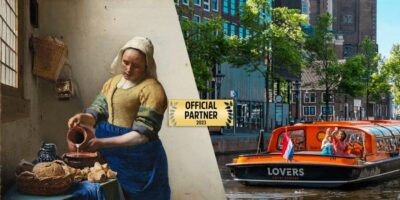
Rijksmuseum Entry Ticket and Canal Cruise Combo
Read our review →
Go City Amsterdam Pass: Attractions Pass with Rijksmuseum
Read our review →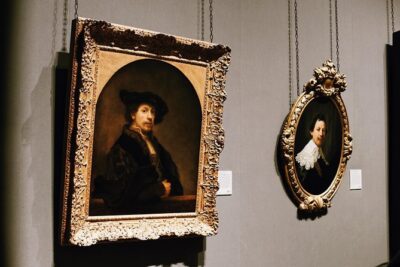
Rijksmuseum Amsterdam Exclusive Guided Tour w/ Reserved Entry
Read our review →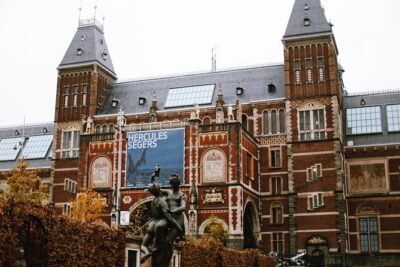
Van Gogh & Rijksmuseum w/ Reserved Entry Semi-Private 8ppl Max
Read our review →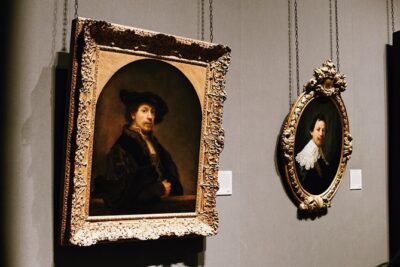
Van Gogh & Rijksmuseum w/ Reserved Entry Exclusive Guided Tour
Read our review →Browse the lists this tour appears in