
Reviewed · CITY WALKING TOURS
Small Group Walking Tour in Amsterdam with Friendly and Fun Guide
Amsterdam can feel like a puzzle. This walk helps you fit the pieces together fast. You cover the medieval center, iconic canals, and old courtyards in a low-impact way, with a guide who keeps the pace human and the stories lively. It is built for a compact group too, so you actually get to ask questions and hear the city, not just follow a crowd.
Two things I really like: the small group size (up to 12) and the way the guide connects streets you already see with the bigger changes that shaped Amsterdam. In one tour I saw guides like David and Diana bring a warm, funny, city-loving energy, which makes history feel usable. There is also a practical refreshment stop so your legs get a break.
One consideration: this is mostly walking, and it is time in the open air. If rain is likely, you will want that umbrella, and if you dislike crowds at major landmarks, you should plan your expectations around central areas.
In This Review
- Quick reasons this small-group walk clicks
- A 3-hour Amsterdam introduction that stays easy on your feet
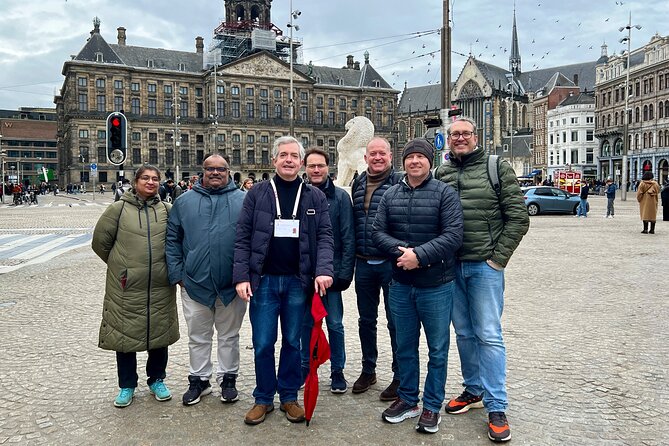
- Starting at Dam Square: your mental map begins here
- Nieuwe Kerk: medieval Amsterdam without getting lost
- The canal stretch: how Amsterdam got its structure
- Jordaan: a calmer Amsterdam “village” feel
- Old Center from Waag toward Dam Square
- Begijnhof: courtyard calm, hofjes, and two kinds of faith
- Refreshment breaks: coffee or tea, but plan it yourself
- Guide energy matters: David’s style and why it works
- Price and value: $41.13 for a focused 3-hour walk
- Who should book this Amsterdam walking tour
- Final call: should you book Walks in Amsterdam for this route?
- FAQ
- How long is the Amsterdam walking tour?
- How much does the tour cost?
- What language is the tour offered in?
- What is the group size limit?
- Where do you meet for the tour?
- Does the tour include coffee or tea?
- Are admission tickets required for the stops?
- Is it recommended to bring an umbrella?
- What is the cancellation refund window?
Quick reasons this small-group walk clicks
- Max 12 people keeps it personal, not a moving line.
- Free-entry stops mean you spend money on food, not tickets.
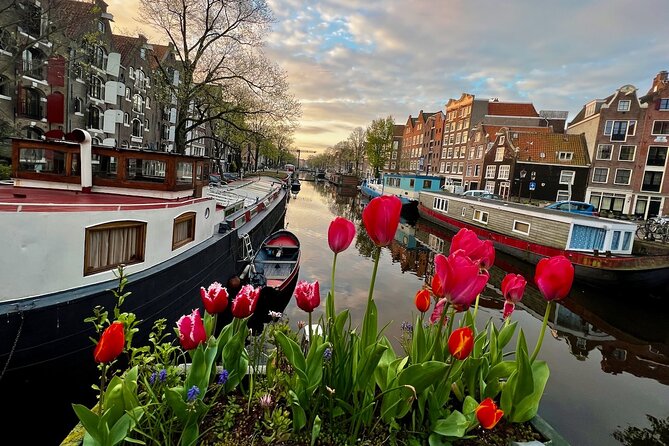
- Canals plus context explains how the city’s layout grew over centuries.
- Jordaan break gives you a calmer neighborhood feel and a place to pause.
- Begijnhof hofjes brings you into a quieter, courtyard-style Amsterdam moment.
- Friendly guide style often mixes Dutch culture talk with humor and useful tips.
A 3-hour Amsterdam introduction that stays easy on your feet
This is a straightforward way to get oriented in Amsterdam’s core without turning your day into a race. The tour runs about 3 hours, and it is designed as a walking route that returns you to the start area at Dam. You will move through the areas many first-timers want, but with the added benefit of a guide who gives you a clear story arc.
The value here is not just the places you pass. It is the way the route turns geography into understanding. You start at Dam, where the city’s modern identity is easy to recognize, then you work toward the medieval center and canal belt logic. You do not need to be a history buff to enjoy it. If you like cities for their street patterns and human-scale details, you will get a lot out of this.
Cost matters too. At $41.13 per person for a 3-hour small-group walk with English commentary, this is the kind of price that can fit a tight itinerary. It is also booked fairly far in advance on average, so if you want a specific day and time, it helps to lock it in sooner rather than later.
More of the canal ring crossed on foot:
- Amsterdam Anne Frank: Small-Group Walking Tour & Local Guide
★ 4.8 · 12,789 reviews - Anne Frank’s Story – Guided Walking Tour through Amsterdam
★ 5.0 · 11,619 reviews - Absolutely Amsterdam – the Essential Introductory Walking Tour
★ 5.0 · 3,629 reviews
Starting at Dam Square: your mental map begins here
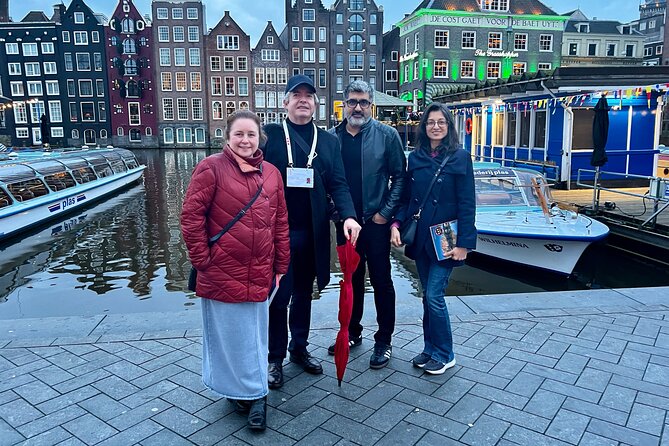
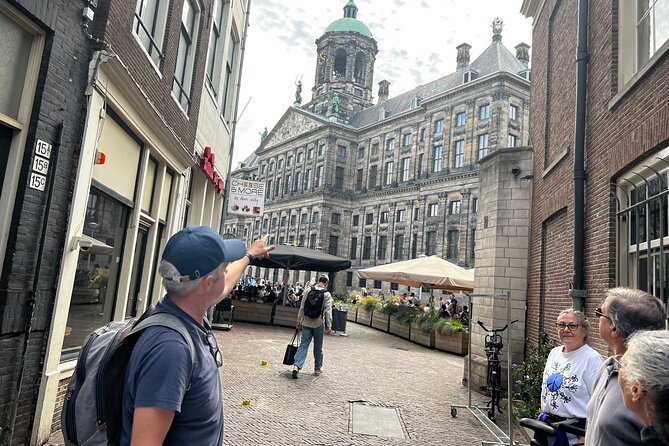
You begin at the National Monument Dam, right in the Dam Square area. This is where Amsterdam tells you, immediately, that it is a city with layers. The guide gives an introduction that frames Amsterdam as it evolved from a fishing village around 750 years ago. That one early context is surprisingly helpful. Once you hear it, the rest of the walk makes more sense, because you start seeing the city as an ongoing rebuild, not a museum piece.
From Dam Square, you continue through the Damstraat corridor. This stretch is practical and central, which is good on a walking tour. It also means you will likely see the city’s movement and modern rhythm. The “win” is that you get a clean baseline for what you will recognize later, especially once you start thinking about how canals and neighborhoods connected to wealth, trade, and housing patterns.
Because this is a quick intro stop (around 15 minutes), it is also low-pressure. You get the setup, then you move on before the info overload happens. If you like learning in bite-sized chunks, you will appreciate that.
Nieuwe Kerk: medieval Amsterdam without getting lost
The next stop is Nieuwe Kerk, which the tour uses as a gateway into medieval Amsterdam. Expect a walk-by style focus, with the guide explaining how the area changed across the centuries. This is a smart stop because Nieuwe Kerk sits in a zone where the past is always in your peripheral vision. You can stand there, look around, and connect the architecture and setting to what the guide is telling you.
This part is about pattern recognition. You are learning how Amsterdam grew, not just what it looked like. The 15-minute pace keeps it friendly for mixed groups. In the feedback I saw, the tour worked well for ages ranging from early teens to much older adults, which tells me this is not a museum lecture. It is more like guided city storytelling.
Potential drawback? This section is still in the central core. If you are sensitive to crowds, arrive with the mindset that it is a busy area. The guide’s job is to keep you moving and to pace the explanations so you are not stuck standing in one knot of people for too long.
The canal stretch: how Amsterdam got its structure
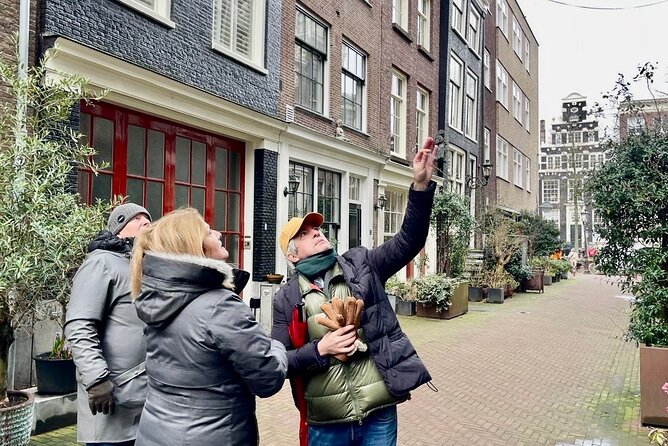
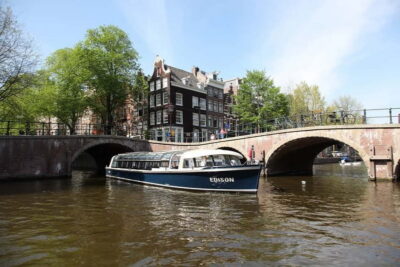
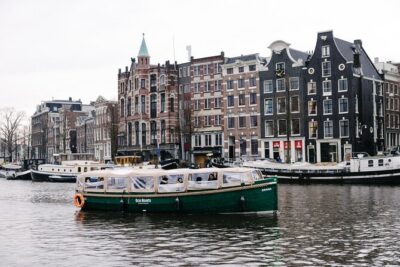
One of the best parts of the walk is the long canal-focused section, around 1 hour. You see iconic canals and you learn how they were built, plus what changed for Amsterdam in the 17th century. If you have ever looked at Amsterdam’s waterfronts and wondered why everything lines up so neatly, this is where the “why” gets explained.
This hour matters for value. A lot of walking tours point at canals and move on. Here, you connect canals to the city becoming a major world player. The guide covers major events tied to Amsterdam’s rise, so you are not just collecting pretty views. You are learning the turning points that affected where people lived, how goods moved, and how the city expanded.
I also like that the guide talks about Amsterdam as a place people live, not just a postcard backdrop. When a guide can connect trade history to daily city life, you leave with a more realistic sense of what Amsterdam feels like beyond the canals. It also helps you when you plan the rest of your trip, because you start recognizing which neighborhoods match which vibe.
Some other canal-ring outings to set against this



Jordaan: a calmer Amsterdam “village” feel
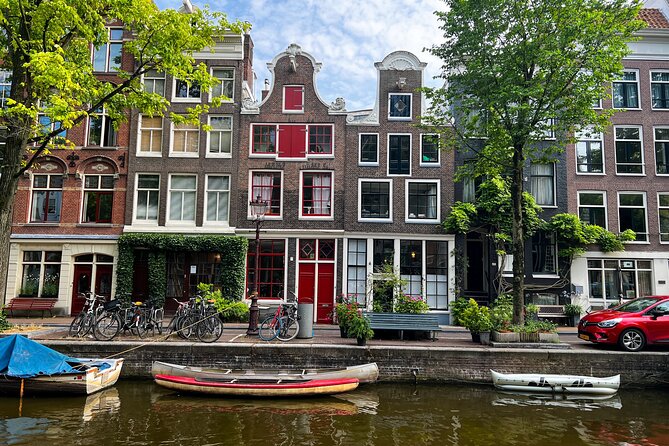
Next comes the Jordaan, and this is the neighborhood pause your legs will appreciate. The tour frames Jordaan as the area tied to people who worked on the 1600s canal expansion, and it describes how it transformed over time into a more “village-like” section of Amsterdam. In practice, that means quiet streets, cozy corners, and a better sense of strolling at human speed.
You get about 30 minutes here, which is long enough to feel a change in atmosphere. If you want a drink or a snack, this is a strong moment to do it, because you are no longer only moving between big, obvious landmarks. You are in a place where you can actually slow down and look sideways at everyday Amsterdam.
One smart detail: the Jordaan stop makes this tour feel less like a checklist and more like a route with variety. Big square energy at the start, medieval context mid-walk, canal logic in the middle, then neighborhood feel at the end. That rhythm helps a lot if this is your first day in town.
Old Center from Waag toward Dam Square
After the Jordaan feel, the route returns through the Old Center area, moving from the Waag area toward Dam Square again. This part is built around stories. You look at old Amsterdam as the guide links the present-day street layout to what came before, and you hear explanations that make the walking route feel purposeful.
This stop also works because it gives you time for small discoveries. When you walk slowly with context in your head, you notice things you would normally miss, like how certain streets funnel movement, or how buildings relate to each other even when you cannot immediately name them.
The time here is about 30 minutes, so it stays manageable. Still, this is a good point to pay attention to your pace and to ask questions if anything clicked and you want more detail. A lot of people rush their questions early. I prefer saving the best ones for this middle-late section, when the guide has already set the city story in motion.
Begijnhof: courtyard calm, hofjes, and two kinds of faith
Then you reach Begijnhof, one of Amsterdam’s oldest hofjes. This stop is short, about 15 minutes, but it packs in real atmosphere. You hear how the hofje system originally housed lay women who had not taken vows to become nuns, and you learn what makes Begijnhof distinctive: it is a beautiful enclosed set of houses, plus a mix of religious spaces tied to different eras.
What I like about Begijnhof on a walking tour is that it changes your senses fast. You go from streets and squares into an interior feeling, where you can slow down and look around. Even if you do not have time to tour every part on your own, the guide’s context helps you understand what you are seeing.
This is also a good stop for “travel brain” reset. After canal streets and city corridors, the courtyard space gives your mind a break. If you are traveling with teens or family, this is often the moment that turns the tour from information to experience.
Refreshment breaks: coffee or tea, but plan it yourself

The highlight notes a stop for refreshments like coffee or tea so you can rest your legs. That is the practical side of the tour, and I appreciate it because it prevents the classic walking-tour problem: everyone gets grumpy around hour two.
Coffee and/or tea are not included in the price, so you will need to pay for what you order. Still, having the pause scheduled by the guide is useful. You do not have to guess when the best timing is, and you can take a breather without falling behind.
If it looks like rain, bring that umbrella. The tour explicitly suggests it, and Amsterdam weather can shift quickly. Even if rain is light, you will feel the difference if you can keep walking instead of stopping to wait it out.
Guide energy matters: David’s style and why it works
A big reason this tour earns such strong marks is the guide vibe. Many of the comments I saw mention David by name, describing him as fun, engaging, and eager to share stories along the way. People also talked about humor and a pace that kept everyone involved, even with a wide age range.
That guide style matters because it changes how you absorb facts. If the guide reads your city like it is a conversation, you remember more. You also get better local recommendations for what to do after the walk, because the guide is not only pointing out sights, they are explaining how Amsterdam actually works as a living city.
And yes, there is also evidence of other guides leading similarly, like Diana, who was described as personable and helpful with finding the start area and keeping the route focused for a small group. That is a good sign if you want a tour that feels organized and friendly, not stiff.
Price and value: $41.13 for a focused 3-hour walk
Let’s talk about the money in a plain way. At $41.13 per person for about 3 hours, you are paying for guided storytelling plus a route that concentrates on Amsterdam’s inner core. The stops are marked as free admission for the visit points used on the walk, so your spending is mainly on food and drink rather than entry tickets.
You also get something harder to price: time and confidence. If you are new to Amsterdam, knowing where Dam Square sits, how the canal areas relate, and why Jordaan feels different helps you plan the next day. That alone can save you from wandering with no plan.
The small-group cap to 12 people is the other value lever. A private-style experience without private-tour prices usually makes a huge difference. You can hear the guide, you can ask things, and the walk does not feel like you are being herded.
Who should book this Amsterdam walking tour
This tour is ideal if you want:
- a low-impact intro that still gives real context
- a small-group setting where you can ask questions
- a mix of major landmarks and calmer neighborhood street time
- an English-speaking guide with a fun, story-driven approach
It is also a solid fit if you have limited time and want to get your bearings early in your trip. One practical tip: try to schedule it near the start of your Amsterdam days, because the route helps you understand the city layout faster.
If you hate walking, you might not love it. But if you can manage a few hours on your feet and you like learning while you move, this is a comfortable first taste of Amsterdam.
Final call: should you book Walks in Amsterdam for this route?
I would book it if you want an easy, guided overview that balances big-name spots with a couple of quieter, more meaningful stops like Jordaan and Begijnhof. The price is reasonable for a 3-hour, small-group walk, and the guide style seems to be a major strength. You get structure, humor, and a clearer sense of how Amsterdam changed over time.
I would think twice if you are only interested in ticketed museum-style visits, or if you cannot handle central areas during busy hours. For most first-timers, though, this is one of those “get it done early” tours that makes the rest of your trip simpler.
FAQ
How long is the Amsterdam walking tour?
It is about 3 hours.
How much does the tour cost?
The price is $41.13 per person.
What language is the tour offered in?
The tour is offered in English.
What is the group size limit?
The tour has a maximum of 12 travelers.
Where do you meet for the tour?
You start at the National Monument Dam, 1012 JS Amsterdam, Netherlands.
Does the tour include coffee or tea?
Coffee and/or tea are not included, but the tour includes a stop for refreshments like coffee or tea.
Are admission tickets required for the stops?
The tour lists admission ticket free for the stops it covers.
Is it recommended to bring an umbrella?
Yes. The tour suggests bringing your umbrella if rain is likely.
What is the cancellation refund window?
Free cancellation is available up to 24 hours in advance for a full refund.
Newest on the canal ring
- Amsterdam Bike Food Tour with Private Guide★ 5.0 · 1 review
- Amsterdam: Rijksmuseum Private Tour with an Art Historian★ 5.0 · 1 review
- Happy B-day Amsterdam! Guided Tour with a History Buff★ 5.0 · 1 review
- Local Foodie Adventure in Amsterdam★ 5.0 · 1 review
- Private Photo Shoot in Amsterdam with a Professional Photographer★ 5.0 · 1 review
- Private day trip to Giethoorn and the Enclosing Dike★ 5.0 · 1 review
- Private Sightseeing Tour to Giethoorn from Amsterdam incl. canal cruise★ 5.0 · 1 review
City Walking Tours, compared.

Amsterdam Anne Frank: Small-Group Walking Tour & Local Guide
Read our review →
Anne Frank’s Story – Guided Walking Tour through Amsterdam
Read our review →
Absolutely Amsterdam – the Essential Introductory Walking Tour
Read our review →
Anne Frank Guided Walking Tour in DE/EN/IT/ES
Read our review →

Anne Frank Walking Tour Amsterdam Including Jewish Cultural Quarter
Read our review →Browse the lists this tour appears in