
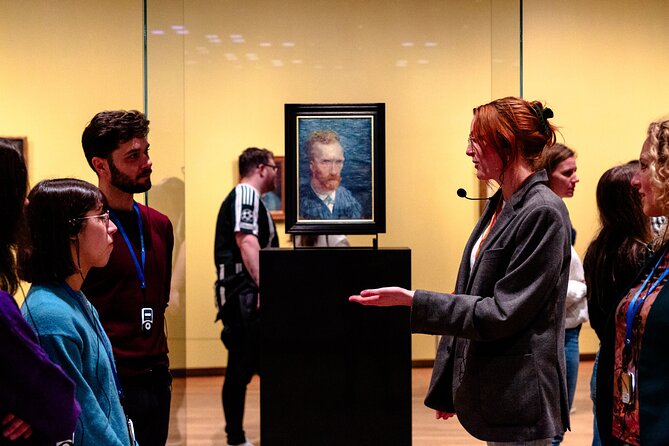
Reviewed · VAN GOGH MUSEUM ENTRY TICKETS
Van Gogh Museum Private Tour
Vincent Van Gogh in 2 hours, with your questions answered. This private visit through the Van Gogh Museum is a smart way to see the big ideas behind his work, because you do not just stand and read, you follow a guide who ties the paintings to the moments in his life. I love that the tour includes admission tickets and focuses on a tight set of must-see works, like the portraits and the famous Arles and later-room masterpieces. I also love the whisper system, which makes it feel effortless to hear every detail without craning your neck. One thing to consider: you will likely need to plan your luggage, since the museum has rules about staying after the tour unless you are traveling light.
Because it is private, you only share the experience with your group, and you can keep it conversational. It runs about 2 hours, and it is offered in English, so if you prefer another language you will want to check options before booking. The itinerary is built for flow, with short viewing windows at each stop, so it works well as a break in a packed Amsterdam day.
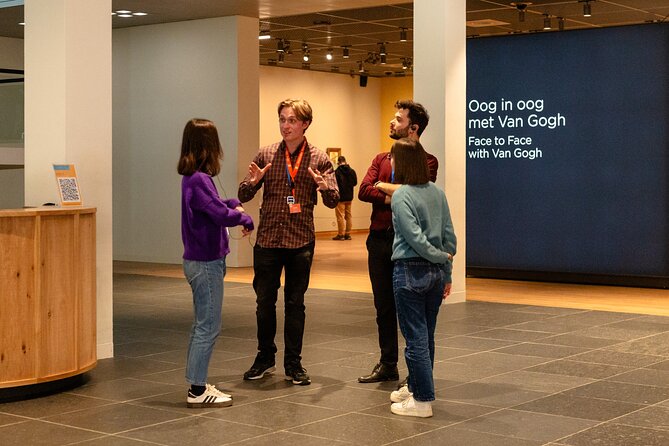
You will start near the Museumplein area at Cobra Café on Hobbemastraat, and you finish near Museumplein 6. Food and drinks are not included, so bring water and a snack plan if you need one. And since this is an adult-only experience (18-and-over), it is a good fit for anyone who wants a calmer, no-rush museum visit.
In This Review
- Key highlights you should know before you go
- A private Van Gogh Museum tour feels less like a museum, more like a story
- First stop: self-portraits and the power of early intensity
- Why this works
- Possible drawback
- Dutch beginnings: Millet and Breton, and the dignity of peasants
- A practical tip
- Paris years (1886 to 1888): portraits, still life, and creative risk
- What to look for during this stop
- Arles (1888) and the South of France: sunflowers, the Yellow House, and bold color choices
- A small caution
- Saint-Rémy and Auvers: the later rooms that hit harder
- Whisper system and pacing: why the tour stays easy to follow
- Admission included, private guide included, and what that means for value
- Where to start and where to end, plus the museum rules that affect your plans
- Who this tour is for, and who might want a different approach
- Should you book this Van Gogh Museum private tour?
- FAQ
- How long is the Van Gogh Museum private tour?
- Is the tour offered in English?
- Is admission to the Van Gogh Museum included?
- Is this tour truly private?
- Where do I meet for the tour?
- Where does the tour end?
- Does the price include food or beverages?
- Are there age limits?
- Can I stay in the museum after the tour?
Key highlights you should know before you go
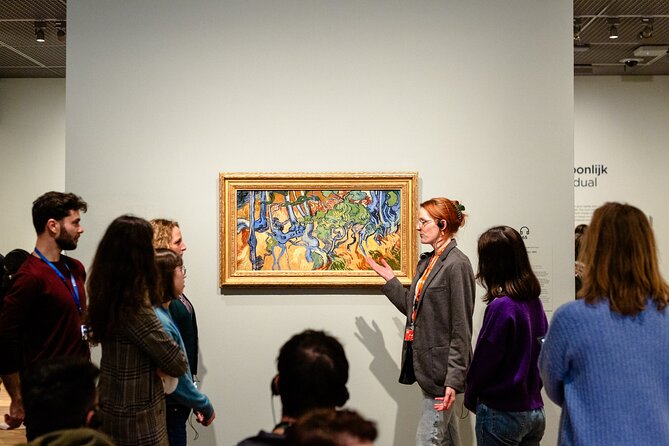
- Private guide with a whisper system, so you hear everything clearly during the stops
- Admission tickets included, which matters when you factor in overall value
- A focused route through Van Gogh’s life phases, from early works to Arles, Saint-Rémy, and Auvers
- Short viewing times that keep the momentum, ideal if you do not want a half-day commitment
- Guides named Sylvia, Giulia, and Kiran, repeatedly praised for clear, patient, interactive storytelling
- Adult-only (18-and-over), which helps keep the tour tone consistent
A private Van Gogh Museum tour feels less like a museum, more like a story
The Van Gogh Museum can be a lot, even when you love art. The collections are dense, the rooms move fast, and you can lose the thread without a framework. A private guide is the shortcut to understanding the what and the why, because you are not trying to map a career using only wall labels.
This tour’s structure is practical. You get a set of stops, each one designed to highlight a specific chapter in Van Gogh’s development. Then the guide connects those dots in real time, so the museum starts to feel like a narrative instead of a maze.
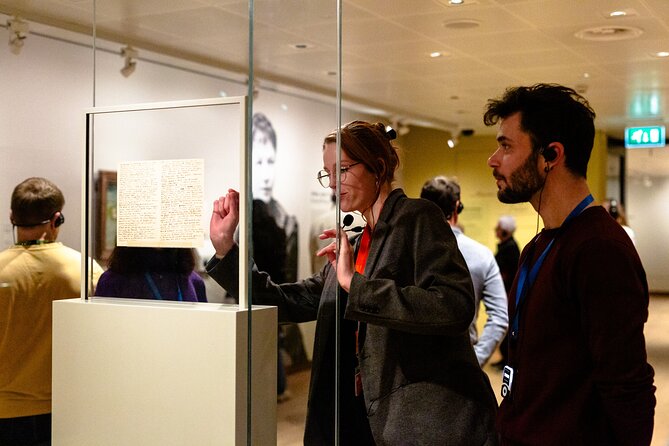
The other big win is sound. The whisper system is a simple upgrade that changes everything. You spend less time searching for the guide’s voice and more time looking at brushwork, composition, and details you might miss on your own. If you have ever been stuck behind tall visitors in a crowded gallery, you will appreciate this setup right away.
More entries for the Van Gogh Museum:
- Amsterdam: Van Gogh Museum Ticket and City Canal Cruise
★ 4.6 · 3,899 reviews - Amsterdam: Van Gogh Museum Ticket & Canal Cruise
★ 4.5 · 3,304 reviews - Van Gogh Museum Amsterdam Exclusive Tour w/ Reserved Entry
★ 5.0 · 1,760 reviews
First stop: self-portraits and the power of early intensity
The tour begins with Van Gogh’s self-portraits, which is a smart choice because it frames how he used painting to track his own identity and mental world. Self-portraits are not just likenesses. They are experiments in mood, style, and presence.
You get a focused look at how his self-image evolves, and the guide typically helps you notice what changes over time. Are the strokes tighter or looser? Does the palette get warmer or calmer? Are the expressions more guarded or more direct? In a short stop, you do not have time to analyze everything, but you do get enough to start recognizing patterns.
If you like art history but hate long lectures, this is a good entry point. You can walk in knowing some famous names and end the first room feeling like you understand what you are about to see.
Why this works
Starting with self-portraits gives you a reference point for everything else. When you later see portraits of other people, you can compare how he depicts faces, posture, and emotion.
Possible drawback
This is a concentrated route. If you want to linger for 30 to 45 minutes on one painting, this tour’s pacing is not designed for that kind of deep, room-staying focus.
More Amsterdam collections worth the queue:

Dutch beginnings: Millet and Breton, and the dignity of peasants
The next part of the visit leans into Van Gogh’s Dutch period and his fascination with rural subjects. You will spend time in a foyer area that sets up key influences, with paintings tied to Millet and Jules Breton. This matters because it explains why Van Gogh was drawn to everyday labor and plainspoken life.
Then you move into major works that center ordinary people with serious presence. You see Woman Lifting Potatoes, the emotional weight of Head of a Peasant Woman, and the layered storytelling of The Potato Eaters. The guide’s job here is crucial, because these paintings are easy to misunderstand if you only see them as “sad” scenes. They are also about structure, light, and how Van Gogh builds a moment into something monumental.
You also get the chance to look at how he treats faces and hands. In a private tour format, you can ask what to notice, which helps you shift from general admiration to specific viewing.
A practical tip
Keep your eyes moving between faces and surroundings. Many people focus on emotion first, but the scene is designed so the emotional reading connects back to the objects, textures, and color choices.
Paris years (1886 to 1888): portraits, still life, and creative risk
Then the tour snaps into the Paris period, when Van Gogh’s style and subject choices broaden. You will look at works such as Self Portrait with Felt Hat and Still Life with Absinthe. These paintings are an invitation into his shift toward bolder themes and a more contemporary visual language.
You also get In the Café: Agostina Segatori in Le Tambourin and scenes that show people moving through space, including Garden with Courting Couples. Café and street-life subjects can feel like they belong to another era, but the guide helps you see how Van Gogh used these moments to test composition, color, and the feeling of a modern public world.
When you are short on time, this Paris segment is where a guide earns their keep. Without help, it is easy to treat each painting as a separate highlight. With a guide, you start to sense the overall approach: Van Gogh learning from the city while still building his own visual voice.
What to look for during this stop
Ask yourself what stands out first, the faces or the atmosphere. Paris works often reward that second look, where you notice how he uses color and rhythm to create mood, not just depict objects.
Arles (1888) and the South of France: sunflowers, the Yellow House, and bold color choices
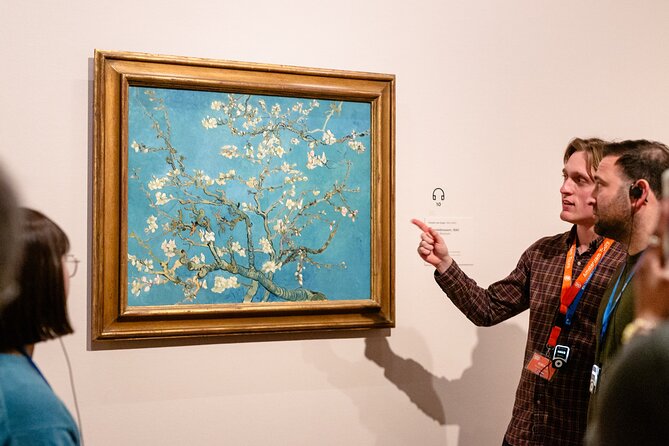
Arles is the part of Van Gogh’s story that many people already know, and this tour uses that familiarity to help you see deeper. You will encounter Sunflowers, Almond Blossoms, and the famous The Bedroom. You also get time with The Yellow House, which helps you understand how environment becomes subject, and how place turns into a whole creative program.
The tour also includes Japanese Paintings, described as copies from prints. That detail is more important than it might sound. It shows Van Gogh was not only reacting to French landscapes and people. He was also studying how other traditions handled line, pattern, and stylization, then translating those lessons into his own painted world.
You will likely leave this section thinking about boldness differently. Arles is where his color choices feel less like decoration and more like emotion. The guide’s commentary helps connect the paintings to the feeling of being in a new place, especially in how he builds interiors and gardens into clear visual statements.
A small caution
Because Arles works are so famous, it is tempting to treat them like checkboxes. Give yourself a moment to actually look at edges, patterns, and how light behaves in the scenes.
Saint-Rémy and Auvers: the later rooms that hit harder
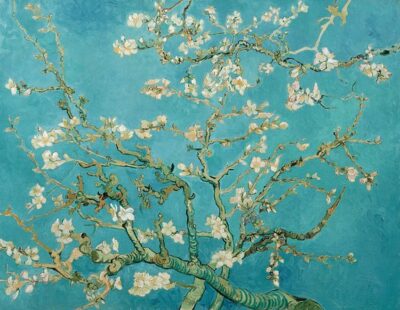
The later chapters are where Van Gogh’s work can feel less like a set of images and more like a record of thought. You will reach Level 3, starting with Saint-Rémy-de-Provence, with paintings including Almond Blossoms, Wheatfield with a Reaper, Iris, and Pieta (After Delacroix).
This is a strong pairing. Almond Blossoms connects back to earlier motifs, so you can see how a theme returns with different emotional weight. The wheatfield scene and Iris shift you toward landscape intensity, while Pieta helps show that even during tough periods, he was still engaging with major art traditions.
Then the tour continues to the Auvers room on Level 3, with works including Tree Roots and Wheatfield with Crows. These are not just late masterpieces because they are famous. They are powerful because the compositions feel more urgent. The guide’s job is to point out how the shapes and structure do the emotional work.
Short stops might sound like a limitation, but in practice, these later rooms can be too intense to do slowly if you want to keep your day moving. The guide’s pace helps you take the key ideas without burning out.
Whisper system and pacing: why the tour stays easy to follow
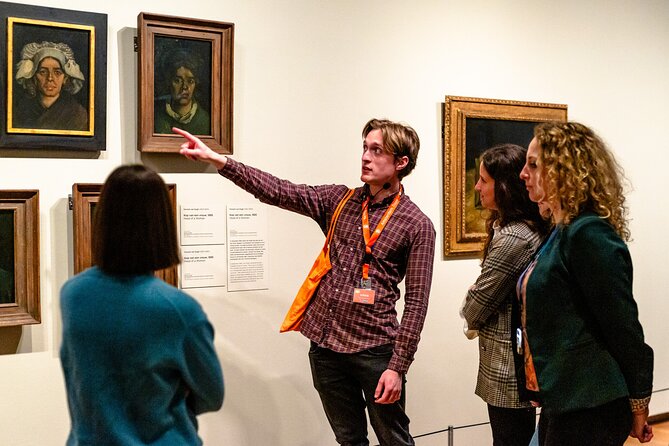
The tour runs about 2 hours, and each stop is timed for momentum. That timing is not just convenience, it is a viewing strategy. You get a focused window for each cluster of works, then move on with context.
This is also where the guide matters. In strongly positive feedback, guides such as Sylvia, Giulia, and Kiran are repeatedly praised for being patient, clear, and interactive. That combination is important. If a guide explains but never answers questions, you lose your chance to personalize the experience. If a guide is friendly but unclear, the museum becomes noise.
In this format, the whisper system helps you stay engaged with the guide even in busier galleries. And the private setting means you can ask what you are stuck on, then immediately apply it to the next painting.
Admission included, private guide included, and what that means for value
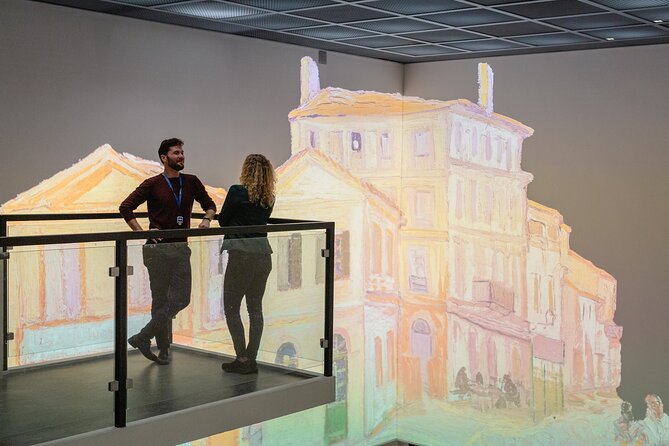
At $263.20 per person for a 2-hour private tour, the price is not a budget pick. But value is not only about the hourly rate. In a museum like this, you are paying for two things you cannot easily recreate on your own.
First, the route is curated for understanding. You are not spending your time guessing which paintings to prioritize. Second, you get a live guide plus the whisper system, which improves comprehension and reduces frustration, especially if you are sensitive to noise or crowds.
Also note the practical detail that admission is included with the tour stops. Many museum tours are priced like a guided session only, then you still pay ticket prices separately. Here, you do not have to stitch together logistics in your head while you are already inside a busy museum.
The tour is offered in English and is adult-only, so if you fit those requirements, you are likely to feel the price more justified because the experience targets your comfort and attention.
Where to start and where to end, plus the museum rules that affect your plans
You meet at Cobra Café, Hobbemastraat 18, then you finish near Museumplein 6. That location is great if you are planning other sights around the Museumplein area, since you end right in the same zone.
One detail I do not want you to overlook is the museum stay rule after your visit. The tour ends and you are generally not allowed to stay in the museum afterward, unless you are traveling light. The guidance is clear about avoiding thick winter jackets, suitcases, large bags, and liquids. If you arrive with just a small jacket and a small handbag, you can stay until closing time.
So, if you want the option to wander after the tour, pack with that in mind. It is not about breaking any rules. It is about planning your day so you do not waste time deciding what to do with bags when you are already in art mode.
Food and beverages are not included, so plan a quick stop nearby if you need one. The tour is short enough that a snack break can fit easily into your day.
Who this tour is for, and who might want a different approach
This private Van Gogh Museum tour is a strong match if:
- You want a structured visit in about 2 hours, not a full half-day.
- You prefer live explanations and Q&A over reading wall text alone.
- You want to hear clearly thanks to the whisper system.
- You like art that tells a life story across periods, from early works through later masterpieces.
You might consider a different approach if:
- You hate timed stops and want long, unbroken time in every room.
- You plan to carry large bags, heavy coats, or liquids and really want to stay in the museum afterward. The post-tour stay rule can limit that.
- You need a language other than English.
Should you book this Van Gogh Museum private tour?
If you want the easiest path to understanding Van Gogh without getting lost, I think this one is worth serious consideration. The combination of private guide attention, admission included, and a whisper system is exactly what you want when you are trying to connect portraits and landscapes to his life chapters.
The biggest reason to book is not that you will see famous paintings. It is that you will see them in sequence with meaning, with time to ask questions and a pace that fits a busy Amsterdam day. If you can travel light and you are comfortable with an adult-only, English-only experience, this tour is a smart way to get more out of the Van Gogh Museum than a solo visit would usually deliver.
If you are flexible on timing and you want a calm, guided overview that still feels personal, book it and spend the rest of your day around Museumplein. That is a good setup for turning one art highlight into a whole memorable morning or afternoon.
FAQ
How long is the Van Gogh Museum private tour?
It lasts about 2 hours.
Is the tour offered in English?
Yes, it is offered in English.
Is admission to the Van Gogh Museum included?
Yes. Admission tickets are included as part of the tour stops.
Is this tour truly private?
Yes. It is a private tour/activity, and only your group participates.
Where do I meet for the tour?
You start at Cobra Café, Hobbemastraat 18, 1071 ZB Amsterdam.
Where does the tour end?
The tour ends at Museumplein 6, 1071 DJ Amsterdam.
Does the price include food or beverages?
No. Food and beverages are not included.
Are there age limits?
Yes. The tour is only available for adults age 18 and older.
Can I stay in the museum after the tour?
You are generally not allowed to stay after the visit, unless you are traveling lightly. If you are not carrying thick winter jackets, suitcases, large bags, or liquids, and you have a small jacket and small handbag, you can stay until closing time.
Newest on the canal ring
- Amsterdam Bike Food Tour with Private Guide★ 5.0 · 1 review
- Amsterdam: Rijksmuseum Private Tour with an Art Historian★ 5.0 · 1 review
- Happy B-day Amsterdam! Guided Tour with a History Buff★ 5.0 · 1 review
- Local Foodie Adventure in Amsterdam★ 5.0 · 1 review
- Private Photo Shoot in Amsterdam with a Professional Photographer★ 5.0 · 1 review
- Private day trip to Giethoorn and the Enclosing Dike★ 5.0 · 1 review
- Private Sightseeing Tour to Giethoorn from Amsterdam incl. canal cruise★ 5.0 · 1 review
Van Gogh Museum Entry Tickets, compared.

Van Gogh Museum Amsterdam Exclusive Tour w/ Reserved Entry
Read our review →
Van Gogh Museum Tour Reserved Entry Semi Private
Read our review →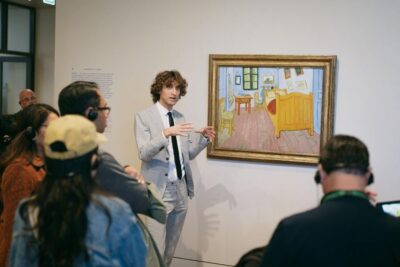
Combo Ticket: Van Gogh Museum Ticket and 1-Hour Canal Cruise
Read our review →
Van Gogh & Rembrandt Captivating Experience Entry
Read our review →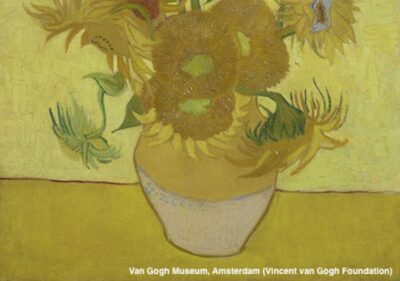
Browse the lists this tour appears in