
Reviewed · AMSTERDAM
Your Own Amsterdam. The Old Side
That secret-courtyard feeling hits fast. This guided walk through Amsterdam’s old quarters mixes classic canals with surprising local stories you would miss on your own, with memorable stops like the Jewish Quarter and the Portuguese Synagogue. I also love the way the guide weaves the city’s Catholic and Protestant past into what you see today, while keeping it human and practical. One drawback to plan around: it is a brisk 3-hour route, so comfortable shoes matter, and you should not expect entrance tickets or included meals.
I came away liking the tour’s balance: big landmarks, plus smaller details that explain why Amsterdam looks the way it does. The itinerary is also flexible, since the tour is tailored to your interests. In one standout review, Florence from France praised guide René for making the city’s details visible, and for the inspiring, story-rich way he guided the group.
In This Review
- Key things I’d make sure you notice
- Starting at Amsterdam Central, and why that matters
- Saint Nicholas Basilica stop: old faith, street-level reality
- A local bar pass-by: Amsterdam’s social glue
- Chinatown walk: when Amsterdam layers identities
- Nieuwmarkt and Lastage photo stop: canals and courtyards energy
- Jewish Quarter: spiritual diversity, explained on the street
- Rembrandt House pass-by: art life as a city theme
- The “secret” stop and a short break: where the tour slows down
- Local café break: keep energy for the final arc
- Hidden gem photo stop: learning how to spot the details
- Ending at the Portuguese Synagogue: the story closes neatly
- The guide’s big skill: turning facades into clues
- Price and value: is $171 for 3 hours worth it?
- Who this tour suits best (and who might not)
- Should you book Your Own Amsterdam, The Old Side?
- FAQ
- How long is this tour?
- Where do I meet the guide?
- Is the tour private or group-based?
- What languages is the guide speaking?
- Are entrance fees included?
- Are food and drinks included?
- What is the cancellation policy?
- Is there reserve now, pay later?
- Do I need to check for exact start times?
Key things I’d make sure you notice
- A storyline from the 80 Years’ War that connects religion and daily life to the buildings you pass.
- Old Amsterdam details in plain sight, like facade boards and small visual clues that the guide explains.
- A clear arc from Jewish landmarks to the Portuguese Synagogue, finishing where the story lands.
- Neighborhood variety in one compact walk, from Chinatown streets to the Nieuwmarkt area and Jewish Quarter.
- Short breaks built into the route, so you can recover without the tour feeling slow.
Starting at Amsterdam Central, and why that matters
Most Amsterdam walks start with the canals. This one starts with Amsterdam Centraal, which is smart. You get your bearings fast in a place that feels like the city’s front door, and then you head into older lanes where the scale changes, houses get narrower, and sightlines tighten.
Meet at the front of the station, between the two towers. From there, the guide sets the tone: expect a story-led stroll, not a checklist. The group moves at a comfortable walking pace, with brief stops where the guide gives context.
A practical note for your planning: you have about 3 hours, so you are in walking mode. If you want photos, bring a phone with enough battery, because you will be stopping often enough that charging later might not happen.
Weighing this against the rest? A few more from Amsterdam:
- Amsterdam: Heineken Experience Ticket including 2 Drinks
★ 4.6 · 36,014 reviews - Amsterdam Classic Saloon Boat Cruise with Drinks and Cheese
★ 5.0 · 31,825 reviews - Amsterdam Luxury Canal Cruise + Unlimited Drinks & Bites option
★ 5.0 · 30,518 reviews
Saint Nicholas Basilica stop: old faith, street-level reality
One of the first passes is the Basilica of Saint Nicholas, Amsterdam. Even when you are just walking past, it works as a marker for the tour’s bigger theme: how religion shaped the city’s identity over centuries.
You will hear how Amsterdam’s religious history links to what Catholics and Protestants did to influence the city. The point is not just names and dates. It is how that kind of pressure and change ends up in the architecture, in who had power when, and in how communities relate to each other.
This is also where the guide’s style matters. A good story-guide helps you read a street like a page. You start noticing how buildings, entrances, and facades each seem to carry their own local “chapter.”
A local bar pass-by: Amsterdam’s social glue
Next up, the itinerary takes you by a local bar, about 20 minutes. That might sound random at first, but for Amsterdam, it is not.
Bars and cafes have long been places where regular people gather, trade news, and keep culture moving. On this tour, the bar stop helps translate the big historical themes into something everyday: a city built on communities that constantly overlap and renegotiate.
If you like tours where the guide explains what life feels like, this stop will click. If you only want monuments, you might feel the bar element is lighter than the church or synagogue stops, but it helps keep the walk grounded.
Chinatown walk: when Amsterdam layers identities
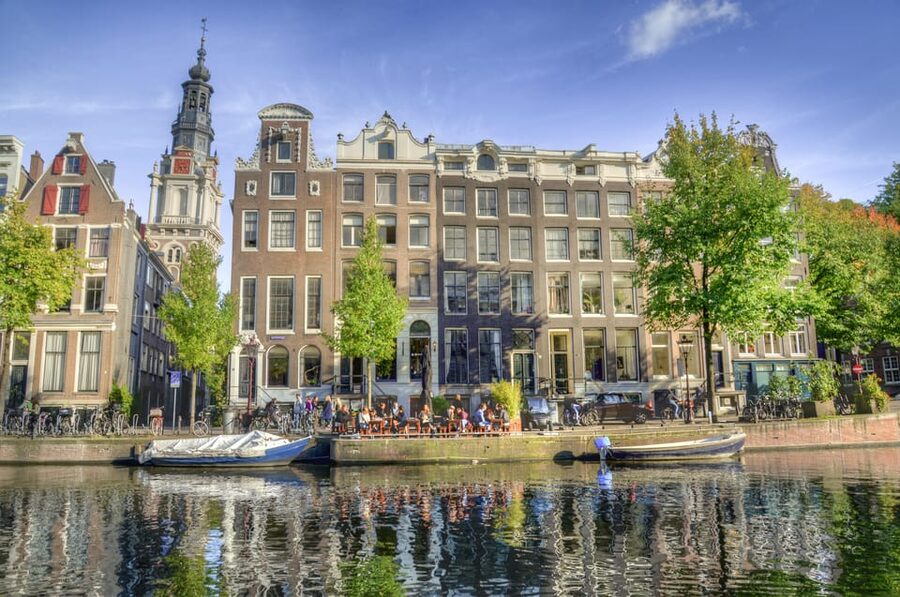
Then you move into Amsterdam Chinatown for a walk segment. The value here is contrast. In just a few steps, the city shifts tone, signage, and street energy.
This tour uses neighborhood variety to show Amsterdam as a place that layers communities over time. You are not just learning about one period. You are seeing how different groups leave their stamp, then how the city keeps moving forward.
When you walk through a pocket like Chinatown, pay attention to how the street feels at human scale. It is one thing to know a neighborhood exists. It is another to feel how people live outdoors on the sidewalk, how businesses cluster, and how the city’s identity expands without erasing what was already there.
A different use for the same hours in Amsterdam:



Nieuwmarkt and Lastage photo stop: canals and courtyards energy
Your Nieuwmarkt en Lastage moment is a photo stop with guided context. This area is a sweet spot for classic Amsterdam texture: canal views, older brick details, and the kind of street corners where an ordinary doorway turns into a story.
I like this part because the guide usually slows down your attention. You start looking beyond the postcard angle and notice things like older brickwork patterns, the way windows face the street, and the traces of previous eras.
Photo stops can feel like a rush on some tours. Here, it is guided enough that your photos end up meaning something, not just capturing pretty scenery.
Jewish Quarter: spiritual diversity, explained on the street
A highlight section follows with the Jewish Quarter, Amsterdam and sightseeing. Expect a guided walk that keeps the history connected to visible places.
This is also where the tour’s “religions and people” storyline becomes concrete. The route is designed to show Amsterdam’s spiritual diversity as you pass sites tied to Catholic, Protestant, Buddhist, and Jewish traditions. Even if you do not go inside anywhere (entrances are not included), you still learn how belief communities shaped neighborhoods and how those layers overlap.
One reason I like tours like this is that they make tolerance feel real, not abstract. Amsterdam’s story is not only about conflict or freedom. It is about people living close enough to influence each other, then finding ways to coexist.
Also, if you enjoy learning through specific landmarks, this is where the tour gives you handles, not just generalities.
Rembrandt House pass-by: art life as a city theme
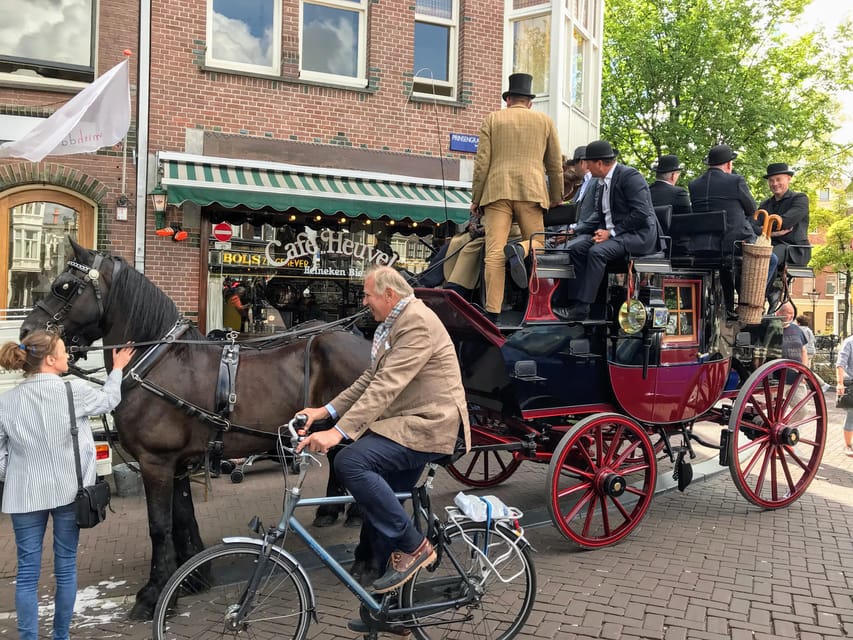
Next is Rembrandt House, approached as a pass-by stop. Again, you are not buying an entrance, but you still get the connection between art, people, and place.
The guide ties Rembrandt’s name to the street-level feel of old Amsterdam and how creative life is part of the city’s identity. In practical terms, it helps you understand why the city looks the way it does around famous artists, and why art history is not separate from everyday history.
Even if you are not a die-hard art fan, Rembrandt is one of those cultural anchors that helps you “read” Amsterdam. You will see the old neighborhoods differently after.
The “secret” stop and a short break: where the tour slows down
You then get a secret stop with a short break. This is the tour’s palate cleanser.
The guide uses this time to pull you toward details: the kind of courtyard feeling and side streets you would miss if you walked straight through. It also gives you a chance to reset, especially after a few longer informational stretches.
I love that the break is built in. Amsterdam walking tours can drift into nonstop information. A real pause keeps the stories from blending together.
Local café break: keep energy for the final arc
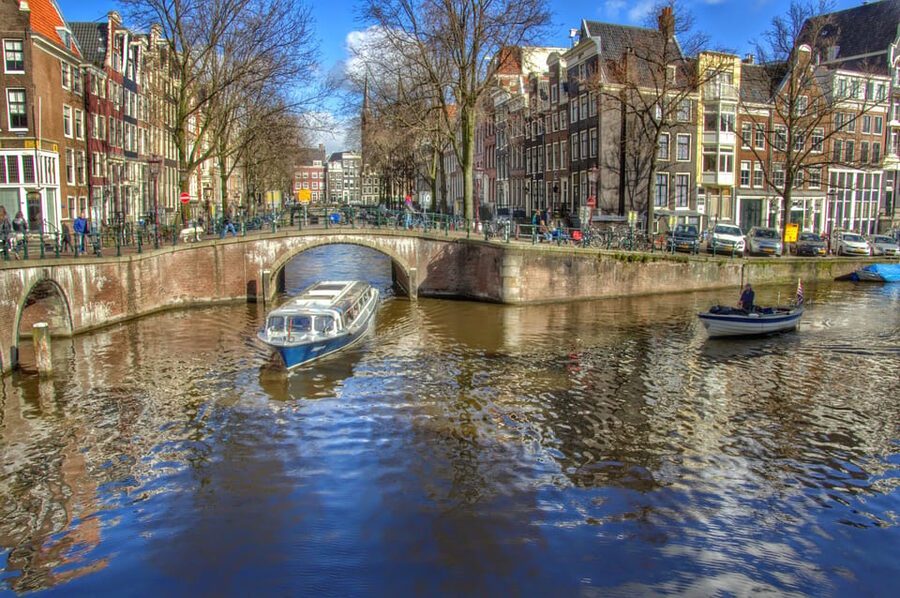
After that, the tour includes a local café break. You are not being promised a meal, since food and drinks are not included, but this stop is part of how the itinerary keeps you comfortable for the last stretch.
This is a good moment to ask questions. If you are curious about the quirky historical ideas the guide mentions later, this is the time to ask.
And if you want to strategize for photos, you can watch how people move through the area. In Amsterdam, what you notice about everyday life can matter as much as the buildings.
Hidden gem photo stop: learning how to spot the details
The itinerary ends with a hidden gem style photo stop. You are likely to get more than a view here. The guide typically uses this stop to teach you a way of looking.
Expect to hear about the small, strange, funny things Amsterdam does across centuries. The tour points to odd stories like 500-year promotions costing nothing, why weeds are cultivated, and how some ideas about “drinks” can be more about food than you expect. There is also a theme around craft beer and how creative industries can shape society.
These might sound like trivia at first, but they add a key texture to the city. Amsterdam is a place where ordinary people turned clever ideas into traditions, and that attitude shows up in everything from local shops to cafe culture.
If you like learning through curiosity, this photo stop usually turns into one of the most memorable moments of the walk.
Ending at the Portuguese Synagogue: the story closes neatly
The tour finishes at the Portuguese Synagogue of Amsterdam. Ending here is smart because it ties your route back to the Jewish landmarks you saw earlier in the walk.
You get a sense of closure, like the guide did not just sprinkle sites along the way. It feels planned, which is exactly what you want from a compact 3-hour itinerary.
And even if you do not go inside, finishing at a major landmark helps your brain file what you learned into a clear mental map.
The guide’s big skill: turning facades into clues
One of the most praised aspects from the review you shared is how the guide made the city’s details visible, especially the small things your eye misses at first glance. That fits the tour’s focus on layered Amsterdam.
You might hear about things like facade boards and the idea of searching for hidden spies. The exact references can sound playful, but the purpose is serious: you learn to connect what you see to the stories behind it. That is how Amsterdam stops being just scenery and starts feeling like a living place.
Also, because the tour is described as personalized and tailored to your interests, you are not trapped in someone else’s lecture. If you care more about religion, architecture, neighborhoods, or quirky cultural habits, the guide can steer the attention in that direction within the time you have.
Price and value: is $171 for 3 hours worth it?
At about $171 per person for a 3-hour guided walk, you’re paying for three things you mostly cannot DIY easily:
- Story threading across multiple neighborhoods, from the old faith conflicts after the 80 Years’ War to today’s variety of communities.
- Local pattern recognition, like learning what to notice on facades, courtyards, and street corners.
- A guide-led pace with breaks, which keeps the tour enjoyable instead of turning into a stamina test.
Entrance fees are not included, and food and drinks are not included. That means the value comes from the guide and the walk itself, not from ticketed sites.
If you are the kind of traveler who likes to know what you are looking at, this price can make sense. If you would rather wander freely without narration, you might feel it is better to do a self-guided route with a good map. But for story-focused people, it is the kind of spending that pays off in how you remember Amsterdam.
Who this tour suits best (and who might not)
This is a great fit if you:
- Want an old-side Amsterdam orientation without spending all day commuting between far-flung areas.
- Like history told through street-level details, not just museum walls.
- Enjoy a blend of major landmarks and smaller surprises, plus short breaks.
- Want a tour that can adapt to your interests, instead of forcing one rigid script.
It might be less ideal if you:
- Want mostly indoor time or museum entrances, since entrances are not included.
- Prefer fully unstructured wandering. This is guided, with set stops and a planned route.
For most visitors, it lands in the sweet spot between “just a walk” and “too much planning.”
Should you book Your Own Amsterdam, The Old Side?
I’d book it if you want Amsterdam to feel like it has a pulse, not just pretty buildings. The tour’s best strength is how it connects religion, neighborhoods, and daily life into one readable route, then spices that with local curiosities like weed cultivation and craft beer culture.
Do it early in your trip if possible. You will learn how to see the city, which makes the rest of your days easier and more enjoyable.
FAQ
How long is this tour?
The tour lasts 3 hours.
Where do I meet the guide?
You meet in front of the main entrance of Amsterdam Centraal station, at the entrance between two towers.
Is the tour private or group-based?
A private group is available.
What languages is the guide speaking?
The live tour guide speaks English, Russian, and Ukrainian.
Are entrance fees included?
No. Entrance fees are not included.
Are food and drinks included?
No. Food and drinks are not included.
What is the cancellation policy?
Free cancellation is available up to 24 hours in advance for a full refund.
Is there reserve now, pay later?
Yes, there is a reserve now & pay later option, so you can book a spot and pay nothing today.
Do I need to check for exact start times?
Yes. Starting times depend on availability, so you should check available times when booking.
Newest on the canal ring
- Amsterdam Bike Food Tour with Private Guide★ 5.0 · 1 review
- Amsterdam: Rijksmuseum Private Tour with an Art Historian★ 5.0 · 1 review
- Happy B-day Amsterdam! Guided Tour with a History Buff★ 5.0 · 1 review
- Local Foodie Adventure in Amsterdam★ 5.0 · 1 review
- Private Photo Shoot in Amsterdam with a Professional Photographer★ 5.0 · 1 review
- Private day trip to Giethoorn and the Enclosing Dike★ 5.0 · 1 review
- Private Sightseeing Tour to Giethoorn from Amsterdam incl. canal cruise★ 5.0 · 1 review