
Reviewed · CITY WALKING TOURS
Amsterdam City Center & History – Exclusive Guided Walking Tour
Amsterdam clicks into place fast on foot. This guided city-center history walk strings together churches, canal corners, and Dutch Golden Age buildings so you understand what you are seeing and what to do next.
I love the insider perspective you get from a real guide, and the way the route moves you through Amsterdam’s layers quickly, from St. Nicholas Basilica to the quiet corners of the Begijnhof. I also like that you finish with tips for further exploration, so you do not waste your next day aimlessly searching for meaning.
One consideration: not everything is included, and some stops may be viewable only from the outside due to security, so plan for possible admission costs if you want to go in.
In This Review
- Key Points to Know Before You Go
- Why This 2.5-Hour Amsterdam Walk Helps You Understand the City
- Meet at Prins Hendrikkade, Then Follow the Center to Papeneiland
- St. Nicholas Basilica to the Weeping Tower: Faith Meets the City’s Edge
- Zeedijk, Nieuwmarkt, and The Waag: Learning the City’s Trading DNA
- Trippenhuis to Oost-Indisch Huis: Wealth, Taxes, and the First Multinational
- Zuiderkerk, Rembrandt’s House, and the Stopera: A City That Rebuilt Itself
- Canal-Girded Corners: Huis Aan De Drie Grachten and Begijnhof Peace
- Dam Square to Herengracht: The Heart and the Golden Bend
- Anne Frank House Outside, Then the Gables of De Drie Hendricken
- Karthuizerhof Hofje, Noorderkerk, and a Scenic End at Papeneiland
- Price and Value: What $62.48 Covers and How to Budget for Tickets
- Practical Tips That Make This Walk Easier (and More Fun)
- Who Should Book This Tour, and Who Might Not Love It
- Should You Book This Amsterdam City Center and History Tour?
- FAQ
- How long is the Amsterdam City Center & History guided walking tour?
- What is the price per person?
- Is the tour offered in English?
- Does the tour run in bad weather?
- Are admission tickets included?
- Where do I meet and where does the tour end?
- Is the tour private?
Key Points to Know Before You Go
- Guide-led city center flow: a clear walking route that helps you build a mental map fast
- Amsterdam’s major eras, in sequence: Catholic, Protestant, trading empire, and Golden Age architecture
- Courtyard moments and canal detail: you spend time noticing buildings up close, not just passing by
- Rain or shine operation: the tour still runs, so pack for weather
- Some interiors not guaranteed: security rules and ticketed sites can limit inside access
- Easy walk ends at Papeneiland: a scenic finish where you can grab a slice and keep wandering
Why This 2.5-Hour Amsterdam Walk Helps You Understand the City
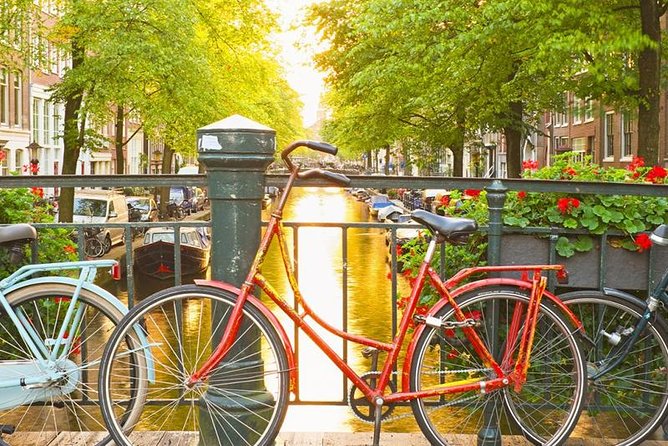
Amsterdam can feel like a puzzle made of canals, gables, and bicycles. This tour works because it is not just a checklist of famous stops. In 2 hours 30 minutes, you get the story beats that make the city make sense: why certain churches exist, how trade shaped neighborhoods, and what those strange-looking canal-side details are trying to tell you.
I like that it is paced like a real city walk, not a rushed bus tour. The stops are short, so you keep momentum and still get context. The best part is how you leave with a direction for the rest of your trip, because the guide’s role is more than pointing. They connect dots for you as you go.
It is also built for day-one reality. The tour runs rain or shine, and the route can shift if national celebrations cause disruptions. You still see the highlights, you just follow an alternate path that keeps the same overall story going.
More of the canal ring crossed on foot:
- Amsterdam Anne Frank: Small-Group Walking Tour & Local Guide
★ 4.8 · 12,789 reviews - Anne Frank’s Story – Guided Walking Tour through Amsterdam
★ 5.0 · 11,619 reviews - Absolutely Amsterdam – the Essential Introductory Walking Tour
★ 5.0 · 3,629 reviews
Meet at Prins Hendrikkade, Then Follow the Center to Papeneiland
The route starts at Prins Hendrikkade 73, 1012 AD, near the city center. From there, you move through a sequence that steadily takes you from religious and civic buildings into commerce-heavy squares, then across to historic canal neighborhoods, and finally to one of the nicest canal corners at Papeneiland.
That matters because it saves your brain. When you walk the city this way, you stop thinking in terms of individual landmarks and start recognizing patterns: what an older street was built to do, where the city gates once connected to the walls, and how certain buildings show the wealth of Amsterdam’s trading era.
It also ends in a practical place. You finish at Papeneiland at Prinsengracht 2, where you can easily continue exploring on foot, grab a snack, and still be close to public transit options.
St. Nicholas Basilica to the Weeping Tower: Faith Meets the City’s Edge
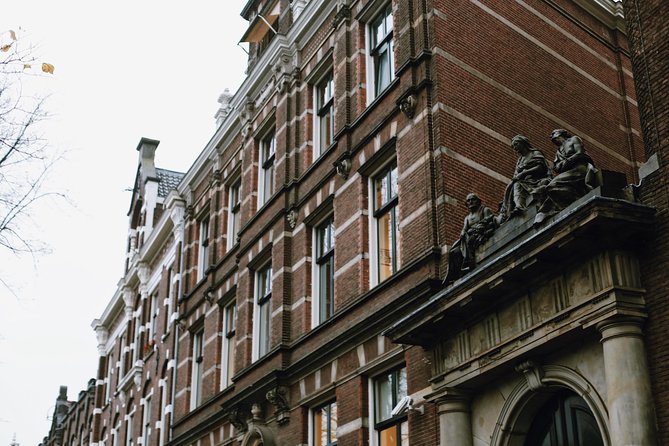
Your first stop is St. Nicholas Basilica, Amsterdam’s primary Roman Catholic church. The key reason this works early in the tour is that the building reflects a bigger story: it was built in the late 19th century after centuries of prohibition. That one detail changes how you read the structure. You are not just seeing architecture, you are seeing how the city handled religion over time and how that history left physical traces.
Next comes the Schreierstoren, also called the Weeping Tower. This is a medieval structure where women bid farewell to loved ones departing by ship. It is brief, but it adds emotion to the early part of the walk. Amsterdam’s maritime economy is not an abstract concept here. You feel how trade and travel affected real people.
What to watch for: towers and church exteriors are easy to ignore when you are tired. But on this tour, those pieces matter. They are visual clues that point to Amsterdam’s social life, not just its skyline.
Zeedijk, Nieuwmarkt, and The Waag: Learning the City’s Trading DNA
Then you drift along Zeedijk, one of Amsterdam’s oldest streets. This is not just a pretty lane. It began as a sea dike that held back the water of the IJ. In other words, the city’s survival infrastructure lives right under your feet.
At the Kolksluis area, you get the chance to admire one of Amsterdam’s picturesque lock bridges. It is one of those details you might walk past later without knowing what you are looking at, but here it is explained in plain terms, so it becomes memorable.
You also reach Nieuwmarkt, a lively square tied to commerce and social life since the 17th century. The tour links that role to the square’s location just inside the old city gate, which made it convenient for traders and shoppers bringing in fresh produce. That context helps you understand why this neighborhood feels like a natural meeting point.
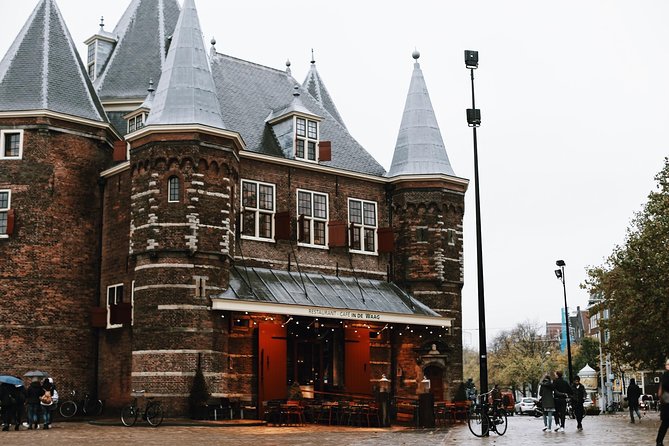
Near Nieuwmarkt you see De Waag, a 15th century non-religious building and one of Amsterdam’s oldest remaining civic structures. It started as a city gate and part of the walls, then served as a guildhall, a museum, and even a firestation. Even if you do not go inside, you can understand why a building could wear so many roles across centuries.
Other loops taking in the big sights:



Trippenhuis to Oost-Indisch Huis: Wealth, Taxes, and the First Multinational

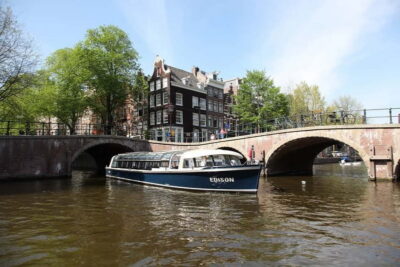
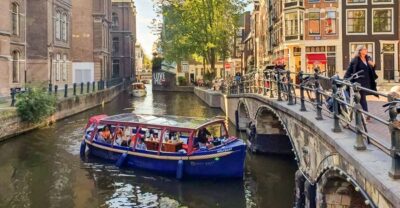
This is the section where Amsterdam starts flexing. You visit the Trippenhuis, described as the grandest 17th-century mansion in Amsterdam, once owned by the wealthy Trip family. Right around it, the contrast is part of the point, because you also see the smallest house built opposite. That kind of neighbor-to-neighbor contrast is one of the things that makes Amsterdam architecture feel real, not staged.
Then you step into the courtyard of the Oost-Indisch Huis, the Dutch East India Company headquarters. The tour frames it as the birthplace of the world’s first multinational corporation. That is a big claim, and the value here is how it changes what you think about Amsterdam. You stop seeing canals as scenery and start seeing them as part of a machine for money, shipping, and power.
Even the narrow houses get their moment. The Kleine Trippenhuis is one of the narrowest houses in Amsterdam, with a story tied to high land taxes that encouraged tall, narrow building shapes. If you like seeing how economic rules turn into visual design, this stop will click for you.
Zuiderkerk, Rembrandt’s House, and the Stopera: A City That Rebuilt Itself
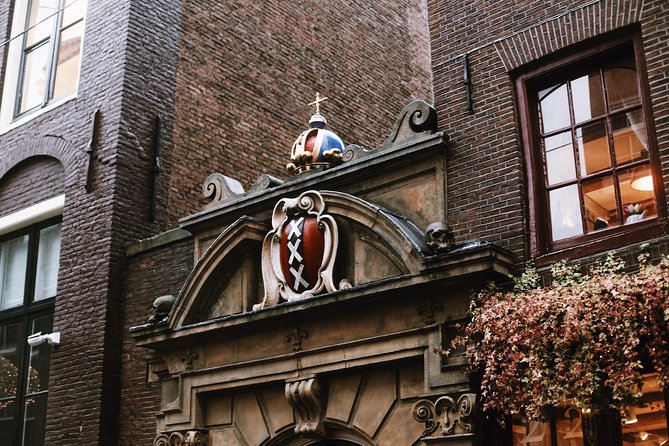
You then head toward Zuiderkerk, Amsterdam’s first purpose-built Protestant church, designed by Hendrick de Keyser. The defining detail is its elegant tower, but the real payoff is understanding it as a shift from older religious structures and ideas of worship.
After that, you see Museum Het Rembrandthuis, Rembrandt’s former home and studio where he lived and worked for nearly 20 years. This stop is especially good if you are a first-time visitor who wants to connect an artist to the actual place, not just the painting. You get the sense of why Rembrandt belongs to Amsterdam beyond being a name on a museum sign.
Then comes the Stopera, a complex that houses both the city hall and the Dutch National Opera and Ballet. Construction took at least 60 years, which tells you something about Amsterdam itself: long planning, long patience, and big public ambitions. It is a great reminder that the city did not only grow in the 1600s and 1700s. It kept building institutions that still run today.
Canal-Girded Corners: Huis Aan De Drie Grachten and Begijnhof Peace
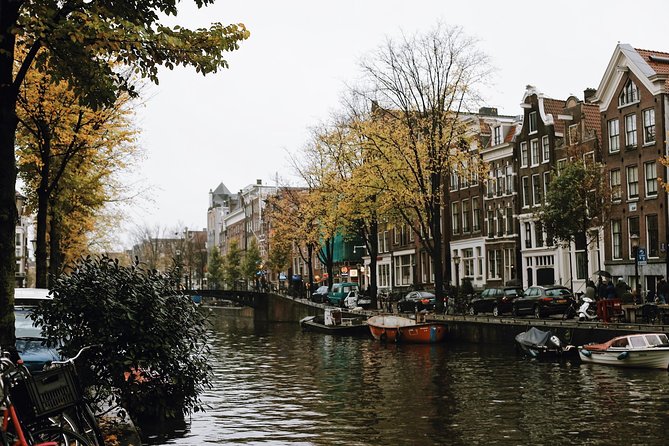
You pause at Huis Aan De Drie Grachten, a rare 17th-century canal house located at the junction of three canals. The fun part is the geometry: façades facing in three directions. It is one of those places where you can stand back, look, and realize the city was designed to be experienced from all angles.
Next is the Begijnhof, a peaceful medieval courtyard once home to Beguines, a community of devout women. It also features one of Amsterdam’s oldest wooden houses. This stop is a palate cleanser after the more civic and trade-focused buildings. You get a sense of Amsterdam having quieter, inward spaces, not just outward show.
If you like contrast, this stretch is ideal. You go from commerce and big architecture to a small courtyard where the mood changes immediately.
Dam Square to Herengracht: The Heart and the Golden Bend
Dam Square is the historic heart of Amsterdam. It sits between the Royal Palace, the 15th-century New Church, and the National Monument to WWII victims. Even with a short stop, it helps to understand why Dam Square is a gravity point. It is where major civic identity and collective memory meet.
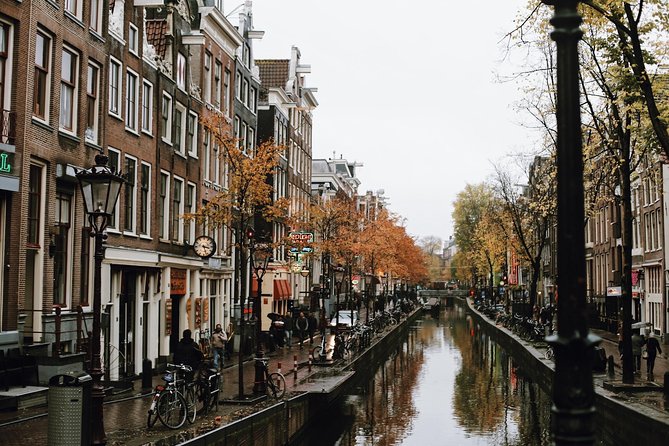
Then you move to Herengracht, specifically the Golden Bend lined with rich, ornate canal mansions from the Dutch Golden Age. This is where your eyes start reading the façades the right way. After the earlier stops about trade and wealth, the canal houses stop looking like random pretty buildings and start looking like status displays tied to a very specific economic era.
A practical tip: if you want photos here, plan for light and weather. The walk stays moving, so if you stop too long, you might miss the rest of the sights. Quick snapshots work best.
Anne Frank House Outside, Then the Gables of De Drie Hendricken
You pause outside the Anne Frank House, where she hid during WWII. Right next door you see the Westerkerk, with the tallest church tower in Amsterdam. Even if you do not enter, these exteriors anchor a lot of meaning fast.
Then you look up for De Drie Hendricken aan de Bloemgracht 87-91. The focus is on quirky gable stones carved with allegories and trade emblems. It is a reminder that Amsterdam decoration often points back to commerce, belief, and identity. If you enjoy noticing details, this is a fun section because the guide nudges you to look where most people do not.
Karthuizerhof Hofje, Noorderkerk, and a Scenic End at Papeneiland
You finish with a mix of tranquil courtyards and distinctive church architecture. The Coöperatieve Vereniging Karthuizerhof BA is described as the largest hofje in Amsterdam, originally built as almshouses around a calm courtyard for the city’s poor and elderly. This is not just a pretty stop. It gives you a human scale view of how social care was built into the city fabric.
Then you visit Noorderkerk, a 17th-century Protestant church built for the Jordaan district. The standout is its unusual cross-shaped floor plan, tied to Reformation worship ideals. It is a good time to pay attention because church shapes often reflect theology, not just design taste.
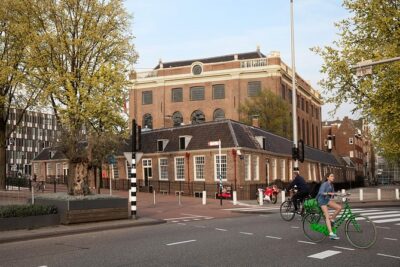
Finally, you end at Papeneiland, one of Amsterdam’s prettiest canal corners. The tour includes a stop at Het Papeneiland, a brown café from 1642 that is said to serve the best apple pie in town. Even if you skip dessert, you get a satisfying final view that feels like a reward for walking your way through the city.
Price and Value: What $62.48 Covers and How to Budget for Tickets
At $62.48 per person for a roughly 2.5-hour guided walk, this is priced in the middle of what you would expect for a city-center guide. The value comes from structure. You are not paying just for someone to point at buildings. You are paying for context that turns “I saw a tower” into “I understand why that tower exists and how Amsterdam changed.”
Where you need to plan is that some sites have admissions not included. Certain stops are listed as free, like St. Nicholas Basilica, Nieuwmarkt, and Dam Square. Others are marked as ticketed, such as the Weeping Tower area, Trippenhuis, the Rembrandt house museum, and several more. Many stops also specify no interior access in some cases due to security measures, so you should expect this to be part walking, part looking, and part explanation, with optional entry depending on the site rules.
My practical advice: if you want to go inside ticketed places, bring extra money and leave time elsewhere in your day. If you mainly want the story, you are still covered. You will come away with a grounded understanding even without paying for every interior.
Practical Tips That Make This Walk Easier (and More Fun)
A canal city walk is only as good as your comfort level. This tour is designed for moderate physical fitness, so comfortable walking shoes matter. You will be on your feet long enough that sloppy footwear turns sightseeing into suffering.
Also, pack like it is Amsterdam. The tour runs rain or shine, and the route can change with national celebrations. That means having the basics helps you stay relaxed: a water bottle, an umbrella if rain is possible, and a hat in summer.
One more rule that can surprise people: no large bags or suitcases are allowed. Plan to travel light, especially if you are coming straight from the train station or the airport.
Finally, bring your mobile phone number with country code. The tour requires it, and a mobile ticket is involved.
Who Should Book This Tour, and Who Might Not Love It
This tour is a strong fit if:
- You are in Amsterdam for a short time and want a fast, meaningful overview.
- You like walking and want help noticing details, from canal façades to church towers.
- You want practical guidance for what to do next, not just facts in the moment.
You might want to consider another option if:
- You are hoping for long museum time and multiple guaranteed indoor visits. Some sites have admissions not included, and security rules can limit interior access.
- You prefer slow, stop-everywhere pacing. This is designed to keep you moving so the full storyline lands in one half-day.
Should You Book This Amsterdam City Center and History Tour?
If you want your first days in Amsterdam to feel confident, this tour is a smart booking. The route connects religion, trade, and city planning in a way that makes the streets and buildings readable. I especially like that it ends at Papeneiland, because you get a satisfying finish and a natural place to continue without rushing.
Book it if you want an efficient orientation plus a strong set of next-step ideas from your guide. Skip or pair it with other plans if you are aiming for many indoor museum entries, because not everything is included and some access depends on security and site rules.
Either way, come prepared for weather and a real walking pace. Do that, and you will leave with the feeling that Amsterdam is not just pretty, it is understandable.
FAQ
How long is the Amsterdam City Center & History guided walking tour?
The tour is approximately 2 hours 30 minutes.
What is the price per person?
The price is $62.48 per person.
Is the tour offered in English?
Yes, it is offered in English.
Does the tour run in bad weather?
Yes, the tour will run rain or shine.
Are admission tickets included?
Some stops are listed as free, while others are listed as admission ticket not included. So you may need to budget for certain sites if you want to enter them.
Where do I meet and where does the tour end?
It starts at Prins Hendrikkade 73, 1012 AD Amsterdam, and ends at The Papeneiland, Prinsengracht 2, 1015 DV Amsterdam.
Is the tour private?
It is described as a private tour/activity where only your group participates. The materials also note that the guide being exclusively for you does not apply if you choose the SAVE! BOOK SEMI-PRIVATE option.
The Golden Age Still Standing
- Amsterdam Food and Cultural Tour with Tastings
★ 5.0 · 4,315 reviews - Amsterdam: Historic City Centre Canal Cruise
★ 4.3 · 659 reviews - Amsterdam: Haunted History and Ghost Walking Tour
★ 4.5 · 488 reviews - Amsterdam High-End Dutch Food & History Tour – Up to 8 guests
★ 5.0 · 482 reviews
Newest on the canal ring
- Amsterdam Bike Food Tour with Private Guide★ 5.0 · 1 review
- Amsterdam: Rijksmuseum Private Tour with an Art Historian★ 5.0 · 1 review
- Happy B-day Amsterdam! Guided Tour with a History Buff★ 5.0 · 1 review
- Local Foodie Adventure in Amsterdam★ 5.0 · 1 review
- Private Photo Shoot in Amsterdam with a Professional Photographer★ 5.0 · 1 review
- Private day trip to Giethoorn and the Enclosing Dike★ 5.0 · 1 review
- Private Sightseeing Tour to Giethoorn from Amsterdam incl. canal cruise★ 5.0 · 1 review
City Walking Tours, compared.

Amsterdam Anne Frank: Small-Group Walking Tour & Local Guide
Read our review →
Anne Frank’s Story – Guided Walking Tour through Amsterdam
Read our review →
Absolutely Amsterdam – the Essential Introductory Walking Tour
Read our review →
Anne Frank Guided Walking Tour in DE/EN/IT/ES
Read our review →

Anne Frank Walking Tour Amsterdam Including Jewish Cultural Quarter
Read our review →Browse the lists this tour appears in