Reviewed · PRIVATE
Amsterdam, Eastern Docklands Architecture: Private Tour
Follow the harbor into new city design. Amsterdam’s Eastern Docklands turns former waterfront industry into livable neighborhoods, and the expert guide explains how the planning ideas actually play out in real streets and buildings. I especially like the focus on urban development, not just photo spots.
What I like even more is the way the tour keeps switching perspectives, from the twin islands Java and KNSM to the low-rise housing experiment on Borneo and Sporenburg, then the park-and-traffic setup at Riet Landen. One consideration: this is a walking tour, and luggage or large bags are not allowed, so you will want to travel light and plan for about 2 hours on foot.
In This Review
- Key things you will notice on this Eastern Docklands tour
- Why Amsterdam’s Eastern Docklands looks like a planning experiment
- Meeting at Pakhuis De Zwijger, then walking the docks to the districts
- Java and KNSM Islands: one concept, two very different neighborhoods
- Borneo and Sporenburg: low-rise homes at 100 apartments per acre
- Riet Landen: park, residences, and a traffic junction in one picture
- The guide matters: academic training turns buildings into a story
- Price and value for a private group up to 10 people
- Practical tips so your 2 hours actually feel complete
- Should you book this Amsterdam Eastern Docklands architecture tour?
- FAQ
- How long is the Amsterdam Eastern Docklands Architecture private tour?
- How much does the tour cost?
- Is this a private group tour?
- Where do we meet for the tour?
- Which districts are included in the tour?
- What languages are available for the guide?
- Is food or drinks included?
- Are transfers included?
- Are luggage or large bags allowed?
- Is the tour wheelchair accessible, and can I cancel?
Key things you will notice on this Eastern Docklands tour
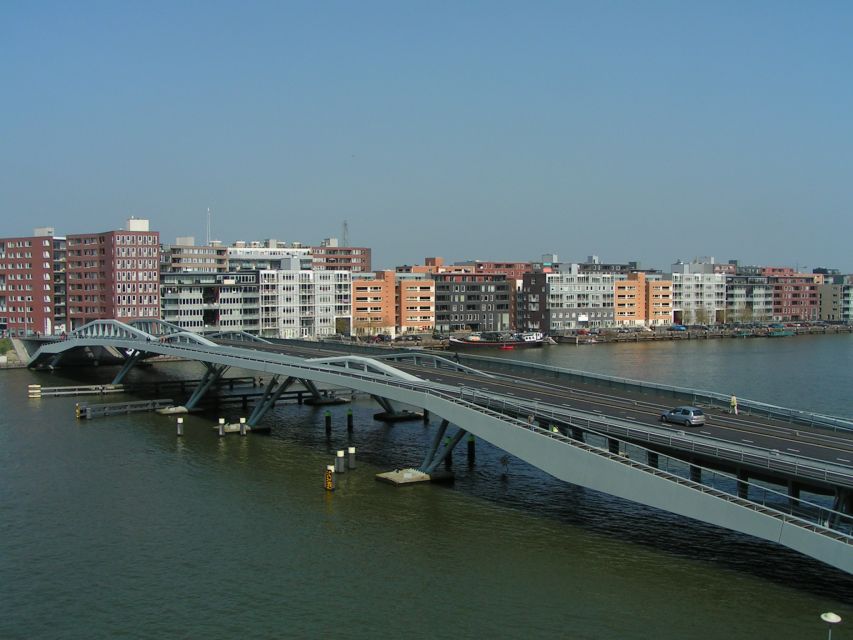
- Java and KNSM as twin islands with one shared concept and very different results
- Modern architecture inside an old harbor setting, where industrial heritage still matters
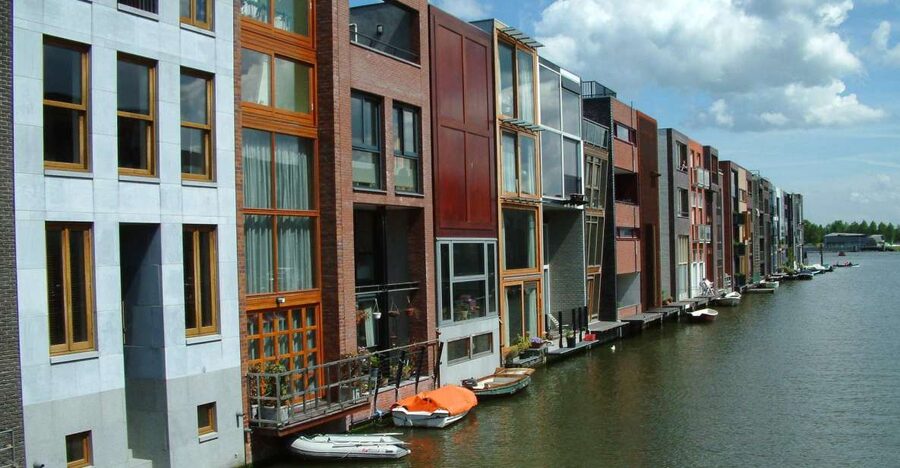
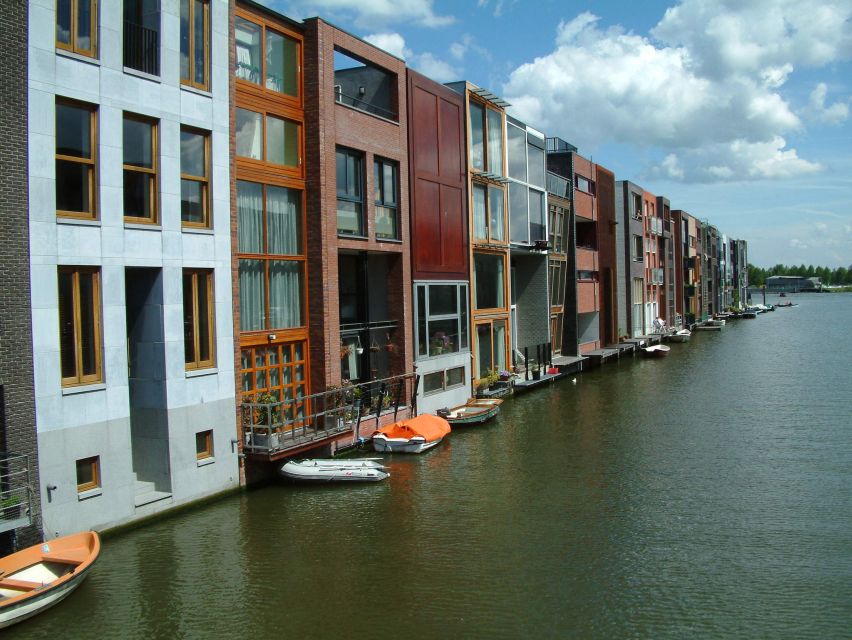
- Borneo and Sporenburg’s housing density trick, low-rise single-family homes at 100 apartments per acre
- Riet Landen’s park plus traffic junction, a smart mix that changes how you read the area
- A guide with architecture, sociology, and art history training, so you get design plus context
- Private group pacing, adapted to your needs, not a rushed herd
Why Amsterdam’s Eastern Docklands looks like a planning experiment
Amsterdam’s Eastern Docklands grew out of a harbor that had one job, moving goods and ships. Starting in the 1970s, it slowly transformed into something else: a residential district with a wide spread of architecture styles. The result is a place where you can see how ideas change over time, first through major growth in the 1980s and 1990s, then into the new millennium with a waterfront that fits into the existing industrial story.
This is not just an aesthetic walk. You are reading the city’s decision-making in layers. When you pay attention to how neighborhoods were laid out, you start understanding why certain buildings feel close to the street, why some areas emphasize public space, and why others focus on housing density.
If you like architecture that has a reason behind it, this tour is a strong match. It is designed around five districts, each used to show a different urban-development concept.
Some other canal-ring outings to set against this
- Rijksmuseum Amsterdam Small-Group Tour with Private Upgrade
★ 4.5 · 1,547 reviews - Van Gogh Museum Tour Reserved Entry Semi Private
★ 5.0 · 1,437 reviews - Private Amsterdam Red Light District and Coffee Shop Tour
★ 5.0 · 763 reviews
Meeting at Pakhuis De Zwijger, then walking the docks to the districts
You meet in front of Pakhuis De Zwijger, right next to Jan Schaeferbrug. That matters because this whole area was built around the harbor edge, and the walk naturally pulls you from that industrial shell into the residential neighborhoods that replaced it.
The tour is private, for a group of up to 10. You will be with a live guide in English, Dutch, or German, and the walk runs about 2 hours, with flexibility for a 2 to 3-hour format depending on your needs. Wheelchair access is available, which helps if you want the architectural story without turning the day into a grind.
Practical note for your comfort: this is a guided walk, and food or drinks are not included. So build in a plan to snack or drink on your own if you want it.
Java and KNSM Islands: one concept, two very different neighborhoods
The tour starts by comparing the twin islands of Java and KNSM. The key idea is that both sites are united by a single concept inspired by Amsterdam’s history. The useful part is that the outcomes are not the same, and you can learn a lot just by noticing the differences in how the built environment behaves.
When you walk this part, you are basically doing a side-by-side reading exercise. Same umbrella concept, different architectural answers. That is the kind of comparison that helps you see design choices as more than style. You start thinking about how planners balance density, street life, and the feel of the waterfront edge.
I also like that the tour keeps it focused. You are not just moving past buildings, you are using Java and KNSM to understand how a design concept can be expressed in distinct ways without losing the overall identity of the area.
Borneo and Sporenburg: low-rise homes at 100 apartments per acre
Next come Borneo and Sporenburg, and this is where the tour gets especially “okay, show me how you did that.” These districts succeeded in providing low-rise, single-family houses within a density usually associated with multi-storey building complexes.
The number matters: 100 apartments per acre is specifically called out. That gives you a concrete benchmark. If you have ever seen housing density handled only with taller blocks, this is the alternative story. Here, the design answer is spread out differently, so your eyes keep searching for how the streets still feel livable even when the math is tight.
As you walk, try to notice what changes when housing is not pushed into big stacks. Street frontage tends to feel different. Neighborhood rhythm can shift. Even without technical jargon, you can read the planning intention: the goal was to fit family-scale housing into a density plan that might normally lead to high-rises.
This is also a great section for questions. If you care about how cities can house more people without destroying the human scale, this is where you will want the guide to explain their thinking.
A different use for the same hours in Amsterdam:


Riet Landen: park, residences, and a traffic junction in one picture
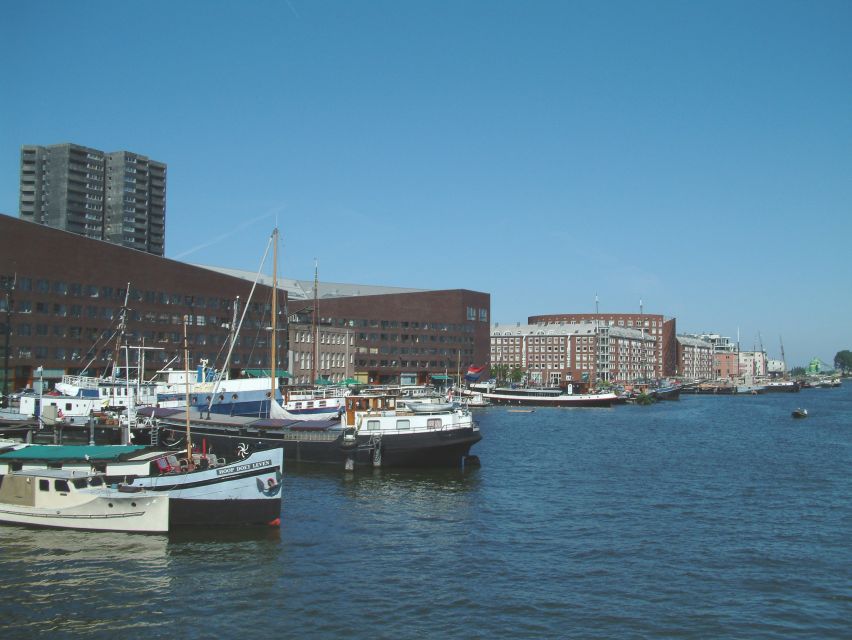
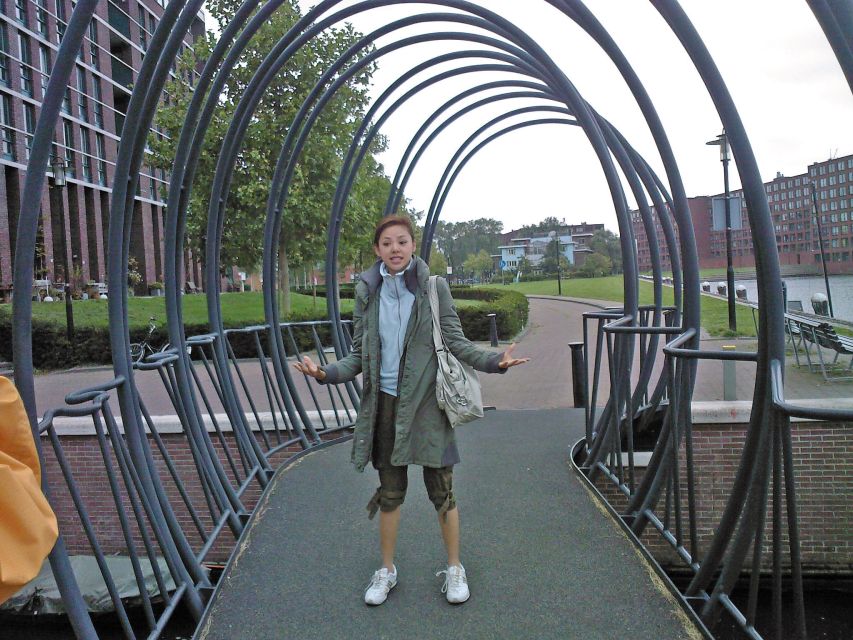
The last district, Riet Landen, is described as an incredible juxtaposition of park, residential area, and a traffic junction that sits at its heart. That is a big deal in urban design. Parks are usually imagined as calm spaces. Traffic junctions are usually treated as interruptions.
Here, the tour’s framing is that the relationship between those elements is the point. The park envelops the junction, and that changes how the area feels and how you move through it. Instead of separating “people space” from “cars space,” the design blends them into a single urban composition.
For your own viewing, approach Riet Landen like an experiment. Ask yourself: does the park soften the traffic edge? Does the junction define routes you would otherwise not notice? Do residential spaces look shaped around the green space, or around movement through the area? The tour encourages that kind of observation, because the architectural lesson is about how function and public space can share the same stage.
The guide matters: academic training turns buildings into a story
What makes this tour land well is the guide background. The guides have academic training, including architecture, sociology, and art history. Two of the guides have recently published a book titled Ontdek het Oostelijk Havengebied, and it is being translated into English.
That is not a trivia flex. It changes how you experience the walk. You get explanations that connect buildings to social goals, and social goals to the physical layout you are seeing. If you like architecture but you also care about how cities work for people, this is the right balance.
One detail worth keeping in mind: the tour is private, and it is adapted to your needs. That usually means you can steer the focus, ask follow-ups, and slow down when something grabs you. This kind of flexibility is especially helpful in a place like Eastern Docklands, where one street view can lead to five different design questions.
Price and value for a private group up to 10 people
The price is $235 per group for up to 10 people. That matters because this is a private, guided architecture walk, not a bus tour with fixed seating.
How to judge value: if your group fills close to 10, the cost per person drops sharply. If you have fewer people, the per-person number climbs, but you are still paying for an expert guide plus a structured route through five districts in about 2 hours.
It also helps that what you get is targeted. You are not paying for a generic stroll through Amsterdam. You are paying for a guided explanation of planning ideas, with Java and KNSM used for comparison, Borneo and Sporenburg for density plus low-rise housing, and Riet Landen for the park plus traffic junction concept.
Also, transfer and food are not included, so plan those extras separately. On the plus side, there is no pressure to commit to a full day, and the tour is built around walking time you can realistically fit into a sightseeing plan.
Practical tips so your 2 hours actually feel complete
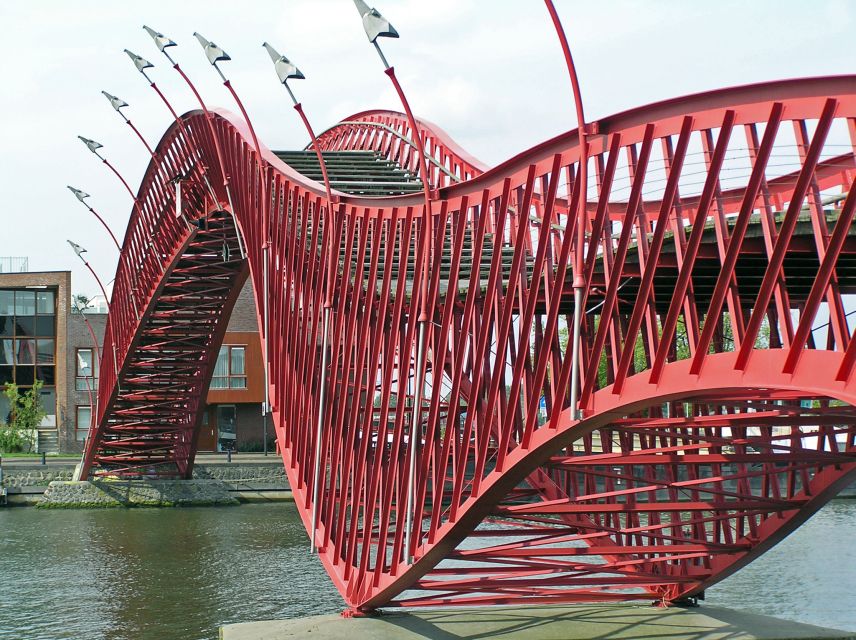
- Pack light. Luggage or large bags are not allowed.
- Arrive at Pakhuis De Zwijger. The meeting spot is in front of it, next to Jan Schaeferbrug, so give yourself a little buffer to find the exact corner.
- Expect a design-focused walk. Food and drinks are not included, so plan your timing for a snack before or after.
- Bring your best questions. This is the kind of tour where a thoughtful question about density, street life, or public space gets a better answer than you might expect.
- Wear walking shoes. The tour is described as a walk of 2 to 3 hours, so comfort matters more than you think.
If you are pairing this with other Amsterdam highlights, I would schedule it when you are still fresh enough to notice details, not at the end of a long, late day.
Should you book this Amsterdam Eastern Docklands architecture tour?
Book it if you want to understand architecture as urban planning. You care about why districts look the way they do, and you enjoy comparing design outcomes. The Java and KNSM contrast, the 100 apartments per acre point on Borneo and Sporenburg, and the Riet Landen park-plus-junction setup give you clear “lessons” you can carry into the rest of Amsterdam.
Skip it or reconsider if you want a mostly casual stroll with no design focus, or if you are traveling with luggage and cannot store or avoid large bags. Also, because it is a walking tour, make sure you are comfortable with 2 hours on foot.
If you are the kind of traveler who likes asking why cities build the way they do, this is a smart use of time, and it is well matched to a private group format.
FAQ
How long is the Amsterdam Eastern Docklands Architecture private tour?
The tour lasts about 2 hours, and it can be adapted to a 2 to 3-hour walk depending on your needs.
How much does the tour cost?
It costs $235 per group, for groups up to 10 people.
Is this a private group tour?
Yes, it is a private group tour.
Where do we meet for the tour?
Meet in front of Pakhuis De Zwijger, next to Jan Schaeferbrug.
Which districts are included in the tour?
The tour covers Java, KNSM, Borneo, Sporenburg, and Riet Landen.
What languages are available for the guide?
The live guide is available in English, Dutch, and German.
Is food or drinks included?
No, food and drinks are not included.
Are transfers included?
No, transfer is not included.
Are luggage or large bags allowed?
No, luggage or large bags are not allowed.
Is the tour wheelchair accessible, and can I cancel?
The tour is wheelchair accessible. It also offers free cancellation up to 24 hours in advance for a full refund.
Newest on the canal ring
- Amsterdam Bike Food Tour with Private Guide★ 5.0 · 1 review
- Amsterdam: Rijksmuseum Private Tour with an Art Historian★ 5.0 · 1 review
- Happy B-day Amsterdam! Guided Tour with a History Buff★ 5.0 · 1 review
- Local Foodie Adventure in Amsterdam★ 5.0 · 1 review
- Private Photo Shoot in Amsterdam with a Professional Photographer★ 5.0 · 1 review
- Private day trip to Giethoorn and the Enclosing Dike★ 5.0 · 1 review
- Private Sightseeing Tour to Giethoorn from Amsterdam incl. canal cruise★ 5.0 · 1 review
Private, compared.
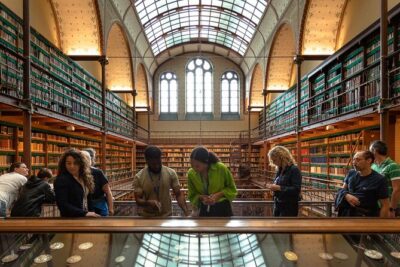
Rijksmuseum Amsterdam Small-Group Tour with Private Upgrade
Read our review →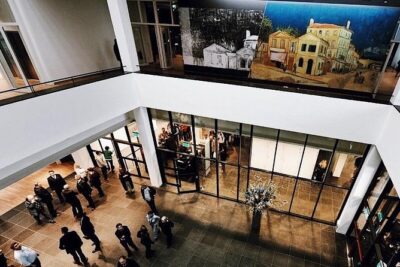
Van Gogh Museum Tour Reserved Entry Semi Private
Read our review →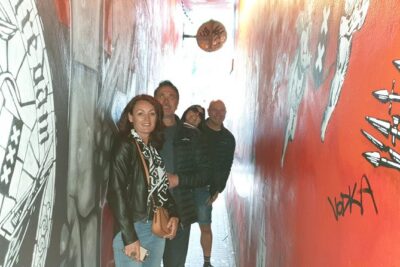
Private Amsterdam Red Light District and Coffee Shop Tour
Read our review →
Anne Frank and Jewish Quarter Amsterdam Private Walking Tour
Read our review →
Amsterdam Airport & Non-Airport Private Transfer to City Center
Read our review →
Private Excursion to Zaanse Schans, Edam, Volendam and Marken
Read our review →
Van Gogh & Rijksmuseum w/ Reserved Entry Semi-Private 8ppl Max
Read our review →