
Reviewed · RED LIGHT DISTRICT WALKING TOURS
Private Amsterdam Red Light District and Coffee Shop Tour
Prostitution laws, coffee rules, and street stories. On this private Amsterdam walk, I like the straight talk about Dutch tolerance and laws, and I like that the history comes with real street stops you can actually point to. The one drawback to consider is that it is a respectful, history-led stroll, so if you want a long, free-form coffee shop crawl, two hours can feel limiting.
Guides like Saskia, Guido, Luis, Robin, Ben, Catherine, and Esther are praised for keeping things clear and respectful, even when the topic could get awkward. I also like that it feels comfortable for different group types, including families and teenagers, as long as you follow the tone and keep questions polite. Expect a lot of walking through mixed neighborhoods.
You start in the Damrak area and end there, and you do not need hotel pickup. There is an upgrade option to visit the Erotic Museum or go to a coffeeshop with your guide, and it runs in English with a mobile ticket. Food and drinks are not included, so I’d plan a snack before you go or leave space after.
In This Review
- Key things to know before you go
- Why Amsterdam’s tolerant rules feel different up close
- Starting at Damrak: the city built on wooden poles
- Pub The Ape: wooden building survival and the 1452 fire lesson
- Waag Square: from city gate to guild headquarters
- Amsterdam’s smallest house and the VOC storage to living shift
- Walking the Red Light District without the noise
- Coffee shop culture: what the guide can do for you
- Condomerie: a bluntly practical Amsterdam stop
- What makes a private pace actually better here
- Price and value for $41.60 per person
- Should you book this Amsterdam Red Light District and coffee shop tour?
- FAQ
- How long is the Private Amsterdam Red Light District and Coffee Shop Tour?
- Is this tour private or shared with other groups?
- Where do we meet for the tour?
- Is the tour offered in English?
- Does the tour include food or drinks?
- What upgrade options are available?
- What is the cancellation policy?
Key things to know before you go
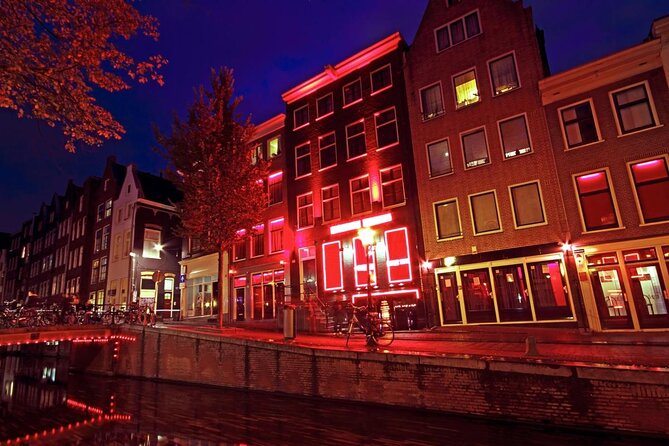
- Dutch law made understandable: prostitution is legal, and marijuana is tolerated, explained in context rather than slogans.
- Private, on-your-pace wandering: only your group goes with your guide, so you can ask questions without feeling rushed.
- Old Town landmarks inside the route: you’ll pass spots tied to Amsterdam’s foundations, guild life, and the VOC.
- Pub The Ape as a time capsule: a rare remaining wooden building tied to the city’s big fire history.
- A practical look at coffee shop culture: you get guidance on how it fits into Dutch tolerance and daily life.
- Condomerie stop for a modern twist: a long-running, specialty shop that reflects Amsterdam’s blunt pragmatism.
Why Amsterdam’s tolerant rules feel different up close
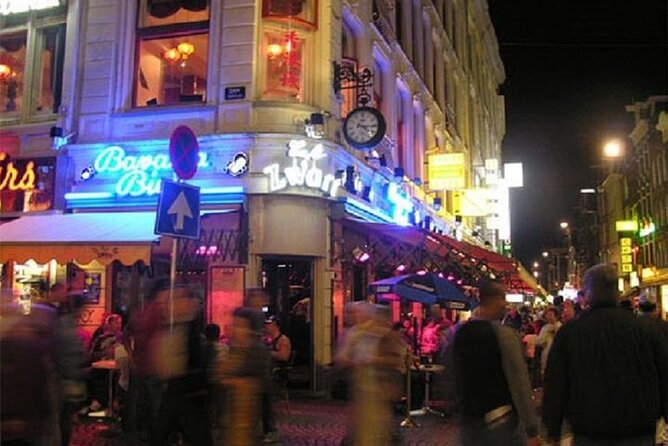
Amsterdam’s Red Light District is famous worldwide, but the reality is more specific, more legal, and less rumor-based than most first impressions. What makes this tour worth it is that you’re walking with a guide who connects the neighborhood to how laws work, not just sensational images.
I especially like the way the tour frames tolerance as a system, not a slogan. You hear how Dutch society treats prostitution as legal, and how marijuana is tolerated, with the guide translating what that means on the street, and what it does not mean. You come away with a clearer sense of the difference between what is allowed, what is regulated, and what is simply local behavior.
The tone matters here. This is not set up as a crude party. It’s more like a guided reality check, with humor and street smarts included, so the whole thing stays comfortable even for people who did not plan to book this topic.
More walks through the Wallen:
- Amsterdam: Red Light District Tour in DE/EN/IT/ES/FR
★ 4.9 · 7,136 reviews - Amsterdam: Red Light Secrets Museum Entry Ticket
★ 4.2 · 5,722 reviews - Amsterdam Red Light District & Coffee Shop Tour
★ 4.6 · 4,134 reviews
Starting at Damrak: the city built on wooden poles
The walk begins at Damrak, right where many visitors naturally find themselves near transit and the center of the action. You start with the basic Amsterdam story that explains why the city looks the way it does.
One of the first eye-opening moments is the foundation logic. Amsterdam’s soil is described as a thick mix of fen and clay, so houses were built on wooden poles driven down into the sand layer, roughly 11 meters deep. It sounds technical, but it changes how you see the city when you realize these buildings are literally engineered around unstable ground.
From there, the route also leans into how the area connects to Amsterdam’s oldest parts. Even when you’re heading toward the Red Light District streets, the guide keeps reminding you that you’re not walking through something random. You’re moving through the older urban core, which helps the neighborhood feel less like a movie set and more like part of a living city.
Pub The Ape: wooden building survival and the 1452 fire lesson
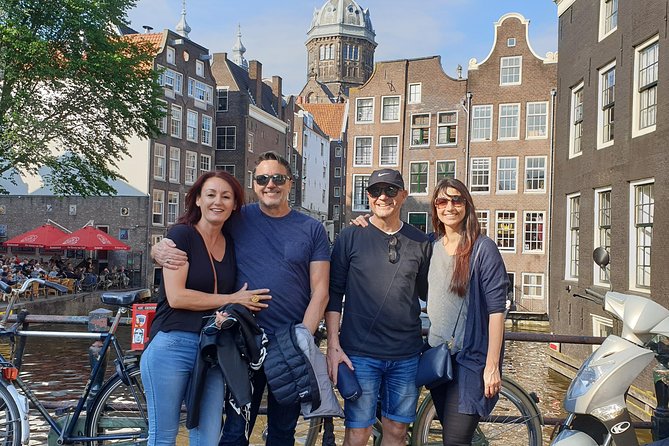
One of the stops that tends to stick in your mind is Pub The Ape, also known as Int Aepjen. You’re told it dates to around 1540, and that it’s one of only two remaining wooden buildings in Amsterdam.
That matters because Amsterdam’s architecture did not stay frozen. After a major fire in 1452, the government decided buildings should have brick facades. Standing in front of a surviving wooden structure makes the policy feel real, not historical trivia.
I like how this stop sets the emotional tone for the walk. The Red Light District can feel intense at first, but starting with a building that survived fire gives you an anchor in continuity and survival. It’s also a reminder that Amsterdam is not just about today’s headlines. It’s about layers of decisions that shaped what you see now.
Waag Square: from city gate to guild headquarters
Next, you’ll get a stop at the Waag. This building used to be part of Amsterdam’s defenses as a city gate, built around the 1400s. It’s also described as the second oldest building in Amsterdam.
Later, the Waag became tied to trade and craft life. The guide explains how guilds and craftsman organizations sat within the Waag and around the square. That’s a useful perspective because it shows how Amsterdam’s streets were commercial long before modern tourism arrived.
For me, this part helps you connect the dots. When you understand that these streets were once about goods, guild power, and controlled movement, the Red Light District becomes easier to interpret as another chapter in how the city managed social and economic life. You stop seeing it as one isolated zone.
Some other canal-ring outings to set against this

Amsterdam’s smallest house and the VOC storage to living shift
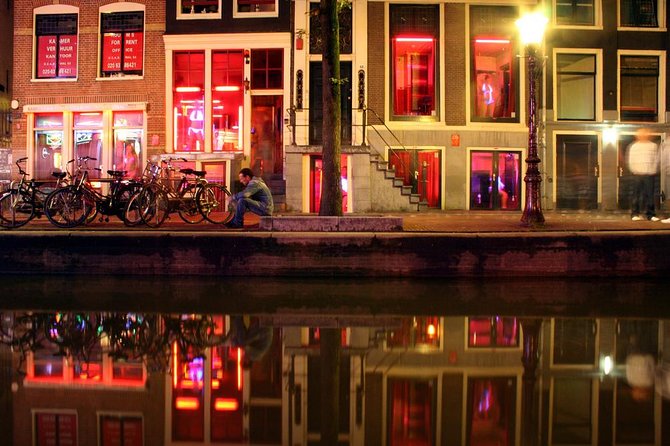
The tour also includes the smallest house of Amsterdam, built around the 1700s. You’re shown where it first functioned as storage tied to the VOC trading company, and then how people later started living there for a long time.
That quick arc, storage to living, makes Amsterdam feel human. You can see how tightly space could be used, and how the city adapted as commerce and daily life evolved. It’s also a good reminder that Amsterdam’s famous canals and big facades sit alongside smaller, tougher realities.
If you like details, this stop delivers. It’s the kind of place you would not notice from a distance, but a guide helps you connect the dot between trading history and the way people squeezed life into narrow spaces.
Walking the Red Light District without the noise
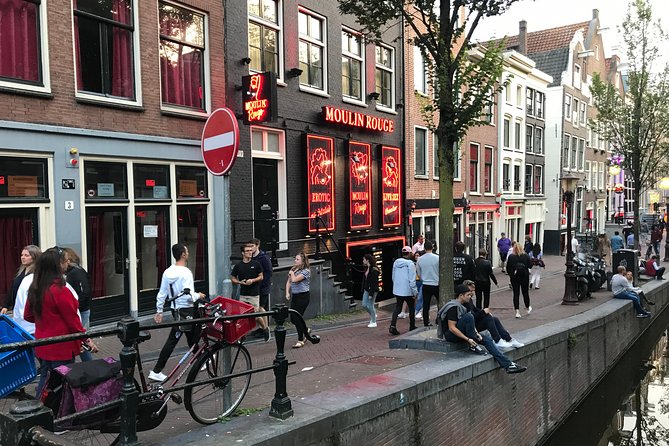
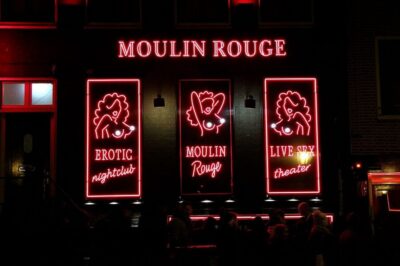
The centerpiece of the experience is the Red Light District walk itself, where the guide gives you that firsthand understanding beyond guidebook myths. You learn the neighborhood’s history and also how Dutch law shapes today’s reality.
This part is where the tour’s respectful tone becomes important. You’re taught about how prostitution is legal, and marijuana is tolerated, so you can interpret what you see without jumping to extreme conclusions. That context helps you handle the street atmosphere in a way that keeps things comfortable and safe.
The route also threads through streets that are part of the Old Town area, which is described as the oldest part of the city. That matters because it adds weight. You’re not just viewing a famous district, you’re walking through older streets that have existed long enough to hold many different types of life.
Practical tip: wear shoes you can handle on uneven streets. This isn’t a sit-down museum day. It’s a walk where weather can matter too. On a cold or rainy evening, bring a layer you can move in and keep your hands free for photos and questions.
Coffee shop culture: what the guide can do for you
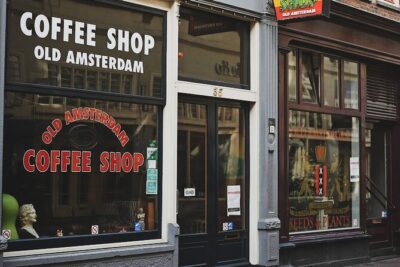
Amsterdam’s coffeeshop culture is one of those topics people discuss like it’s a single rule. In real life, it’s more nuanced, and this tour focuses on that nuance instead of hype.
When the guide takes you through the coffee shop culture, you’re not just hearing that marijuana is tolerated. You’re getting context for why coffeeshops exist in the local system, and how they fit into a city that regulates rather than ignores. It helps you separate legal tolerance from chaos.
There is also an upgrade option. Depending on what you choose, you can add a visit to the Erotic Museum, or you can go to a coffeeshop with your guide. That upgrade is a big reason to consider a private format, because you’re not trying to figure out everything on your own while also staying respectful in a place with local rules.
One more thing I like: the guide can help you avoid rookie confusion. Even without “insider hacks,” having someone explain how to approach the area and how to read what you’re seeing makes the experience feel more grounded.
Condomerie: a bluntly practical Amsterdam stop
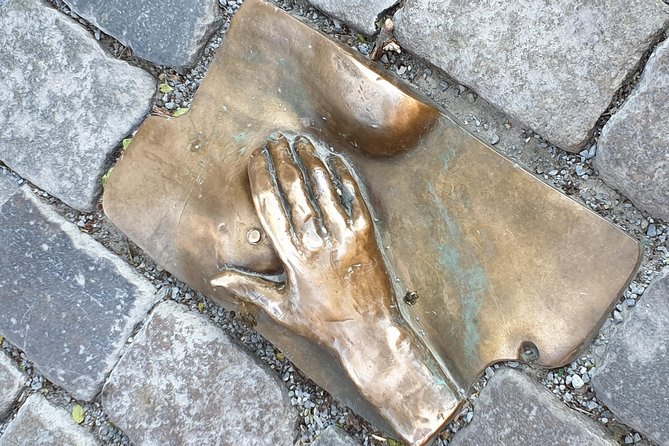
Not every Amsterdam tour slips in something as specific as the Condomerie, described as the world’s first condom shop since 1987. The guide explains you can even get customized condom sizes.
It’s a strange stop at first glance, but it works for the tour’s overall theme. Amsterdam’s tolerance shows up in everyday commerce as well as in big policy debates. This is the kind of place that turns the city’s reputation into something tangible and normal, even if the product category is a surprise.
If you like learning how a city’s attitudes show up in small details, you’ll appreciate this stop. It also helps keep the walk from becoming only about one topic. You get a broader view of how Amsterdam handles sex, health, and openness.
What makes a private pace actually better here
A private tour is not automatically better everywhere. Here, it helps. The Red Light District is a sensitive area, and walking it with a guide who sets the tone for questions changes everything.
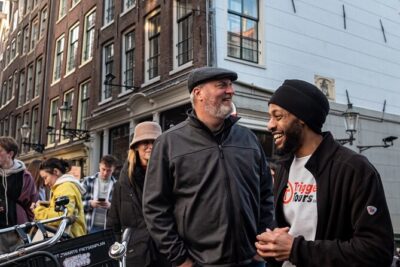
I like that you’re not stuck with strangers who might rush, wander off, or turn the conversation into something you did not plan for. With only your group, your guide can keep the pace steady and adjust based on how curious you are. Guides such as Robin and Ben are described as funny but still serious about history, and that mix tends to keep the whole experience from feeling heavy.
It’s also a good setting for families with teenagers. That does not mean everyone will love the topic, but when the guide stays respectful and factual, the walk can feel educational instead of embarrassing. I’d still use common sense and prepare your group for adult content before you arrive.
Finally, because it’s a walking tour, the “private” part also means more practical help. You can ask what to do next in the city, what neighborhoods match your interests, and what to avoid.
Price and value for $41.60 per person
At about $41.60 per person for roughly two hours, this is not the cheapest thing on your Amsterdam list. But you are paying for a private guide and a specialty topic that is harder to get right on your own.
Here’s where the value shows up. You get structure, context, and local interpretation. You’re also not spending time guessing your way through how laws and cultural tolerance translate into street life. For many people, that clarity is worth more than extra time.
If you’re traveling with friends or family, the per-person cost becomes easier to justify because you can split the experience into something more personal. Also, the tour is often booked around 46 days in advance on average, so planning earlier can help you lock in the day and time you want.
Should you book this Amsterdam Red Light District and coffee shop tour?
Book it if you want a respectful, context-first Amsterdam experience. You’ll get street-level understanding, explanations of Dutch law and tolerance, and a guided walk through specific historic stops like Pub The Ape and the Waag.
Skip it if you want a long, self-guided exploration with lots of freedom to wander. This is a guided walk with set stops and a firm time window, and the atmosphere stays tasteful. Also, if adult topics make you uncomfortable even with a factual tone, you might prefer something else for this day.
My practical take: if you’re curious, careful, and open to learning how Amsterdam runs on rules and history as much as on reputation, this is a smart use of a couple hours.
FAQ
How long is the Private Amsterdam Red Light District and Coffee Shop Tour?
The tour lasts about 2 hours.
Is this tour private or shared with other groups?
It is a private tour, so only your group participates.
Where do we meet for the tour?
The tour starts and ends at Damrak, 1012 Amsterdam, Netherlands.
Is the tour offered in English?
Yes, the tour is offered in English.
Does the tour include food or drinks?
No, food and drinks are not included.
What upgrade options are available?
You can upgrade to visit the Erotic Museum, or upgrade to visit a coffeeshop with your guide.
What is the cancellation policy?
You can cancel for a full refund if you cancel up to 24 hours in advance of the experience start time.
Newest on the canal ring
- Amsterdam Bike Food Tour with Private Guide★ 5.0 · 1 review
- Amsterdam: Rijksmuseum Private Tour with an Art Historian★ 5.0 · 1 review
- Happy B-day Amsterdam! Guided Tour with a History Buff★ 5.0 · 1 review
- Local Foodie Adventure in Amsterdam★ 5.0 · 1 review
- Private Photo Shoot in Amsterdam with a Professional Photographer★ 5.0 · 1 review
- Private day trip to Giethoorn and the Enclosing Dike★ 5.0 · 1 review
- Private Sightseeing Tour to Giethoorn from Amsterdam incl. canal cruise★ 5.0 · 1 review
Red Light District Walking Tours, compared.
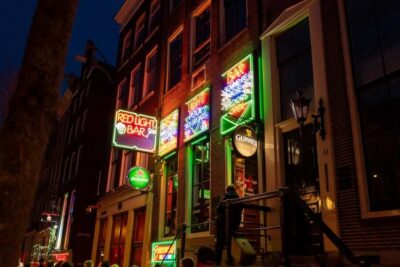
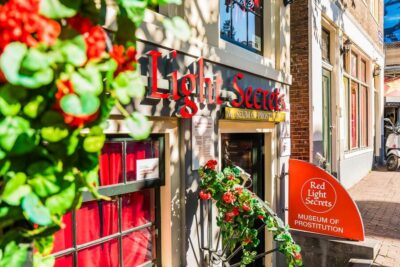
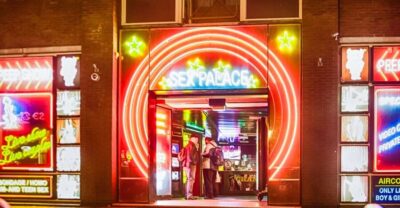
Amsterdam Red Light District & Coffee Shop Tour
Read our review →
Red Light District Pub Crawl with Unlimited Shots
Read our review →
Red Light Secrets: Museum of Prostitution Amsterdam
Read our review →Browse the lists this tour appears in