
Reviewed · RED LIGHT DISTRICT WALKING TOURS
Amsterdam: Red Light District guided tour (TOP RATED)
Two hours in De Wallen, with context. This small-group guided tour helps you understand Amsterdam’s Red Light District through local rules and street-level history, not just what you see in shop windows. You’ll get your bearings fast, without the awkward guesswork.
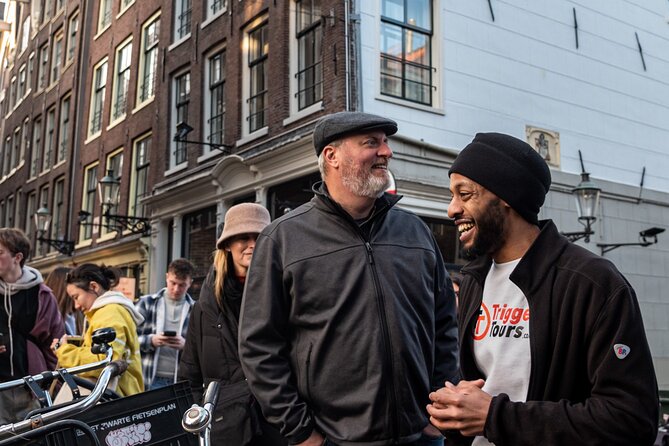
I love that the guide leans on real city context, and the tour often feels like a guided crash course in how Amsterdam thinks. Names I’ve seen featured in these tours include Ben and Robin, and they’re praised for connecting the Red Light District with broader Dutch history.
One thing to consider: this is a walking tour and it’s not recommended for limited mobility. Add Amsterdam’s constant bike traffic, and you’ll want to keep your head up and move with the group.
In This Review
- Key highlights you should know
- Why a De Wallen guided tour beats wandering solo
- The Damrak start and what 2 hours really means
- Stop-by-stop: De Wallen streets, laws, and how Amsterdam thinks
- What’s great about the De Wallen portion
- A real consideration
- The Dam stop: City built on trees, explained in plain terms
- Old Town context: why the oldest streets matter
- Pub The Ape (Int Aepjen): a wooden survivor from around 1540
- The Waag: Amsterdam’s old gate turned guild center
- Amsterdam’s smallest house and the VOC connection
- Condom shop and the limits of taboos in Amsterdam
- Price and value: is $34.17 worth it?
- Who this tour fits best (and who might want a different plan)
- Should you book this Amsterdam Red Light District tour?
- FAQ
- How long is the Amsterdam Red Light District guided tour?
- Where does the tour start and end?
- What is the price per person?
- What language is the tour offered in?
- What is the group size?
- Is food and drinks included?
- Is hotel pickup included?
- Is the tour recommended for limited mobility?
- Do I need good weather for this tour?
Key highlights you should know
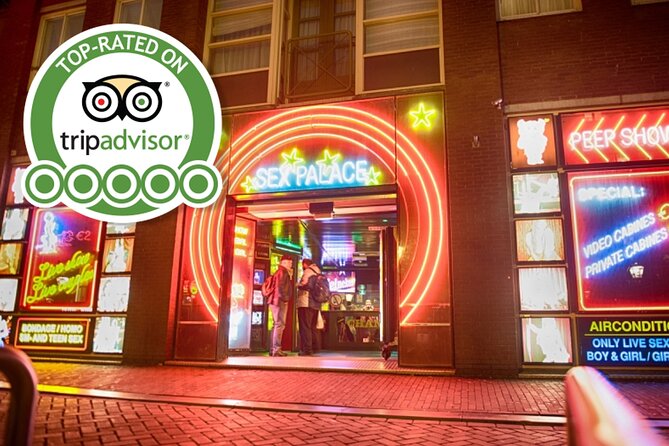
- Small groups (max 15) keep the pace relaxed and make it easier to hear the guide.
- Local, rules-first explanations help you understand how Amsterdam regulates De Wallen.
- Old-town stops beyond the red lights add meaning, including the Waag and Pub The Ape.
- Amsterdam’s Dam foundation story explains why so many buildings sit on wooden poles.
- A respectful tone toward workers with comfort-focused guidance and safety reminders.
- Coffeeshop and culture context helps the area make more sense at night.
Why a De Wallen guided tour beats wandering solo

The Red Light District is easy to find in Amsterdam, but it’s harder to understand. You can walk it on your own, sure, but you’ll miss the “why” behind the streets, the laws, and the way the city has handled this for centuries.
This is built as a context tour. You’re not just pointed at windows. You get the story of how De Wallen became what it is today, and how current rules shape what you’ll see now. That turns a confusing area into one you can actually read.
The best part is pace. With a group that stays small, you get time to ask questions and to process what you’re seeing. And because the focus is on facts and respect, the whole thing feels more like learning than gawking.
More walks through the Wallen:
- Amsterdam: Red Light District Tour in DE/EN/IT/ES/FR
★ 4.9 · 7,136 reviews - Amsterdam: Red Light Secrets Museum Entry Ticket
★ 4.2 · 5,722 reviews - Amsterdam Red Light District & Coffee Shop Tour
★ 4.6 · 4,134 reviews
The Damrak start and what 2 hours really means
The tour starts at Damrak (1012 Amsterdam) and ends at the same spot. That matters because Damrak is a clean, central place to meet, and it’s convenient for public transport.
Plan for about 2 hours of walking. This is not a sit-and-stare tour. You’ll move through narrow streets, step past landmarks, and connect the dots between old Amsterdam buildings and the modern rules that govern the area.
Also, it’s commonly done in the evening. One reason is simple: more is happening at night, and the area has a different energy. If you have the choice, an evening slot (for example, the 8 pm option mentioned in guides’ schedules) can make the walk feel more alive.
Stop-by-stop: De Wallen streets, laws, and how Amsterdam thinks
Your main focus is De Wallen, Amsterdam’s best-known Red Light District area. You’ll walk the narrow lanes and see the sights that draw people in, but you’ll also get history and the current situation from a local perspective.
A key value here is how the guide frames the topic. You’ll get the sense that Amsterdam treats this not as a mystery, but as something governed by rules, planning, and social compromise. That helps you understand what you’re seeing without needing to fill in the blanks yourself.
You’ll also get cultural context that connects De Wallen to nearby Amsterdam traditions. Reviews highlight coffee house culture as part of the explanation, not as an afterthought. That’s useful because De Wallen doesn’t exist in isolation, it sits inside a city known for tolerance, trade, and strong civic rules.
One very practical touch: guides make sure you’re safe in real street conditions. Amsterdam bicycle traffic is fast, and you’ll get reminders to watch for it. You’re not just learning what’s historical, you’re learning how to navigate the area calmly.
What’s great about the De Wallen portion
- You learn the background so the district stops feeling random.
- You get a guided “map in your head,” not just photos in your camera roll.
- You walk at a pace that lets you actually hear the guide.
Some other canal-ring outings to set against this




A real consideration
Because the tour stays focused on the district streets, you should expect it to feel busy and visually intense. If you need a quieter route, this might not be your first choice.
The Dam stop: City built on trees, explained in plain terms
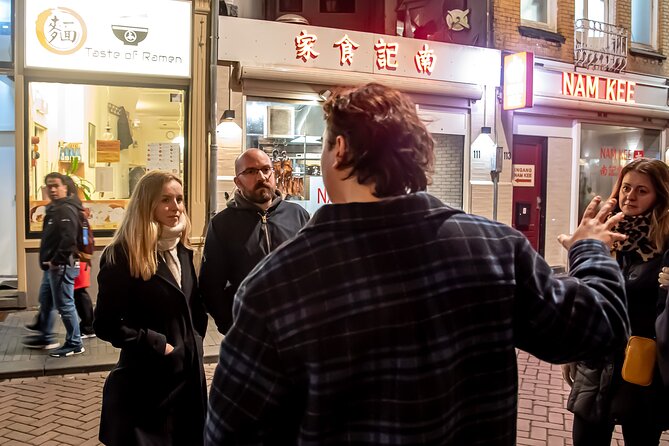
After the De Wallen core, the tour shifts into older Amsterdam landmarks and the physical story of the city. One stop is the Dam, with the explanation that Amsterdam is, in a sense, built on trees.
The guide explains why: Amsterdam’s soil includes thick layers of fen and clay. Historically, builders drove wooden foundation piles down through clay, peat, and water until they hit a layer of solid sand, about 11 meters deep. That’s why the city’s architecture works where it does.
If you’ve ever wondered why Amsterdam buildings look the way they do, this stop gives you the answer in a memorable, practical way. It also makes the rest of the walk make sense, because you’re no longer just seeing “old buildings,” you’re seeing buildings engineered for that ground.
Old Town context: why the oldest streets matter
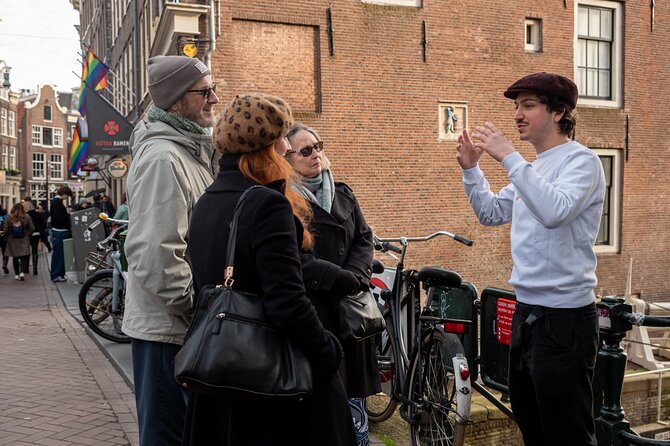
The tour also includes the idea that this part of the Red Light District area overlaps with the city’s oldest zones. In other words, the walk isn’t only about the modern district. It’s about how the old town layout influenced where commerce, guilds, and later regulated activities could concentrate.
This is a subtle but important shift. When you understand that De Wallen sits on older city fabric, it becomes easier to follow the logic of how Amsterdam grew. You can connect today’s rules to older patterns of settlement and trade.
This stop is most valuable if you’re a first-timer. You’ll leave feeling like you know where you are in Amsterdam, not just where you stood for a couple of photos.
Pub The Ape (Int Aepjen): a wooden survivor from around 1540
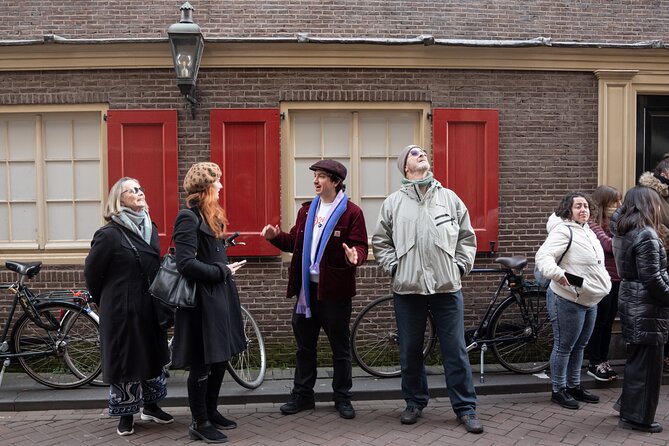
One of the most distinctive stops is Pub The Ape, known in Dutch as Int Aepjen. The tour points out that it was built around 1540 and is one of only two remaining wooden buildings in Amsterdam.
That detail alone is worth slowing down for. After a major fire in 1452, Amsterdam’s government pushed decisions toward brick facades. So a surviving wooden structure becomes a physical clue to how the city used to build, and how rebuilding shaped the look of Amsterdam over time.
Even if you don’t plan to go inside a pub, you’ll appreciate why it matters. It’s not random trivia, it’s a small monument to how policy and disaster shaped architecture.
The Waag: Amsterdam’s old gate turned guild center
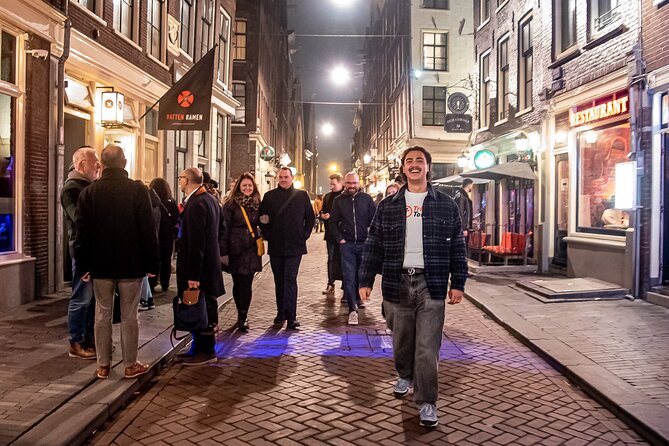
Next comes the Waag, a landmark with a long role in the city. The tour explains it used to be one of Amsterdam’s city gates, built around the 1400s as part of the defensive wall.
Later, it shifted into guild life. Craftsman organizations sat in and around the square, turning the Waag into a hub for trading skill and goods. This is another “now you get it” stop.
Why this matters for a Red Light District tour: it shows the area’s continuity as a place where Amsterdam activity clustered. Commercial energy didn’t disappear. It changed forms as the city’s laws and economy evolved.
Amsterdam’s smallest house and the VOC connection
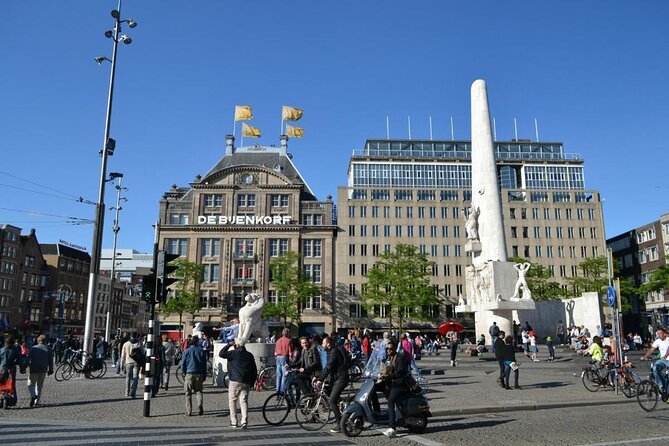
The walk also includes the smallest house of Amsterdam, built around the 1700s. The tour shares how it started as storage for the VOC trading company, then later became a lived-in home for a long time.
This stop is a great reminder that Amsterdam has always been a practical city. Trade and storage needed space, and housing adapted to the realities of the streets. It’s not only romantic old architecture, it’s architecture shaped by commerce.
It also ties into the broader theme of the tour: how Amsterdam’s wealth and global connections helped shape the city’s culture and social systems. You’ll leave understanding that De Wallen is part of a much larger Amsterdam story.
Condom shop and the limits of taboos in Amsterdam
One stop goes to a retail detail that many visitors find surprising: a condom shop specializing in condoms. The tour notes it’s been in place since 1987 and calls it the world’s first condom shop devoted to condoms.
Why include this on a Red Light District walk? Because it points to Amsterdam’s different way of handling sensitive topics. Instead of treating certain things as hidden or shameful, the city often handles them through regulation, clear rules, and everyday commerce.
This is also where the guide’s tone matters. The tour is described as tasteful and respectful toward the workers. You’ll get explanations framed around laws and safety, not sensational reactions.
Price and value: is $34.17 worth it?
At about $34.17 per person for roughly 2 hours, this tour sits in a reasonable range for Amsterdam. The value mainly comes from what’s included: a local guide plus a structured route through the area.
Since the main stop’s admission is listed as free, you’re paying primarily for interpretation and time on the ground, not ticket fees. And because the group is small (up to 15), the guide can actually manage questions and keep the experience moving without turning it into a noisy herd.
Here’s the honest way to judge it: if your goal is to understand Amsterdam’s De Wallen context, this offers a lot per minute. If your goal is only to see the district quickly with minimal talking, a self-guided walk might feel cheaper. But you lose the laws, the history, and the practical pointers that help you read the place like a local.
Who this tour fits best (and who might want a different plan)
This is a strong fit if you’re:
- A first-timer who wants clear context fast
- Interested in how Amsterdam rules shape everyday life
- Curious about coffeeshop culture alongside De Wallen
- Looking for a respectful, question-friendly guide experience
It’s less ideal if you:
- Have limited mobility, since it’s not recommended for that
- Want minimal walking or a fully quiet route
- Dislike topics that can feel visually intense at night
One more practical point: good weather is required. If conditions are poor, the tour may be canceled and you’ll likely be offered another date or a refund. In Amsterdam, that’s not a small detail.
Should you book this Amsterdam Red Light District tour?
If you’re trying to make your Amsterdam time smarter, I’d book it. This is the kind of tour that helps you understand what you’re seeing so the Red Light District doesn’t feel like a one-note experience.
Choose it especially if you want the respectful, rules-focused framing and the extra old-town stops like the Dam, Pub The Ape, the Waag, and the smallest house. Those detours make the walk more than a single neighborhood highlight.
I’d skip or consider another option if walking is hard for you, or if you prefer a lighter, less discussion-heavy approach. But for most first-time visitors, a small-group De Wallen tour with a local guide is one of the best ways to get your bearings and understand the city’s logic in a short amount of time.
FAQ
How long is the Amsterdam Red Light District guided tour?
It lasts about 2 hours.
Where does the tour start and end?
It starts at Damrak (1012 Amsterdam, Netherlands) and ends at Damrak (1012 Amsterdam, Netherlands).
What is the price per person?
The price is $34.17 per person.
What language is the tour offered in?
The tour is offered in English.
What is the group size?
The tour has a maximum of 15 travelers.
Is food and drinks included?
No, food and drinks are not included.
Is hotel pickup included?
No, hotel pickup and drop-off are not included.
Is the tour recommended for limited mobility?
It is not recommended for travelers with limited mobility.
Do I need good weather for this tour?
Yes, it requires good weather. If it is canceled due to poor weather, you will be offered a different date or a full refund.
Newest on the canal ring
- Amsterdam Bike Food Tour with Private Guide★ 5.0 · 1 review
- Happy B-day Amsterdam! Guided Tour with a History Buff★ 5.0 · 1 review
- Amsterdam: Rijksmuseum Private Tour with an Art Historian★ 5.0 · 1 review
- Local Foodie Adventure in Amsterdam★ 5.0 · 1 review
- Private Photo Shoot in Amsterdam with a Professional Photographer★ 5.0 · 1 review
- Private day trip to Giethoorn and the Enclosing Dike★ 5.0 · 1 review
- Private Sightseeing Tour to Giethoorn from Amsterdam incl. canal cruise★ 5.0 · 1 review
Red Light District Walking Tours, compared.
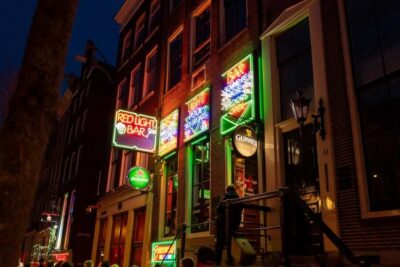
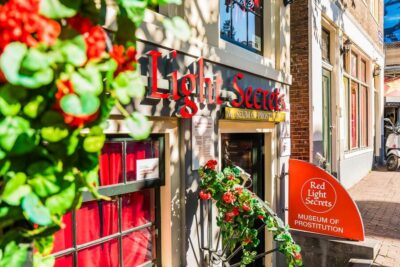
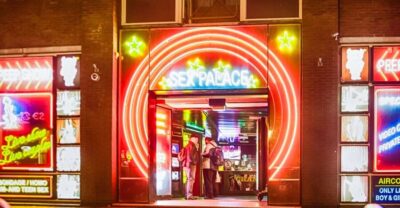
Amsterdam Red Light District & Coffee Shop Tour
Read our review →
Red Light District Pub Crawl with Unlimited Shots
Read our review →
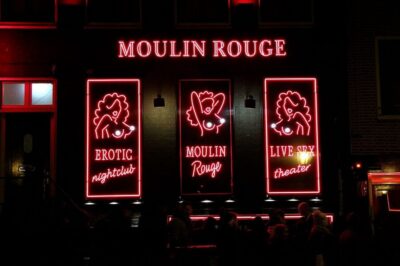
Private Amsterdam Red Light District and Coffee Shop Tour
Read our review →
Red Light Secrets: Museum of Prostitution Amsterdam
Read our review →Browse the lists this tour appears in