
Reviewed · MUSEUMS
Amsterdam: Stedelijk Museum (Private Tour with Art Historian)
Stedelijk art, made manageable. This private 90-minute tour with an art historian is designed to help you read modern and contemporary work without getting lost in the styles. You start on Museumplein and get a guided path through the museum’s biggest movements and artists.
I especially love how the tour connects the dots across De Stijl and Dutch avant-garde abstraction, instead of treating each room like a separate art quiz. The second big win for me is the way you’re walked through post-war directions like abstract expressionism, with names like Pollock, Newman, and de Kooning placed in a clear storyline.
One possible drawback: it’s a short time window, so you will cover highlights rather than slow down for deep, room-sized study of every artwork. If you tend to spend 30 minutes in front of a single painting, you may want a second visit later on your own.
In This Review
- Key Highlights You Should Know
- Why This Private Stedelijk Tour Works So Well
- Meeting on Museumplein, Getting Oriented Fast
- Price and Value: What You’re Really Paying For
- How the Art-History Story Builds Room by Room
- Early Modernism and De Stijl: Mondrian and van Doesburg Without the Confusion
- Expressionism and Surrealism: Reading Intensity and Dream Logic
- Abstract Expressionism and Post-War Art: Pollock, Newman, and de Kooning
- Pop Art and Minimalism: Warhol, Lichtenstein, Judd, and Flavin
- Stedelijk Today: How the Museum Shapes Modern Visual Culture
- The Guide Experience: When Art History Feels Human
- Timing, Duration, and How to Pair This With Your Day
- Who This Tour Suits Best
- Should You Book the Stedelijk Private Tour?
- FAQ
- How long is the Stedelijk Museum private tour?
- Is this tour private, and how many people are included?
- What language is the tour offered in?
- Where do we meet, and where does the tour end?
- Is museum admission included?
- When does the tour start?
- Can I bring a service animal?
- What is the cancellation policy?
- How far in advance should I book?
Key Highlights You Should Know
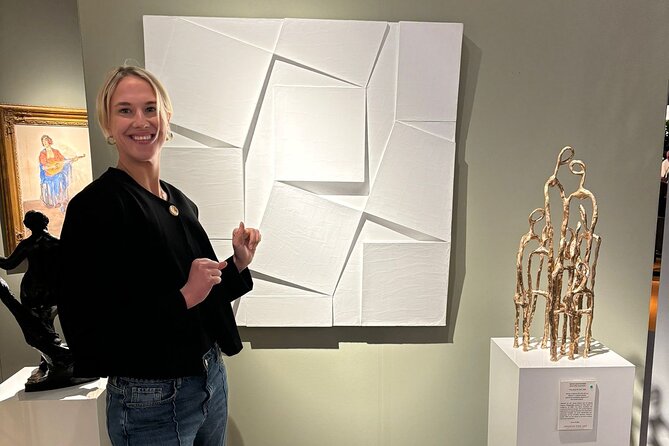
- Private group up to 4 means you can ask questions and move at a comfortable pace.
- Art historian guidance in English helps modern art feel less intimidating.
- A movement-by-movement route covers De Stijl, Expressionism, Surrealism, and beyond.
- Major artist names are anchored to what you should actually look for in each room.
- Stedelijk Today focus shows how the museum shapes modern visual culture.
- Free museum admission is part of the experience, with a ticket redemption point at the museum.
Why This Private Stedelijk Tour Works So Well
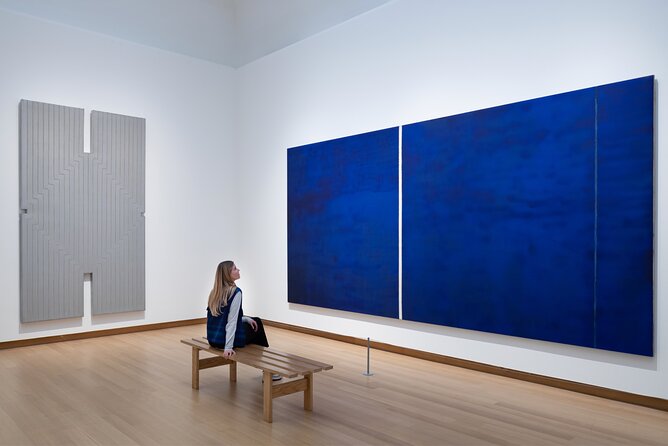
The Stedelijk Museum can feel like a lot, fast. Modern and contemporary art covers huge territory, and if you wander alone, you can end up with a blur of titles and techniques. This tour solves that problem with a simple promise: you’ll leave with a mental map.
What makes it work is the structure. You don’t just get a list of artists. You get a short introduction to the museum’s role in modern art, then a curated walk through the movements that actually explain the jump from one style to the next. That “why this exists” context makes it easier to look at the work in front of you.
Another smart thing: the group is private for up to four people. That matters at the Stedelijk because people have different comfort levels. Some want big-picture history. Others want to know how to read a style shift. With a small group, you can usually adjust on the fly.
More Amsterdam collections worth the queue:
- Amsterdam: Red Light Secrets Museum Entry Ticket
★ 4.2 · 5,722 reviews - Amsterdam’s Weirdest Museum: Ripley’s Believe It or Not!
★ 4.5 · 4,920 reviews - Amsterdam: Van Gogh Museum Ticket and City Canal Cruise
★ 4.6 · 3,899 reviews
Meeting on Museumplein, Getting Oriented Fast
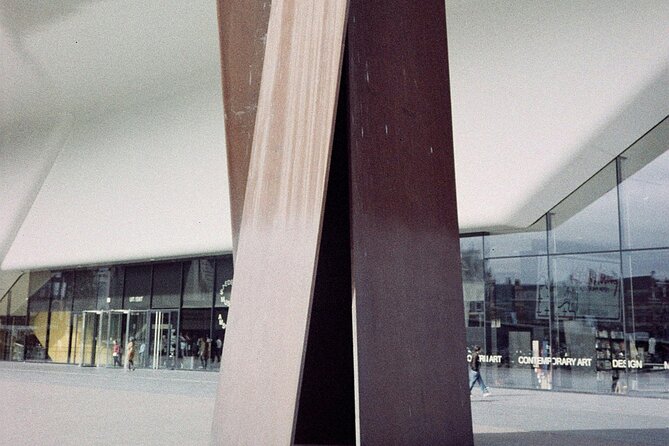
Your tour starts at Museumplein 6, right in front of the museum entrance. The guide meets you there for a brief intro to the museum’s history and significance in modern and contemporary art, plus a quick framing of what you’re about to see.
Then you begin the “movement overview” phase, a short look at the key styles and artists included in the route. This is the part I like most because it sets you up to notice patterns. Instead of only asking, What am I looking at? you’ll start asking, What changed here, and why?
The tour runs about 1 hour 30 minutes and ends back at the meeting point. So you’re not dragged across the museum for hours. If you’re planning your day around other sights in Amsterdam, this is a very workable block.
Price and Value: What You’re Really Paying For
The price is $180.19 per group (up to 4). On its face, that can sound like “a splurge.” But private tours are often about buying time and clarity.
Here’s the value angle: you’re paying for an art historian’s focus on the exact themes you’ll see, including a sequence that moves from early modernism through post-war art, Pop Art, minimalism, and then right up to what the Stedelijk is doing now. If you tried to build that yourself from guidebooks, you’d spend time researching, then still risk missing the logic that makes the museum feel coherent.
Also, admission is free as part of the experience, with a ticket redemption point at Stedelijk Museum Amsterdam, Museumplein 10. That helps keep the total cost from creeping upward once you’re on site.
How the Art-History Story Builds Room by Room
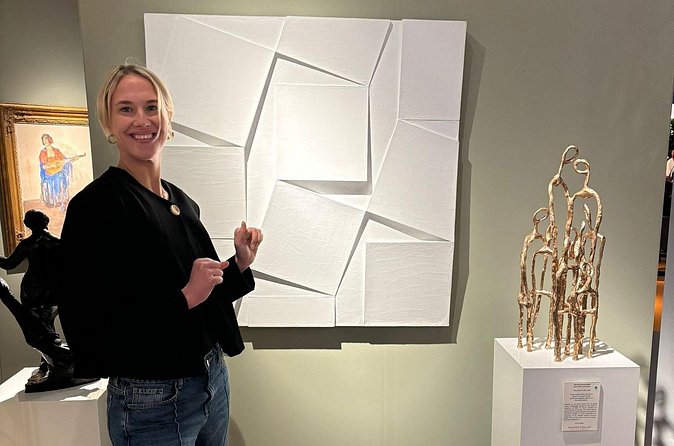
This isn’t a random gallery stroll. It’s a themed walk that follows how modern art evolved.
The route begins with early modernism and the Dutch avant-garde, then moves into Expressionism and Surrealism, continues through post-WWII abstract directions, and eventually lands on Pop Art and minimalism. Then it circles back to the present with Contemporary art and the Stedelijk Today segment.
What I like about this approach is that it trains your eye. When you know what came before, you start spotting the real differences: sharp grid logic versus raw emotion, dream logic versus formal experimentation, and the later turn toward consumer imagery and reduced forms.
And because it’s private, the guide can steer you toward what you’ll respond to most. If you pause a lot, the guide can typically slow the explanation and keep you from feeling rushed.
Some other canal-ring outings to set against this


Early Modernism and De Stijl: Mondrian and van Doesburg Without the Confusion
The Dutch avant-garde section is where many people first feel modern art click. The tour calls out works by Mondrian and van Doesburg, tied to De Stijl, the movement that helped revolutionize abstraction.
If you’ve ever wondered why some paintings look like colored rules, this is the section that answers that question. The guide’s job here is to give you the reasoning behind the style: the idea that order and reduction could express something universal.
Practical tip for you: as you look at the works, focus on relationships. Not just color or shape, but how the lines behave. Are they insisting on structure? Breaking it? That one shift in how you look usually makes the art feel less distant.
This part also helps you understand what “early” modernism meant. It isn’t just old work. It’s when the visual language started changing, setting up what later artists would rebel against or transform.
Expressionism and Surrealism: Reading Intensity and Dream Logic
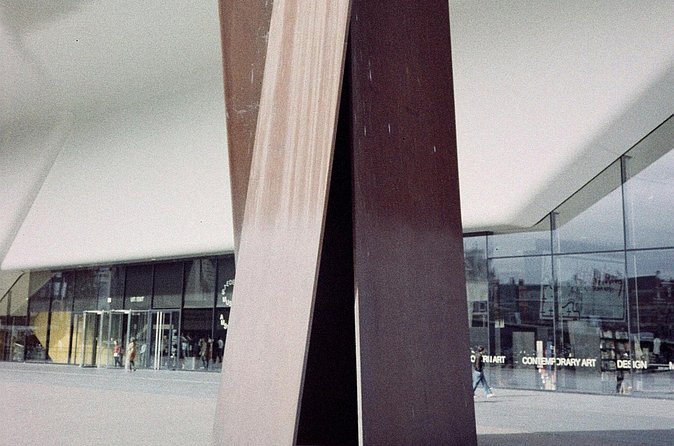
Next comes Expressionism and Surrealism, where the mood changes fast. You’ll encounter the bold intensity associated with German Expressionism, including artists such as Kirchner and Kandinsky, then shift to dreamlike Surrealism with Dalí.
This is a great stop if you like emotion in art or if you’ve heard people say modern art feels too cold. Expressionism tends to be the antidote. The tour framing helps you spot what drives the intensity, whether it’s distorted form, aggressive color, or an urgency in how the image is constructed.
Then Surrealism adds a different tool: the logic of dreams. Dalí is a name people recognize, but the point here is understanding what to look for beyond the spectacle. You’ll want to watch for how familiar objects get reassembled into something that feels psychologically off.
My advice: don’t try to force a single interpretation. Instead, let the guide’s themes help you see how the artists are thinking, not just what the painting depicts.
Abstract Expressionism and Post-War Art: Pollock, Newman, and de Kooning
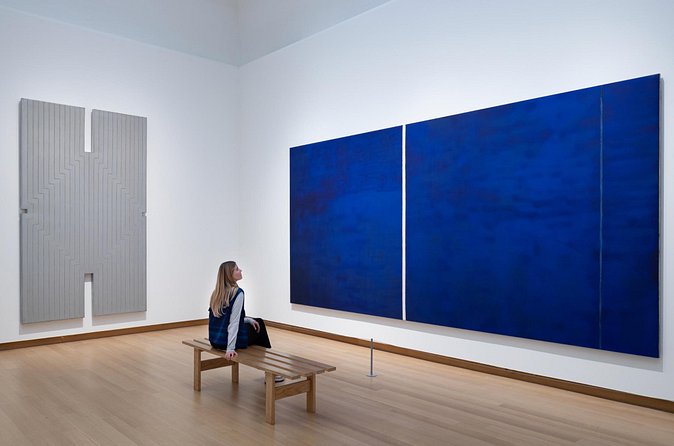
After that emotional and dream-based terrain, you move into Abstract Expressionism and post-war art. Here you’ll see major names like Pollock, Newman, and de Kooning.
This section can be hit-or-miss when you’re alone. Abstract work can feel like it resists meaning. But with a guide, the work becomes easier to approach because you learn what the artists were trying to do in their time period.
In practical terms, you’ll likely be coached on how abstraction communicates. Think energy, scale, gesture, and how a work can be about action or presence as much as about subject matter.
A good way to engage: notice the difference between “paint as material” and “paint as image.” Some works make you feel the physical act. Others create space that feels more like thought than representation.
If you enjoy art that asks questions rather than provides answers, this portion tends to be a strong payoff.
Pop Art and Minimalism: Warhol, Lichtenstein, Judd, and Flavin
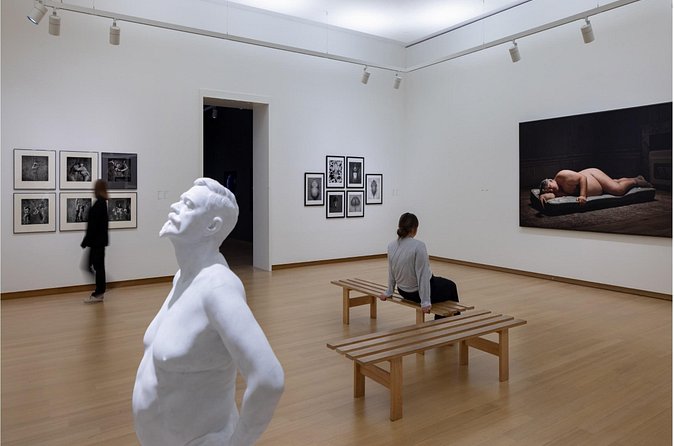
Then the tour turns to Pop Art and minimalism, including Warhol and Lichtenstein, plus minimalist names like Judd and Flavin.
This is where the Stedelijk’s variety shines. Pop Art is about culture, repetition, and the look of media. Minimalism is about reducing form and letting the environment and the object’s presence do the talking.
The value here is that you get a guided contrast. You don’t just see consumer imagery. You also learn how later artists used reduction and industrial clarity to shift attention away from narrative and toward perception.
Practical tip: stand back and then step closer. Minimalist works often change how they feel as you adjust your distance. The guide’s framing can help you avoid the common trap of judging them only by your first glance.
Stedelijk Today: How the Museum Shapes Modern Visual Culture
The tour ends with Contemporary art and the Stedelijk Today segment. This part focuses on recent acquisitions and the museum’s role in shaping modern visual culture.
Even if you’re mostly here for the famous artists, don’t skip this final stretch. It’s where the museum stops being only a storehouse of the past and becomes a living institution responding to what’s next in art.
If you’re curious about what makes a museum influential, this is the part that teaches it. You’ll see how modern collecting choices can influence what becomes “important” in the visual conversation.
And because your tour is short, this final stop gives you closure. You go from origins and evolution to what the museum believes is still relevant.
The Guide Experience: When Art History Feels Human
One of the most praised parts of this experience is the guide’s ability to make modern art feel approachable. Names that have been highlighted include Mercedes and Liz, both described as especially helpful at explaining themes and highlights of rooms.
That matters because modern art often comes with intimidation factors: unfamiliar terms, big names, and a lot of visual noise. A good guide does two things: they explain the themes, then they help you focus your attention so you can enjoy the art rather than just study it.
Also, one booking specifically praised thoughtful help for a parent using a wheelchair, which is a reassuring sign that the experience can be handled with care for real needs, not just as a checklist.
Timing, Duration, and How to Pair This With Your Day
The tour starts at 12:00 pm. With about 1 hour 30 minutes, you’ll finish with enough energy to keep exploring nearby areas of Amsterdam.
Since you meet at Museumplein, it’s easy to connect this with other museum stops or nearby walks. And because the ending point is back where you started, you avoid the “now what?” stress that some tours create.
If you’re sensitive to crowds, aim to arrive a few minutes early so you can settle your brain before the guide starts the history framing.
Who This Tour Suits Best
This is a strong fit for you if:
- You want to understand modern art without spending a day researching.
- You like a clear structure that moves through styles in order.
- You prefer asking questions in a smaller group rather than listening to a lecture for dozens of people.
- You want a mix of famous names and museum context, not only one style.
You might prefer a different format if:
- You want slow, obsessive detail on a handful of masterpieces, with lots of time in one room.
- You dislike guided routes and prefer fully independent exploring.
Should You Book the Stedelijk Private Tour?
If you’re going to the Stedelijk and you want your visit to feel coherent, not chaotic, I think you should book this. The biggest reason is the structure: you get a guided path through major movements that actually explains what you’re seeing. Add in the fact that it’s a small private group, in English, with free admission tied to the experience, and it starts to look like a smart use of money and time.
Also, the praise for guides like Mercedes and Liz points to something you can’t easily “DIY,” good theme explanations plus practical help when needed. If that sounds like the kind of tour you enjoy, this one is worth it.
FAQ
How long is the Stedelijk Museum private tour?
It lasts about 1 hour 30 minutes.
Is this tour private, and how many people are included?
Yes, it’s a private tour/activity with only your group participating, up to 4 people.
What language is the tour offered in?
The tour is offered in English.
Where do we meet, and where does the tour end?
Meet in front of the Stedelijk Museum entrance on Museumplein. The activity ends back at the meeting point.
Is museum admission included?
Admission ticket is listed as free. You use the ticket redemption point at Stedelijk Museum Amsterdam, Museumplein 10.
When does the tour start?
The start time is 12:00 pm.
Can I bring a service animal?
Yes, service animals are allowed.
What is the cancellation policy?
Free cancellation is available if you cancel at least 24 hours in advance of the experience start time for a full refund.
How far in advance should I book?
On average, this experience is booked 33 days in advance.
Newest on the canal ring
- Amsterdam Bike Food Tour with Private Guide★ 5.0 · 1 review
- Happy B-day Amsterdam! Guided Tour with a History Buff★ 5.0 · 1 review
- Amsterdam: Rijksmuseum Private Tour with an Art Historian★ 5.0 · 1 review
- Local Foodie Adventure in Amsterdam★ 5.0 · 1 review
- Private Photo Shoot in Amsterdam with a Professional Photographer★ 5.0 · 1 review
- Private day trip to Giethoorn and the Enclosing Dike★ 5.0 · 1 review
- Private Sightseeing Tour to Giethoorn from Amsterdam incl. canal cruise★ 5.0 · 1 review
Museums, compared.


Amsterdam’s Weirdest Museum: Ripley’s Believe It or Not!
Read our review →



Van Gogh Museum Amsterdam Exclusive Tour w/ Reserved Entry
Read our review →
Moco Museum Amsterdam Admission Ticket with Banksy and more
Read our review →
Van Gogh Museum Tour Reserved Entry Semi Private
Read our review →Browse the lists this tour appears in