
Reviewed · HISTORICAL TOURS
Amsterdam: The Untold Story of Dutch Colonial History Tour
Amsterdam can look like pure success. Yet this walk explains how that shine was powered. You’ll trace the Dutch Golden Age back to colonial expansion, and I love that the tour doesn’t treat it like a footnote, it treats it like the main storyline, from VOC and WIC to the transatlantic slave trade. You also get a focused route with short guided stops across central landmarks, so the story stays clear instead of feeling like a lecture.
One heads-up: the content is critical and directly tied to exploitation and slavery, so it can feel heavy. If you’re in Amsterdam for mostly light-and-fancy vibes, this might not be your best match.
In This Review
- Key things I’d circle before you go
- Why Amsterdam’s Golden Age Has a Dark Side
- Starting at Nieuwmarkt, Finding the Orange Umbrella
- VOC and WIC, Explained in City-Sized Pieces
- The Guided Stops That Turn Facts Into a Clear Route
- Golden Bend: Where Wealth Takes Shape in the City
- Multatuli Statue: When Criticism Becomes Public Memory
- Royal Palace and National Monument: Memory and Justice in Plain Sight
- What the Tour Does Especially Well With Resistance and Resilience
- Price and What You Get for $38
- Who This Tour Fits Best
- Should You Book the Amsterdam Untold Story Tour?
- FAQ
- How long is the Amsterdam: The Untold Story of Dutch Colonial History Tour?
- Where does the tour start?
- Where does the tour end?
- Is the tour walking only?
- What language is the tour offered in?
- What topics will the tour cover?
- How much does the tour cost?
- Can I cancel for a full refund?
- Is there a reserve and pay later option?
Key things I’d circle before you go
- VOC and WIC made practical: you connect corporate power to real outcomes in the city.
- Colonial violence isn’t skipped: exploitation and slavery are part of the explanation, not a sidebar.
- Resistance and resilience get time: voices that challenged injustice are woven into the walk.
- Short segments, good pacing: multiple guided moments keep the 2-hour plan moving.
- Public memory comes into focus: you end thinking about identity and justice, not just history facts.
Why Amsterdam’s Golden Age Has a Dark Side
Amsterdam’s postcard version is gorgeous: canals, grand buildings, merchant wealth. This tour asks a simple question you rarely hear asked in casual sightseeing, funded by what, and at what human cost? You start with the Dutch Golden Age as most people know it, then you build the missing link to colonial expansion and the systems that made that wealth possible.
The heart of the tour is connecting big institutions to everyday participation. It’s not just about faraway places. You learn how the rise of the VOC and WIC connects to exploitation tied to trade routes and labor. And the tour keeps its critical balance by pairing those structures with stories of resistance and resilience, so the narrative has more than one angle.
If you like history that explains cause and effect, this format works. It turns names you might see on buildings into something you can picture in real terms.
More of the Golden Age still standing:
- Amsterdam Food and Cultural Tour with Tastings
★ 5.0 · 4,315 reviews - Amsterdam: Historic City Centre Canal Cruise
★ 4.3 · 659 reviews - Amsterdam: Haunted History and Ghost Walking Tour
★ 4.5 · 488 reviews
Starting at Nieuwmarkt, Finding the Orange Umbrella
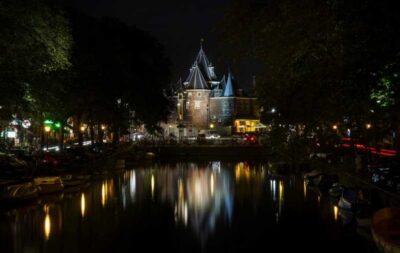
The tour begins at Nieuwmarkt 4, with the meeting point in front of Restaurant-Café In de Waag. Your cue is straightforward: look for the guide with the orange umbrella.
This matters more than you might think. In central Amsterdam, it is easy to arrive late and miss the start, and the opening segment sets the tone for the entire route. Getting there a little early helps you relax, get oriented, and settle into the walk.
Timing is built into the plan. You’ll spend about 15 minutes at the first guided stop, then you keep moving between sites. Because it’s a walking tour, plan on staying on your feet through city streets and short distances. The upside is that the story doesn’t live only in one classroom moment, it moves as you move.
Tip: wear comfortable shoes. You’ll be stopping, listening, and walking again in a compact 2-hour flow.
VOC and WIC, Explained in City-Sized Pieces
The first major guided stop focuses on the Dutch East India Company, the VOC. That’s a smart choice because VOC is the kind of term people hear, but they often don’t understand how the company fit into the bigger colonial machine. In this tour, the guide ties the company to expansion and the trade systems that followed.
Right after that, you keep walking through additional guided moments that broaden the picture. You’ll connect the rise of both VOC and WIC to the wider context of colonial growth and transatlantic slavery. The tour does not treat these topics as separate tragedies. It frames them as connected parts of the same economic world.
What I like about this approach is that it gives you a vocabulary for seeing Amsterdam differently. When you later notice wealth and trade references around the city, you’ll know what question to ask. Not just who built it, but who benefited, and who paid.
You’ll also hear how ordinary citizens played a role in colonial enterprise. That piece can be uncomfortable, but it’s also where the tour becomes meaningful. It helps you understand that large systems often rely on many hands, not only rulers.
The Guided Stops That Turn Facts Into a Clear Route
One of the best things about a 2-hour walking tour is whether it has momentum. This one does. The schedule alternates between walking and guided listening, with several guided blocks of about 5 to 15 minutes.
Here’s the rhythm you can expect, based on the route plan:
- You get a 15-minute VOC stop, then you walk briefly.
- You hit more guided segments across the city, including a longer middle section and a couple of shorter moments that keep attention sharp.
- You walk again, then reach the canal-area stop called the Golden Bend.
This pacing is useful. Colonial history can be dense. Breaking it into smaller guided stops makes it easier to absorb and reduces the chance that the story turns into background noise. You’re not stuck with one long explanation while your feet freeze or your brain wanders.
A different use for the same hours in Amsterdam:


Golden Bend: Where Wealth Takes Shape in the City
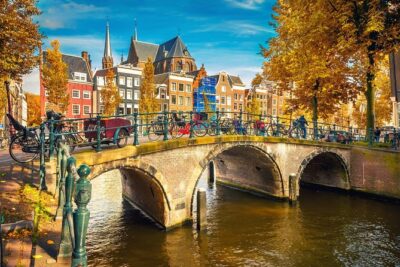
The tour includes the Golden Bend, a standout named stop. Even if you’ve never studied Amsterdam’s canal geography, this is where the city’s merchant-era confidence becomes visible in physical space.
I like that the Golden Bend is not treated as a pretty detail. It’s treated as a clue. You are guided to connect the look of wealth and the bend of the canal world to the economic forces the tour has already been describing, including colonial expansion and the trade networks tied to exploitation.
This is the kind of stop that gives you a mental picture for later. You’ll look at the canal area and think beyond architecture. You’ll be thinking about the flow of money, the systems behind it, and how that wealth helped shape the city you see today.
The drawback, if you can call it that, is that the Golden Bend can feel like a contrast moment. The place is beautiful. The story is not. If you prefer history that only stays positive, this city view may feel jarring.
Multatuli Statue: When Criticism Becomes Public Memory
Next comes the Multatuli Statue. The tour includes it as a short guided stop, about 5 minutes. Even in that short window, the statue fits the tour’s main theme: voices that challenged injustice.
The timing here is telling. After covering companies, expansion, and exploitation, the tour shifts you toward critique. That’s important because it changes the emotional balance of the walk. You move from describing a system to hearing that people resisted it, argued against it, and pushed the conversation into public space.
This stop also helps with the tour’s focus on memory and identity. It suggests that history is not only what happened, it’s what gets remembered, honored, and discussed. When you see a statue connected to critique and moral questioning, you understand how public space can carry political meaning long after the events themselves.
Royal Palace and National Monument: Memory and Justice in Plain Sight
The tour then guides you past two big public sites tied to national storytelling: the Royal Palace and the National Monument. You spend about 5 minutes at the palace stop and about 10 minutes at the National Monument stop.
Even without turning these landmarks into a lecture about other eras, the tour uses them to connect past and present-day debates. That is the tour’s stated goal: linking colonial history to current conversations about memory, justice, and identity.
For me, this is one of the most useful parts. You are not only learning what colonial expansion did. You are also learning why the city’s public symbols matter now. They shape how people interpret the past, and they influence which stories feel official and which feel contested.
The practical takeaway is this: when you stand in front of major monuments, you can look with new questions in mind. What does this place highlight? What does it skip? Who benefits from the version of history that gets centered?
The route ends back toward Dam Square, bringing you out into the most familiar Amsterdam public space, but with a different lens than you had at the start.
What the Tour Does Especially Well With Resistance and Resilience
This tour isn’t only a story about systems of exploitation. It explicitly includes resistance, resilience, and voices that challenged injustice. That matters, because colonial history without resistance can start to feel like inevitability, like oppression was simply permanent.
Instead, the tour makes room for the human pushback. It connects the suffering caused by colonial expansion to the people who questioned it and tried to change the terms. Even when those stories are brief, they help you feel the moral argument behind the history, not just the economic one.
The tour also emphasizes a critical and balanced perspective. That balance is what keeps it from becoming either propaganda or pure outrage. You get context for how wealth was built, and you get reasons why later voices demanded accountability.
And that is why the ending lands. You don’t walk away with just facts. You walk away thinking about memory and justice, the way people argue about what should be commemorated and why.
Price and What You Get for $38
At $38 per person for a 2-hour walking tour, the value comes down to two things: time on the ground and guided interpretation. You’re paying for a live guide, multiple historical stops, and an organized route that connects topics instead of tossing you into a self-guided scavenger hunt.
Two hours is a sweet spot. It’s short enough to fit into a busy day, but long enough to move beyond surface sightseeing. You cover several guided segments, including key company-related history and major public landmarks tied to how nations remember.
If you’re the type of traveler who likes to understand what you’re looking at, $38 is a reasonable spend. If you already know Dutch colonial history deeply and prefer to read on your own, you might see less unique value. But for most people, the guided structure plus the critical focus is exactly what turns the city from scenery into insight.
Who This Tour Fits Best
I’d especially recommend this tour if you:
- Want Amsterdam history that goes beyond trade and art into colonial expansion and exploitation.
- Like clear storytelling with short guided stops across real landmarks.
- Care about modern debates on memory, identity, and justice, and want historical grounding.
I’d think twice if:
- You want a mostly cheerful city overview with minimal discomfort.
- You’re sensitive to topics involving slavery and exploitation.
- You are looking for a long, museum-style experience where you can pause and read quietly.
Best match: curious first-timers, history students, and anyone who feels uneasy with the clean version of the Golden Age and wants the missing context.
Should You Book the Amsterdam Untold Story Tour?
Yes, if your goal is to understand Amsterdam beyond the postcard. This is one of those tours where the city looks the same at the end, but you understand it differently. The combination of VOC and WIC focus, the inclusion of slavery and exploitation, and the deliberate attention to resistance and memory gives you a more honest picture than a standard walking route.
Also, keep an eye out for the guide’s delivery. In past tours, the guide Giovani has been praised for bringing Dutch history people may not have heard before, and for keeping the explanation clear and respectful. If you get a guide with that same energy, you’ll likely find the details easier to hold onto.
Book it when you still have curiosity left in your day, not when you’re exhausted. And wear comfortable shoes, because the best part of this experience is how the story moves from stop to stop.
FAQ
How long is the Amsterdam: The Untold Story of Dutch Colonial History Tour?
The tour lasts 2 hours.
Where does the tour start?
It starts at Nieuwmarkt 4. Meet in front of the main entrance of Restaurant-Café In de Waag, and look for the guide with an orange umbrella.
Where does the tour end?
The tour ends at Dam Square.
Is the tour walking only?
Yes, it is a walking tour, with guided moments at multiple city stops.
What language is the tour offered in?
The tour is led by a live guide in English.
What topics will the tour cover?
You’ll learn about colonial expansion and exploitation, the VOC and WIC, the transatlantic slave trade, and stories of resistance, resilience, and voices that challenged injustice. It also connects the past to present-day debates about memory and justice.
How much does the tour cost?
The price is $38 per person.
Can I cancel for a full refund?
Yes, you can cancel up to 24 hours in advance for a full refund.
Is there a reserve and pay later option?
Yes, you can reserve now and pay later, with no payment today.
Newest on the canal ring
- Amsterdam Bike Food Tour with Private Guide★ 5.0 · 1 review
- Amsterdam: Rijksmuseum Private Tour with an Art Historian★ 5.0 · 1 review
- Happy B-day Amsterdam! Guided Tour with a History Buff★ 5.0 · 1 review
- Local Foodie Adventure in Amsterdam★ 5.0 · 1 review
- Private Photo Shoot in Amsterdam with a Professional Photographer★ 5.0 · 1 review
- Private day trip to Giethoorn and the Enclosing Dike★ 5.0 · 1 review
- Private Sightseeing Tour to Giethoorn from Amsterdam incl. canal cruise★ 5.0 · 1 review
Historical Tours, compared.

Amsterdam Food and Cultural Tour with Tastings
Read our review →

Amsterdam High-End Dutch Food & History Tour – Up to 8 guests
Read our review →

Anne Frank and the Jewish History of Amsterdam Private Tour
Read our review →
Luxury Canal Cruise with Historic VR Experience
Read our review →Browse the lists this tour appears in