
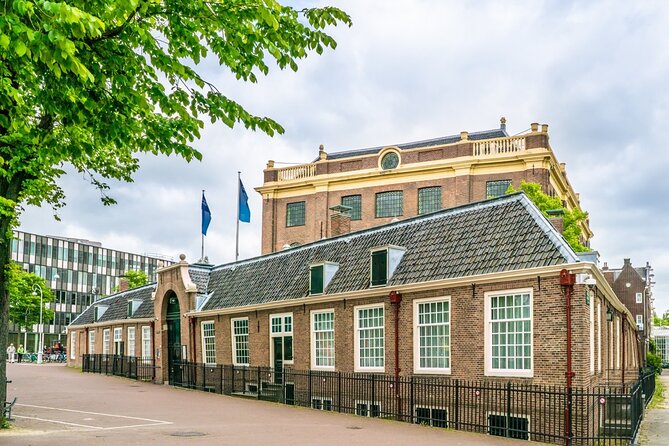
Reviewed · ANNE FRANK HOUSE TICKETS
Anne Frank’s Amsterdam Jewish History WWII Exclusive Guided Tour
Memorials tell a deeper Amsterdam story. This Anne Frank WWII guided tour strings together key sites of persecution across the city, with a guide who helps you connect the dots fast. I like the stop-by-stop context you get, and I’ve seen guides such as Clare and Monique bring the stories to life with calm, careful explanations.
Two things I really appreciate: you get a thoughtful route for groups beyond the Frank family, and the pace feels human, with frequent check-ins so you do not feel rushed. The one drawback to plan for is this is not an Anne Frank House ticket, since the tour includes Anne Frank House exterior only and admission is not included.
In This Review
- Key things I’d pencil into your day
- Price and value: what $59.28 really covers
- Timing and walking style: 2.5 hours that stay steady
- Stop 1: Anne Frank House exterior, and why starting here helps
- Stop 2: Statue of Anne Frank with the Westerkerk bell story
- Stop 3: Homomonument, the LGBTQ+ memorial in plain sight
- Stop 4: Dam Square, recruitment and the National Monument
- Stop 5: Spinoza Monument, Jewish ideas before the storm
- Stop 6: Joods Verzetsmonument, Jewish resistance in the open
- Stop 7: Monument Megadlé Jethomiem, deportation traced in stones
- Stop 8: Portuguese Synagoge, then the Jewish Museum across the street
- Stop 9: The Dokwerker and the February Strike of 1941
- Stop 10: Deaf Memorial, the word Untermenschen made real
- Stop 11: Auschwitz Monument, the shattered mirror effect
- Stop 12: National Holocaust Names Monument and Stumbling Stones
- Who this tour fits best (and who might want a different plan)
- Should you book Babylon Tours Amsterdam for this walk?
- FAQ
- Does the tour include entry to Anne Frank House?
- Are admissions included for other sites on the route?
- How long is the tour and is it mostly walking?
- What language is the tour in?
- Where does the tour start and end?
- What’s not included in the price?
Key things I’d pencil into your day

- Anne Frank House exterior only, paired with nearby context instead of waiting in line
- A wider persecution map, including LGBTQ+ memorials, Jewish resistance sites, and memorials for deaf victims
- Short, manageable stops, most around 5 to 10 minutes, so you can absorb without burning out
- Many stops are free to visit, which makes the $59.28 feel more like paying for guidance and meaning
- Personal attention through small-group and private options (it is your group only on private tours)
- A clear ending at the Names Monument, where numbers turn back into human names and addresses
Price and value: what $59.28 really covers
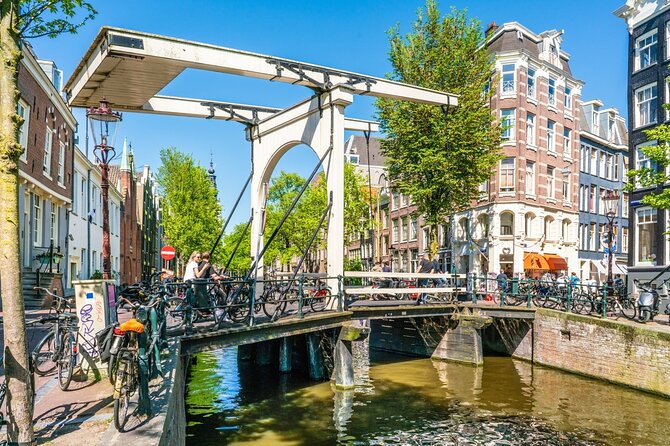
At $59.28 per person for about 2 hours 30 minutes, you are paying mainly for a guided narrative and a structured route. The tour price includes the expert local guide and a mobile ticket, but it does not include admission to the Anne Frank House or the Portuguese Synagogue area. That means your money is going to interpretation, not ticket entry.
Here is the value angle that matters in real life: most of the memorial stops along the walk are free. So you are not stacking additional costs just to keep learning as you move. Also, if you cannot get Anne Frank House timed entry, this kind of guided route is a solid way to still understand the story and the city around it.
You also get satisfaction guarantee language, which is reassuring when the topic is heavy and you want the experience to feel respectful and well run.
Other walks through Jewish Amsterdam:
- Anne Frank Walking Tour Amsterdam Including Jewish Cultural Quarter
★ 5.0 · 1,879 reviews - Anne Frank and Jewish Quarter Amsterdam Private Walking Tour
★ 5.0 · 684 reviews - Amsterdam: Anne Frank and Jewish Quarter Tour
★ 4.7 · 434 reviews
Timing and walking style: 2.5 hours that stay steady
This is a walking tour with short stops, usually about 5 to 10 minutes each, plus travel time between points. The whole experience runs roughly 2 hours 30 minutes, and the physical demand is listed as moderate, so you should plan for street-level walking on uneven sidewalks.
The route ends at the National Holocaust Names Monument, which is a meaningful place to finish, but it also means you will likely want to build time into your schedule for whatever emotional landing you need. In the rain, you can count on the guide to keep things comfortable, with at least some awareness for weather and group needs, which matches what people have described in the reviews.
One practical tip: wear shoes you can walk in for a couple hours. You do not need hiking gear, but you do want reliable traction and comfort.
Stop 1: Anne Frank House exterior, and why starting here helps
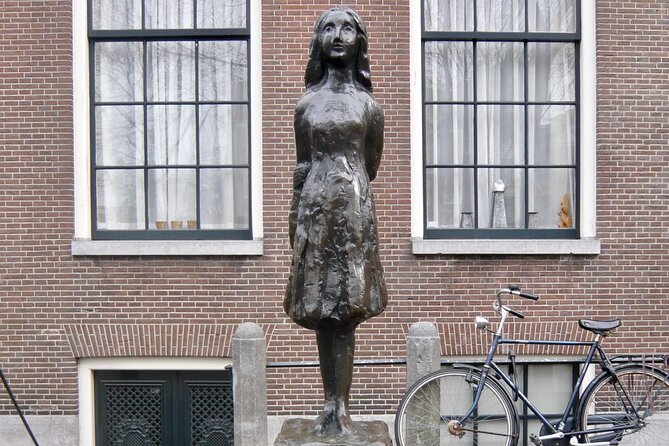
The tour begins at Westermarkt 60, near the Westerkerk area. Stop 1 is the Anne Frank House, but only from the outside, and there is no admission included. Even so, it sets the tone. You learn that Anne, her family, and four others hid from the Nazis for about two years.
Starting with the outside matters because it gives you the frame before you move into the wider city story. You will not just walk past famous places like photos on legs. You get a reason for why this location sits in the middle of a whole system of persecution and fear.
The drawback, of course, is simple: if you came here specifically for the inside, this tour will not replace that. Use it as a guided alternative and context builder, especially if interior tickets are hard to get.
Stop 2: Statue of Anne Frank with the Westerkerk bell story
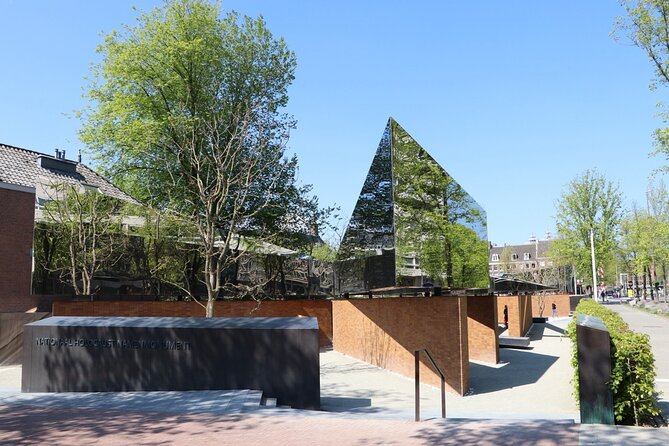
Next up is a stop for the Statue of Anne Frank, a tribute set against the Westerkerk, the 17th-century church. The bells are part of the emotional background here. They were, in Anne Frank’s experience, both a comfort and a reminder that the world continued beyond the attic.
This is a quick stop, around 10 minutes, but it is one of those moments where the city’s everyday sound connects to wartime isolation. It also helps you see Amsterdam as more than canals and street scenes. The guide ties the setting to lived experience.
Other routes to the Anne Frank House:
Stop 3: Homomonument, the LGBTQ+ memorial in plain sight
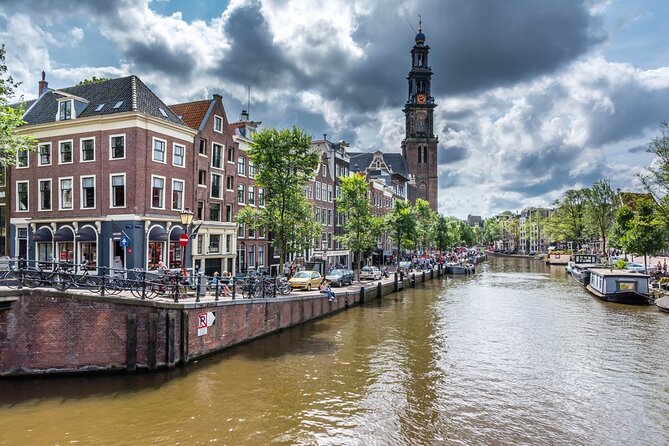
You then reach the Homomonument, described as the first memorial in the world dedicated to persecuted LGBTQ+ individuals. This is not a generic plaque stop. It exists to commemorate those who lost their lives under the Nazi regime.
This part of the walk is important because it prevents the story from narrowing too much. The Nazi occupation did not target only one group. Once you see that on the ground, you start to read the city differently.
The stop is short, about 10 minutes, so you’ll want to listen closely rather than just take in the view and move on.
Stop 4: Dam Square, recruitment and the National Monument
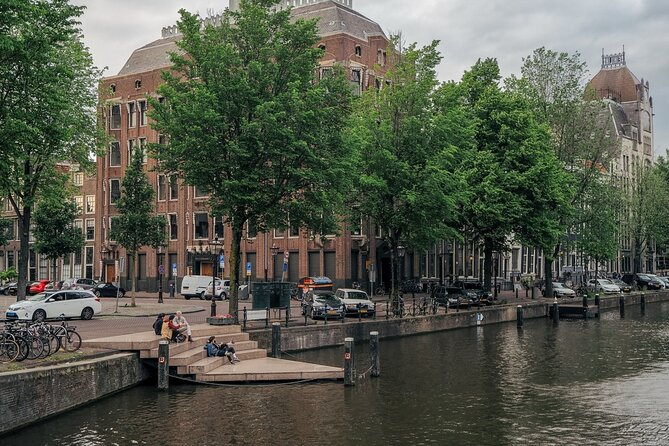
At Dam Square, you walk through Amsterdam’s historic main square, where a Nazi recruitment office once stood. That detail is jarring in the middle of a place that today looks like a public square you can just stroll through.
Then you pay respects at the National Monument, a cenotaph honoring victims of World War II and later conflicts. This is one of those moments where you feel the tour’s balance: it does not only focus on specific diaries or buildings, it also anchors the memory in broader civic remembrance.
Expect about 10 minutes here, so it is likely more reflective than informational, though the guide will connect the dots.
Stop 5: Spinoza Monument, Jewish ideas before the storm
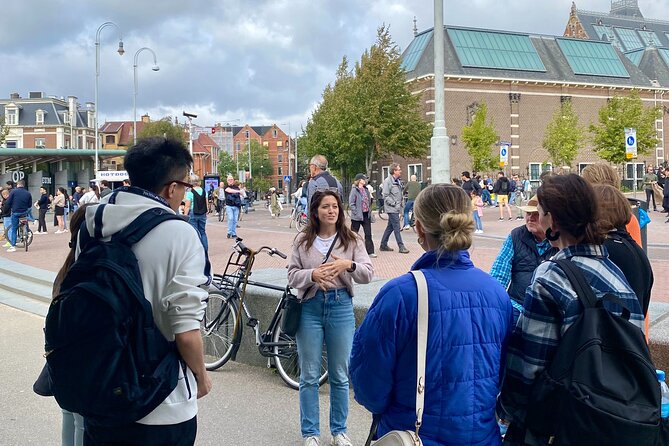
The Spinoza Monument is brief, around 5 minutes, but it carries weight. You learn about the Dutch Jewish philosopher Baruch Spinoza and how his rationalist ideas on religion and politics were considered radical in his time. His thinking later influenced the Enlightenment.
This stop is a reminder that Jewish life in the Netherlands was not only about persecution. It included scholarship, debate, and ideas that shaped Europe. Even in a 5-minute pause, the guide can help you shift from tragedy to continuity.
Stop 6: Joods Verzetsmonument, Jewish resistance in the open
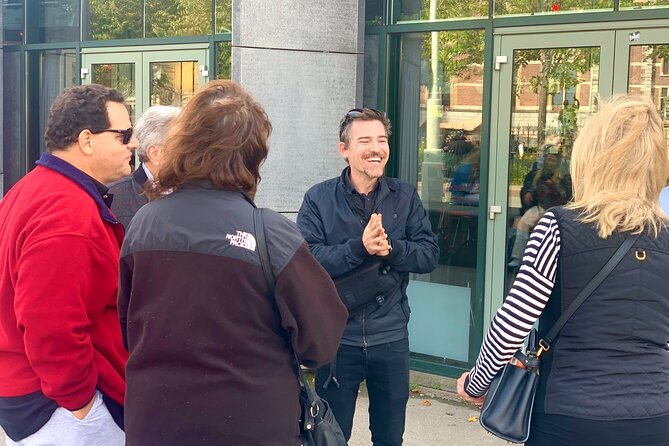
At the Monument vor Joods verzet (Joods Verzetsmonument), you pause at a site erected in 1988 to commemorate Jewish resistance fighters who lost their lives during WWII. The stop also highlights that this location marks the first mass protest against Nazi occupation.
About 10 minutes here is enough to understand the purpose, but not enough to forget it. This is where the tour stops being only about what was taken and starts pointing at what people tried to do, even under brutal risk.
Stop 7: Monument Megadlé Jethomiem, deportation traced in stones
This is one of the most quietly powerful stops. The Monument Megadlé Jethomiem uses stones that trace the outline of an orphanage. From there, Jewish children and caretakers were deported to Sobibor in 1943.
The message is subtle. That is why it works. You are not bombarded with a massive structure, you are guided to see the shape of a place that used to hold lives, then understand how that place became part of the deportation machine.
Plan for a reflective 10 minutes, and let the guide’s explanation slow your pace.
Stop 8: Portuguese Synagoge, then the Jewish Museum across the street
The walk continues to the Portuguese Synagogue area. You admire what was once the world’s largest synagogue, and it functions as a symbol of Amsterdam’s once-thriving Jewish community.
Admission is not included here, and you are not told you will go inside as part of this tour. But the guide points out that the Jewish Museum across the street offers a deeper look into Jewish life, history, and culture in the Netherlands. If this topic grabs you, it is a logical next stop to explore on your own time.
This pause is about 10 minutes, and it is a helpful counterweight to the darker memorials. It puts community and culture back into the picture.
Stop 9: The Dokwerker and the February Strike of 1941
The tour then reaches The Dokwerker, also described as the Memories of the February strike. This statue commemorates the February Strike of 1941, when thousands of workers staged the first public protest in occupied Europe against Nazi persecution.
This stop is around 10 minutes, and it often lands well because it adds an action thread. People protested. People resisted in the public sphere. That does not erase the horror, but it gives you a fuller map of what happened in Amsterdam.
Stop 10: Deaf Memorial, the word Untermenschen made real
Next is the Deaf Memorial, honoring Jewish deaf and hard-of-hearing victims of the Nazi regime from 1940 to 1945. The Nazis labeled these people as Untermenschen, meaning subhuman, and murdered them systematically.
This is a small monument, but it is not small in impact. The guide’s framing can make the difference between reading labels and truly understanding what those labels meant for real people. Plan for about 10 minutes of quiet attention here.
If you are sensitive to heavy subject matter, give yourself a small moment before continuing.
Stop 11: Auschwitz Monument, the shattered mirror effect
Then comes the Auschwitz Monument in Wertheimpark. It uses a shattered mirror design that reflects the sky. The symbolism is tied to the idea that even the heavens were broken by the horrors of Auschwitz and other concentration camps.
This stop is also around 10 minutes, and it can feel oddly literal, even though it is abstract. You may find your brain trying to make sense of reflections while the story stays unresolved and painful.
This is one of those places where you let the guide’s meaning guide you rather than trying to force an emotional conclusion.
Stop 12: National Holocaust Names Monument and Stumbling Stones
The tour ends at the National Holocaust Names Monument and Stumbling Stones. The Names Monument includes engraved names of 102,000 Jewish victims and 220 Roma and Sinti murdered by the Nazis. The Stumbling Stones are small brass plaques embedded in the pavement that mark the last known residence of a deported Holocaust victim.
This ending matters because it brings the story down to specific human traces. It also helps you understand what memorial design can do at ground level. When you look at a name and then imagine an address, you feel how close the tragedy sits to everyday life.
The tour ends at this site, around 10 minutes here, and it is a strong finish if you want your last impression to be about remembering precisely.
Who this tour fits best (and who might want a different plan)
This is a great match if you want context across Amsterdam, not just a single famous building. If you care about how the occupation targeted multiple groups, and you like your history explained in a way that connects places to people, this route will work well.
I’d also point this out: people have described the tour as an excellent alternative when Anne Frank House tickets are not available. That makes sense given this is Anne Frank House exterior only but still gives you a guided story you can use to shape what you learn next.
You might skip or supplement this tour if your main goal is the interior experience of Anne Frank House and you are determined to see every room. This walk is rich in meaning, but it does not replace interior admission.
Should you book Babylon Tours Amsterdam for this walk?
If you are weighing options, I’d book this if you want a memorial-focused route with clear storytelling and a humane pace. The strongest reasons are the coverage of many persecuted groups, the way the stops connect city geography to WWII events, and the fact that most key locations you visit are free to view.
Do book it as a guidance experience, not as a replacement for Anne Frank House entry. If you can get tickets for the house later, even better, because this tour helps you know what you are looking at before you step into the story in a new way.
FAQ
Does the tour include entry to Anne Frank House?
No. The tour includes the Anne Frank House exterior only, and admission tickets are not included.
Are admissions included for other sites on the route?
No. Admission is not included for the Anne Frank House and Portuguese Synagogue. The other memorial stops listed are free to visit.
How long is the tour and is it mostly walking?
It runs about 2 hours 30 minutes and is a walking tour with short stops, generally around 5 to 10 minutes each.
What language is the tour in?
The tour is offered in English.
Where does the tour start and end?
It starts at Westermarkt 60, 1016 DL Amsterdam, Netherlands, and ends at the National Holocaust Names Monument, 1018 DP Amsterdam, Netherlands.
What’s not included in the price?
The tour does not include food and drinks, luggage or coat storage, hotel pickup or drop-off, admission to the Anne Frank House and Portuguese Synagogue, or gratuities.
The Golden Age Still Standing
- Amsterdam Food and Cultural Tour with Tastings
★ 5.0 · 4,315 reviews - Amsterdam: Historic City Centre Canal Cruise
★ 4.3 · 659 reviews - Amsterdam: Haunted History and Ghost Walking Tour
★ 4.5 · 488 reviews - Amsterdam High-End Dutch Food & History Tour – Up to 8 guests
★ 5.0 · 482 reviews
Newest on the canal ring
- Amsterdam Bike Food Tour with Private Guide★ 5.0 · 1 review
- Amsterdam: Rijksmuseum Private Tour with an Art Historian★ 5.0 · 1 review
- Happy B-day Amsterdam! Guided Tour with a History Buff★ 5.0 · 1 review
- Local Foodie Adventure in Amsterdam★ 5.0 · 1 review
- Private Photo Shoot in Amsterdam with a Professional Photographer★ 5.0 · 1 review
- Private day trip to Giethoorn and the Enclosing Dike★ 5.0 · 1 review
- Private Sightseeing Tour to Giethoorn from Amsterdam incl. canal cruise★ 5.0 · 1 review
Anne Frank House Tickets, compared.

Amsterdam Anne Frank: Small-Group Walking Tour & Local Guide
Read our review →
Anne Frank’s Story – Guided Walking Tour through Amsterdam
Read our review →
Anne Frank Guided Walking Tour in DE/EN/IT/ES
Read our review →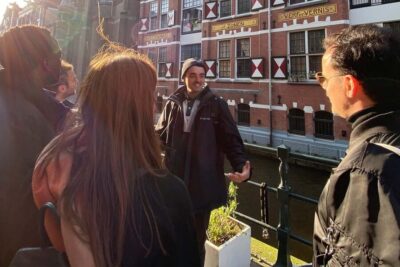
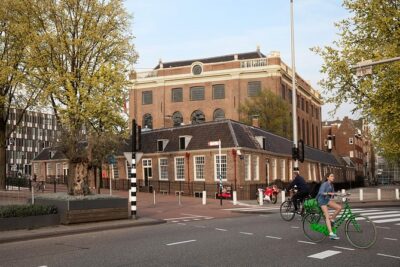
Anne Frank Walking Tour Amsterdam Including Jewish Cultural Quarter
Read our review →
Anne Frank’s Last Walk & See Anne Frank House in Virtual Reality
Read our review →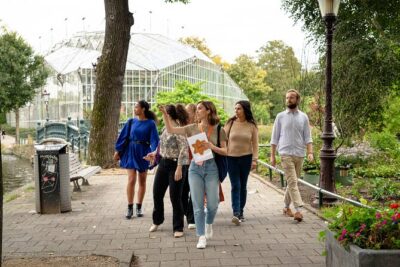
Anne Frank and Jewish Quarter Amsterdam Private Walking Tour
Read our review →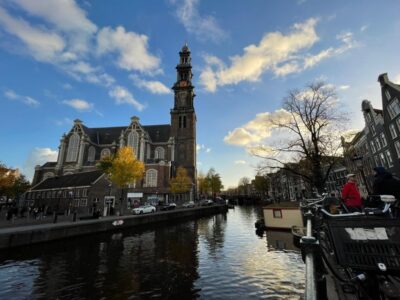
Anne Frank’s Last Walk & Visit Anne’s House in VR
Read our review →Browse the lists this tour appears in