
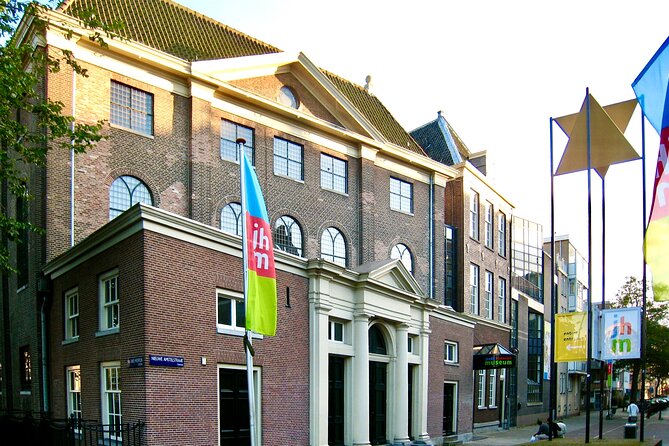
Reviewed · ANNE FRANK HOUSE TICKETS
Anne Frank’s Amsterdam Jewish History WWII Semi-Private 12ppl Max
WWII shadows still hang over Amsterdam’s streets. This semi-private walk threads together Jewish history, resistance, and remembrance with expert local guidance and a smart 2.5-hour pace. You start at the Anne Frank House area, then move through major memorials tied to occupation-era persecution, resistance, and deportations.
Two things I really like: the route is semi-private with a 12-person max, so you get room for real questions, and the stops are selected to make connections, not just check boxes. One thing to consider up front: the tour includes exterior-only views of Anne Frank House, and the Portuguese Synagogue is also not part of paid admission.
In This Review
- Key highlights to look for
- A 12-person Jewish WWII route that stays human, not just factual
- Price and value: what you get for $62.54
- Getting oriented: start at Westermarkt, end at the Names Monument
- Stop-by-stop: what each moment teaches you
- 1) Anne Frank House area, exterior only
- 2) Statue of Anne Frank, with Westerkerk as a backdrop
- 3) Homomonument, a memorial for LGBTQ+ victims
- 4) Dam Square and the National Monument
- 5) Spinoza Monument, Jewish identity through ideas
- 6) Jewish Resistance Monument (Joods Verzetsmonument)
- 7) Monument Megadlé Jethomiem, deported children traced in stone
- 8) Portuguese Synagogue, admire the building, understand the community
- 9) The Dokwerker, the February strike statue
- 10) Deaf Memorial, Jewish deaf and hard-of-hearing victims
- 11) Auschwitz Monument, a shattered mirror effect
- 12) National Holocaust Museum: Names Monument and Stumbling Stones
- The guides: why the small group feel matters
- Practical tips to make your walk easier and more meaningful
- Who should book this WWII Jewish history tour
- Should you book?
- FAQ
- Is this tour semi-private, and what is the maximum group size?
- How long is the tour?
- How much does it cost?
- Is entry to Anne Frank House included?
- Are tickets included for the Portuguese Synagogue and the Jewish Museum area?
- Are the other memorial stops included, or do they require tickets?
- Where do I meet the tour, and where does it end?
- What language is the tour offered in?
- Is free cancellation available?
Key highlights to look for

- Semi-private group size (max 12 people) keeps the tour focused and question-friendly
- Anne Frank House exterior only, with the surrounding context you need to understand the site
- A clear memorial route that connects Jewish victims, resistance, and other targeted groups
- Mostly free-to-view stops, so you are paying primarily for interpretation and wayfinding
- English-speaking expert guide, with time to pause at each moment of remembrance
A 12-person Jewish WWII route that stays human, not just factual
If your Amsterdam travel list includes the words Anne Frank and Holocaust memorial, you already know the setting is heavy. What makes this tour useful is how it handles that weight: it slows you down in the right places, and it gives you the background you need to connect what you see to what happened.
This is built as a walking tour with a total time of about 2 hours 30 minutes. At $62.54 per person, it is not cheap for a city walk, but you are paying for an expert guide to place each stop in context and keep the sequence understandable. When you have only a short window in Amsterdam, a guided route like this can save you from bouncing between scattered sites with no through-line.
The small group size matters. With a 12-person max, the guide can answer questions without turning it into a lecture for a crowd. It also means you can actually hear explanations over street noise, especially at quieter memorial points.
Other walks through Jewish Amsterdam:
- Anne Frank Walking Tour Amsterdam Including Jewish Cultural Quarter
★ 5.0 · 1,879 reviews - Anne Frank and Jewish Quarter Amsterdam Private Walking Tour
★ 5.0 · 684 reviews - Amsterdam: Anne Frank and Jewish Quarter Tour
★ 4.7 · 434 reviews
Price and value: what you get for $62.54
Here is the practical way to think about value on this one.
You are paying for:
- A semi-private guided route across multiple key sites
- Expert local interpretation in English
- A structure that covers Jewish history and WWII remembrance across the city center
- A mobile ticket (so you are not juggling paper)
You are not paying for:
- Entry tickets to the Anne Frank House (exterior only on this tour)
- Entry tickets to the Portuguese Synagogue (admission not included)
- Food and drinks
- Hotel pickup or drop-off
- Gratuities (optional)
- Luggage or coat storage
So the value is strongest if you want the guidance and the story, and you are okay doing some sites from the outside. If you specifically want to go inside the Anne Frank House or inside the Portuguese Synagogue, you will need separate tickets. That does not make the tour bad, it just clarifies what kind of visit this is: a guided understanding walk.
One more real-world note: this tour is often booked ahead, averaging around 81 days in advance. If you are traveling in peak season, treat it like a popular entry-adjacent experience and secure your spot early.
Getting oriented: start at Westermarkt, end at the Names Monument
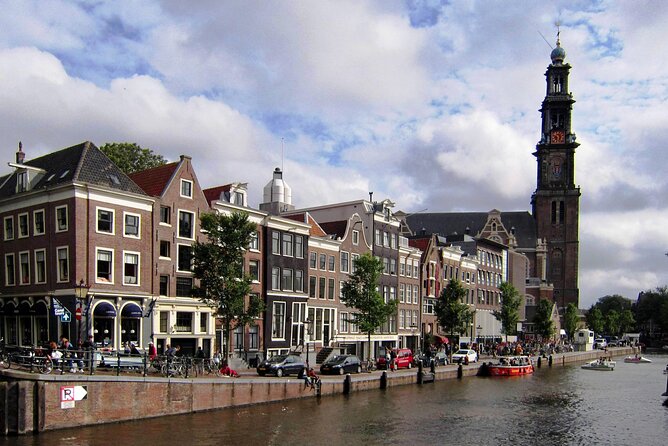
The tour starts at Westermarkt 60, 1016 DL Amsterdam. It ends at the National Holocaust Names Monument, 1018 DP Amsterdam. That ending point is a meaningful place to finish, because the last stretch is where names and deportation traces become the focus.
You should plan for walking on city sidewalks. The pace is not described as extreme, but it does help that the tour asks for moderate physical fitness. Bring your good rain gear. Amsterdam weather can change fast, and memorial stops are usually outdoors.
Logistics you can rely on:
- It runs in English
- It is near public transportation
- Confirmation comes at booking time
- There is no hotel pickup, so you’ll want an easy way to reach Westermarkt (taxi or rideshare works well)
Stop-by-stop: what each moment teaches you
This route is designed as a sequence. Each stop adds a different piece of the WWII Jewish story, plus related persecution and resistance across multiple groups. Some stops are brief, around 10 minutes each, but the guide is there to make that short time count.
Other routes to the Anne Frank House:
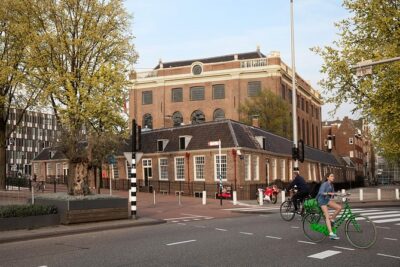
1) Anne Frank House area, exterior only
You begin at the Anne Frank House (listed as exterior only). This is a key start because it anchors everything that follows. You will learn about Anne, her family, and four others who hid from the Nazis for two years.
What matters here is not just the location, it is the framing. The guide helps you understand how the hiding shaped daily life, and how the outside world kept pressing in even when they were not visible.
Heads up: the Anne Frank House admission ticket is not included. You can still do a lot with the exterior orientation, but if you want the full interior experience, plan separate entry.
2) Statue of Anne Frank, with Westerkerk as a backdrop
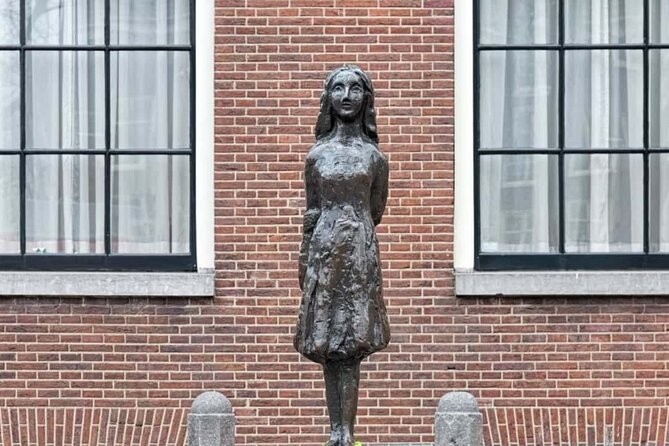
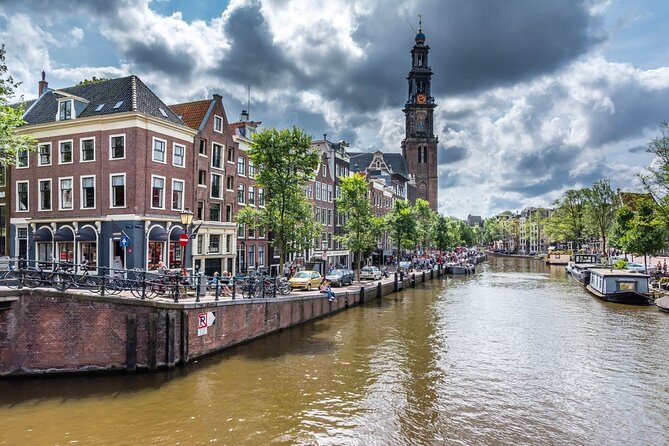
Next is the Statue of Anne Frank. It is set with the Westerkerk church in view. The idea is powerful: the bells she found comforting also reminded her of a world beyond the attic.
This stop works well because it shifts you from the factual details of hiding to the emotional reality of time passing. You’re not just looking at a statue, you are looking at how a single person experienced a city and a country that were changing under occupation.
3) Homomonument, a memorial for LGBTQ+ victims
Then you move to the Homomonument, the first memorial in the world dedicated to persecuted LGBTQ+ individuals. It commemorates those who lost their lives under Nazi persecution.
Why this belongs on a Jewish WWII tour: the Nazi system targeted multiple groups using overlapping policies of exclusion, humiliation, and murder. Seeing this memorial early helps you understand that this period was not a single story with one victim group, even though it is often told that way.
4) Dam Square and the National Monument
At Dam Square, you walk through one of Amsterdam’s most recognizable public spaces, which matters because public spaces were also used for power and control. The tour notes that a Nazi recruitment office once stood here.
Then you pay respects at the National Monument, a cenotaph honoring victims of World War II and later conflicts. It is a reminder that the consequences of persecution extend beyond individual events into how a nation remembers.
5) Spinoza Monument, Jewish identity through ideas
The Spinoza Monument spot is shorter, around 5 minutes. You learn about Baruch Spinoza, a Dutch Jewish philosopher whose rationalist ideas on religion and politics were considered radical for his time, and later influenced the Enlightenment.
This stop is not a detour. It gives you context for Jewish intellectual life and the longer arc of Jewish presence in the Netherlands. Without it, the story can feel like it only begins with persecution. With it, you see a deeper timeline.
6) Jewish Resistance Monument (Joods Verzetsmonument)
Now you reach the Jewish Resistance Monument, erected in 1988. It commemorates Jewish resistance fighters who lost their lives during WWII, and it marks the first mass protest against Nazi occupation.
This is where resistance becomes visible in a physical way. It is easy to remember victims. Resistance is harder. This stop corrects that imbalance by highlighting action, risk, and collective refusal.
7) Monument Megadlé Jethomiem, deported children traced in stone
The Monument Megadlé Jethomiem is subtle and moving. Stones trace the outline of an orphanage from which Jewish children and their caretakers were deported to Sobibor in 1943.
You get the sense of absence made measurable. Even if you only spend a short time here, the shape helps your brain hold a specific place and a specific loss, rather than an abstract number.
8) Portuguese Synagogue, admire the building, understand the community
Next is the Portuguese Synagogue. You are there to admire what was once described as the world’s largest synagogue, a symbol of Amsterdam’s once-thriving Jewish community.
The tour also points out that the Jewish Museum is across the street for deeper insight into Jewish life, history, and culture in the Netherlands. That is a helpful suggestion because it gives you an easy next step if you want to spend extra time after the walking portion.
Heads up: Portuguese Synagogue admission is not included on this tour.
9) The Dokwerker, the February strike statue
At The Dokwerker (Memories of the February strike), you reflect on the February Strike of 1941, when thousands of workers staged the first public protest in occupied Europe against Nazi persecution.
What I like about placing this after the synagogue stop is pacing. The tour moves from community and cultural life into action and protest. It reminds you that persecution did not stop everyday people from pushing back, even at great risk.
10) Deaf Memorial, Jewish deaf and hard-of-hearing victims
Then you visit the Deaf Memorial, honoring Jewish deaf and hard-of-hearing victims of the Nazi regime from 1940 to 1945. It references how Nazis labeled deaf people as Untermenschen and then systematically murdered them.
This is one of those stops that makes you pause longer than the clock suggests. It broadens the story beyond the victims we usually picture. If you care about accuracy and full inclusion in history, this stop is especially important.
11) Auschwitz Monument, a shattered mirror effect
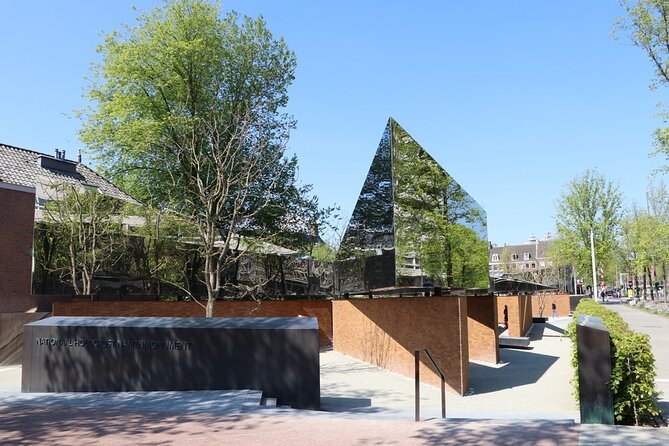
In Wertheimpark, you find the Auschwitz Monument. A shattered mirror memorial reflects the sky, symbolizing how the heavens themselves were broken by the horrors of Auschwitz and other concentration camps.
This stop is quiet by design. There’s a reason the tour does it after the Deaf Memorial. You move from different targeted groups and then into a broader symbol of mass murder and broken futures.
12) National Holocaust Museum: Names Monument and Stumbling Stones
Finally, you reach the National Holocaust Names Monument and the Stumbling Stones within the National Holocaust Memorial area.
The tour highlights:
- Names engraved for 102,000 Jewish victims and 220 Roma and Sinti murdered by the Nazis
- Stumbling Stones, small brass plaques embedded in the pavement marking the last known residence of a deported Holocaust victim
This is the most concrete closing moment. Stumbling Stones turn the concept of deportation into street-level geography. You are not just learning about history, you are seeing how it touched real addresses.
The guides: why the small group feel matters
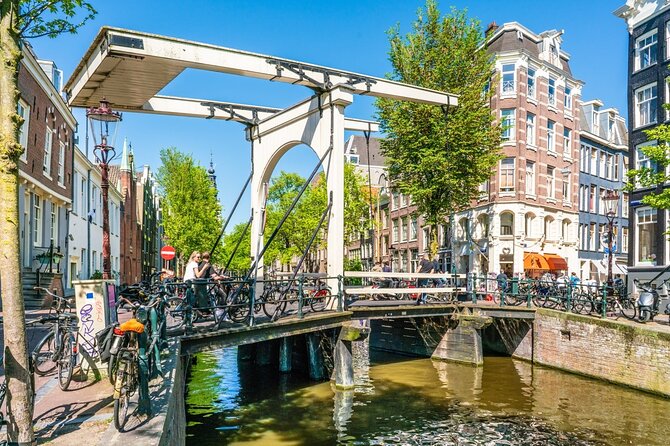
This tour is described as having an expert local guide, and that is usually the difference between a list of sites and a route you actually remember. The experience is set up to allow questions, which is especially useful when you hit difficult topics like deportations, resistance, and targeted persecution beyond the usual narratives.
In particular, guides named Anita and Klaus are highlighted for strong storytelling and clear answers, including keeping the tour going even in bad weather. That is a practical skill in Amsterdam, where rain can turn a walking plan into a slippery mess if the guide does not manage time and transitions well.
If you want a tour where you can ask, pause, and understand the why behind each stop, the semi-private group size is one of the biggest selling points.
Practical tips to make your walk easier and more meaningful
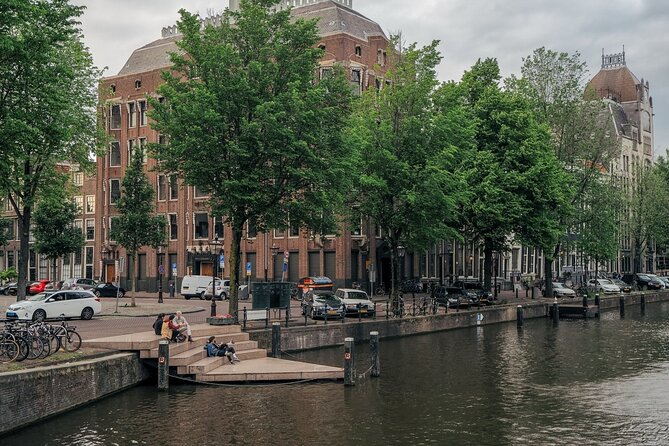
Here are the details that help you enjoy this kind of memorial-focused tour.
Bring a light layer and rain protection. Even if you plan for clear skies, Amsterdam can change fast. MemoriaI stops are mostly outdoors, so you want to stay comfortable.
Arrive on time at Westermarkt. This route chains multiple stops, and if you show up late you lose context. The start point matters because the tour builds meaning as it goes.
Plan for outside viewing at major sites. If Anne Frank House and the Portuguese Synagogue are must-inside stops, treat this as the guide-based orientation version. You can add interior visits on separate ticketed days.
Take photos thoughtfully. Many memorials are designed for quiet respect. If you photograph, keep it brief and let the moment stay what it is: remembrance.
Ask one clear question at the right time. With a 12-person max, you can usually get space to ask. If you are unsure what to ask, a good default is: What does this monument tell us about who was targeted, and how?
Who should book this WWII Jewish history tour
You’ll likely love this tour if:
- You want a guided memorial route that connects many parts of the Jewish WWII story
- You prefer a small group where questions are possible
- You have limited time and need structure
- You want more than famous names, you want real context for resistance, deportations, and remembrance
You might skip it if:
- You only want fully ticketed museum interiors and cannot do exterior viewing
- You want a longer sit-down museum experience rather than a walking sequence
- You are traveling with very limited walking ability, since this is a city-center walking itinerary
Should you book?
Yes, if you want a thoughtful, organized way to understand Amsterdam’s Jewish WWII story across multiple memorials and remembrance sites. The semi-private size, English expert guide, and the way the route mixes Anne Frank, Jewish community life, resistance, and broader Nazi persecution make it more than a sightseeing loop.
Book it with one clear expectation: Anne Frank House and the Portuguese Synagogue are exterior or viewing-focused here, and tickets for those interiors are not included. If that fits your plan, this is a strong value for a high-impact route that ends at the Names Monument where the history becomes names you can read.
FAQ
Is this tour semi-private, and what is the maximum group size?
Yes. It is a semi-private walking tour with a maximum of 12 travelers.
How long is the tour?
It lasts about 2 hours 30 minutes (approx.).
How much does it cost?
The price is $62.54 per person.
Is entry to Anne Frank House included?
No. The tour includes Anne Frank House exterior only, and admission tickets are not included.
Are tickets included for the Portuguese Synagogue and the Jewish Museum area?
No. Portuguese Synagogue entry is not included. The Jewish Museum is mentioned as nearby for deeper insight, but admission details are not included for it on this tour.
Are the other memorial stops included, or do they require tickets?
For the listed stops other than Anne Frank House and the Portuguese Synagogue, the tour indicates admission is free at each of those points.
Where do I meet the tour, and where does it end?
You start at Westermarkt 60, 1016 DL Amsterdam. The tour ends at the National Holocaust Names Monument, 1018 DP Amsterdam.
What language is the tour offered in?
The tour is offered in English.
Is free cancellation available?
Yes. You can cancel for a full refund if you cancel at least 24 hours before the experience start time.
The Golden Age Still Standing
- Amsterdam Food and Cultural Tour with Tastings
★ 5.0 · 4,315 reviews - Amsterdam: Historic City Centre Canal Cruise
★ 4.3 · 659 reviews - Amsterdam: Haunted History and Ghost Walking Tour
★ 4.5 · 488 reviews - Amsterdam High-End Dutch Food & History Tour – Up to 8 guests
★ 5.0 · 482 reviews
Newest on the canal ring
- Amsterdam Bike Food Tour with Private Guide★ 5.0 · 1 review
- Happy B-day Amsterdam! Guided Tour with a History Buff★ 5.0 · 1 review
- Amsterdam: Rijksmuseum Private Tour with an Art Historian★ 5.0 · 1 review
- Local Foodie Adventure in Amsterdam★ 5.0 · 1 review
- Private Photo Shoot in Amsterdam with a Professional Photographer★ 5.0 · 1 review
- Private day trip to Giethoorn and the Enclosing Dike★ 5.0 · 1 review
- Private Sightseeing Tour to Giethoorn from Amsterdam incl. canal cruise★ 5.0 · 1 review
Anne Frank House Tickets, compared.

Amsterdam Anne Frank: Small-Group Walking Tour & Local Guide
Read our review →
Anne Frank’s Story – Guided Walking Tour through Amsterdam
Read our review →
Anne Frank Guided Walking Tour in DE/EN/IT/ES
Read our review →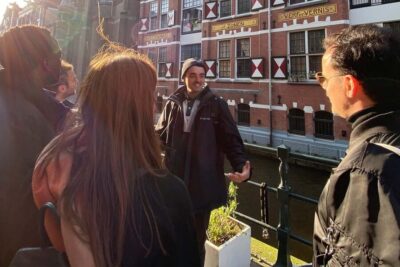
Anne Frank Walking Tour Amsterdam Including Jewish Cultural Quarter
Read our review →
Anne Frank’s Last Walk & See Anne Frank House in Virtual Reality
Read our review →
Anne Frank and Jewish Quarter Amsterdam Private Walking Tour
Read our review →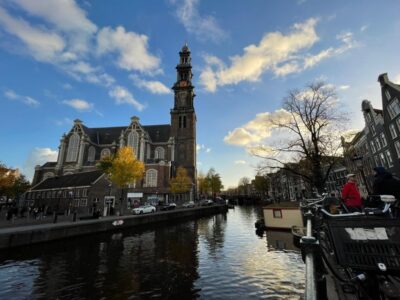
Anne Frank’s Last Walk & Visit Anne’s House in VR
Read our review →Browse the lists this tour appears in