
Reviewed · HISTORICAL TOURS
History & culture tour in Amsterdam with a local
Amsterdam makes more sense on foot. This 2-hour history and culture walk with a local guide stitches together the city’s trading rise, its religious past, and today’s street life, with a classic Dutch stroopwafel break along the way. I like the small group size because it keeps the chat going, not just the walking.
I also appreciate how much the guide adjusts to you. When I’ve experienced the tour with guides like Manouk and Malik, the stories felt pointed and practical, from why Amsterdam tolerated unusual religious communities to how canals shape daily movement.
One thing to consider is time. Each stop is short, so you’ll get highlights, not long sittings at every landmark. Come with a few must-sees in mind and you’ll be happy with the pace.
In This Review
- Key things I’d plan for on this Amsterdam tour
- A 2-Hour Amsterdam History and Culture Walk, Built for Real Questions
- Beursplein: How Amsterdam’s Trading Power Took Shape (and Even the Name)
- Dam Square and the Royal Palace: Power, War, and the City’s Centerline
- Begijnhof: A Quiet Courtyard That Explains Amsterdam’s Tolerance
- House on the Three Canals and the Bicycle Bridge Concept
- Nieuwmarkt: Waag, Guilds, and the Dancing Houses
- Zeedijk and Chinatown’s Turning Point: Danger to Favorite Street
- Centraal Station: Stunning Architecture and the Meaning of Connections
- Price and Value: Is $30.07 for Two Hours Fair?
- Should You Book This Amsterdam Local Tour?
- FAQ
- How long is the Amsterdam walking tour?
- Is the tour offered in English?
- Where does the tour start?
- What is the group size?
- What’s included during the tour?
- Can I cancel for free?
- Are service animals allowed?
Key things I’d plan for on this Amsterdam tour
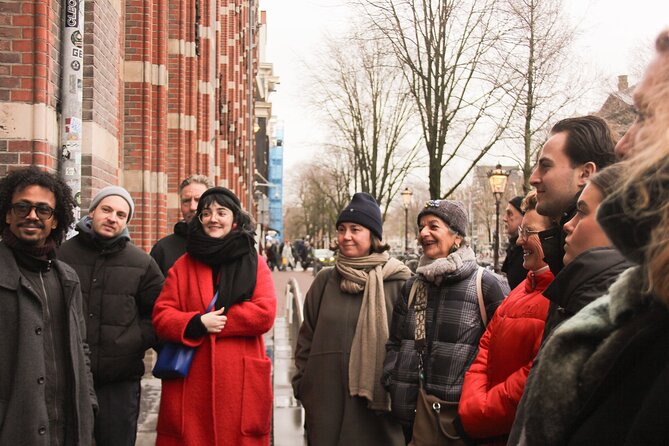
- Small group (max 15) means you get real interaction, not a lecture.
- Stroopwafel stop gives you a proper Dutch break during the walk.
- Seven focused stops cover trade, war memory, religion, canals, guilds, and transport.
- Begijnhof courtyard time is your calm moment between busy squares.
- Canals and bicycles get explained in plain language, not just photos.
- Centraal Station architecture lands as a payoff for the whole route.
A 2-Hour Amsterdam History and Culture Walk, Built for Real Questions
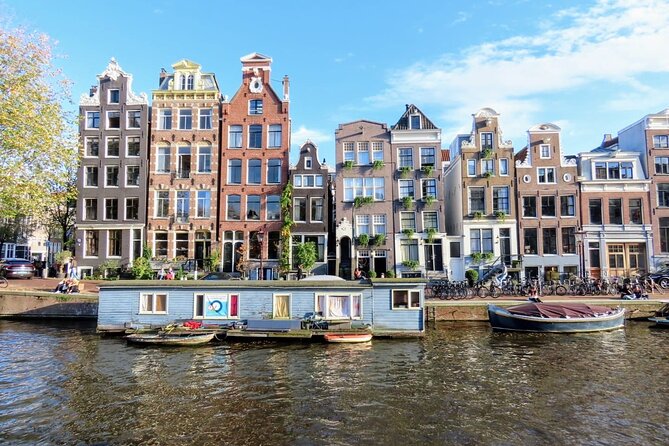
This is the kind of tour I recommend when you want to understand Amsterdam quickly, without turning your day into a museum slog. You’ll be walking between major central areas, with the guide explaining what you’re seeing and why it mattered. The pace is designed so you cover several neighborhoods and landmarks, usually without feeling rushed off the street.
The “small group” part is more than a comfort perk. With a group of up to 15 people, you can ask follow-ups when something clicks, like how a fishing settlement became a global economic center in the 17th century, or why certain streets changed so dramatically over time.
You’ll also be in good shape for the tour format. The route is presented as a walking tour around Amsterdam, roughly 2 to 2.5 hours, with frequent short stops. If you like history that’s tied to physical places, this works well. If you prefer slower wandering where you can linger for 30 minutes at one spot, you might want to pair this with extra solo time afterward.
More of the Golden Age still standing:
- Amsterdam Food and Cultural Tour with Tastings
★ 5.0 · 4,315 reviews - Amsterdam: Historic City Centre Canal Cruise
★ 4.3 · 659 reviews - Amsterdam: Haunted History and Ghost Walking Tour
★ 4.5 · 488 reviews
Beursplein: How Amsterdam’s Trading Power Took Shape (and Even the Name)
Your first stop is Beursplein, and it’s a smart opener because it frames Amsterdam as a place that learned to trade hard and think long-term. Here you’ll hear how the city got its name and what’s behind the idea of Amsterdam growing from a fishing village into something much bigger.
The big picture to listen for is the jump into the 17th century. This was the era when Amsterdam became the kind of global hub that drew attention, money, and ships from far beyond the Netherlands. Even if you’re not a “numbers and dates” person, the guide’s job is to connect that era to what you can still sense around you in central Amsterdam.
Practical tip: at Beursplein, take a second look around for how business and movement cluster here. It helps you understand why later landmarks like Dam Square and Centraal Station feel like parts of one system.
A drawback to keep in mind: because you only get about 10 minutes at this stop, you won’t leave with a full timeline. You’ll leave with the key storyline. If you want deeper detail, save that for museums or reading later.
Dam Square and the Royal Palace: Power, War, and the City’s Centerline
Then you shift to Dam Square, the classic heart of Amsterdam. This is where the tour’s tone can change in a good way, because Dam Square isn’t just scenic, it’s symbolic. You’ll hear about its importance in the city’s formation, and you’ll admire the Royal Palace on the Dam.
After that, the guide brings in the Second World War context. That adds weight to the square, because you start to see why public spaces matter beyond tourism. They hold memory, politics, and identity in the same few blocks.
Here’s what I find useful: Dam Square becomes an anchor point. Once you understand it as the city’s formation center plus its modern national stage, you can navigate the rest of Amsterdam with more meaning.
Practical tip: if your legs feel heavy at this point, it’s a good place to pause, breathe, and reset your focus. Short stops are built into the tour, so you’re not stuck standing for long. You just need to be ready to walk again quickly.
Begijnhof: A Quiet Courtyard That Explains Amsterdam’s Tolerance
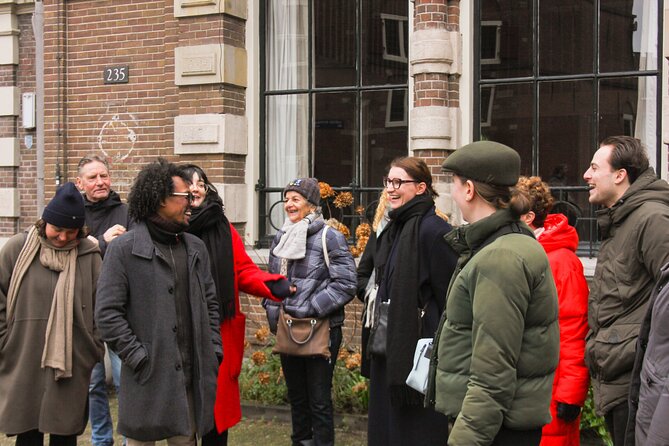
Next comes Begijnhof, and this is the tour’s “slow down” stop. You’ll see a lovely, serene courtyard, and the guide explains the religious history behind it.
This is not a vague spirituality lecture. The key idea is Amsterdam’s tolerance, shown through the way this place functioned across time. You’ll also learn that Begijnhof includes one of the oldest houses in Amsterdam, plus a reference to two wooden cottages, including the one you can see here.
Why this stop matters: Amsterdam has a reputation you might’ve heard before, but Begijnhof gives you a concrete example. It shows tolerance as something practical, not just a slogan.
Watch-outs: Begijnhof is peaceful, but it’s also easy to rush through if you’re thinking about the next photo. Let yourself absorb the quiet. Take a moment to look at the courtyard from different angles, since that’s where the serenity becomes real.
If you’re the type who likes history as atmosphere, this is often the favorite stop for people. It gives your brain a break from the louder city squares.
A different use for the same hours in Amsterdam:



House on the Three Canals and the Bicycle Bridge Concept
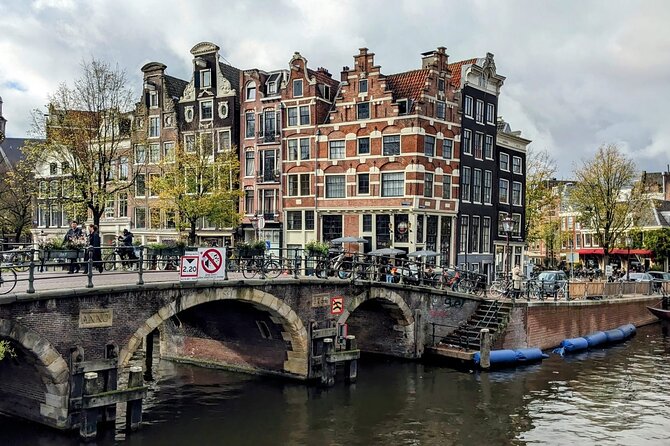
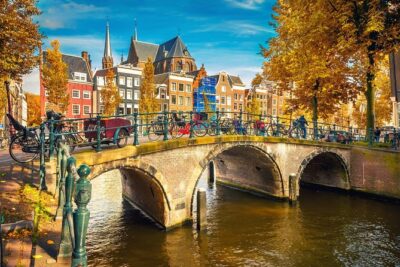
After the calm of Begijnhof, you move back into the canal logic of Amsterdam. At the House on the Three Canals, you’ll see a structure that sits on three canals. It’s one of those architectural facts that feels odd at first, then makes perfect sense once you understand the canal layout.
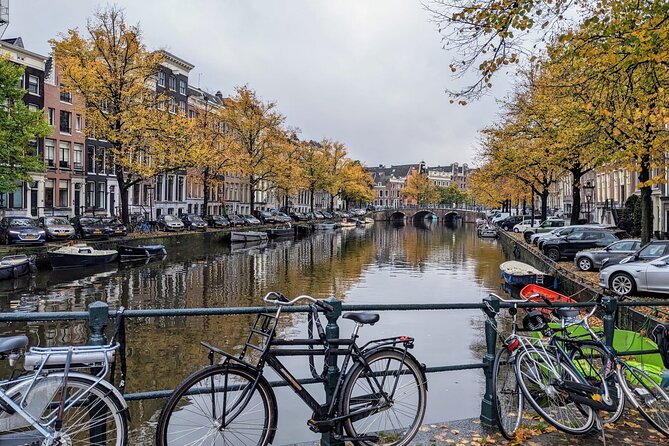
The guide also mentions the bicycle bridge. That part is worth listening to carefully if you care about how people actually live. Amsterdam isn’t only about canals as scenery, it’s canals as infrastructure. The way crossings work, and how cyclists fit into that system, is part of why getting around feels efficient to locals.
This stop is short (about 10 minutes), so you’re mainly learning the concept rather than collecting details. Still, it’s a memorable turning point because it connects Amsterdam’s physical design to daily movement.
Practical tip: if you’re carrying a big camera bag, this is a good place to keep it secure and move efficiently. You’ll get better views by staying ready to shift positions with your group.
Nieuwmarkt: Waag, Guilds, and the Dancing Houses
Now you land in Nieuwmarkt, where the tour explains how old city structures turned into civic and economic spaces. You’ll discover the Waag, described as one of the old city gates that later became a guild hall.
Guilds might not sound exciting at first, but this stop makes them understandable. You’ll learn about their importance in Amsterdam, and you’ll connect guild power to how trades organized themselves and supported the city’s economy. It’s a reminder that cities didn’t function on money alone. They ran on organized skills and groups.
You’ll also see the Dancing Houses. This is one of those Amsterdam visual ideas that locals talk about, and the guide’s job is to tell you what you’re actually looking at and why it’s known this way.
What to watch for: the tour doesn’t ask you to memorize architecture. It guides you to the meaning behind it. That makes the stop feel less like trivia and more like a map of how Amsterdam worked.
Potential drawback: because there are multiple points squeezed into a compact time window here, you might miss small details if you’re distracted. Keep your attention on the guide’s cues, then do a quick extra look after your group moves on.
Zeedijk and Chinatown’s Turning Point: Danger to Favorite Street
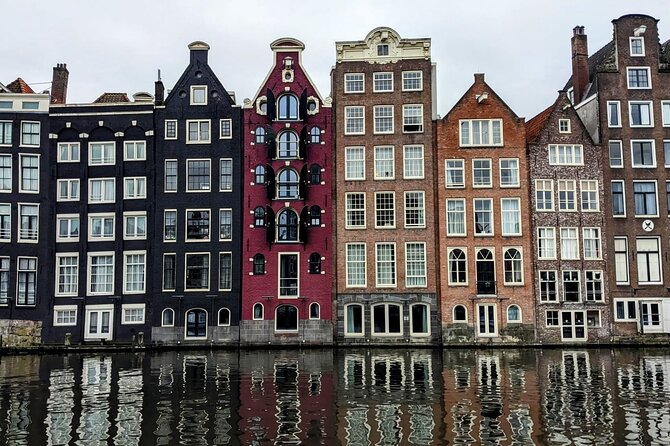
Zeedijk is where the tour shifts from big institutions to street-level change. You’ll learn about Chinatown on this street, including that it was once the most dangerous place in Amsterdam during the 1970s.
That historical contrast is a strong lesson. It shows how neighborhoods can be shaped by social conditions, public policy, and community resilience. Then the tour explains how the area declined in that period of trouble and how the street transformed into a favorite spot for many Amsterdammers.
I like this stop because it balances the grand storyline of trade and palaces with real human change. It also makes the “now” more meaningful, because you see that today’s vibe isn’t permanent by default. People built the recovery, and the street kept evolving.
Practical tip: as you walk, notice the mix of businesses and street energy. It’s an easy way to connect the historical context to what you see right now, without needing to guess.
Short-stop reality: this is another around-10-minute stop. If you want to linger in Chinatown later for food or coffee, treat this as your orientation. The tour helps you understand where to point your feet next.
Centraal Station: Stunning Architecture and the Meaning of Connections
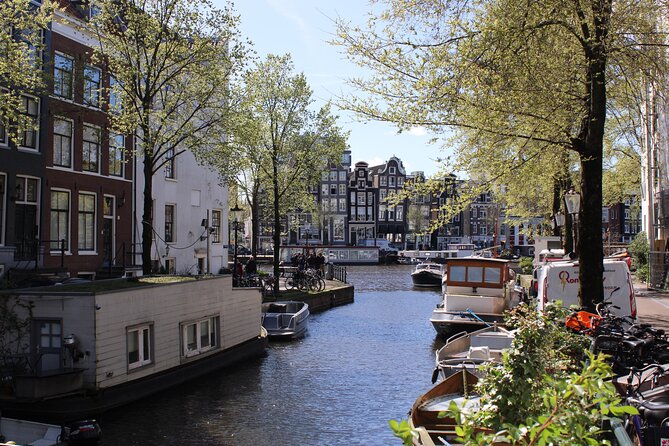
The final stop is Centraal Station, and it’s a strong closer. You’ll explore one of Amsterdam’s most striking buildings, known for impressive architecture. For many people, this is when the walking tour starts to feel like a complete story, not just disconnected stops.
Then the guide ties the station to centuries of transport. You’ll learn why the station’s location played a crucial role for centuries as a transportation hub, and how it became a historical symbol of connection and prosperity.
This matters because it loops back to the earlier theme at Beursplein. Amsterdam rises through trade. It connects through movement. Centraal Station is the physical proof of that idea.
Practical tip: if you’re arriving for the first time, Centraal Station can feel overwhelming. This tour gives you the context first, so you’ll navigate with confidence afterward. Pay attention to how the station sits in the city, not just how it looks.
Price and Value: Is $30.07 for Two Hours Fair?
At $30.07 per person, you’re paying for a guided storyline that covers multiple key places in central Amsterdam in about 2 to 2.5 hours. You’re also getting a mobile ticket and a classic Dutch stroopwafel as part of the experience. That snack sounds small, but it’s a real value add because it marks a break in the walk and keeps energy up without you having to hunt for a café.
The best part is how the tour fits first-day needs. If you’ve got limited time and you want an informed starting point, this is efficient. A self-guided walk can work, but you’ll miss the connections. The guide’s explanations help you see why these stops belong together, from trade origins to wartime memory to transport.
Who gets the best value from this?
- History lovers who want a practical overview tied to visible places
- People on a first trip who want orientation fast
- Anyone who likes small group discussion rather than a big crowd tour
Who might feel less satisfied?
- You want lots of time at fewer sites (this tour is built for breadth)
- You prefer to read maps and plaques on your own, with minimal guiding
Should You Book This Amsterdam Local Tour?
Yes, if your goal is to understand the city quickly and enjoy a guided walk that stays human-sized. I like that it hits major themes you’ll keep encountering while exploring Amsterdam, trade and economics at Beursplein, national symbolism at Dam Square, religious tolerance at Begijnhof, canal life in the center, guild power around Nieuwmarkt, neighborhood change on Zeedijk, and the city’s connection story at Centraal Station.
Book it especially if you want a first-day plan that doesn’t require museum tickets or heavy planning. The route stays walkable, the group stays small, and you get a thoughtful Dutch treat during the walk.
If you’re already an Amsterdam expert and only care about one hyper-specific topic, you may not feel stretched enough. But for most visitors, this is a smart way to get oriented and grounded in what Amsterdam is actually about.
FAQ
How long is the Amsterdam walking tour?
It lasts about 2 hours, and it may run up to around 2.5 hours depending on the pace and how the group moves between highlights.
Is the tour offered in English?
Yes. The tour is offered in English.
Where does the tour start?
The tour starts at Beursplein, 1012 JW Amsterdam, Netherlands.
What is the group size?
The tour has a maximum of 15 travelers.
What’s included during the tour?
You’ll walk between key historic spots with a local guide, and you’ll enjoy a classic Dutch stroopwafel along the way. You also receive a mobile ticket.
Can I cancel for free?
Yes, you can cancel for a full refund if you cancel at least 24 hours in advance. If you cancel less than 24 hours before the start time, the amount paid is not refunded.
Are service animals allowed?
Yes, service animals are allowed on this experience.
Newest on the canal ring
- Amsterdam Bike Food Tour with Private Guide★ 5.0 · 1 review
- Amsterdam: Rijksmuseum Private Tour with an Art Historian★ 5.0 · 1 review
- Happy B-day Amsterdam! Guided Tour with a History Buff★ 5.0 · 1 review
- Local Foodie Adventure in Amsterdam★ 5.0 · 1 review
- Private Photo Shoot in Amsterdam with a Professional Photographer★ 5.0 · 1 review
- Private day trip to Giethoorn and the Enclosing Dike★ 5.0 · 1 review
- Private Sightseeing Tour to Giethoorn from Amsterdam incl. canal cruise★ 5.0 · 1 review
Historical Tours, compared.

Amsterdam Food and Cultural Tour with Tastings
Read our review →

Amsterdam High-End Dutch Food & History Tour – Up to 8 guests
Read our review →

Anne Frank and the Jewish History of Amsterdam Private Tour
Read our review →
Luxury Canal Cruise with Historic VR Experience
Read our review →Browse the lists this tour appears in