
Reviewed · RIJKSMUSEUM TICKETS
Private Family Tour at the Rijksmuseum for Kids and Teens
Art can feel huge. This tour makes it manageable for kids.
I love how the guide turns the Rijksmuseum into a kid-and-teen friendly story instead of a list of masterpieces. I also like that you get a reserved, guided visit with a guide who adapts as you move room to room. The one thing to factor in is the price, since $370.82 per person adds up fast, especially if you are traveling as a bigger group.
If your family likes learning in small bites, this works well. You’ll cover big names like Rembrandt and Vermeer, plus quieter corners like the museum’s historic library and period interiors. The tour is private, wheelchair friendly, and timed for about 2 hours 30 minutes, but you will still do some walking and stand-and-look time.
In This Review
- Key Highlights You Should Know Before You Go
- Why This Rijksmuseum Family Tour Works So Well
- Price and Timing, and What the 2.5 Hours Really Gives You
- Getting Started: Cobra Café Meeting Point and Day-Of Reality
- How Your Guide Builds a Route Inside the Rijksmuseum
- Stop 1 at the Rijksmuseum: Nightwatch, Jewish Bride, and Syndics
- The Nightwatch (Rembrandt)
- The Jewish Bride (Rembrandt)
- The Syndics of the Drapers’ Guild
- Vermeer’s The Milkmaid: Learning to Look in Detail
- The 19th-Century Library and the Calm Middle of the Tour
- The 17th-Century Dollhouses, Globes, Ship Replica, and Delft Ceramics
- What It Feels Like With Real Guides: Cecile and Josie B
- Wheelchair Friendly, But Plan for Walking and Security
- Is This Better Than Exploring on Your Own?
- Who Should Book This Rijksmuseum Tour
- Should You Book This Tour?
- FAQ
- How long is the Private Family Tour at the Rijksmuseum?
- Is admission included?
- What is included in the tour price?
- Are temporary exhibitions included?
- What language is the tour offered in?
- Where do we meet and where does the tour end?
- Is the museum visit wheelchair friendly?
- Are hotel pickup and drop-off included?
Key Highlights You Should Know Before You Go
- Private guide for your family so questions do not get lost in a crowd
- Reserved entry included, which is a real time-saver at the Rijksmuseum
- Rembrandt and Vermeer focus with The Nightwatch and The Milkmaid on the route
- Hands-on feeling without touch through close looking at details and textures
- Historic library stop that gives everyone a calm break from the main galleries
- Family-sized finale with dollhouses, globes, ship replicas, and Delft ceramics
Why This Rijksmuseum Family Tour Works So Well
The Rijksmuseum can overwhelm. Even adults can get that feeling of, Okay, where do we start? This is a smart fix: you get a guide who chooses a path, then teaches you how to see what you are looking at.
What I like most is the balance. You are not stuck with just the famous faces and dates. You get story, context, and visual clues that help kids stay with it. The two best parts from guide feedback were that they tailor the visit to kids’ interests, and they build themes across rooms so it feels like one connected journey.
Private also changes the mood. You are not negotiating with strollers or trying to hear over other families. You can move at your pace, pause when something catches a child’s eye, and ask follow-up questions without worrying the group behind you will get angry.
More ways into the Rijksmuseum:
- Amsterdam: Rijksmuseum Entry Ticket
★ 4.7 · 29,512 reviews - Amsterdam: City Canal Cruise and Rijksmuseum
★ 4.5 · 2,226 reviews - Rijksmuseum Amsterdam Small-Group Tour with Private Upgrade
★ 4.5 · 1,547 reviews
Price and Timing, and What the 2.5 Hours Really Gives You
At $370.82 per person for about 2 hours 30 minutes, this is not a casual add-on. You are paying for three main things:
1) Time saved with reserved entry, plus a guided route that avoids aimless wandering.
2) A guide who adapts, which matters for kids and teens. Art museums are easier when the explanations match the age.
3) All entry fees included, so you are not juggling ticket purchases mid-trip.
The route also covers a good mix of work that draws attention fast and spaces that slow things down. You get major paintings early, then a calmer break in the 19th-century library, then decorative and playful objects like dollhouses, globes, and Delft ceramics. That rhythm is smart for families.
One note: the tour does not include temporary exhibitions. If you are traveling specifically for a special show, plan to pair this with another timed ticket on your own day.
Getting Started: Cobra Café Meeting Point and Day-Of Reality
Your tour starts at Cobra Café, Hobbemastraat 18, 1071 ZB Amsterdam, then ends at the Rijksmuseum, Museumstraat 1, 1071 XX Amsterdam.
That start matters. I like having a clear, calm meeting point that is not inside the museum chaos. It also helps if you are using public transit, since the tour is listed as being near public transportation.
Here are the practical museum rules you should plan around:
- No large bags or suitcases inside the museum. Only handbags or small thin bag packs go through security.
- Appropriate dress is required for entry into some sites on the tour.
- Expect that security lines can form. Even with reserved entry, you may still see waiting in some areas.
- Some rooms may have quiet or restricted rules for speaking, and your guide will explain this before you enter.
If you want the smoothest experience, travel light. For families, that usually means packing a small bag you can keep with you, and skipping bulky backpacks.
How Your Guide Builds a Route Inside the Rijksmuseum
This tour is a private guided museum visit with your guide exclusively for your group. That sounds obvious, but inside a big museum it is huge. Your guide can do real-time adjustments like:
- If a child is stuck on one detail, you can follow that thread.
- If a teen wants more meaning behind the scene, the guide can slow down and explain.
- If you need a short pause, you can take it without turning into a moving target.
From the best feedback I saw, guides (like Cecile and Josie B) do something subtle but powerful: they set up a theme, then carry it from room to room. So the museum does not feel like separate rooms of unrelated art. It feels like one story with different chapters.
Some other canal-ring outings to set against this


Stop 1 at the Rijksmuseum: Nightwatch, Jewish Bride, and Syndics
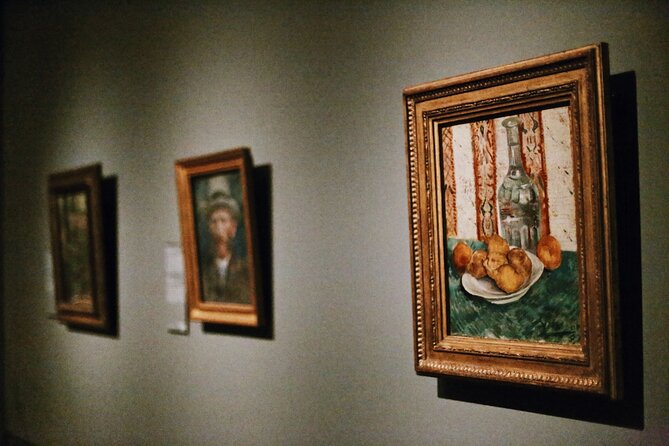
You start with some of the Rijksmuseum’s biggest story starters. Expect a fast ramp-up, not a slow, silent march.
The Nightwatch (Rembrandt)
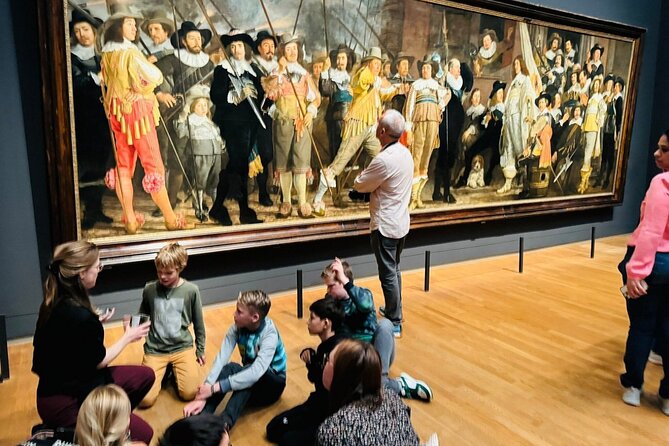
The Nightwatch is a perfect opener because it feels like action. Your guide will point out how Rembrandt builds drama through light and shadow, turning a militia group into a scene with motion. For kids, that usually reads as, People are doing things, not just standing still for a painting.
Practical tip: when the guide points to lighting or faces, let kids answer first. That keeps them engaged and helps them learn the visual cues faster.
The Jewish Bride (Rembrandt)
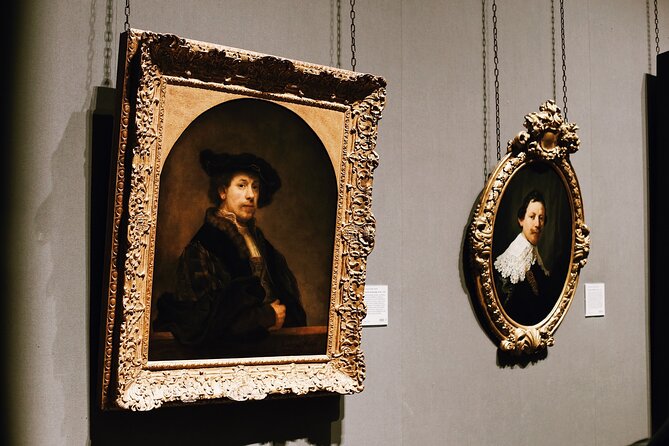
Then comes The Jewish Bride, a portrait that shifts the tone. Instead of action, you get tenderness and closeness. This is where you see rich surface details and a warm glow that makes the artwork feel intimate.
For many families, this stop is the first time a child realizes portraits are not only about looks. They can be about relationships and emotion.
The Syndics of the Drapers’ Guild
Next, the Syndics of the Drapers’ Guild brings you to group portrait realism. The dignified leaders are painted with a sense of solidity, and the composition makes them feel like a team that has agreed to be remembered. For kids, it can click as, This is like a serious family photo for grown-ups.
Potential drawback here: group portraits can be harder for very young children if the focus stays too formal. The good part is a private guide can change the pace so the focus lands on recognizable human features, expressions, and the way people are arranged.
Vermeer’s The Milkmaid: Learning to Look in Detail
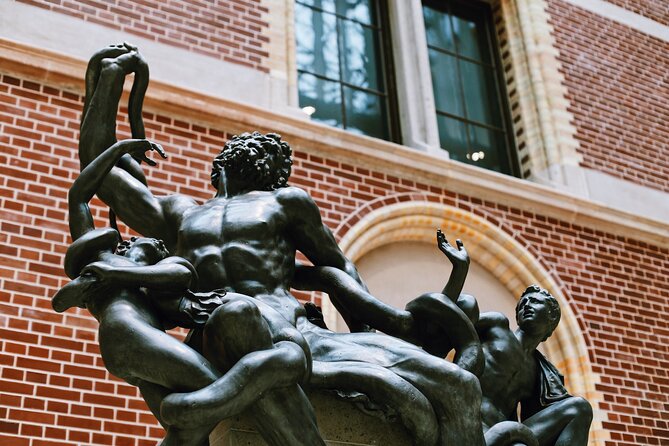
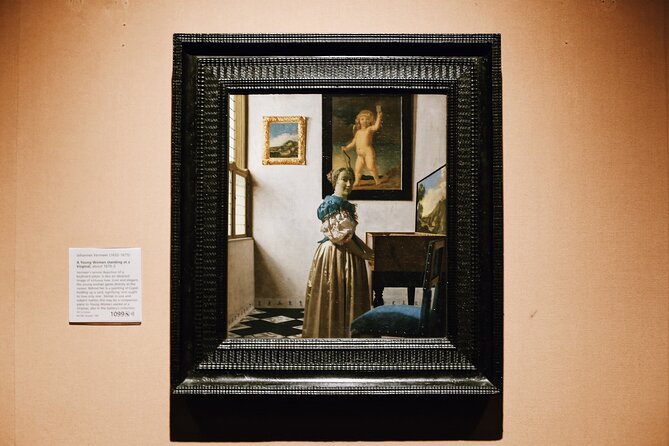
Vermeer’s The Milkmaid is often the moment families stop and finally breathe. It is celebrated for meticulous detail and its radiant use of light, and it tends to be the artist most kids remember.
What your guide helps you do is slow down without getting bored. Instead of just saying it is famous, you learn what to look for: the way light lands, small textures, and how the scene feels calm even when the subject is busy.
If you have teens, this is also where explanations start to matter. Vermeer rewards close attention, and a guide helps you find the clues quickly, so you do not have to stare for an hour hoping it clicks.
I also like that this stop supports different learning styles. Some kids enjoy the practical eye skills, like noticing patterns and details. Some teens want to understand why the light looks the way it does. Either way, this painting gives you a concrete payoff.
The 19th-Century Library and the Calm Middle of the Tour
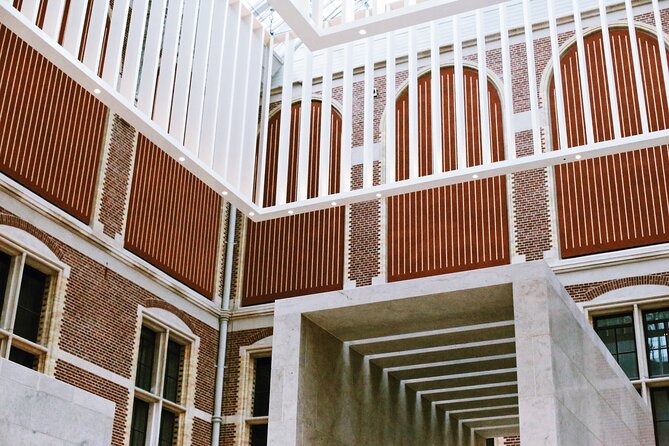
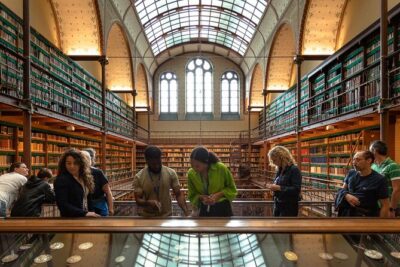
After paintings, you head to the 19th-century library. This part is special because it changes the tempo of the museum. It is known for soaring shelves, intricate ironwork, and a tranquil ambiance.
For families, that calm matters. Museums are sensory overload machines. A library stop gives you a reset, and it gives kids a different kind of curiosity trigger. They start looking at structure and design instead of only paintings.
Also, because speaking may be quiet or restricted in certain rooms, a library visit is a good way to show how museum rules help preserve the space. Your guide will tell you where the speaking rules apply before you enter, so there are fewer surprises.
The 17th-Century Dollhouses, Globes, Ship Replica, and Delft Ceramics
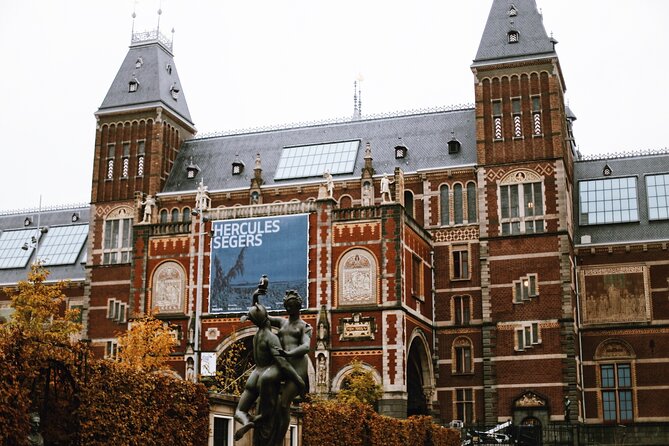
The tour does not end with just artwork. It pivots into playful, miniature, and decorative objects that grab kids fast.
You will see:
- 17th-century dollhouses
- Globes and a ship replica
- Delft ceramics
This section works for two reasons. First, the scale feels approachable. Kids can see how small objects still carry big ideas. Second, ceramics and replicas give you visual variety, so the museum does not feel repetitive.
For teens, it can spark an interest in how people at the time imagined the world, traveled, and decorated homes. The Rijksmuseum is not just about paintings. These objects show daily culture, craftsmanship, and curiosity.
A practical consideration: decorative galleries can be tempting for kids to rush. If you want them to learn, use the guide prompts. Ask kids to pick one object and explain what they think it is for.
What It Feels Like With Real Guides: Cecile and Josie B
The strongest praise in the feedback centered on storytelling that matched the ages. Cecile was highlighted as fantastic over a roughly two-hour visit, tailoring the visit to kids’ interests and weaving in period history plus helpful insights about the art that you would not easily get on your own. That room-to-room theme setup is the exact kind of structure that keeps families from getting lost.
Josie B was described as so knowledgeable and beyond amazing that the museum would have been overwhelming without her. The key takeaway for you is not just that she knew the art, but that she acted like a translator between the museum and real kids’ brains.
In other words, the guides here seem to understand that a family tour is not a lecture. It is a guided way to make art feel personal and understandable.
Wheelchair Friendly, But Plan for Walking and Security
This tour is listed as wheelchair friendly. That is a major plus if you have limited mobility.
You should still plan for moderate physical fitness needs, since you will move through museum spaces and spend time looking closely at works. Bring breaks into your mental plan. Kids do better when you do not pretend they can hold attention for the full 2.5 hours without breaks.
Also remember the museum security rule about bags. This is where many families get stuck at the last minute. If you show up with a bulky bag or suitcase, you may end up changing plans or dealing with restrictions right when you want to start.
Is This Better Than Exploring on Your Own?
You can absolutely visit the Rijksmuseum without a guide. If your goal is flexible wandering and you want to stay only where your family is instantly interested, self-guided can work.
But this private family format wins when:
- You want high-impact highlights like The Nightwatch and The Milkmaid handled in a child-friendly way.
- Your family gets overwhelmed easily in big museums.
- You want someone to help you prioritize what matters in a limited time window.
- You care about structure, including a theme that carries you from room to room.
For families who do best with direction, this feels like the easiest path to a museum win.
Who Should Book This Rijksmuseum Tour
This tour fits best if:
- You have kids and teens who need guided focus to enjoy art museums.
- You want a private experience with your group only.
- You like a mix of major paintings and more playful museum objects like dollhouses and Delft ceramics.
- You want English-language guiding with a reserved entry plan.
It may be less ideal if:
- Your family wants lots of time for temporary exhibitions, because those are not included.
- You are traveling super light and hate museum rules. Even if you are flexible, you will have to follow bag limits and dress expectations.
Should You Book This Tour?
I’d book this tour if you want your Rijksmuseum visit to feel organized, age-appropriate, and worth the money. The value comes from the combination of reserved entry, a private guide, and a route that balances big, recognizable masterpieces with calmer, interactive-feeling stops like the 19th-century library and the miniature worlds of dollhouses and ceramics.
If price is your biggest concern, you can still do the museum on your own. But if you want to avoid the overwhelm and get your family to actually enjoy what they are seeing, this is one of those guides that turns a famous building into a memorable afternoon.
FAQ
How long is the Private Family Tour at the Rijksmuseum?
The tour is about 2 hours 30 minutes.
Is admission included?
Yes. Admission fees are included, along with a guided museum tour with reserved entry included.
What is included in the tour price?
Entry fees, the guided tour, the reserved entry, and your guide exclusively for your group. The tour also mentions a mobile ticket.
Are temporary exhibitions included?
No. Temporary exhibitions are not included.
What language is the tour offered in?
The tour is offered in English.
Where do we meet and where does the tour end?
You start at Cobra Café, Hobbemastraat 18, 1071 ZB Amsterdam, and the tour ends at Rijksmuseum, Museumstraat 1, 1071 XX Amsterdam.
Is the museum visit wheelchair friendly?
The tour is listed as wheelchair friendly, and guests should have a moderate physical fitness level.
Are hotel pickup and drop-off included?
No. Hotel pickup and drop-off are not included, and you are advised to use Uber or a taxi.
Newest on the canal ring
- Amsterdam Bike Food Tour with Private Guide★ 5.0 · 1 review
- Amsterdam: Rijksmuseum Private Tour with an Art Historian★ 5.0 · 1 review
- Happy B-day Amsterdam! Guided Tour with a History Buff★ 5.0 · 1 review
- Local Foodie Adventure in Amsterdam★ 5.0 · 1 review
- Private Photo Shoot in Amsterdam with a Professional Photographer★ 5.0 · 1 review
- Private day trip to Giethoorn and the Enclosing Dike★ 5.0 · 1 review
- Private Sightseeing Tour to Giethoorn from Amsterdam incl. canal cruise★ 5.0 · 1 review
Rijksmuseum Tickets, compared.
Rijksmuseum Amsterdam Small-Group Tour with Private Upgrade
Read our review →
Rijksmuseum Entry Ticket and Canal Cruise Combo
Read our review →
Go City Amsterdam Pass: Attractions Pass with Rijksmuseum
Read our review →
Rijksmuseum Amsterdam Exclusive Guided Tour w/ Reserved Entry
Read our review →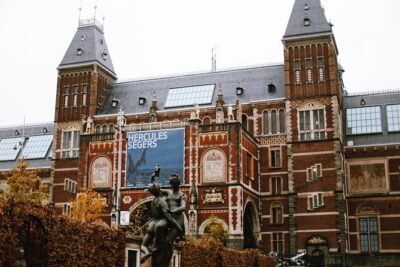
Van Gogh & Rijksmuseum w/ Reserved Entry Semi-Private 8ppl Max
Read our review →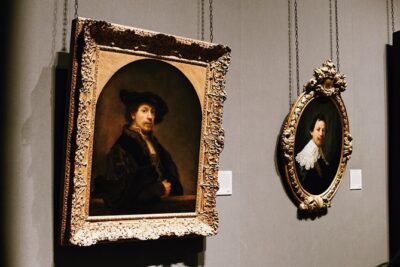
Van Gogh & Rijksmuseum w/ Reserved Entry Exclusive Guided Tour
Read our review →Browse the lists this tour appears in