
Reviewed · CITY WALKING TOURS
Walking Tour about Golden Age Architecture, private local guide
Amsterdam’s Golden Age buildings walk right up to you. This private local tour in central Amsterdam lets you read the city like a blueprint, with special attention to 17th-century architecture, trade-linked design, and the practical engineering that made the canal belt possible. It’s offered in English and timed for maximum sightseeing without feeling rushed.
I especially like that Anna, a proud local, points out details you would miss if you just wander. You’ll also get the human side of the buildings, since each stop connects design choices to the people who lived and worked there, including symbols and stories tied to Amsterdam’s maritime wealth.
One possible drawback: it’s a walking tour for about 1.5 hours, and it’s not recommended if you use a walker or have trouble standing and walking for that length of time. Also, mobility aids are listed as not available.
In This Review
- Quick hits before you go
- A 90-minute plan to decode Amsterdam’s Golden Age look
- Where the tour starts near the Royal Palace, and how the pace works
- Dam Square to Royal Palace Amsterdam: power, style, and building on difficult ground
- Canal-belt baroque at Huis Bartolotti and Torensluis, plus a look at crooked houses
- Wealth symbols and ship-trade details at De Dolphijn and Prinsengracht warehouses
- The Jordaan facade stones lesson: reading brick like a detective
- Renaissance dome stops at Ronde Lutherse Kerk, and how domes signal ambition
- Westerkerk finale: the spire, Rembrandt’s connection, and a memorable end near Anne Frank House
- Why the stories about design and engineering matter for your next Amsterdam walk
- Who should book this Golden Age architecture walk, and what to prepare
- Should you book this private Golden Age architecture tour?
- FAQ
- How long is the Amsterdam Golden Age architecture walking tour?
- Is this tour private or shared?
- What language is the tour offered in?
- Where does the tour start and where does it end?
- What is the price per person?
- Are admissions tickets required for the stops?
- Is bottled water included?
- Is the tour wheelchair-friendly or good for walker users?
- What is the cancellation policy?
Quick hits before you go
- Private guide just for your group, so you can ask questions and take your time with photos.
- Golden Age architecture focus, with trade and engineering explanations, not just surface aesthetics.
- Canal belt walk with real facade-reading, including Jordaan facade stones and merchant-era gables.
- Landmarks plus small gems, from Dam Square and the Royal Palace to Westerkerk’s spire and Rembrandt’s connection.
- Most stops are free to view, so you can keep your spending tight while still seeing a lot.
- Ends near the Anne Frank House area, which makes it easy to tack on another visit.
A 90-minute plan to decode Amsterdam’s Golden Age look
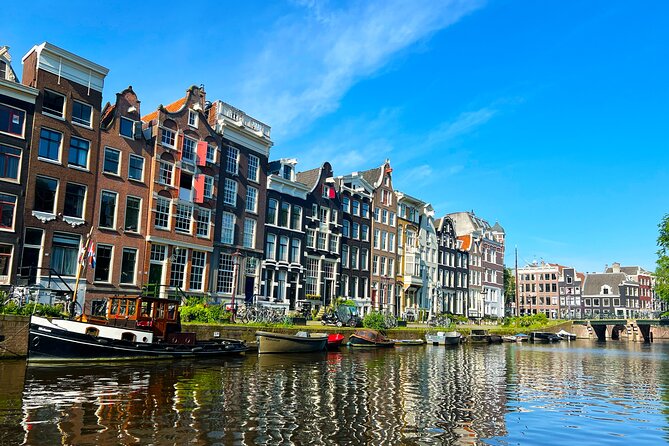
Amsterdam’s 17th century, the Dutch Golden Age, did two things at once. It made the city wealthy through global trade, and it gave that wealth a very specific architectural fingerprint. This tour is built for the moment you want both: you want key buildings, but you also want to know why they look the way they do.
The value is the guide’s angle. Instead of treating buildings like random pretty facades, you get a practical read on materials, design logic, and engineering limits. The tour also keeps moving through central Amsterdam so you can see a full slice of the canal belt era in about 90 minutes, ending near Westerkerk at Prinsengracht.
This is also a smart choice if you like architecture but don’t want a museum timeline crawl. You’ll spend time outdoors, mostly at street level, looking closely at doors, windows, gables, brickwork, and symbolic details. That’s where Golden Age design really lives.
One more detail that matters: it’s private. Even if you’re traveling with two people, the experience is not a big group shuffle. That makes it easier to hear the stories and harder to miss what the guide points at, like specific facade elements or trade-related building features.
More of the canal ring crossed on foot:
- Amsterdam Anne Frank: Small-Group Walking Tour & Local Guide
★ 4.8 · 12,789 reviews - Anne Frank’s Story – Guided Walking Tour through Amsterdam
★ 5.0 · 11,619 reviews - Absolutely Amsterdam – the Essential Introductory Walking Tour
★ 5.0 · 3,629 reviews
Where the tour starts near the Royal Palace, and how the pace works
The tour begins at Royal Palace Amsterdam, Nieuwezijds Voorburgwal 147, 1012 RJ Amsterdam. Starting here helps you get oriented fast, because Dam Square and the palace area connect directly to how Amsterdam’s power was displayed during the Golden Age.
Expect a walking rhythm designed for sightseeing plus explanation time. The overall duration is about 1 hour 30 minutes, so the stop lengths are tight and focused. Some stops are very short, around 5 minutes, but those tend to be for key visuals where the guide can point out one or two crucial ideas. Other stops run longer, like the Jordaan section, where you’ll really “read” the streetscape.
You’ll also want to plan your day around what comes next. The tour ends near Westerkerk, Prinsengracht 279, and it’s close to the Anne Frank House area. If you’re trying to stack highlights efficiently, this routing is convenient.
One thing to watch for: the tour notes say mobility aids are not available. That doesn’t mean you can’t do it, but if you need frequent seating or have limited standing tolerance, you should treat this as a firm walking commitment.
Also, bottled water is not included. Amsterdam walks can feel easy until you’re 30 to 45 minutes in, so I’d bring your own water or plan a quick refill before you meet.
Dam Square to Royal Palace Amsterdam: power, style, and building on difficult ground
Dam Square is the opening scene, and the guide starts with why it matters. You’ll connect the square to Amsterdam’s rise in the 17th century and the city’s role as a global trade hub. That matters because the rest of the tour is basically an architectural translation of that wealth and ambition.
Next up is Royal Palace Amsterdam. The key idea here is that the building wasn’t always a palace. It began as Amsterdam’s town hall during the Dutch Golden Age, a statement of civic power. Later, it became the royal residence, but the Golden Age purpose shaped its grand presence.
You’ll also get a style and engineering lesson. The palace is described as Dutch Neoclassical, and the guide explains the materials and techniques used to create its serious, monumental look. The standout engineering point is the construction challenge on clay and marshy ground. Amsterdam’s soft soil is not a footnote here. It’s part of why the city’s building culture developed the way it did.
This stop is a good example of why the tour feels different from a typical architecture walk. You’re not just looking at “fancy” stonework. You’re learning that even the biggest civic statements had to be designed around real ground conditions. That gives the later canal-belt buildings more meaning because you can link design decisions to problem-solving.
Canal-belt baroque at Huis Bartolotti and Torensluis, plus a look at crooked houses
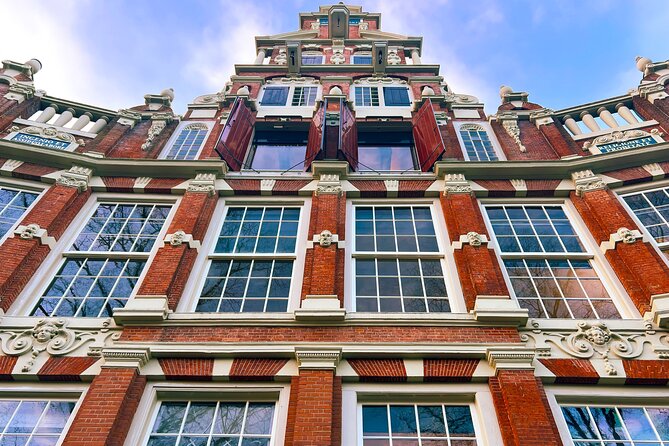
After the palace area, the tour shifts into canal-belt architecture, where the Golden Age becomes more personal. Huis Bartolotti is a great stop for this. It’s known for 17th-century Dutch baroque style, including the striking red brick and an ornate facade with large windows. You’ll also notice sculptural details made of sandstone.
The guide ties those features to wealth and status. That’s the point: baroque here is not just about drama. It’s about a merchant signaling success, including trading links with Italy. If you’ve ever wondered why some canal houses look like mini palaces, this is where the answer starts making sense.
Then you’ll head to Torensluis, a wide bridge with a perfect view of multiple facade designs connected to the mercantile class. You’ll also spot one of Amsterdam’s signature quirks: crooked houses. These lean because the city sits on soft, marshy ground, and the buildings have settled in uneven ways over time.
This stop is fun because it gives you a visual lesson in cause and effect. Amsterdam is not perfectly flat and stable. The city’s architecture had to respond to that reality, so you see both adaptation and character. You also get a feel for how baroque style was adapted in the Netherlands, not copied blindly from elsewhere.
A practical note: bridges can be windy and sometimes busy, so keep your camera strap short and be ready for quick photo windows. The guide’s timing helps, since Torensluis is an efficient visual payoff.
Some other canal-ring outings to set against this

Wealth symbols and ship-trade details at De Dolphijn and Prinsengracht warehouses
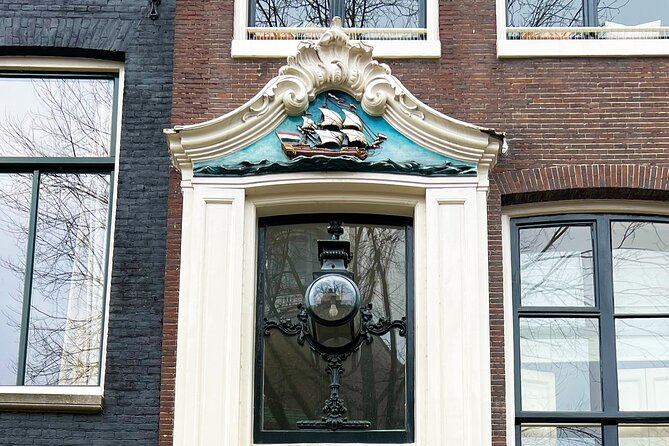
De Dolphijn is next, and it’s a quick stop with a lot of meaning. The house’s name refers to the dolphin symbol of wealth, which points straight back to maritime trade during the Dutch Golden Age. The guide also connects the building to Frans Banning Cocq, the captain immortalized in The Night Watch. That kind of connection turns a facade from an object into a story.
From there, the tour moves to Prinsengracht. This is one of the most important Golden Age architecture corridors because the warehouses along the canal were built for commerce. What you’ll look for is function disguised as elegance.
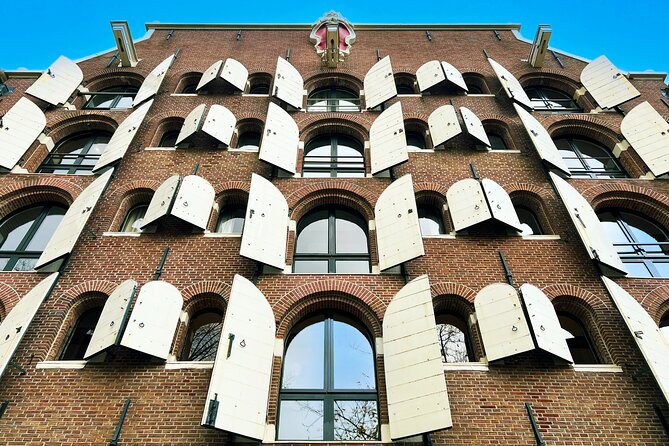
These buildings were designed to handle cargo. Expect to see tall, steeply pitched gables, large windows, and wooden hoisting beams on the roof. Those beams were used to lift heavy goods from ships docked along the canal. The exteriors are also intentionally simple, with clean lines and minimal ornamentation, which reflects utilitarian purpose.
And yet, the scale signals wealth. That contrast is the point. Amsterdam’s merchants wanted efficiency for business, but they also wanted the city to see their power.
If you’ve ever walked past these canal warehouses and thought they all look similar, this is where the tour gives you a way to notice differences. You learn what to look for: the cargo logic in the structure, the merchant messaging in the proportions, and the way trade shaped the city’s “look.”
The Jordaan facade stones lesson: reading brick like a detective
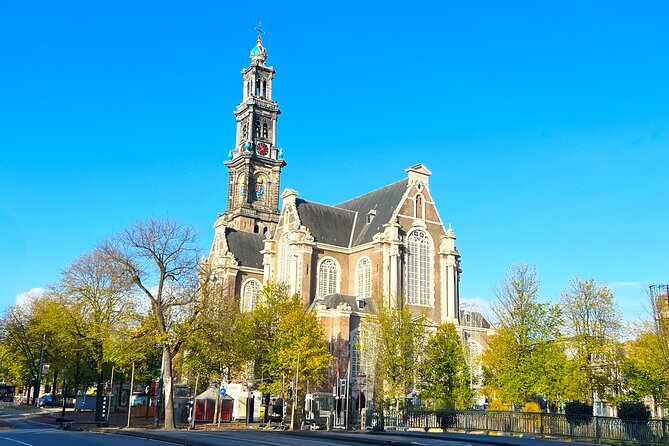
The Jordaan segment is longer, about 20 minutes, and it’s where you really slow down and learn to see details. In the 17th century, Jordaan served both residential and commercial life. Originally developed for craftsmen and laborers, it grew into a lively district, with narrow canals and tight rows of houses, many with small shops or workshops at street level.
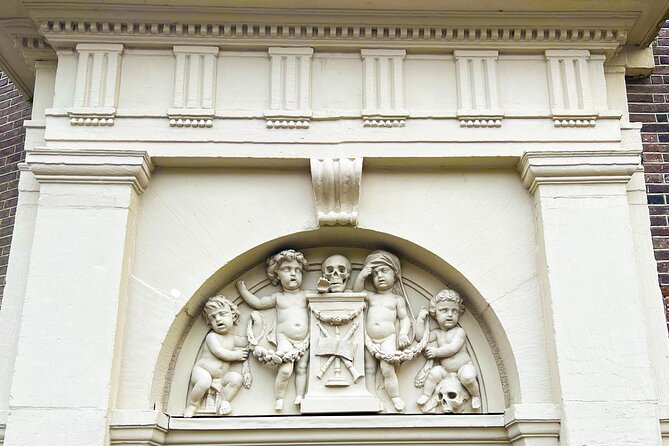
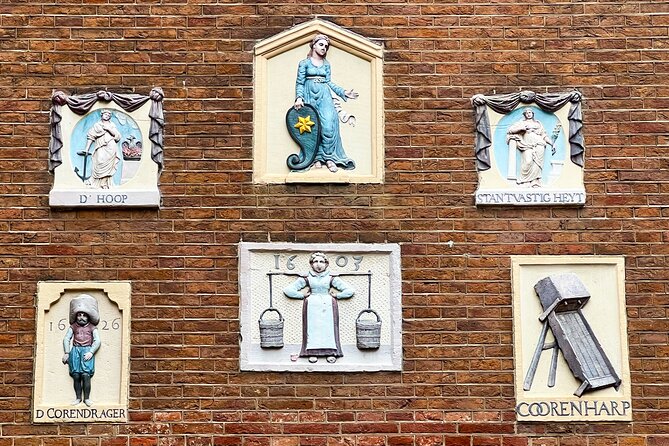
Here’s the key concept you’ll focus on: gevelstenen, also called facade stones. These are small decorative plaques embedded in building facades. They weren’t just decoration. They often communicated how the building was used, the owner’s profession, or other facts about the people living and working there.
The guide points out how these stones can include intricate carvings. That makes the Jordaan walk feel like a street-level museum, but without museum tickets or a strict timeline. You’re learning how to “read” history in small choices.
This stop is also practical for your future self. Once you know what facade stones are, you’ll spot them later on your own walks around the canal belt. It turns a casual stroll into something much more rewarding, because you start noticing micro-details: symbols, profession clues, and dates carved into brickwork.
If you’re traveling with someone who likes photos, Jordaan also offers lots of angles. The buildings are close together, and there’s usually a chance to frame a facade stone or a window pattern even without entering any buildings.
Renaissance dome stops at Ronde Lutherse Kerk, and how domes signal ambition
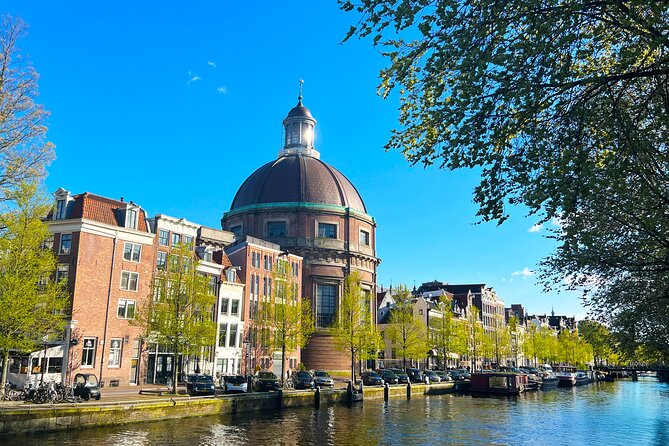
One of the quieter stops is Ronde Lutherse Kerk. The tour notes here focus on domes as a highlight of architectural achievement during the Renaissance period. Even though the time is short, the guide’s framing matters.
Domes, especially in a city like Amsterdam, are not just “pretty ceilings.” They signal ambition and a shift in architectural taste. They also help you compare what you see later at other Golden Age buildings. The contrast between Renaissance ambition, Calvinist worship simplicity, and Golden Age merchant practicality is part of the story the tour is building.
Because the stop is brief, go into it ready to observe rather than expecting a long interior experience. The value comes from what the guide helps you connect: why domes represented achievement, and why that idea shows up in different ways across Amsterdam’s changing architectural phases.
If you enjoy architectural transitions, this stop gives you a useful pivot before the tour wraps with Westerkerk.
Westerkerk finale: the spire, Rembrandt’s connection, and a memorable end near Anne Frank House
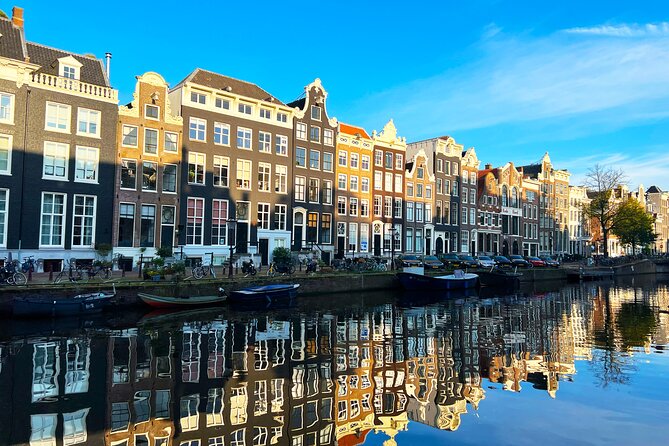
The last stop is Westerkerk, one of Amsterdam’s most important landmarks. It was built as a Calvinist church for a growing population, and the design is described as simple and elegant, matching Calvinist worship style. You’ll get a sense of the church’s airy interior as part of the explanation.
The historical connection is the star story. Rembrandt van Rijn is laid to rest here, giving Westerkerk a strong cultural pull. The spire is also a major visual feature, completed in 1638 and rising 85 meters above the Jordaan district. The tower is crowned with an imperial crown, tied to Amsterdam’s status since the 15th century.
There’s also a clock story. The clock chimes are said to have been referenced by Anne Frank in her diary, which is a neat link that helps the place feel relevant to modern visitors. The guide notes the spire has marked the passing hours for centuries, and that residents value it for its beauty and historical significance.
This ending location is convenient. The tour finishes near Westerkerk on Prinsengracht 279, and it’s close to the Anne Frank House area. That makes it easy to plan your next stop without backtracking.
If you’re watching your energy, this is a good final payoff. You end at a landmark with lots to look at, plus a sense of closure because you’ve already learned how Amsterdam’s architecture reflects trade, faith, and civic identity.
Why the stories about design and engineering matter for your next Amsterdam walk
A typical quick architecture tour can stay at the level of style, like baroque versus Neoclassical. This one adds engineering and social meaning, and that’s what makes it useful beyond the hour and a half.
You’ll walk away with a few mental tools:
- You learn to connect building form to purpose, like hoisting beams on Prinsengracht warehouses used for cargo handling.
- You learn that Amsterdam’s ground conditions shaped the city, from construction on clay and marshy ground at the Royal Palace to the crooked houses at Torensluis.
- You learn to spot symbols and read them. De Dolphijn’s dolphin reference is a good example, linking wealth to maritime trade.
- You learn micro-history in the streetscape through facade stones in Jordaan, including how carvings can hint at professions and building use.
And there’s the human factor. In the reviews, Anna is praised for making explanations easy to follow in English, answering lots of questions patiently, and being friendly and accommodating. The practical bonus is that she allows time for photos. If you care about details, that matters. You can stop, frame, and move on without feeling rushed.
Small group attention also helps. This kind of private setting makes it easier to ask, What am I looking at? and Get the why behind it, not just the name. That’s where architecture becomes a story you can carry around instead of facts you forget.
Who should book this Golden Age architecture walk, and what to prepare
This tour fits best if you:
- Enjoy architecture and want to understand what you’re seeing.
- Like canals and canal-belt neighborhoods and want to read them beyond pretty postcard views.
- Want a private experience in English with time for questions and photos.
- Have limited time in Amsterdam and want a compact route from Dam Square to Westerkerk.
It might not fit as well if you:
- Use a walker or have trouble standing and walking for about 1.5 hours, since the tour explicitly says it is not recommended in those cases.
- Need mobility aids, since mobility aids are listed as not available.
What to bring is simple, but don’t skip it. Wear comfortable walking shoes, because you’ll be on foot. Bring water since bottled water is not included. If you’re sensitive to weather, Amsterdam can shift quickly, so plan a light layer even in warmer months.
If you’re scheduling your day, remember the tour starts near Royal Palace Amsterdam and ends near Westerkerk, close to the Anne Frank House. That means you can reasonably plan a longer sightseeing block in the same area without much transit time.
Should you book this private Golden Age architecture tour?
If your goal is to leave Amsterdam with more than a memory of nice buildings, then yes, you should strongly consider booking this. The price is $73.59 per person for about 90 minutes, and the value comes from the focus on Golden Age design logic, engineering context, and street-level details like facade stones.
The top reason to book is the guide. Anna is consistently described as knowledgeable about Amsterdam’s history, architecture, and social policies, and she explains in a way that’s easy to follow in English. You also get real time to ask questions, plus photo-friendly pacing.
I’d only hesitate if your mobility needs are higher than the tour can handle. Since it is not recommended for walker users and mobility aids are not available, it’s worth choosing a different format if standing and walking is difficult.
If you’re comfortable walking for 1.5 hours, this is a smart, high-impact way to understand Amsterdam’s Golden Age architecture in one connected story.
FAQ
How long is the Amsterdam Golden Age architecture walking tour?
It runs for about 1 hour 30 minutes.
Is this tour private or shared?
It’s private, meaning only your group participates.
What language is the tour offered in?
The tour is offered in English.
Where does the tour start and where does it end?
It starts at Royal Palace Amsterdam, Nieuwezijds Voorburgwal 147, 1012 RJ Amsterdam. It ends near Westerkerk, Prinsengracht 279, 1016 DL Amsterdam, close to the Anne Frank House.
What is the price per person?
The price is $73.59 per person.
Are admissions tickets required for the stops?
The stops listed are marked as admission ticket free.
Is bottled water included?
No, bottled water is not included.
Is the tour wheelchair-friendly or good for walker users?
It is not recommended for participants who use a walker, and it is not recommended for people who have trouble walking and standing for 1.5 hours. Mobility aids are not available.
What is the cancellation policy?
Free cancellation is available up to 24 hours in advance for a full refund.
Newest on the canal ring
- Amsterdam Bike Food Tour with Private Guide★ 5.0 · 1 review
- Amsterdam: Rijksmuseum Private Tour with an Art Historian★ 5.0 · 1 review
- Happy B-day Amsterdam! Guided Tour with a History Buff★ 5.0 · 1 review
- Local Foodie Adventure in Amsterdam★ 5.0 · 1 review
- Private Photo Shoot in Amsterdam with a Professional Photographer★ 5.0 · 1 review
- Private day trip to Giethoorn and the Enclosing Dike★ 5.0 · 1 review
- Private Sightseeing Tour to Giethoorn from Amsterdam incl. canal cruise★ 5.0 · 1 review
City Walking Tours, compared.

Amsterdam Anne Frank: Small-Group Walking Tour & Local Guide
Read our review →
Anne Frank’s Story – Guided Walking Tour through Amsterdam
Read our review →
Absolutely Amsterdam – the Essential Introductory Walking Tour
Read our review →
Anne Frank Guided Walking Tour in DE/EN/IT/ES
Read our review →

Anne Frank Walking Tour Amsterdam Including Jewish Cultural Quarter
Read our review →Browse the lists this tour appears in