
Reviewed · RED LIGHT DISTRICT WALKING TOURS
Amsterdam: Guided Red Light District and City Walking Tour
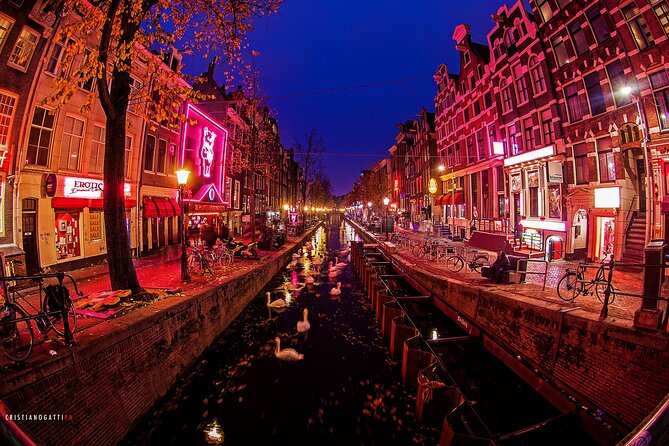
Street corners tell stories in Amsterdam. This 2-hour guided walk links the Red Light District with landmark Old Town stops, so you get more than street views. You’ll hear the why behind the places, plus architecture and city details you’d miss if you just wandered.
I really like how the route ties the area to Amsterdam’s physical reality, especially the wooden poles under the city. I also love the building stops, from Pub The Ape to the Waag, where the guide points out what you’re looking at and why it matters.
One thing to consider: this is adult-themed territory, and it’s a mostly on-foot experience. It’s not recommended for travelers with limited mobility.
In This Review
- Key things to know before you go
- Why this Amsterdam walk works for first-timers
- Price, timing, and meeting at Geldersekade 2
- Dam Square and the city built on wooden poles
- Old Town Red Light District streets, history, and modern reality
- Pub The Ape: why a 1540 wooden building still matters
- Waag and the old city gate that became a guild hall
- The smallest house and the VOC connection
- Condomerie and the bold cultural contrast at the end
- Guide style, group size, and what you should expect
- Who should book this tour, and who should skip it
- Should you book this Amsterdam Red Light District and city walking tour?
- FAQ
- How long is the Amsterdam Red Light District walking tour?
- What is the price per person?
- Where do I meet for the tour?
- Is the tour in English?
- What’s included in the ticket price?
- Are food and drinks included?
- Is this tour suitable for people with limited mobility?
- Can I cancel for a full refund?
Key things to know before you go
- Small-group size (max 15 travelers), which keeps questions possible and the pace human.
- English-language guide with both a licensed guide and a local guide, so you get city context plus local texture.
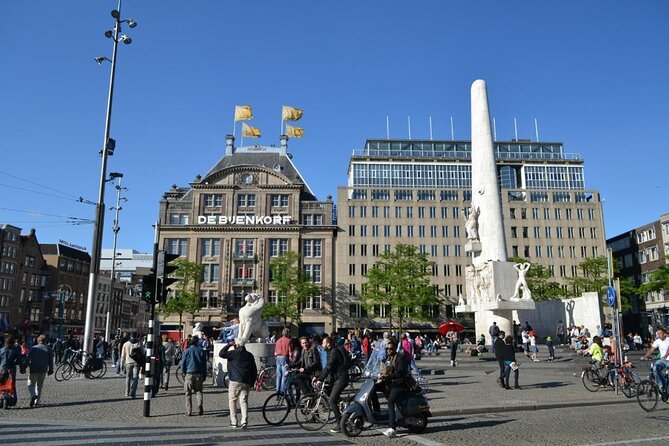
- A stop plan that mixes Dam Square and Old Town landmarks with Red Light District streets.
- Adult-themed walking route, so set expectations for the topics you’ll hear.
- No food or drinks included, so bring water or plan a nearby stop after.
Why this Amsterdam walk works for first-timers
Amsterdam can feel like a choose-your-own-adventure city. This tour gives you a guided path through one of the most talked-about areas, then grounds it with nearby history and buildings that explain how the city grew.
The biggest win is that you’re not just seeing the famous streets. You’re getting context for how Amsterdam’s layout, trade, and architecture shaped the neighborhood you’re walking through. The guide also slows you down at specific sights, so you notice practical details, like construction choices that came after major fires, and the old city gate that became a hub for crafts.
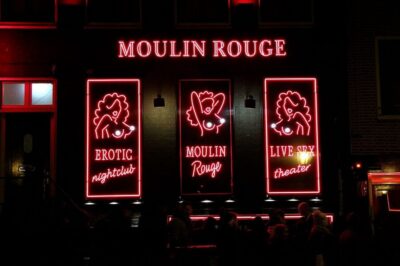
And yes, it’s a Red Light District walk. If you come expecting it to feel like a spooky theme park, you might be surprised. The tone is more about how the district fits into Old Town and how the city has handled commerce, laws, and culture over time.
More walks through the Wallen:
- Amsterdam: Red Light District Tour in DE/EN/IT/ES/FR
★ 4.9 · 7,136 reviews - Amsterdam: Red Light Secrets Museum Entry Ticket
★ 4.2 · 5,722 reviews - Amsterdam Red Light District & Coffee Shop Tour
★ 4.6 · 4,134 reviews
Price, timing, and meeting at Geldersekade 2
The price is $35.44 per person for about 2 hours. For Amsterdam, that’s a pretty fair rate for a guided walk that includes multiple named stops and a small group setting (max 15). You’re basically paying for expert storytelling, plus someone who can translate the city’s clutter into a clear route you can follow without getting lost.
Tours run at multiple start times, and the company uses a mobile ticket, which makes it easier to show up without digging through paperwork. The meeting point is at Geldersekade 2, 1012 BH Amsterdam, and the tour ends back at the start.
Logistically, it’s near public transportation, so you can tack it onto a day of museums and canal wandering. If you’re doing other walking tours, try not to over-book. This one keeps you moving, and you’ll want a little space afterward to decompress and grab a drink on your own.
Dam Square and the city built on wooden poles
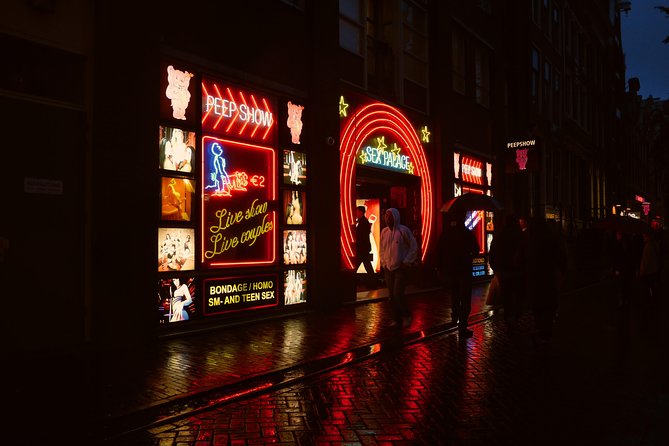
Your route begins with a walk through the streets, then heads to Dam Square. The guide uses this stop to explain something that sounds quirky until you remember Amsterdam is built on challenging soil.
Amsterdam has a thick layer of fen and clay. Historically, many buildings were supported by wooden piles driven deep until they hit a layer of solid sand, roughly 11 meters down. That construction method is a huge clue to why the city looks and feels the way it does today: heavy masonry needed stable foundations, and engineers and builders had to work with what the ground offered.
This is the kind of detail that makes a walking tour feel smarter than a photo stop. Once you understand the “city built on trees” idea, you start seeing how Amsterdam grew and how people built for survival, not just style.
Even if you’re not a construction-history person, it helps your brain. You stop treating the buildings like props and start seeing them as responses to real conditions.
Old Town Red Light District streets, history, and modern reality
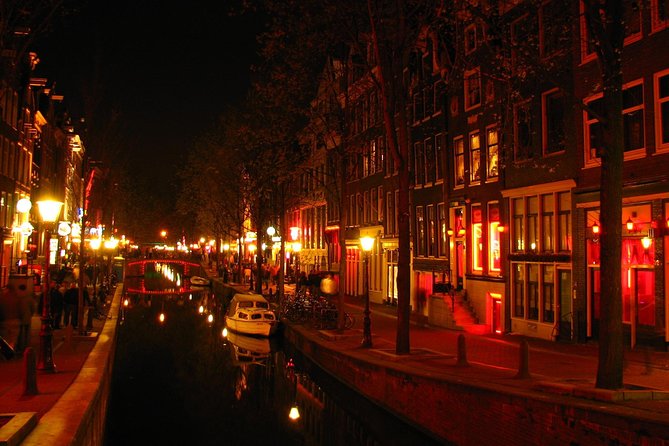
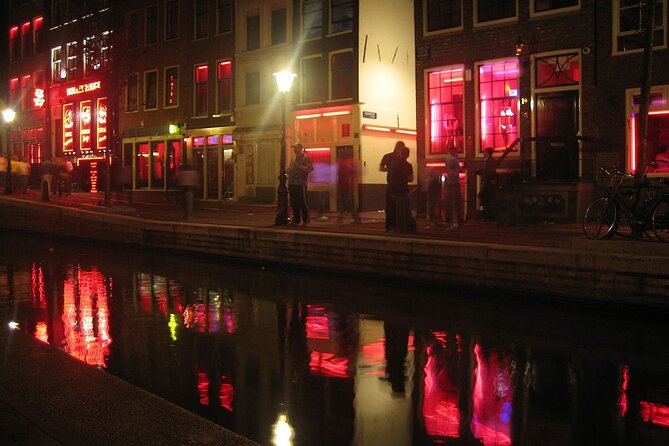
From there, the tour focuses on the Red Light District area tied to Old Town. The emphasis is on history and the current situation of the district, not on sensationalism. Your guide frames the neighborhood as part of the city’s earliest fabric, which helps it feel less like a separate universe and more like Amsterdam’s oldest logic playing out in a different era.
One practical way to think about this part of the walk: you’re learning how the district became what it is. The guide points out why the area has such density of stories in a small space, and how older commerce patterns, port connections, and city governance shaped what you see.
As you walk, keep your eyes on the small things the guide calls out: street width, how buildings sit right next to canals or lanes, and the way certain corners feel more “official” while others feel more lived-in. Those details are what make the neighborhood understandable instead of just shocking.
Tone matters here. If you want a strictly historical walk with minimal emphasis on adult themes, go in knowing it’s still a Red Light District route. A couple of guides have been praised for humor and respectful professionalism, but one person reported feeling uncomfortable due to rude behavior by their guide. If you have strong boundaries, it’s worth speaking up if anything feels off.
More of the canal ring crossed on foot:



Pub The Ape: why a 1540 wooden building still matters
One of the best stops on the route is Pub The Ape, also called Int Aepjen in Dutch. The site is built around 1540, and it’s described as one of just two remaining wooden buildings in Amsterdam.
Why does that matter? The guide connects it to a turning point in how the city built after major fires. There was a large fire in 1452, and afterward, the government made rules that pushed buildings toward brick facades. So when you see a surviving wooden structure, you’re looking at a rare survivor of a pre-brick approach.
This is exactly the kind of stop that earns a guided tour. Without context, you might clock it as a charming pub. With context, you understand it as evidence of policy change, fire risk, and how quickly cities evolve their building rules when things go wrong.
It also helps you see why Amsterdam’s architecture looks the way it does. The city isn’t just pretty. It’s adaptive.
Waag and the old city gate that became a guild hall
Next up is The Waag, which used to be one of Amsterdam’s city gates and part of its defensive wall. It was built around the 1400s and is often described as the second oldest building of Amsterdam.
The guide then explains what happened after the defensive era. The Waag stopped being about keeping enemies out and became a place where guilds and craftsman organizations operated. Guilds were the business-side engine of the city, meaning the building wasn’t just a landmark. It was tied to how trades organized, regulated quality, and controlled work.
As you stand there, pay attention to the role change. Amsterdam keeps reusing big stone structures. That reuse is part of the city’s personality. Even iconic buildings can shift from defense to commerce to culture, without being demolished.
This stop also gives your Red Light District walk a better frame. You start seeing that Amsterdam’s “special districts” are often about trade and industry getting concentrated, then reinterpreted as the city changes.
The smallest house and the VOC connection
Another stop is the smallest house of Amsterdam, built around the 1700s. The guide explains that it started as storage for the VOC trading company. Later, people lived in the house for a long time.
This is a powerful reminder that Amsterdam’s neighborhoods weren’t only for the wealthy and polished. Space was expensive, trade was constant, and the city made room for all kinds of lives tied to business.
Even if the house is small, the meaning isn’t. It’s a micro example of how commerce and housing intertwined. After the Waag’s guild talk, this stop feels like a natural zoom-in on what trade required, and what people did when they needed to live near the work.
If you like architecture trivia, this is one of your moments. If you don’t, it’s still useful because it rounds out the city story. It keeps the Red Light District walk from feeling like it floats alone.
Condomerie and the bold cultural contrast at the end
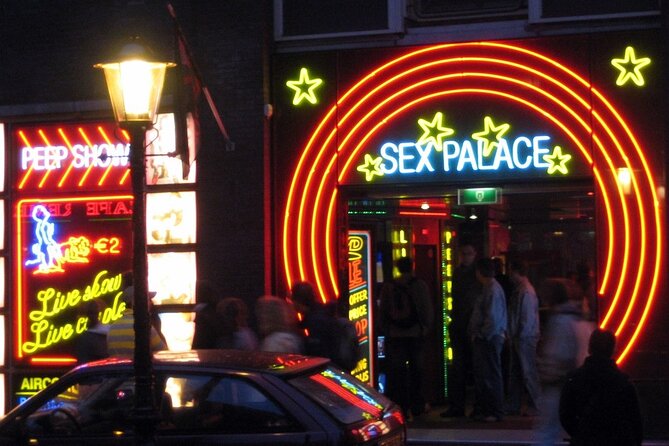
The final highlight is the Condomerie, described as the world’s first specialized condom shop, located there since 1987. The guide also notes that you can get customized sizing and different special condom options.
This stop is more than a novelty. It’s a contrast point. You’re moving from Old Town construction rules and trading-era housing into a modern, commercial site built around adult needs and contemporary openness.
For some visitors, it feels like a laugh line at the end of a serious history walk. For others, it feels like Amsterdam refusing to pretend that sex, commerce, and health never intersect. Either way, it lands because you’ve spent the tour learning how the city handles trade and human behavior through time.
And because the tour ends back at the meeting point, you can treat Condomerie as either a final photo stop or a quick browse before heading off to your next plan.
Guide style, group size, and what you should expect
This is a small-group walk with a maximum of 15 travelers, which matters more than it sounds. In a tight area like Amsterdam’s historic core, smaller groups mean you can hear the guide without sprinting to keep up. It also gives you a chance to ask questions about how the district works and how Amsterdam’s rules shaped it.
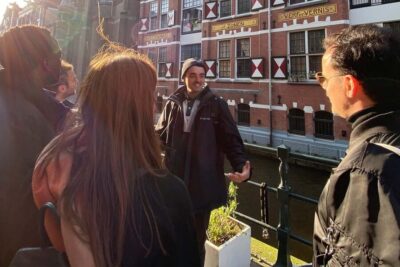
You’ll also be with a licensed guide plus a local guide, which tends to produce a smoother blend of storytelling. In the feedback I saw, multiple guides were praised for being friendly, professional, and comfortable explaining architecture, laws, and culture. Names that came up include Ben, Ari, Pedro, Max, Angel, David, Aaron, and Capt Dan, each credited with different strengths like humor, clarity, and strong historical context.
That said, one outlier complaint focused on a guide being disrespectful and making inappropriate comments. I can’t predict how your guide will act, but I can tell you this: if your expectation is respectful, calm, and informative, bring that into the interaction. If anything crosses your line, let the provider know promptly.
Who should book this tour, and who should skip it
This tour is best for you if you want:
- A structured walk that links the Red Light District to nearby Old Town landmarks
- A guide who explains buildings like Pub The Ape and The Waag
- A small-group pace that keeps you oriented
It’s not the best fit if:
- You have limited mobility, since it’s not recommended for that
- You want a purely family-friendly atmosphere, because the district is adult-themed
- You’re sensitive to frank conversation in an adult street setting
If you’re traveling alone, a guided walk like this can also be a confidence boost. You get the route, context, and social cues so you can walk it yourself later with better understanding.
Should you book this Amsterdam Red Light District and city walking tour?
I think you should book it if you want the practical version of Amsterdam. This tour turns a controversial, famous neighborhood into a mapped-out set of streets and landmarks, with explanations that connect to Dam Square engineering, old city defenses, and craft-guild history.
The value comes from the combination: the adult-themed context is paired with architecture and Old Town stops that genuinely help you read the city. At $35.44 for about 2 hours with a small group cap of 15, it’s not just a walk, it’s a guided story with multiple named points.
My one caution is expectation management. Go in knowing it’s an adult district, and your comfort level matters. If you like your guides to be respectful and discreet, this tour can work well, but keep an eye on how the tone feels from the start.
If you want, tell me your travel dates and whether you prefer morning, afternoon, or evening. I can suggest the best way to pair this with the rest of your Amsterdam day using the same walk-stop rhythm.
FAQ
How long is the Amsterdam Red Light District walking tour?
The tour runs for about 2 hours.
What is the price per person?
The price is $35.44 per person.
Where do I meet for the tour?
You meet at Geldersekade 2, 1012 BH Amsterdam, Netherlands, and the tour ends back at the meeting point.
Is the tour in English?
Yes, it is offered in English.
What’s included in the ticket price?
You get a licensed guide and a local guide.
Are food and drinks included?
No, food and drinks are not included.
Is this tour suitable for people with limited mobility?
It is not recommended for travelers with limited mobility.
Can I cancel for a full refund?
Yes. You can cancel up to 24 hours in advance for a full refund.
Loops Taking In the Big Sights
- Amsterdam: 75 Minute City Canal Cruise with Audio Guide
★ 4.4 · 19,938 reviews - Amsterdam: City Centre Canal Cruise including Audioguide
★ 4.3 · 16,901 reviews - Amsterdam: Smoke and Lounge City Boat Cruise
★ 4.7 · 8,572 reviews - Amsterdam: City Card with Free Entrance & Public Transport
★ 4.3 · 4,145 reviews
Newest on the canal ring
- Amsterdam Bike Food Tour with Private Guide★ 5.0 · 1 review
- Amsterdam: Rijksmuseum Private Tour with an Art Historian★ 5.0 · 1 review
- Happy B-day Amsterdam! Guided Tour with a History Buff★ 5.0 · 1 review
- Private day trip to Giethoorn and the Enclosing Dike★ 5.0 · 1 review
- Local Foodie Adventure in Amsterdam★ 5.0 · 1 review
- Private Photo Shoot in Amsterdam with a Professional Photographer★ 5.0 · 1 review
- Private Sightseeing Tour to Giethoorn from Amsterdam incl. canal cruise★ 5.0 · 1 review
Red Light District Walking Tours, compared.
Amsterdam Red Light District & Coffee Shop Tour
Read our review →
Red Light District Pub Crawl with Unlimited Shots
Read our review →
Private Amsterdam Red Light District and Coffee Shop Tour
Read our review →
Browse the lists this tour appears in