
Reviewed · RED LIGHT DISTRICT WALKING TOURS
Amsterdam Red Light District and City Center Walking Tour
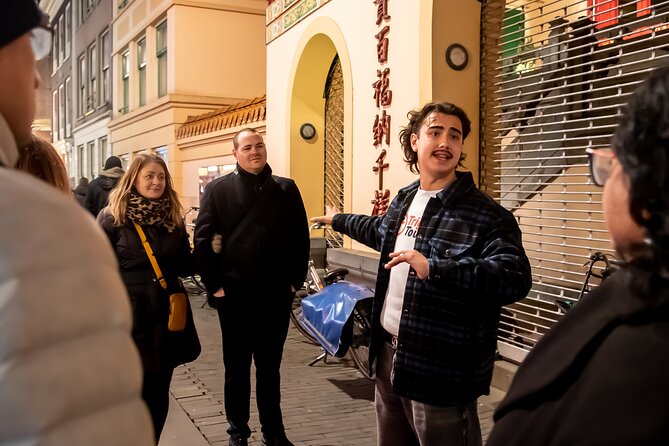
Walking Amsterdam after dark has a different feel. This 2 hour tour combines De Wallen street scenes with old-town stops, so you get context, not just sights. You also learn how Amsterdam’s rules shape what you see, from the windows to the coffeeshop culture, while your guide keeps the tone factual and respectful.
What I liked most is the mix of street-level stories and built environment details. You move through the old center while hearing why the city looks the way it does, including how Amsterdam ended up on wooden piles. Another win is the pace and group size, with a maximum of 16 people, plus an English setup that works well for first-timers.
One heads-up: this is not recommended if you have limited mobility. You’ll be walking through areas that can be tight and uneven, and the tour is designed for a normal walking pace around historic streets.
In This Review
- Key things to know before you go
- Getting Oriented at Geldersekade 2 (and why the timing matters)
- De Wallen at Night: windows, coffeeshops, and the rules behind the scenes
- A quick respect checklist for this stop
- Dam Area and the Old Town Backbone: Amsterdam built on wood
- Pub The Ape (Int Aepjen): wooden buildings that survived a major fire
- Waag: a city gate turned guild center in the 1400s
- The smallest house in Amsterdam: VOC storage to long-term living
- The condom shop stop: modern Amsterdam since 1987
- Price and value: what $31.24 buys in 2 hours
- Who this walk suits, and who should skip it
- Guides you can count on: friendly, organized, and question-ready
- Should you book this Amsterdam Red Light District and City Center walking tour?
- FAQ
- How long is the Amsterdam Red Light District and City Center walking tour?
- Where does the tour start, and where does it end?
- Is the tour offered in English?
- How big is the group?
- Do I need to buy admission tickets for the stops?
- Is the tour suitable for travelers with limited mobility?
- What is the cancellation policy?
Key things to know before you go
- De Wallen at night with a guide who explains what you’re seeing and why the local rules matter
- Small group up to 16 people, which helps keep questions from getting lost
- Old-town history woven in, including Amsterdam’s wooden foundation story (about 11 meters deep)
- Iconic stops like Waag, Pub The Ape, and a famous small house tied to VOC-era storage and living
- A modern stop at a specialized condom shop that has been operating since 1987
Getting Oriented at Geldersekade 2 (and why the timing matters)
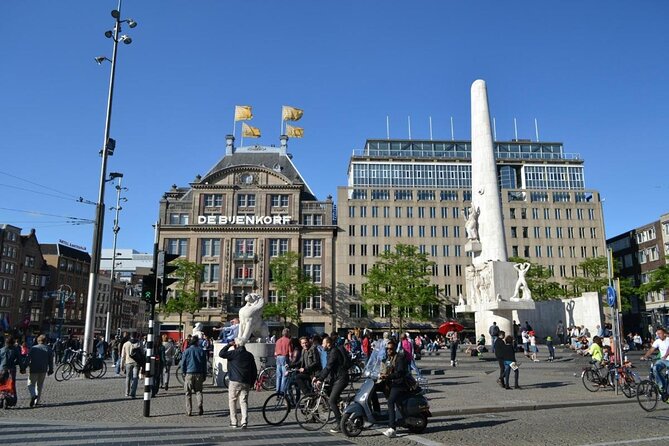
The walk starts at Geldersekade 2, 1012 BH Amsterdam, and it ends back at the same meeting point. That matters more than you think, because Amsterdam is made for wandering, but it is easy to lose your bearings fast when you only see one neighborhood at a time.
The tour also runs with multiple start times, so you can match it to your day. If you are arriving in Amsterdam with limited time, a short 2 hour orientation like this is a strong move, because you see the Red Light District after dark and then connect it to the city’s older structures.
You’ll be in an English-language group, and you get a mobile ticket. I like tours that reduce friction, and a phone ticket helps you focus on the walk instead of paperwork.
More walks through the Wallen:
- Amsterdam: Red Light District Tour in DE/EN/IT/ES/FR
★ 4.9 · 7,136 reviews - Amsterdam: Red Light Secrets Museum Entry Ticket
★ 4.2 · 5,722 reviews - Amsterdam Red Light District & Coffee Shop Tour
★ 4.6 · 4,134 reviews
De Wallen at Night: windows, coffeeshops, and the rules behind the scenes
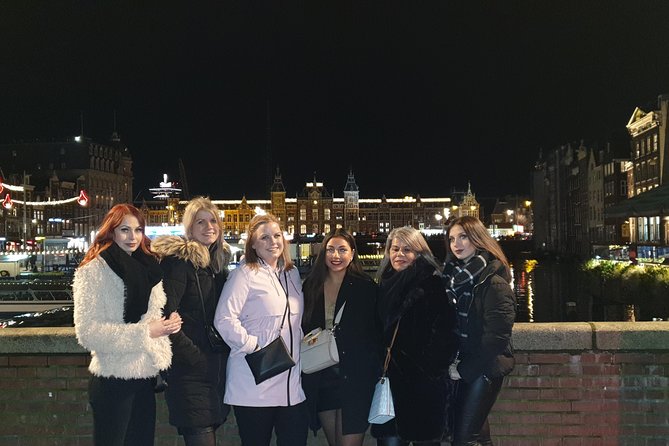
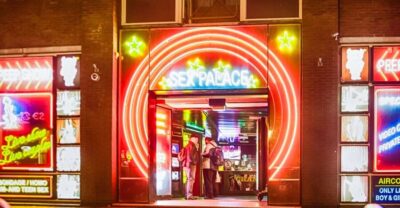
The first big stop is De Wallen, Amsterdam’s famous Red Light District. Going at night changes the whole experience. The streets feel more readable, you can notice the shape of the neighborhood, and you get a better sense of how locals and visitors move through the area.
This tour is not just a photo walk. You learn the real stories around the sex work industry and how the neighborhood works, including explanations of how laws affect what you see in the windows. You also hear about the surrounding coffeeshop culture, so you understand why the area is a magnet for both nightlife and debate.
The best part here is that your guide keeps the tone practical. The goal is clarity, not shock. If you are an Amsterdam first-timer, this is a great way to get questions answered before you start forming your own assumptions.
A quick respect checklist for this stop
- Stick with your group, and keep your voice level in narrow streets
- Expect adult subject matter, and decide in advance if that fits your comfort level
- Ask questions if you have them, since the tour is built around explanations
Dam Area and the Old Town Backbone: Amsterdam built on wood
From the Red Light District, you move into the old-city layers, including a stop connected to the Dam and the oldest parts of Old Town. This is where the tour starts to feel more like real Amsterdam, not just a single district.
You’ll hear a key piece of the city’s physical story: Amsterdam sits on a thick layer of fen and clay, so early builders used wooden foundation piles driven down into clay, peat, and water until they reached solid sand. The depth is around 11 meters. That one detail changes how you think about the city, because it explains why construction techniques mattered so much from the start.
This section also ties the neighborhood back to the bigger picture of the city. If you only visit Amsterdam’s waterfronts and museums, you can miss how the urban design and land realities created what you see today.
More of the canal ring crossed on foot:


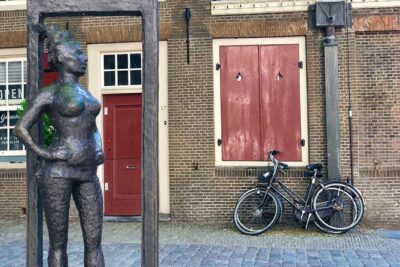

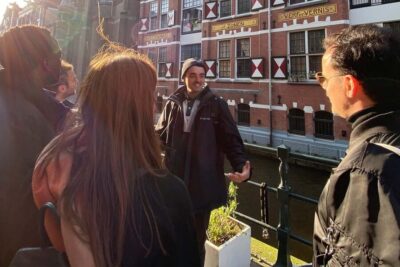
Pub The Ape (Int Aepjen): wooden buildings that survived a major fire
One of the most distinctive stops is Pub The Ape, also known as Int Aepjen. The building dates to around 1540, and it’s described as one of only two remaining wooden buildings in Amsterdam.
Here’s why that matters. After a major fire in 1452, the government pushed building rules so that facades would be brick. So when you stand in a wooden structure like this, you are looking at a rare survivor from a different era of construction norms.
This stop is a nice break in tone, because you shift from window stories to architecture that you can actually see and appreciate. Even if you do not plan to order anything, you’ll come away with a sharper eye for why some buildings in Amsterdam look like they do.
Waag: a city gate turned guild center in the 1400s
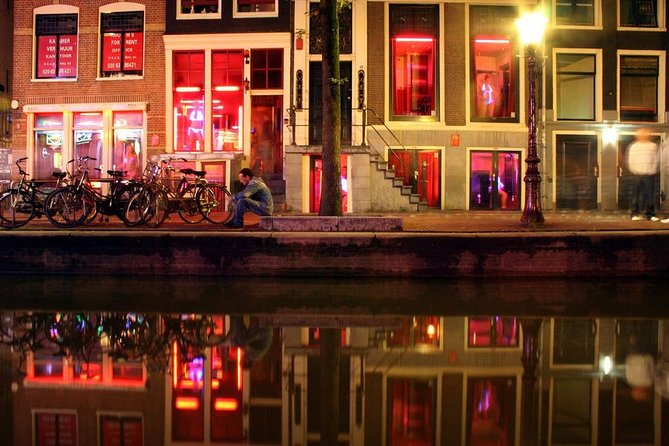
Next up is the Waag, originally built as one of Amsterdam’s city gates around the 1400s. You’ll also hear that it’s among the oldest buildings in the city, and that later it became a hub for guilds and craftsman organizations, with groups gathering inside and around the square.
This is a strong stop for travelers who like to connect dots. The Waag helps explain how Amsterdam organized power and trade. The old gate idea is one of those details you might miss on your own, because in a walking city you can focus on what is in front of you and forget what used to control movement and commerce.
The trade and guild story also fits naturally with the previous points. You go from living on wooden foundations, to neighborhoods shaped by law and commerce, to a building designed for gatekeeping and then repurposed for skilled work.
The smallest house in Amsterdam: VOC storage to long-term living
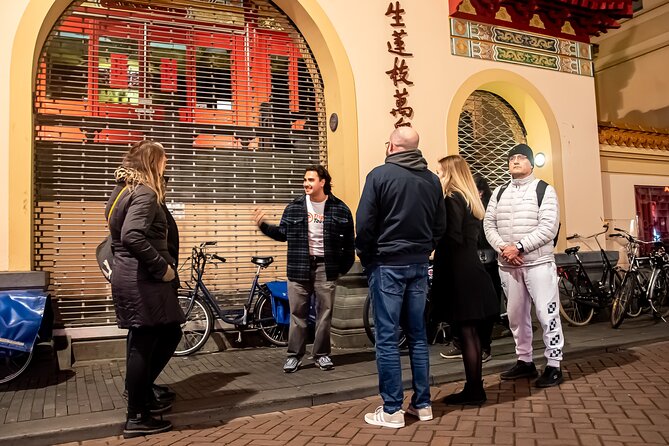
The tour also includes a stop at Amsterdam’s smallest house, built around the 1700s. You’ll hear its early use ties to the VOC trading company, first as storage, then later as a place where people lived for a very long time.
This is the kind of stop I love because it makes history feel human. It is easy to treat the VOC period like a name in a book, but this house gives you a concrete object to anchor the idea of trade, goods, and cramped everyday life.
And because the house is so small, you’ll likely notice how Amsterdam’s old neighborhoods had to function in real space. That connects back to the city’s land constraints, including the wooden-pile construction you heard earlier.
The condom shop stop: modern Amsterdam since 1987
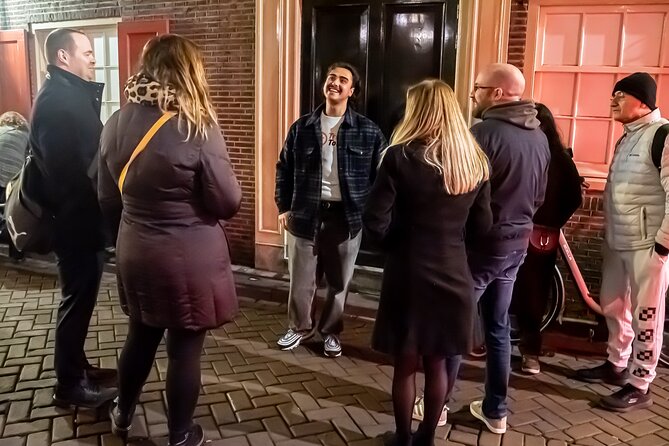
One of the most surprising stops is at a specialized condom shop, described as the world’s first of its kind, focused specifically on condoms. The shop has been in place since 1987, and you can get size customized condoms and other special options.
Why does this belong on a tour about De Wallen? Because Amsterdam has always balanced private life with public systems. This stop brings the story into the modern era, linking health, regulation, and everyday choices. It is also a reminder that the district is not only about underground activity. There are businesses and services that exist to meet real-world needs in a regulated way.
It is also a good marker for tone. A guide can keep the walk respectful while still helping you understand the normal, everyday structures behind what people often assume is purely scandal.
Price and value: what $31.24 buys in 2 hours
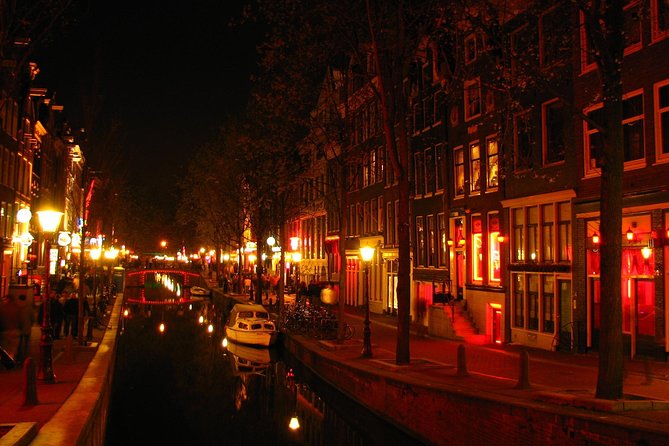
At $31.24 per person for about 2 hours, this tour is priced like an efficient Amsterdam orientation. You are paying primarily for guided storytelling and the route planning, not for museum-style admissions.
That price feels more reasonable because most of the stops are about seeing places and hearing context, and one stop is marked admission ticket free. So you are not juggling extra entry fees every few blocks.
A maximum group size of 16 also matters for value. In a district like De Wallen, you want a guide who can keep the flow and answer questions without letting the group fracture. The best part of value is how much clarity you walk away with, and this tour is designed to explain how the neighborhood works, including the laws and the way windows and coffeeshops fit together.
Who this walk suits, and who should skip it
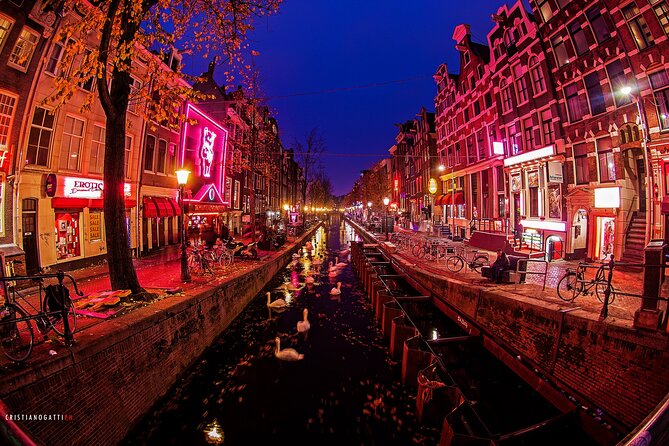
This works best if you want a grounded introduction to Amsterdam without guessing. If you are the type of traveler who prefers facts, context, and route guidance, you’ll likely appreciate how the walk connects adult nightlife context with the city’s historic built environment.
It is also a good fit if you are going solo or as a couple. Small groups help you feel included, and the tour ends back at the start, which makes planning your next activity easier.
I would skip it if you have limited mobility, since it is not recommended for that. Also, if you know you are sensitive to adult subject matter, decide before you go. The tour explains things, but it still centers an area where adult themes are visible.
Guides you can count on: friendly, organized, and question-ready
One thing that stands out from the experiences shared about this tour is the focus on how the guide runs the group. Names like Robin, Gio, and Aaron show up for different strengths, but the common thread is clear: guides tend to be friendly, organized, and ready for questions.
If you are visiting Amsterdam and worried the Red Light District will be awkward, this kind of guiding style helps. You get permission to ask the practical questions, like how local laws shape what you see, and you get answers in plain language instead of awkward guessing.
Should you book this Amsterdam Red Light District and City Center walking tour?
I think you should book it if you want an Amsterdam first-timer-friendly orientation that mixes De Wallen with old-city landmarks in a short, efficient window. For $31.24 and about 2 hours, you get route guidance, expert explanations in English, and stops that stretch from centuries-old buildings to a modern specialized condom shop.
Skip it only if limited mobility is a concern or if adult subject matter will make the walk feel stressful for you. If you are comfortable with that premise, this is one of the more useful ways to understand the district and the city around it, instead of just seeing it.
FAQ
How long is the Amsterdam Red Light District and City Center walking tour?
It runs for about 2 hours.
Where does the tour start, and where does it end?
The meeting point is Geldersekade 2, 1012 BH Amsterdam. The activity ends back at the meeting point.
Is the tour offered in English?
Yes, it is offered in English.
How big is the group?
The tour has a maximum of 16 travelers.
Do I need to buy admission tickets for the stops?
The information provided notes admission ticket is free for the Red Light District stop.
Is the tour suitable for travelers with limited mobility?
No, it is not recommended for travelers with limited mobility.
What is the cancellation policy?
You can cancel for a full refund up to 24 hours before the experience starts.
Loops Taking In the Big Sights
- Amsterdam: 75 Minute City Canal Cruise with Audio Guide
★ 4.4 · 19,938 reviews - Amsterdam: City Centre Canal Cruise including Audioguide
★ 4.3 · 16,901 reviews - Amsterdam: Smoke and Lounge City Boat Cruise
★ 4.7 · 8,572 reviews - Amsterdam: City Card with Free Entrance & Public Transport
★ 4.3 · 4,145 reviews
Newest on the canal ring
- Amsterdam Bike Food Tour with Private Guide★ 5.0 · 1 review
- Amsterdam: Rijksmuseum Private Tour with an Art Historian★ 5.0 · 1 review
- Happy B-day Amsterdam! Guided Tour with a History Buff★ 5.0 · 1 review
- Local Foodie Adventure in Amsterdam★ 5.0 · 1 review
- Private Photo Shoot in Amsterdam with a Professional Photographer★ 5.0 · 1 review
- Private day trip to Giethoorn and the Enclosing Dike★ 5.0 · 1 review
- Private Sightseeing Tour to Giethoorn from Amsterdam incl. canal cruise★ 5.0 · 1 review
Red Light District Walking Tours, compared.
Amsterdam Red Light District & Coffee Shop Tour
Read our review →
Red Light District Pub Crawl with Unlimited Shots
Read our review →
Private Amsterdam Red Light District and Coffee Shop Tour
Read our review →
Browse the lists this tour appears in