
Reviewed · RED LIGHT DISTRICT WALKING TOURS
The Red Light District Now & during the Dutch Golden Age
Sex work meets Golden Age Amsterdam. This 2-hour walk links De Wallen to Amsterdam’s port growth, VOC trade, and the city’s water brain, led by Aarre with a history master’s degree.
I especially love the respectful tone, with adult themes handled seriously and sensibly instead of turning into cheap gawking. I also like how the tour moves beyond one neighborhood, so you get a bigger picture of Amsterdam while you’re walking from Centraal Station.
One heads-up: the subject matter is adult, and the De Wallen portion is about 15 minutes, so if you want a long, nitty gritty look only at the Red Light District, this may feel short.
In This Review
- Key highlights to know before you go
- A Red Light District tour built on Amsterdam’s Golden Age timeline
- Centraal Station: how Amsterdam became a trading empire
- Int Aepjen: sailors, VOC ships, and the human cost of trade
- Weeping Tower: water control, plus Amsterdam’s link to New York
- Spinhuissteeg: the growth of prostitution and Golden Age prison reform
- Zeedijk walk: Chinese community origins, the 70s to 80s crime wave, and modern experiments
- Nieuwmarkt and De Waag: Rembrandt’s Anatomy Lesson at the heart of the route
- De Wallen today: Dutch attitudes, safer alternatives, and real neighborhood pressures
- Price and time: is $70.98 worth a 2-hour private walk?
- Who this tour suits best
- Should you book this Amsterdam Red Light District history walk?
- FAQ
- How long is the tour?
- What is the meeting point?
- Does the tour end at the same place?
- Is this a private tour?
- What is included in the price?
- Are there any admission tickets you have to pay separately?
- Is a mobile ticket used?
- Are tips included?
- Is service animal access allowed?
- Can I cancel for a full refund?
Key highlights to know before you go
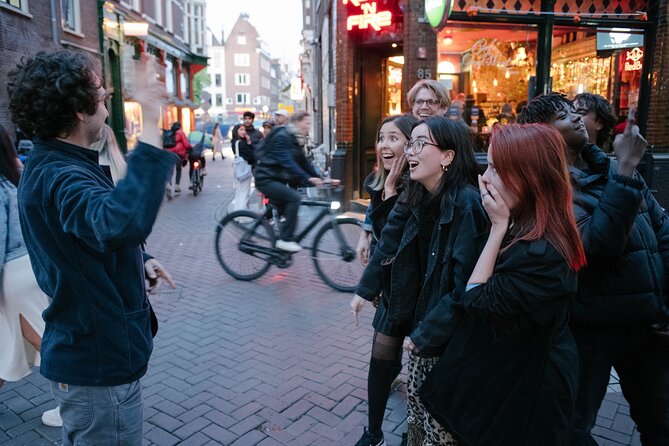
- A history master’s degree guide who connects the Red Light District to Amsterdam’s Golden Age story
- One smooth city walk that starts at Centraal Station and keeps widening the lens across town
- Respectful framing of sex work with an emphasis on safety, policy, and lived realities
- VOC-era context at Int Aepjen, including harsh shipboard conditions and trade “spoils”
- Water control meets culture at the Weeping Tower, plus the Amsterdam to New York connection
- De Waag and Rembrandt sit on the route, so you get art, trade, and social change in one loop
A Red Light District tour built on Amsterdam’s Golden Age timeline
If you think Amsterdam’s Red Light District is just about nightlife, this tour nudges you toward a deeper question: how did a city become the kind of place that could make even sex work part of a wider, intensely managed urban system?
You also get a guide style that matters here. Aarre blends humor with structure, and the Master’s degree in history shows up in how he tells stories. Instead of random facts, you get a clear thread that runs from the early port days to global trading power, then into how communities and institutions shaped daily life. That makes De Wallen more understandable, not just more interesting.
And the format helps. It’s about 2 hours, private for your group, with a mobile ticket. You walk between stops, learn at each one, then move on. This keeps the experience moving and stops it from feeling like a lecture you endure.
More walks through the Wallen:
- Amsterdam: Red Light District Tour in DE/EN/IT/ES/FR
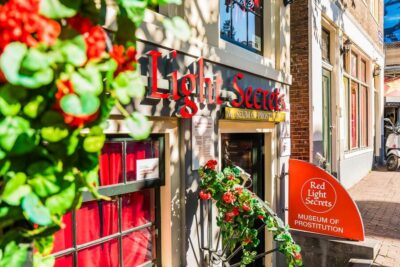
★ 4.9 · 7,136 reviews - Amsterdam: Red Light Secrets Museum Entry Ticket
★ 4.2 · 5,722 reviews - Amsterdam Red Light District & Coffee Shop Tour
★ 4.6 · 4,134 reviews
Centraal Station: how Amsterdam became a trading empire
The walk starts at Centraal Station, and the big theme is transformation. You hear how Amsterdam grew from early settlers living in a provincial swamp into a city tied to long-distance commerce and the iconic Golden Age.
This is a smart opening. Centraal Station is modern, but it sits on the edge of a much older story. When you understand the port and trade foundation, later stops in the tour land with more weight. The city’s prosperity, social change, immigration patterns, and even the way authorities tried to manage behavior all connect back to that early commercial engine.
The practical side is also good. Centraal is easy to reach and makes a clean anchor for the walk. You can think of this stop as your mental map getting drawn in ink, not pencil.
Int Aepjen: sailors, VOC ships, and the human cost of trade
Next up is Int Aepjen, where the focus shifts from land-based growth to sea-based labor. Here, you learn about the lives of sailors who traveled the world, and what conditions could be like aboard a VOC ship.
What stands out is the balance. You don’t just hear that Amsterdam profited from trade. You also hear about the harsher side of the system: harrowing conditions at sea and the complicated reality of people moving through the global network.
Then you get the other half of the equation: the unique spoils of trade that began arriving in Amsterdam in the 17th century. That pairing matters. It helps you see the city’s prosperity as something that was built through real suffering and real commerce at the same time. That framing makes the tour feel grounded, not idealized.
Weeping Tower: water control, plus Amsterdam’s link to New York

At the Weeping Tower, the story turns to one of Amsterdam’s signature powers: water management. This is where you hear about how the Dutch learned to manipulate water, because the city’s survival depends on it.
It’s not just a fun engineering lesson. In a place where water shapes everything from land use to daily routines, you start to understand why Amsterdam’s public life looks the way it does. Authorities, planning, and regulation make sense in that context.
And then comes a twist that grabs your attention: the unique connection between Amsterdam and New York. You’re not left with a vague “two cities are similar” idea. You get a specific, tour-worthy link tied to this city’s reach beyond the Netherlands.
A different use for the same hours in Amsterdam:
Spinhuissteeg: the growth of prostitution and Golden Age prison reform
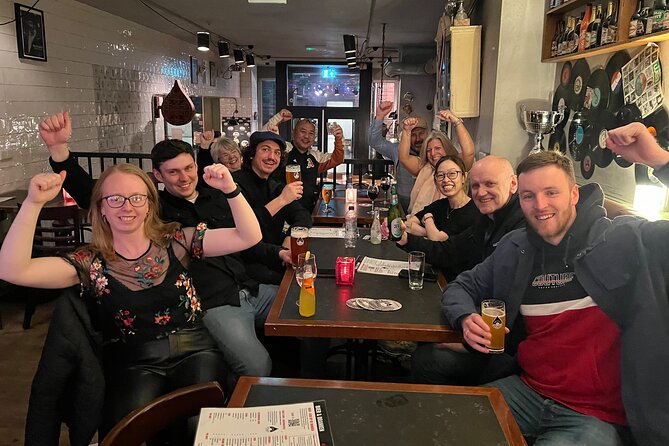
Spinhuissteeg is one of the more thought-provoking stops on the route. You learn about the development of prostitution as one of the oldest professions practiced in Amsterdam, and you hear how the Golden Age era shaped the institutions around it.
The tour also talks about Dutch prisons during that period and how authorities tried to reform prostitutes and people labeled as sinners. The key is the tone. This is not presented as scandal for shock value. It’s discussed as a historical reality, with the goal of showing how a society tried to control behavior while grappling with what it could not easily eliminate.
If you’re the kind of person who likes to understand systems, this stop will click. Amsterdam did not just “have” sex work. It responded to it through social policy, incarceration, and reform ideas. That helps you make sense of how De Wallen developed into a managed neighborhood rather than a random street corner.
Zeedijk walk: Chinese community origins, the 70s to 80s crime wave, and modern experiments
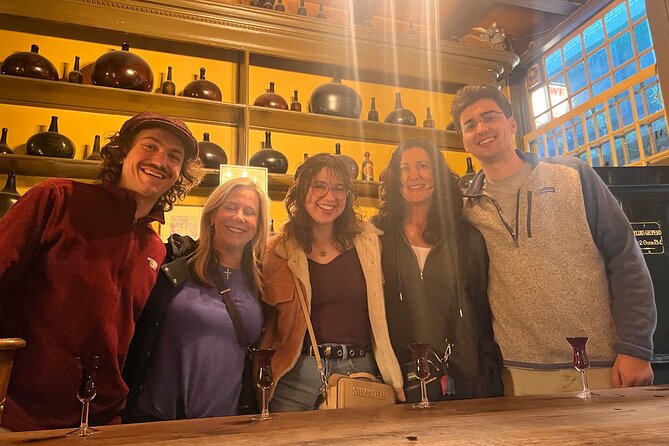
As you walk down Zeedijk, the tone becomes more present-day. You learn about origins of the Chinese community and how migration and commerce helped shape Amsterdam street life.
Then the tour covers a darker chapter: the terrible crime wave of the 70s and 80s. After that, you get to the modern era, including experiments with tolerating drugs and prostitution.
This is where the tour earns its “sensitively handled” reputation. You’re not pushed into graphic detail. Instead, you’re shown how public debates and policy trade-offs play out in real neighborhoods over time. You can see the tension between safety, tolerance, and control, without the tour pretending there are easy answers.
A helpful way to think about this stop: you’re watching the city’s values evolve. It’s not a straight line toward progress. It’s a series of attempts, corrections, and compromises.
Nieuwmarkt and De Waag: Rembrandt’s Anatomy Lesson at the heart of the route
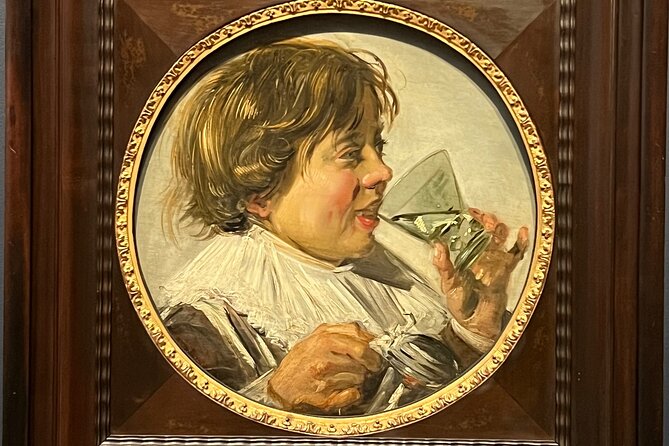
At Nieuwmarkt, you visit De Waag, and the focus is art and civic life. This is where Rembrandt created one of his great masterpieces: The Anatomy Lesson of Dr Tulip.
This stop is more than a museum detour. It keeps the tour from becoming a single-issue story. Amsterdam’s Golden Age was about science, art, and public institutions as much as it was about trade and regulation.
You also feel the benefit of spacing. After serious social topics, the De Waag stop gives your mind a different kind of anchor, one grounded in cultural achievement. That makes it easier to keep an open attitude for the final De Wallen portion.
De Wallen today: Dutch attitudes, safer alternatives, and real neighborhood pressures
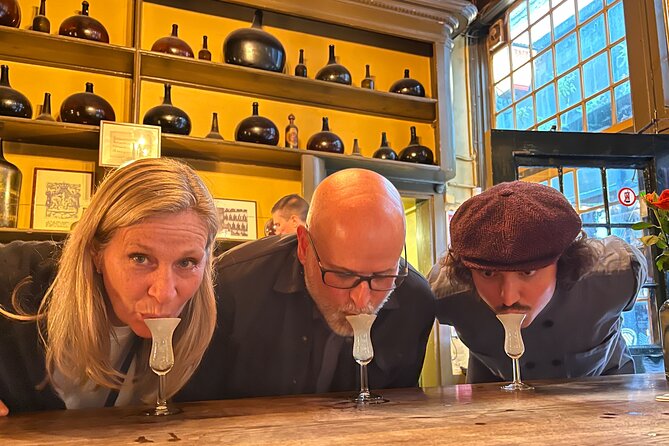
Finally you reach the Red Light District, also known as De Wallen. Here the tour puts it all together. You learn about the Dutch attitude toward sex work and how they have attempted to create a safe alternative to the sex trade.
Then you get the honest part: the current problems in the Red Light District and what the future of this residential neighborhood might look like. This is not sugarcoated, but it is handled with care. The goal is to help you understand why De Wallen exists in this particular form, and why it remains controversial.
One thing I appreciated in how this kind of topic is usually taught on a good city walk is the emphasis on context. Instead of treating sex work like a standalone spectacle, the tour treats it like a social and legal issue that intersects with housing, street life, policing, and public debate.
Is there a chance the area feels uncomfortable in moments? Yes. That’s normal. But with a respectful guide and clear framing, you’re more likely to leave with understanding than with secondhand shock.
Price and time: is $70.98 worth a 2-hour private walk?
At $70.98 per person for about 2 hours, this tour sits in the “mid-range but focused” category. You’re paying for a private, history-led experience with a licensed-feeling guide approach (local pro plus a Master’s degree in history) and a route that goes beyond the Red Light District itself.
Here’s why the value works. You’re not just buying entry into a controversial neighborhood. You’re buying a guided framework that connects:
- Amsterdam’s port rise and Golden Age commerce
- VOC-era sailor suffering and trade gains
- water management as a survival tool and civic mindset
- social policy attempts, including prisons and reform ideas
- major cultural context via De Waag and Rembrandt
Also, the stop mix is efficient. You get several short learning moments, then a longer De Wallen block to close the loop. The tour ends back at the meeting point, so you’re not stuck figuring out the next step.
If you enjoy city history that connects art, policy, and human stories, you’ll likely feel the price matches what you get. If you want a long Red Light District deep dive only about nightlife, you might decide to spend that time differently.
Who this tour suits best
This is a great fit if you’re:
- a history buff who likes your facts tied into a timeline
- curious about how cities handle complicated social issues
- traveling with a parent or mixed-age group that needs a respectful tone
- the type who wants practical context rather than a grab bag of shock stories
Based on the guide’s style, it’s also a strong pick if you appreciate humor and storytelling. Aarre’s approach comes across as entertaining without being dismissive, and he’s known for adding helpful practical ideas after the walk, like restaurant recommendations for the rest of your evening.
Should you book this Amsterdam Red Light District history walk?
Book it if you want De Wallen explained through Amsterdam’s bigger forces: trade, water management, institutions, and culture. The structure is compact, the guide is history-trained, and the tone is the difference between understanding and just watching.
Skip it or reconsider if you know you do not handle adult topics well, or if you only want a long, detailed look at the Red Light District itself. The area is included thoughtfully, but it is not the only focus.
If your goal is to leave with a mental map of Amsterdam in the Golden Age and how it echoes in modern streets, this is a smart way to spend two hours.
FAQ
How long is the tour?
It lasts about 2 hours.
What is the meeting point?
It starts at Hotel NH Collection Amsterdam Barbizon Palace, Prins Hendrikkade 59-72, 1012 AD Amsterdam, Netherlands.
Does the tour end at the same place?
Yes, it ends back at the meeting point.
Is this a private tour?
Yes. Only your group participates.
What is included in the price?
A professional local guide with a Master’s degree in history is included.
Are there any admission tickets you have to pay separately?
No. The stops listed are marked as free admission.
Is a mobile ticket used?
Yes, the tour uses a mobile ticket.
Are tips included?
No. Tips for your guide are not included.
Is service animal access allowed?
Yes, service animals are allowed.
Can I cancel for a full refund?
Yes, free cancellation is available. You must cancel at least 24 hours in advance for a full refund.
Newest on the canal ring
- Amsterdam Bike Food Tour with Private Guide★ 5.0 · 1 review
- Amsterdam: Rijksmuseum Private Tour with an Art Historian★ 5.0 · 1 review
- Happy B-day Amsterdam! Guided Tour with a History Buff★ 5.0 · 1 review
- Local Foodie Adventure in Amsterdam★ 5.0 · 1 review
- Private Photo Shoot in Amsterdam with a Professional Photographer★ 5.0 · 1 review
- Private day trip to Giethoorn and the Enclosing Dike★ 5.0 · 1 review
- Private Sightseeing Tour to Giethoorn from Amsterdam incl. canal cruise★ 5.0 · 1 review
Red Light District Walking Tours, compared.
Amsterdam Red Light District & Coffee Shop Tour
Read our review →
Red Light District Pub Crawl with Unlimited Shots
Read our review →
Private Amsterdam Red Light District and Coffee Shop Tour
Read our review →
Browse the lists this tour appears in